


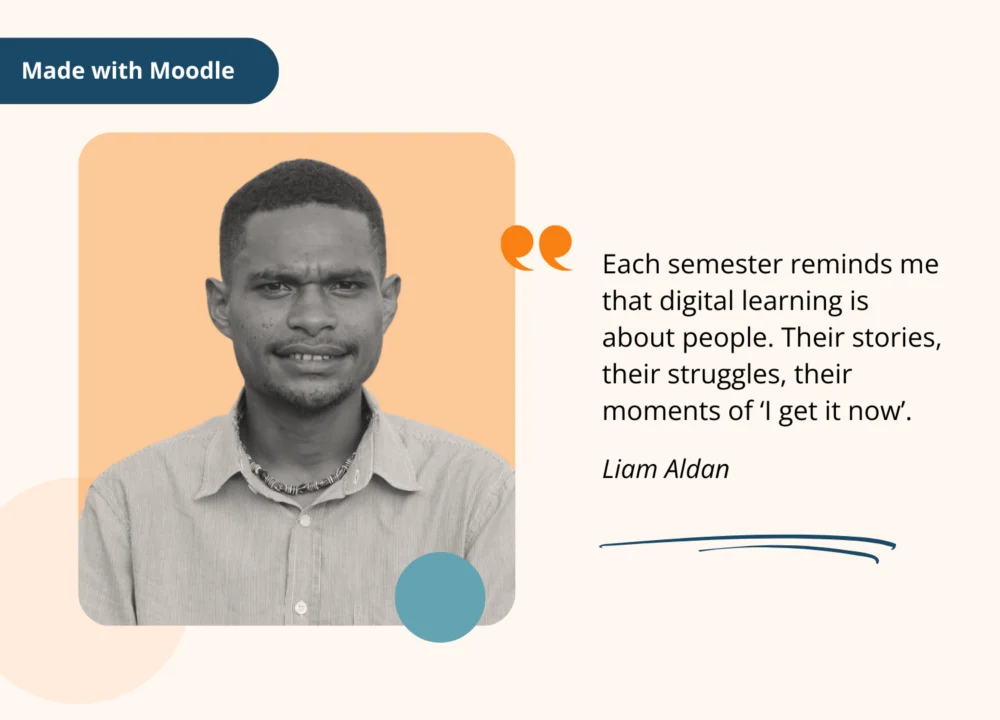
Divine Word University (DWU) in Papua New Guinea has embarked on a significant transformation of its online learning environment, spearheaded by the innovative work of Moodle Learning Designer Liam Aldan. Over the past four years, Aldan has systematically redesigned the university’s Moodle platform, shifting the focus from mere content delivery to the creation of intuitive, engaging, and human-centered learning experiences. This initiative, recognized by Moodle’s "Made with Moodle" series, highlights the profound impact of intentional design on student success and faculty empowerment within digital education.
The Genesis of a Learning Experience Revolution
Liam Aldan’s journey into learning design at Divine Word University was not a preordained path but rather an organic response to observed needs. Upon joining DWU four years ago, he encountered a digital learning landscape that, while functional, lacked the clarity and engagement crucial for effective online pedagogy. Courses often felt like "long corridors with closed doors," presenting information without clear guidance on its application or the next steps for learners. Simultaneously, academic staff, often pressed for time, struggled to leverage the full potential of the Moodle Learning Management System (LMS) to create dynamic and effective online courses.
Aldan quickly recognized that the challenge was not simply about populating a digital space with content, but about architecting a holistic learning experience. This realization marked a pivotal shift in his approach, moving from "designing courses" to "designing clear, meaningful learning experiences." This philosophical change became the bedrock of his strategy at DWU.
A Collaborative Approach to Enhance Digital Pedagogy
The core of Aldan’s strategy involved a deep and collaborative engagement with the university’s academic staff. He dedicated himself to understanding their individual teaching styles, the specific challenges they faced in delivering their subjects online, and the unique needs of their diverse student populations. This active listening and empathetic approach allowed him to gather invaluable insights that directly informed his design decisions.
By understanding the faculty’s pedagogical approaches and their digital comfort levels, Aldan was able to develop Moodle course templates and design principles that were not only effective but also adaptable to various disciplines. He provided targeted training and ongoing support, demystifying the technical aspects of Moodle and empowering lecturers to become more confident and creative in their online course development. This support extended beyond technical training, encompassing pedagogical guidance on how to best utilize Moodle’s features for student interaction, assessment, and content delivery.
From Corridors to Windows: The Visible Impact of Design
The transformation of DWU’s Moodle site has been a gradual yet profoundly impactful process. Aldan likens each redesigned course to "opening a window," allowing more light, structure, and opportunities for engagement to enter the learning process. This metaphor encapsulates the shift from a static repository of information to a dynamic and interactive learning environment.
Initial results were evident in the improved navigability of courses. First-year students, who previously might have felt lost or overwhelmed, could now clearly understand where to find materials, how to participate in activities, and what was expected of them. This enhanced clarity reduced cognitive load and allowed students to focus more on the learning content itself.
Furthermore, academic staff experienced a significant shift in their perception and utilization of Moodle. Aldan’s support and the tangible improvements in their course designs led to increased confidence and inspiration. Lecturers who had once felt intimidated by technology found themselves empowered to experiment with new digital tools and pedagogical strategies, leading to richer and more immersive online learning experiences for their students.
Fostering Engagement and Community in the Digital Realm
The impact of Aldan’s design philosophy is vividly illustrated in the revitalized Moodle forums and the integration of diverse multimedia elements. Forums, once sparsely populated or used for perfunctory announcements, have transformed into vibrant spaces for genuine student-to-student and student-to-instructor dialogue. These online communities foster a sense of belonging and shared learning, crucial for student retention and academic success, particularly in a remote or blended learning context.
The integration of multimedia, including videos, interactive quizzes, and dynamic presentations, has significantly enhanced the richness and appeal of the courses. These elements cater to diverse learning preferences and styles, making the online learning experience more engaging and memorable. This move towards a more multimedia-rich environment aligns with global trends in digital education, which emphasize active learning and student-centered approaches.
A Timeline of Transformation: Four Years of Evolution
The four-year period since Liam Aldan’s tenure as Moodle Learning Designer at Divine Word University can be broadly segmented into distinct phases of development:
- Year 1: Assessment and Foundation Laying: This initial phase focused on comprehensive assessment of the existing Moodle infrastructure and its utilization. Aldan conducted in-depth consultations with faculty and students, identifying key pain points and areas for improvement. He began developing foundational design principles and basic Moodle templates aimed at enhancing navigation and accessibility. Training programs for faculty were initiated, focusing on core Moodle functionalities.
- Year 2: Strategic Redesign and Pilot Programs: Building on the foundational work, Aldan embarked on a strategic redesign of high-impact courses. Pilot programs were implemented to test new design approaches and gather feedback. This year also saw a more focused effort on improving the user interface and experience within Moodle, aiming for greater intuitiveness. The training evolved to include more advanced pedagogical applications of Moodle.
- Year 3: Scaling Up and Faculty Empowerment: This phase was characterized by scaling up the redesigned course templates across a wider range of disciplines. Aldan focused on empowering faculty to become more independent in their Moodle course design and management. He introduced advanced features like collaborative activities, gamification elements (where appropriate), and more sophisticated assessment tools. The "Made with Moodle" spotlight likely originated from the significant advancements observed during this period.
- Year 4: Refinement, Innovation, and Sustainability: In the current year, the focus has shifted to refining existing designs, exploring innovative pedagogical approaches, and ensuring the long-term sustainability of the enhanced online learning environment. This includes ongoing professional development for faculty, the integration of emerging educational technologies, and the continuous evaluation of student learning outcomes. The emphasis remains on the human element of digital learning, with a consistent reminder that technology serves to facilitate human connection and understanding.
Supporting Data and the Human Element
While specific quantitative data on student performance improvements or faculty adoption rates were not provided in the initial context, the qualitative evidence from Liam Aldan’s account strongly suggests a positive trend. The anecdote of a first-year student stating, "I actually understand where everything is now," is a powerful indicator of improved usability and reduced student frustration. This sentiment is corroborated by the observation of lecturers feeling "inspired" and "empowered."
In the broader context of higher education, research consistently demonstrates the correlation between well-designed learning environments and improved student outcomes. Studies by organizations like the Online Learning Consortium (OLC) have shown that effective online courses are characterized by clear organization, engaging content, meaningful interaction, and accessible support. Aldan’s work at DWU directly addresses these critical elements.
The implications of such design work are far-reaching. For students, it means a more equitable and effective learning experience, potentially leading to higher completion rates and better academic achievement. For faculty, it translates to reduced pedagogical stress and increased job satisfaction, as they are better equipped to deliver high-quality education. For the institution, it signifies a commitment to embracing modern educational practices and enhancing its reputation as a forward-thinking learning provider.
Broader Implications and Future Directions
Liam Aldan’s success story at Divine Word University underscores a critical truth in the digital age: technology is only as effective as the pedagogical design that underpins it. The Moodle platform, a powerful and flexible LMS, provides the tools, but it is the thoughtful, human-centered approach to design that unlocks its true potential.
The implications of this work extend beyond DWU. It serves as a compelling case study for other educational institutions, particularly those in developing regions or with limited resources, demonstrating that significant improvements in online learning can be achieved through strategic design and dedicated support, rather than solely through expensive technological overhauls.
The focus on "people" and their "stories, struggles, and moments of ‘I get it now’" is particularly poignant. In an era where discussions around artificial intelligence and automation in education are prevalent, Aldan’s emphasis on the human experience of learning serves as a vital reminder of the core purpose of education: fostering understanding, growth, and human connection.
As Divine Word University continues to evolve its digital learning landscape, the principles championed by Liam Aldan – thoughtful design, collaborative partnerships, and a steadfast focus on the learner’s experience – will undoubtedly remain at the forefront, shaping a future where online education is not just accessible, but also profoundly impactful and deeply human. The ongoing "Made with Moodle" series aims to highlight such impactful stories, inspiring a global community of educators and learners to leverage the platform for transformative educational outcomes.