
Since filmmaker George Lucas introduced audiences to the concept of the Force and the Jedi with the release of Star Wars in 1977—a film subsequently subtitled A New Hope—the narrative landscape of that "galaxy far, far away" has expanded into one of the most complex and commercially successful intellectual properties in history. As of 2024, the franchise encompasses 11 live-action feature films, nine animated series, five live-action television series, and a vast ecosystem of non-canon "Legends" material, video games, and literature. For the uninitiated and veteran fans alike, the sheer volume of content presents a logistical challenge: determining the most effective sequence in which to consume the saga.
The evolution of Star Wars is not merely a story of cinematic progression but a case study in brand management and narrative world-building. Following the 2012 acquisition of Lucasfilm by The Walt Disney Company for $4.05 billion, the production pace accelerated, introducing a new "canon" that retired decades of expanded universe lore to make way for a unified timeline. This restructuring has made the "order of operations" for viewing more critical than ever for understanding character motivations and the overarching political shifts within the fictional Galactic Republic and Empire.
The Theatrical Release Order: Experiencing the Cultural Phenomenon
The most traditional method of viewing Star Wars is the theatrical release order. This approach allows viewers to experience the franchise exactly as the public did, beginning with the original trilogy (1977–1983), moving to the prequel trilogy (1999–2005), and concluding with the sequel trilogy (2015–2019), interspersed with standalone "anthology" films.
- Episode IV: A New Hope (1977)
- Episode V: The Empire Strikes Back (1980)
- Episode VI: Return of the Jedi (1983)
- Episode I: The Phantom Menace (1999)
- Episode II: Attack of the Clones (2002)
- Episode III: Revenge of the Sith (2005)
- Episode VII: The Force Awakens (2015)
- Rogue One: A Star Wars Story (2016)
- Episode VIII: The Last Jedi (2017)
- Solo: A Star Wars Story (2018)
- Episode IX: The Rise of Skywalker (2019)
Proponents of this order argue that it preserves the narrative’s most significant plot twists, most notably the revelation regarding Luke Skywalker’s parentage in The Empire Strikes Back. Furthermore, this sequence highlights the technological evolution of filmmaking, moving from the pioneering practical effects and motion-control photography of the 1970s to the early adoption of high-definition digital cinematography and CGI in the prequels, and finally to the hybrid aesthetic of the Disney-era sequels.
The Chronological Timeline: A Linear History of the Galaxy
For viewers who prefer a historical progression, the chronological order aligns the films according to the internal timeline of the Star Wars universe. This timeline is centered around the Battle of Yavin (the climax of A New Hope), with years designated as BBY (Before the Battle of Yavin) or ABY (After the Battle of Yavin).
Watching chronologically provides a clear view of the rise and fall of the Jedi Order and the transition of the Galactic Republic into a totalitarian Empire. It begins with the discovery of Anakin Skywalker and follows his descent into darkness, providing immediate context for the state of the galaxy in the original trilogy.
- Episode I: The Phantom Menace (Set 32 BBY)
- Episode II: Attack of the Clones (Set 22 BBY)
- Episode III: Revenge of the Sith (Set 19 BBY)
- Solo: A Star Wars Story (Set roughly 13–10 BBY)
- Rogue One: A Star Wars Story (Ends moments before Episode IV)
- Episode IV: A New Hope (Set 0 BBY/ABY)
- Episode V: The Empire Strikes Back (Set 3 ABY)
- Episode VI: Return of the Jedi (Set 4 ABY)
- Episode VII: The Force Awakens (Set 34 ABY)
- Episode VIII: The Last Jedi (Set 34 ABY)
- Episode IX: The Rise of Skywalker (Set 35 ABY)
While this order offers a seamless narrative flow, critics note that it can diminish the impact of the original trilogy’s mysteries. Additionally, the jump in visual quality from the 2005 prequel Revenge of the Sith to the 1977 original A New Hope can be jarring for modern audiences.
The Machete Order: A Narrative Compromise
A popular alternative developed by fan and software developer Rod Hilton is known as the "Machete Order." This sequence is designed to focus specifically on the character arc of Luke Skywalker while using the prequels as an extended flashback to explain the origin of Darth Vader.
The Machete Order typically proceeds as follows: A New Hope, The Empire Strikes Back, Attack of the Clones, Revenge of the Sith, and Return of the Jedi. Notably, this order omits The Phantom Menace entirely, under the argument that its plot points—such as the trade dispute and the introduction of midi-chlorians—are largely tangential to the core Skywalker narrative. By placing the prequels between Episodes V and VI, the viewer witnesses the tragedy of Anakin Skywalker immediately after learning his identity, which heightens the emotional stakes of the final confrontation in Return of the Jedi.
Critical Reception and the Rotten Tomatoes Hierarchy
The reception of Star Wars media has been historically polarized, often reflecting a divide between critical consensus and audience sentiment. Analyzing the films and television series through the lens of Rotten Tomatoes scores provides a unique, albeit "chaotic," viewing order based on critical merit.
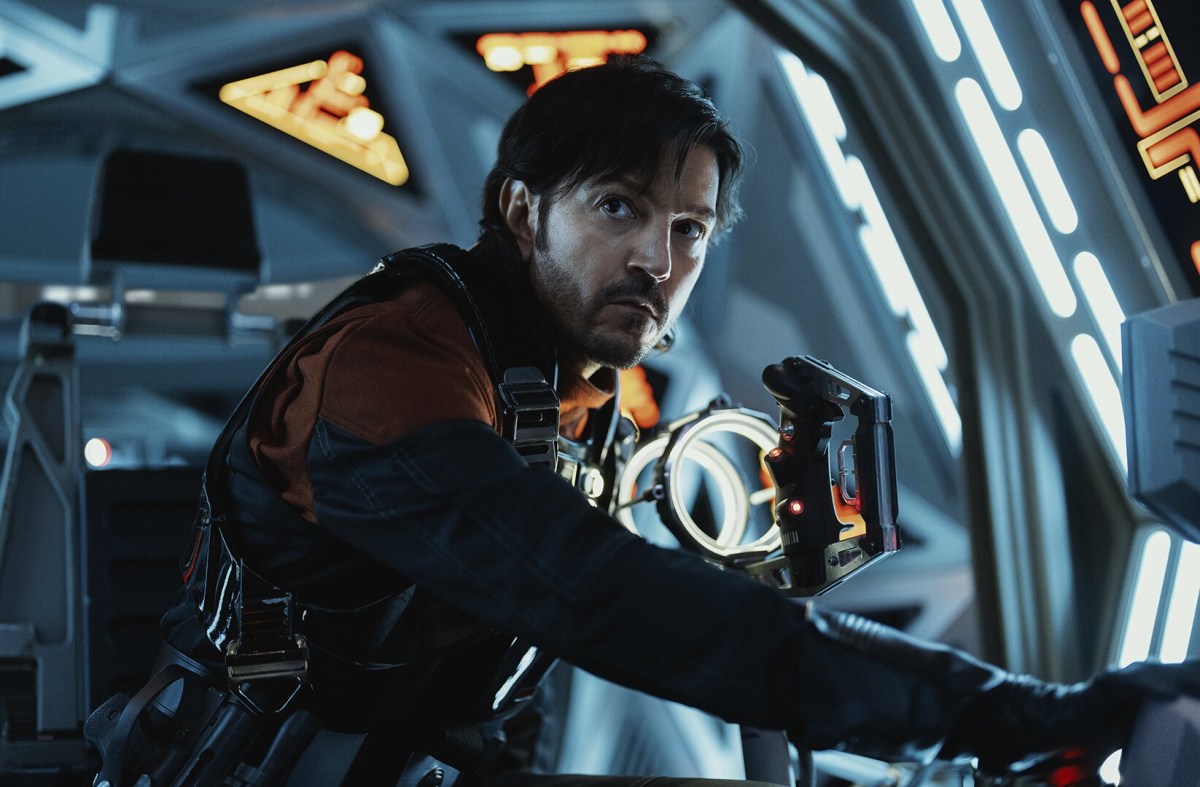
In recent years, the franchise has seen a resurgence in critical acclaim through its television ventures. Notably, Andor Season 2 recently set a record for the highest-ranked live-action Star Wars project on the platform, reflecting a shift toward more mature, politically driven storytelling. Conversely, films like The Phantom Menace and Rise of Skywalker occupy the lower end of the critical spectrum, often cited for over-reliance on exposition or divisive narrative choices.
The data suggests that while the "Skywalker Saga" films remain the commercial bedrock of the franchise, the "Side Stories" and prestige television series often achieve higher critical standing by exploring different genres, such as the heist-film mechanics of Solo or the western-inspired episodic structure of The Mandalorian.
The Disney+ Era: Expanding the Canon through Television
Since the launch of the Disney+ streaming service in 2019, the Star Wars timeline has become significantly more crowded. The "official" timeline provided by Disney now integrates animated series like The Clone Wars and Rebels alongside live-action hits. This expansion has allowed Lucasfilm to fill "gaps" in the chronology.
For instance, The Mandalorian, The Book of Boba Fett, and Ahsoka take place in the immediate years following Return of the Jedi, exploring the power vacuum left by the Empire’s collapse. Meanwhile, The Acolyte explores the "High Republic" era, set roughly 100 years before the prequels, marking the first time live-action media has ventured into the galaxy’s distant past.
The integration of these shows has created a "transmedia" experience where characters debut in animation (such as Ahsoka Tano in The Clone Wars) and eventually transition to live-action, rewarding long-term fans for their investment in the broader lore.
Financial Impact and Future Implications
The financial trajectory of Star Wars remains a dominant force in the entertainment industry. The sequel trilogy alone generated over $4.4 billion in global box office revenue. However, the franchise has recently pivoted toward a more calculated release strategy following the lukewarm box office performance of Solo: A Star Wars Story in 2018.
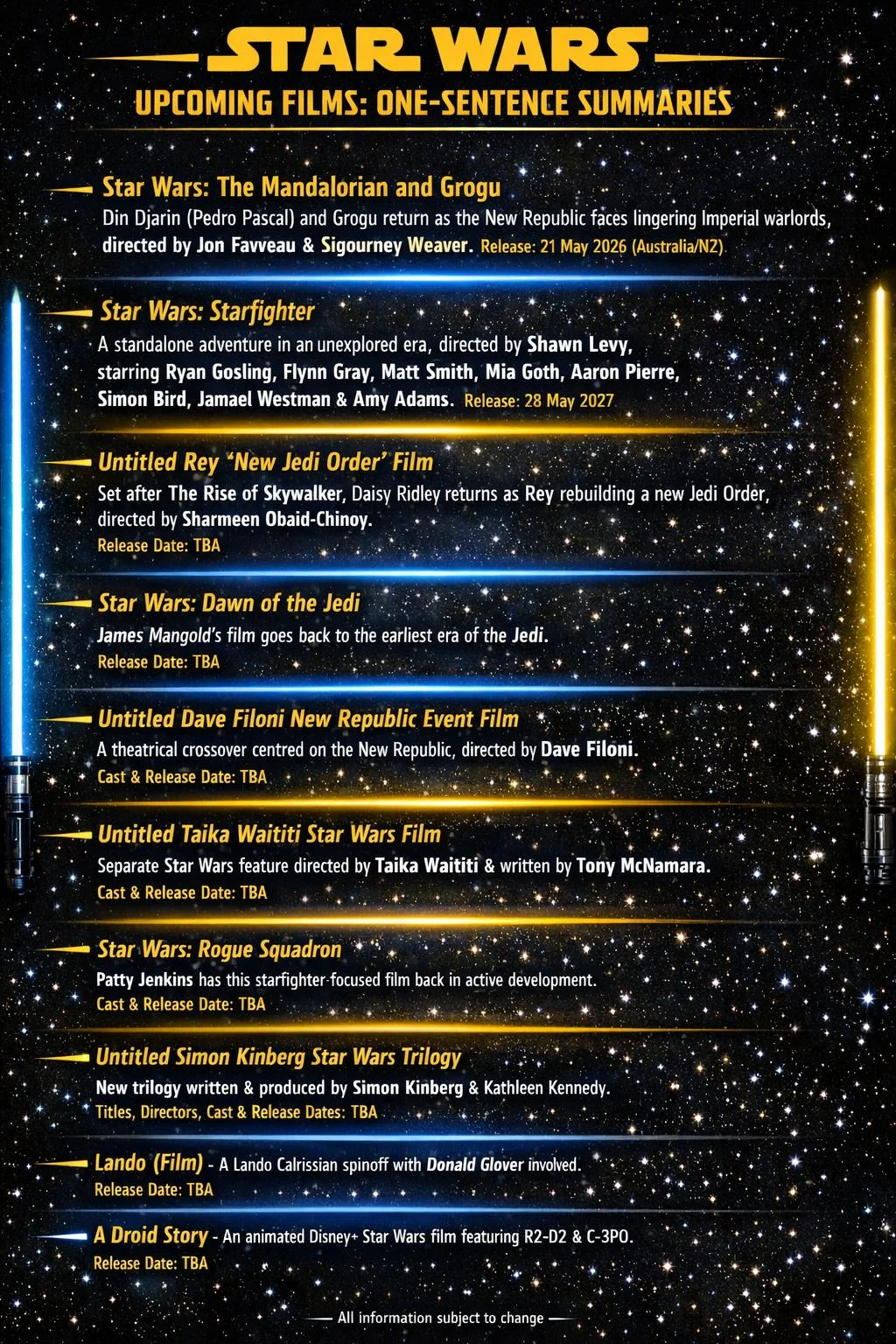
Looking ahead, Disney has confirmed several high-profile projects that aim to return the franchise to theaters while maintaining its streaming presence. The Mandalorian & Grogu is scheduled for a May 2026 release, signaling a transition for the television characters into the cinematic realm. Additionally, rumors regarding Star Wars: Starfighter, reportedly featuring a high-profile cast including Ryan Gosling and Mia Goth, suggest that Lucasfilm is keen on exploring new corners of the universe beyond the Skywalker lineage.
Analysis of the Franchise’s Cultural Longevity
The enduring appeal of Star Wars lies in its ability to function as a modern myth. George Lucas famously drew inspiration from Joseph Campbell’s The Hero with a Thousand Faces, crafting a narrative that resonates across cultural and generational boundaries. By blending elements of science fiction, fantasy, and classical mythology, the franchise has maintained a relevance that few other properties can match.
The current strategy of "fragmented storytelling"—where different series cater to different demographics (e.g., Young Jedi Adventures for children and Andor for adults)—ensures that the brand remains ubiquitous. While the debate over the "correct" viewing order will likely continue as long as new content is produced, the consensus among historians and critics is that the franchise’s strength lies in its versatility. Whether viewed as a historical chronicle, a technological showcase, or a simple tale of good versus evil, Star Wars remains a foundational pillar of global popular culture.