


The University of Saskatchewan (USask) is poised to become a pivotal hub for advanced computational research in Canada, announcing its acquisition of the nation’s first university-owned, fully integrated quantum computer. This groundbreaking development signifies a major leap forward in Canada’s capacity for quantum research and development, promising to accelerate discoveries and innovations across a multitude of critical sectors. The state-of-the-art system, described as a full-stack, open-architecture quantum computer, will be instrumental in empowering research and training initiatives spanning health sciences, energy, agriculture, and national security. University leaders and government officials alike are hailing this acquisition as a transformative achievement that will not only elevate USask’s standing in the global quantum landscape but also cultivate the next generation of quantum scientists.
A New Era for Prairie Innovation
The arrival of this sophisticated quantum computing system at USask is the culmination of a strategic vision to harness the power of emerging technologies for the benefit of Canadians. Quantum computing, a paradigm shift from classical computing, leverages the principles of quantum mechanics to perform calculations that are intractable for even the most powerful supercomputers today. Unlike classical bits that represent either a 0 or a 1, quantum bits, or qubits, can exist in a superposition of states, meaning they can represent both 0 and 1 simultaneously. This fundamental difference allows quantum computers to explore a vast number of possibilities concurrently, leading to exponential increases in processing power for specific types of problems.
The potential applications of this technology are far-reaching and profound. In the health sciences, it could revolutionize drug and vaccine discovery by enabling researchers to simulate molecular interactions with unprecedented accuracy, drastically shortening development timelines and leading to more effective treatments for diseases. In the energy sector, quantum computing could optimize complex grid management systems, improve the efficiency of renewable energy sources, and accelerate the development of new materials for energy storage. For agriculture, it holds the promise of enhancing crop yields through advanced modeling of soil conditions, climate patterns, and genetic modifications, contributing to global food security. Furthermore, quantum-secure data encryption is seen as essential for safeguarding sensitive information in an era of increasingly sophisticated cyber threats.
Investment and Collaboration Driving Progress
The realization of this ambitious project has been significantly bolstered by substantial financial backing from both federal and provincial governments. Prairies Economic Development Canada, through its Regional Innovation Ecosystems program, has provided $1.93 million in federal funding. This investment underscores the federal government’s commitment to fostering innovation and economic growth in Canada’s prairie provinces. Complementing this, Innovation Saskatchewan has contributed $400,000, highlighting the provincial government’s dedication to positioning Saskatchewan at the forefront of technological advancement.
Evan Solomon, Minister of Artificial Intelligence, emphasized the national significance of this initiative in a press release, stating, "What’s happening at the University of Saskatchewan is remarkable – a made-in-Canada quantum computer, built with Prairie partners, advancing research that will touch the lives of Canadians." This sentiment was echoed by Warren Kaeding, the province’s minister responsible for Innovation Saskatchewan, who remarked, "This investment puts Saskatchewan at the leading edge of a technology that is reshaping how quickly we can solve complex challenges." These statements collectively underscore a shared vision of leveraging quantum computing to address pressing societal needs and enhance Canada’s global competitiveness.
A Timeline of Innovation and Partnership
The journey towards establishing Canada’s first university-owned quantum computer at USask has been a deliberate and collaborative process. While the specific timeline for the initial conceptualization and procurement is not detailed in the original announcement, the recent funding allocations and the partnership agreements with leading quantum technology developers suggest a significant acceleration in recent years.
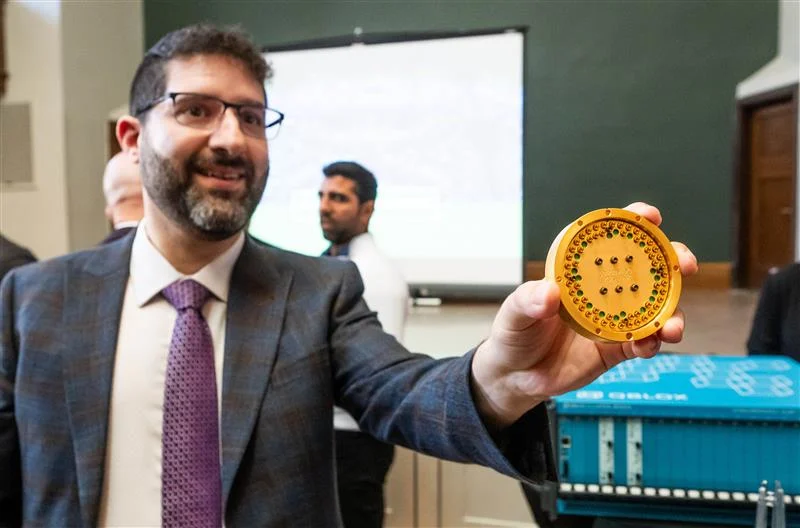
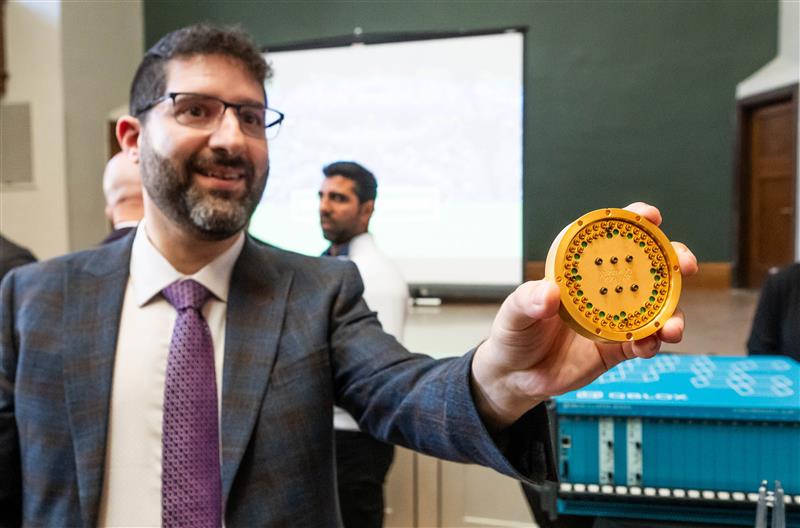
The system itself is a testament to international collaboration and Canadian ingenuity. It will feature 14 superconducting quantum bits (qubits) distributed across two chips, offering researchers direct access to the quantum hardware. This on-campus availability is a critical factor, as explained by Dr. Steven Rayan, director of USask’s Centre for Quantum Topology and Its Applications (quanTA) and the principal investigator on the project. Dr. Rayan drew an analogy to aviation, stating, "Just like there is no substitute for flying the actual plane, there is no substitute for having novel technology like this on premises. We enter a new world of quantum-accelerated research and training." This direct access will empower researchers to experiment, iterate, and push the boundaries of quantum algorithms and applications in real-time, without the logistical hurdles of accessing remote quantum computing resources.
The establishment of the quantum computer at USask also serves as a catalyst for regional collaboration. The university has recently signed a letter of intent with the University of Calgary to link its quanTA centre with Calgary’s Quantum City initiative. This strategic alliance aims to forge a broader "Quantum Corridor" across the Prairies, fostering a more cohesive and powerful quantum research ecosystem in Western Canada. Such inter-university partnerships are crucial for pooling expertise, sharing resources, and creating a critical mass of researchers capable of tackling the most complex quantum challenges. This collaborative approach is aligned with federal efforts to position Canada as a global leader in emerging technologies, as articulated by Eleanor Olszewski, minister responsible for Prairies Economic Development Canada: "Canada’s future prosperity will depend on our ability to lead in the technologies shaping the world ahead."
Broader Implications and Future Outlook
The impact of this development extends beyond the academic realm. USask anticipates that the quantum computer will foster significant collaborations with government agencies and industry partners. Notably, the Vaccine and Infectious Disease Organization (VIDO), a world-leading research centre also located at USask, is expected to leverage the quantum capabilities to accelerate its groundbreaking work in combating infectious diseases. The potential for quantum computing to enhance the speed and accuracy of vaccine development and disease modeling is immense.
The quantum computer was developed in partnership with several leading industry collaborators, including Rigetti Computing, Qblox, QuantrolOx, and Zero Point Cryogenics. These partnerships highlight the integrated approach taken to develop not just the hardware, but also the necessary software and control systems that make a "fully integrated" quantum computer. This collaborative model ensures that the system is not only cutting-edge but also practical and adaptable for a wide range of research needs.
The Quantum Computing Landscape in Canada
Canada has been making strategic investments in quantum technologies for several years, recognizing its potential to drive economic growth and national security. Initiatives like the National Research Council Canada’s Quantum Science and Technology Program and the various quantum research hubs emerging across the country underscore this commitment. The University of Saskatchewan’s acquisition of its own quantum computer marks a significant decentralization of quantum computing resources, moving beyond large government labs or cloud-based access to place powerful quantum hardware directly into the hands of university researchers.
This move is particularly significant for smaller and medium-sized enterprises (SMEs) and startups that may not have the resources to access commercial quantum cloud services. By having on-campus access, researchers can develop and test quantum algorithms tailored to specific industry problems, potentially leading to new quantum-enabled products and services. The "open-architecture" nature of the system also suggests a commitment to transparency and interoperability, encouraging wider adoption and innovation within the quantum community.
Addressing Complex Global Challenges
The implications of this quantum leap for USask and Canada are multifaceted. It positions the university as a leader in a field that is expected to reshape numerous industries and scientific disciplines in the coming decades. The training of a new generation of quantum-literate scientists and engineers is paramount, as the demand for these specialized skills is projected to grow exponentially. The research conducted using this quantum computer could lead to breakthroughs that address some of the world’s most pressing challenges, from climate change and resource management to personalized medicine and advanced materials science.
The development of a "made-in-Canada" quantum computer, even if assembled with components from international partners, signifies a growing capability within the country to design, build, and operate such sophisticated systems. This builds on Canada’s existing strengths in quantum information science, a field where Canadian researchers have made significant contributions over the years. The investment is not merely in hardware but in the intellectual capital and collaborative networks that will drive future innovation.
As the University of Saskatchewan embarks on this new chapter, the fully integrated quantum computer promises to be a catalyst for discovery, a training ground for future innovators, and a testament to Canada’s commitment to leading in the technologies that will define the 21st century. The successful integration and utilization of this powerful tool will undoubtedly be closely watched by the global scientific and technological communities.