



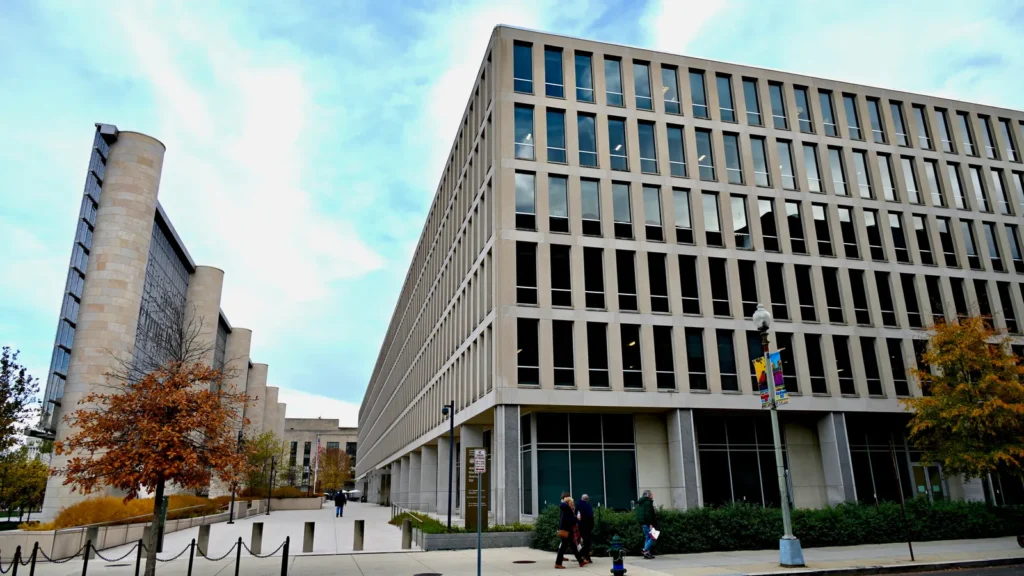
The Trump administration has put forth a fiscal year 2027 budget proposal that seeks to eliminate funding for Equity Assistance Centers and teacher quality grants, citing their perceived ties to Diversity, Equity, and Inclusion (DEI) initiatives. Concurrently, the budget request includes a substantial cut of over 30% to the Office for Civil Rights (OCR) within the U.S. Department of Education. This proposal, submitted on April 3, 2026, signals a continuation of the administration’s efforts to reshape the federal role in education, particularly concerning issues of equity and civil rights enforcement.
Deep Cuts to Equity and Civil Rights Enforcement
The proposed budget outlines a drastic reduction in resources for programs historically designed to address educational disparities and promote equitable learning environments. The elimination of Equity Assistance Centers and teacher quality grants, specifically those linked to DEI, represents a significant shift in federal support for initiatives aimed at fostering inclusive school communities. The proposed over 30% cut to the Office for Civil Rights, the agency tasked with enforcing federal civil rights laws in educational institutions, raises concerns about the nation’s capacity to address discrimination and ensure equal educational opportunities for all students.
A Pattern of Proposed Eliminatons
This is not the first time the Trump administration has targeted these specific programs. In its fiscal year 2026 budget request, the administration had also proposed zeroing out funding for Equity Assistance Centers and teacher quality grants. These repeated attempts suggest a consistent policy objective to curtail federal involvement in what the administration views as ideologically driven educational practices.
The Equity Assistance Centers, originally established under Title VI of the Civil Rights Act of 1964 as Desegregation Assistance Centers, are mandated to assist school districts and school boards in addressing issues stemming from school desegregation. This includes tackling challenges such as harassment, bullying, and prejudice. Their work also extends to helping districts interpret data to identify disparities and implementing professional development for educators to address these inequities. The centers’ current funding supports efforts to combat teacher shortages, improve educational resources, and enhance school-family engagement, particularly in underserved regions.
The administration’s rationale for proposing the elimination of these centers is articulated in a fact sheet accompanying the FY 2027 request. It states that the program has been "weaponized to force local districts to implement Washington-directed DEI practices against their will." Examples cited by the White House of "weaponized grant programming" include equity audits for districts to assess racism and bias, training materials for educators on white supremacy, and the establishment of "anti-racism committee" groups within districts.
Legal Battles and Judicial Scrutiny
Prior to the budget proposals, the administration took steps in February 2025 to close all four Equity Assistance Centers nationwide. These actions triggered legal challenges. One such lawsuit, filed by the Southern Education Foundation, sought to block the closures. The legal battle resulted in a temporary reinstatement of the grant for the center serving 11 Southern states.
In May 2025, Federal Judge Paul Friedman of the U.S. District Court for the District of Columbia ruled in favor of reinstating the equity assistance centers’ grants. Judge Friedman’s decision was notably critical of the administration’s rationale, stating, "the audacity of terminating its grants based on ‘DEI’ concerns is truly breathtaking." The Southern Education Foundation later voluntarily requested the court to dismiss the case in October 2025, following the grant’s reinstatement, while reserving the right to pursue further legal action if necessary.
Teacher Quality Partnership Program Under Fire
The Trump administration has also previously sought to end the Teacher Quality Partnership (TQP) program. This program has frequently been utilized to promote diversity within the teaching workforce. Education Secretary Linda McMahon, upon her arrival, identified the TQP program as one of the first grant programs to be reduced, characterizing it as "divisive" and aiming to wind down the Department of Education’s broader activities.
The administration pursued this objective aggressively, taking the matter to the U.S. Supreme Court after lower court orders mandated the reinstatement of grants in several states. In April 2025, the Supreme Court sided with the administration, upholding a freeze on these grants.

The FY 2027 budget request reiterates the administration’s desire to eliminate the entire $70 million TQP program. The justification provided is that the program is "used to indoctrinate new teachers" by imparting lessons on "social justice activism," "anti-racism," and "instruction on white privilege and white supremacy."
The Budget Process and Presidential Priorities
It is important to note that a president’s budget request is the initial step in the federal budget process. Congress will subsequently hold hearings and ultimately craft appropriations bills for the president’s signature. While the president’s budget blueprint may not be enacted as proposed, it serves as a clear indicator of the administration’s priorities and policy agenda. The proposed cuts to civil rights enforcement and equity programs suggest a deliberate effort to shift the federal government’s focus away from initiatives aimed at addressing systemic inequalities in education.
Implications for Educational Equity and Civil Rights Enforcement
The proposed budget cuts carry significant implications for the landscape of educational equity and civil rights enforcement in the United States. A substantial reduction in the OCR’s budget could hamstring its ability to investigate and resolve complaints of discrimination based on race, color, national origin, sex, disability, and age. This could lead to longer wait times for investigations, fewer resources dedicated to systemic issues, and potentially a chilling effect on individuals reporting civil rights violations.
The elimination of Equity Assistance Centers would remove a vital resource for school districts struggling with complex issues related to desegregation, equity, and inclusive practices. These centers provide expert guidance and support that can be crucial for navigating sensitive social and educational challenges. Their absence could leave districts with fewer avenues for seeking assistance, potentially exacerbating existing disparities.
Similarly, the proposed defunding of teacher quality grants, particularly those focused on diversification and addressing issues like "anti-racism," could hinder efforts to create a more representative and culturally competent teaching force. A diverse teaching staff is widely recognized as beneficial for student learning outcomes and for fostering inclusive school environments.

The administration’s framing of these programs as promoting "DEI," "social justice activism," or "indoctrination" reflects a broader ideological debate about the role of schools in addressing societal issues. Critics of these proposed cuts argue that they would undermine decades of progress in civil rights and equity, potentially rolling back protections and support for marginalized student populations. Proponents of the cuts, however, maintain that federal intervention in these areas is overreaching and that local districts should have greater autonomy in shaping their educational policies.
The timing of these proposals, with the fiscal year 2027 budget request being presented in early 2026, places these significant policy shifts within a broader political context. As the nation approaches future election cycles, the debate over the federal government’s role in education, civil rights, and equity is likely to remain a prominent issue. The proposed budget from the Trump administration offers a clear roadmap of its intentions should it gain the authority to implement them, setting the stage for intense debate and potential legislative battles in the coming months. The impact of these proposed changes on the nation’s schools and students will undoubtedly be a subject of considerable scrutiny and public discussion.