


The release of breathtaking high-resolution imagery from the Artemis II mission has triggered a significant uptick in public interest regarding lunar observation and deep-space exploration. As NASA prepares to send the first crewed mission toward the Moon in over half a century, the global audience is looking toward the night sky with renewed curiosity. In response to this cultural moment, major retailers, led by Amazon, have initiated substantial price reductions on entry-level and intermediate telescopes, making the hobby of amateur astronomy more accessible to the general public.
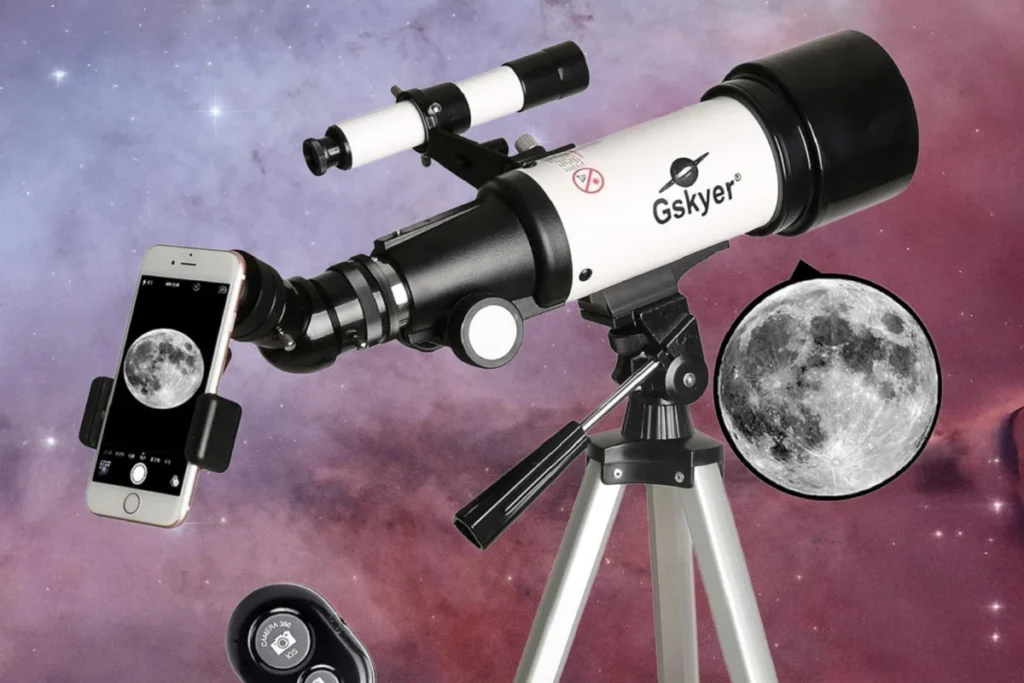
Among the most notable discounts is the Gskyer 70mm refractor telescope, which has seen its price point lowered from $129.99 to $96.99. This move targets the growing demographic of "citizen scientists" and hobbyists inspired by the Orion spacecraft’s latest photographs of Earth and the lunar surface. For those seeking more advanced optical capabilities, premium brands like Celestron have also slashed prices on smartphone-integrated models, signaling a competitive shift in the consumer optics market during this "New Space Age."
The Artemis II Context: A Catalyst for Amateur Astronomy
The Artemis II mission represents a pivotal chapter in NASA’s lunar exploration roadmap. Following the success of the uncrewed Artemis I mission in late 2022, Artemis II is slated to carry four astronauts—Commander Reid Wiseman, Pilot Victor Glover, Mission Specialist Christina Koch, and Mission Specialist Jeremy Hansen—on a trajectory around the Moon. This mission serves as the final test flight before Artemis III attempts to land humans on the lunar South Pole.
The imagery produced by the Artemis program has done more than provide technical data for engineers; it has captured the public imagination. High-definition "Earthrise" photos and detailed lunar topography shots have circulated widely on social media, creating a "halo effect" for the astronomy equipment industry. Historically, major space milestones, such as the Apollo landings or the launch of the James Webb Space Telescope, have been accompanied by surges in telescope sales. The current market trend suggests that Artemis II is continuing this tradition, prompting retailers to clear inventory and offer incentives for new observers.
Analysis of Entry-Level Equipment: The Gskyer 70mm Refractor
For many first-time buyers, the Gskyer 70mm aperture telescope represents the baseline for functional astronomical observation. Priced currently under $100, this model utilizes a refractor design, which employs lenses to gather and focus light. With a 400mm focal length, the telescope is engineered to provide clear views of the Moon’s craters, the moons of Jupiter, and the rings of Saturn under ideal atmospheric conditions.
The Gskyer package includes several components designed to lower the barrier to entry for beginners:
- Optics: A 70mm objective lens coated for enhanced brightness.
- Magnification: Two replaceable eyepieces (25mm and 10mm) paired with a 3x Barlow lens, which theoretically triples the magnification power of each eyepiece.
- Technology Integration: A smartphone adapter that allows users to align their phone cameras with the eyepiece, enabling the digital capture of celestial objects—a feature that has become essential for the modern hobbyist.
While professional astronomers often opt for much larger apertures, the 70mm refractor is frequently cited by educators as an ideal "gateway" instrument. It is portable, requires minimal maintenance compared to mirror-based systems, and provides enough resolution to satisfy the curiosity of those inspired by the Artemis mission’s lunar goals.
Stepping Up: The Celestron StarSense Explorer DX 130AZ
For enthusiasts willing to invest more for higher resolution and ease of use, the Celestron StarSense Explorer DX 130AZ has emerged as a top-tier recommendation, now discounted to approximately $428 from its original $499.95. This model represents a significant technological leap from basic refractors, utilizing a 130mm (5-inch) Newtonian reflector design.
The primary advantage of the DX 130AZ lies in its light-gathering capability. A 130mm mirror offers nearly double the surface area of a 70mm lens, allowing the user to see fainter deep-sky objects such as nebulae and star clusters that are invisible to smaller scopes. However, the most disruptive feature of the StarSense line is its integration of "plate-solving" technology.
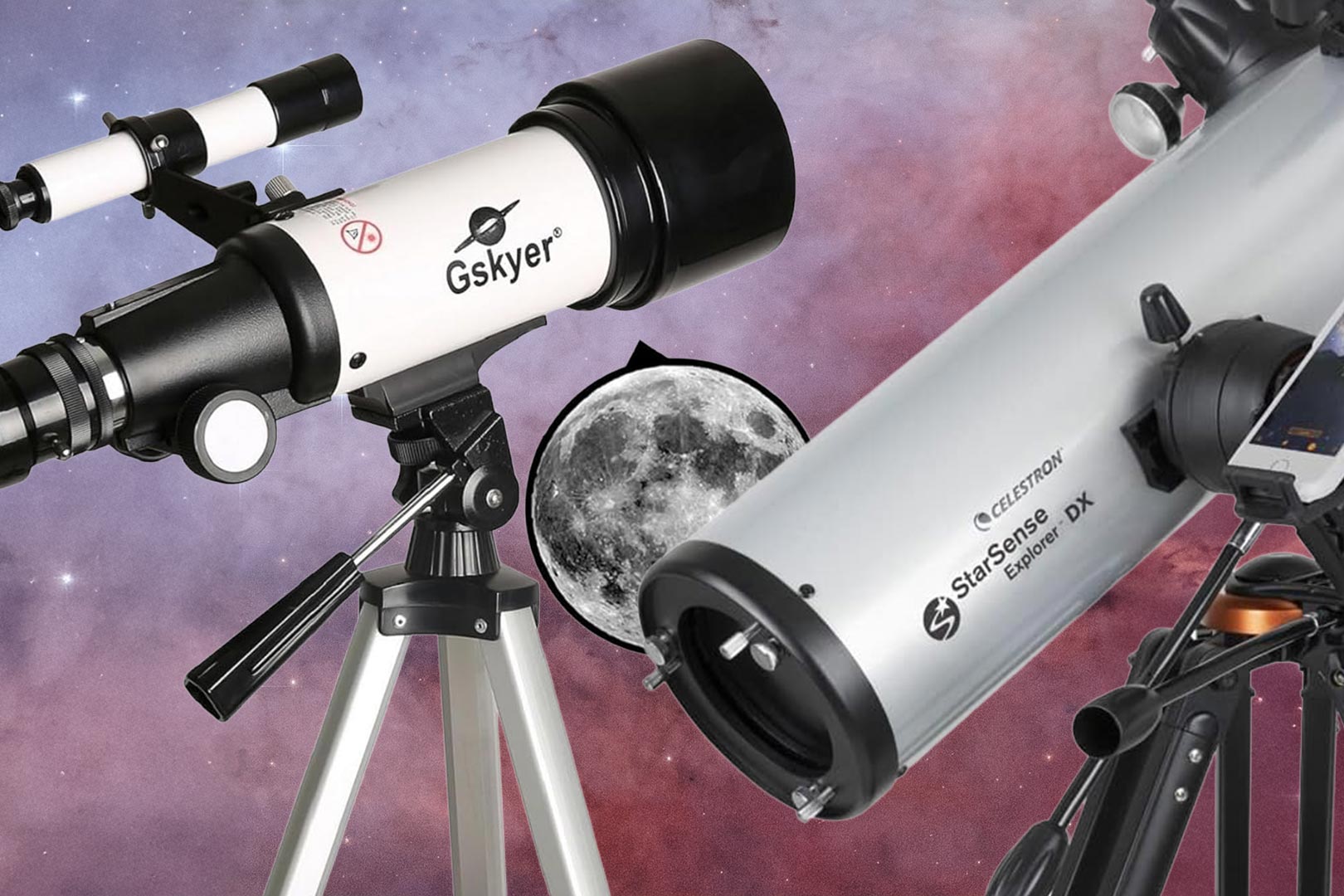
By placing a smartphone into a specialized cradle on the telescope mount, the StarSense Explorer app uses the phone’s camera to identify star patterns in the sky. It then generates a real-time map and provides on-screen arrows to guide the user toward specific planets or galaxies. This eliminates the steep learning curve associated with traditional star charts and polar alignment, making it a favorite for families and tech-savvy adults.
Comparative Chronology of Lunar Exploration and Public Engagement
The current surge in astronomy interest can be mapped against a timeline of recent and upcoming space exploration milestones:
- November 2022 (Artemis I): The uncrewed Orion capsule successfully orbits the Moon, testing the Space Launch System (SLS) rocket. Public interest in "Lunar viewing" begins to climb.
- Early 2024 (Mission Preparations): NASA releases detailed updates on the Artemis II crew training. Commercial lunar lander missions (such as Intuitive Machines’ Odysseus) capture global headlines, despite mixed mission results.
- Current Period (Spring 2024): Retailers observe a seasonal uptick in telescope sales, bolstered by the "Artemis Effect" and favorable spring viewing conditions in the Northern Hemisphere.
- Upcoming (2025-2026): Artemis II crewed flyby. This event is expected to produce the most high-fidelity video footage of the Moon ever recorded, likely driving telescope demand to record highs.
Industry analysts suggest that the current discounts on Amazon and other platforms are a strategic attempt to capture this growing market before the peak frenzy of the actual Artemis II launch.
Broader Market Impact: Binoculars and Specialized Gear
The current sales trend extends beyond traditional telescopes. Experts often recommend that beginners supplement their viewing with high-quality binoculars, such as the Celestron Nature DX series. Binoculars offer a much wider field of view than telescopes, making them superior for scanning the Milky Way or observing large star clusters like the Pleiades.
Furthermore, specialized educational tools have seen price adjustments. The NASA Lunar Telescope for Kids, often priced under $50, serves as a ruggedized entry point for younger children. By branding these items with the NASA insignia, manufacturers are directly linking the products to the national pride and scientific excitement generated by the Artemis program. This strategy appears to be working, as educational toys in the STEM (Science, Technology, Engineering, and Math) category continue to outperform general toy categories.
Technical Analysis: Refractors vs. Reflectors
For the consumer navigating these sales, understanding the technical differences between the discounted models is crucial.
- Refractors (like the Gskyer 70mm): These use glass lenses. They are generally more durable and provide high-contrast images of the Moon and planets. They are "sealed" systems, meaning dust rarely enters the tube.
- Reflectors (like the Celestron DX 130AZ): These use mirrors to collect light. They offer the "most bang for your buck" in terms of aperture size. However, the mirrors may occasionally need "collimation" (alignment), which adds a layer of complexity for the user.
The current market offers a balanced mix of both, allowing consumers to choose based on their commitment level and technical comfort.
Implications for the Future of Amateur Science
The democratization of high-quality optics, combined with the "StarSense" style of software assistance, is changing the landscape of amateur astronomy. In previous decades, finding a faint nebula required hours of study and manual tracking. Today, the combination of hardware discounts and mobile technology allows a novice to locate the Andromeda Galaxy in minutes.
This shift has broader implications for science. Amateur astronomers frequently contribute to the discovery of comets, supernovae, and exoplanet transits. By lowering the cost of entry during the Artemis mission cycle, retailers and space agencies are effectively expanding the global network of eyes on the sky.
As the Artemis II crew prepares for their historic journey, the tools to follow their progress from a backyard or balcony have never been more affordable. Whether through a $96 refractor or a $400 smartphone-guided reflector, the ability to connect with the cosmos is moving from the realm of specialists to the hands of the general public. This synergy between government-funded exploration and private-sector retail ensures that the legacy of the Artemis program will be measured not just in footprints on the Moon, but in the number of telescopes pointed toward it from Earth.