


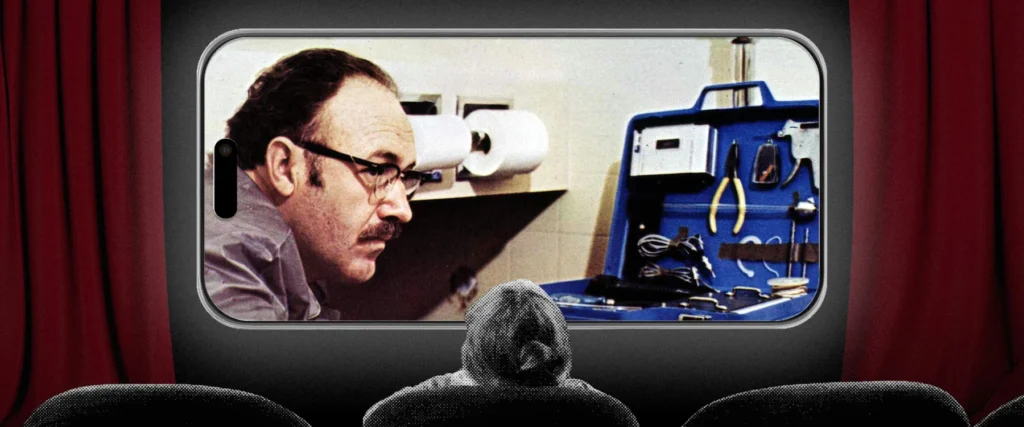
Last month, The Atlantic published an article with an alarming headline: “The Film Students Who Can No Longer Sit Through Films.” This provocative title ignited a discussion across academic and public spheres, highlighting a growing concern about the erosion of sustained attention in an increasingly digital landscape. The article, penned by Rose Horowitch, brought to light a phenomenon observed by film professors nationwide: a discernible struggle among students to engage with feature-length films, even within the context of their specialized studies.
The Cinematic Canary in the Coal Mine: Film Students’ Struggle
Horowitch’s reporting captured a sentiment echoed by educators from various institutions. Craig Erpelding, a film professor at the University of Wisconsin at Madison, expressed a common bewilderment: "I used to think, if homework is watching a movie, that is the best homework ever. But students will not do it." This observation was not isolated; similar accounts emerged from approximately 20 film-studies professors across the United States. Their collective experience pointed to a significant shift over the past decade, with a marked acceleration of this trend since the onset of the COVID-19 pandemic, which further entrenched digital habits and screen reliance.
The implications for film education are profound. Historically, the ability to engage deeply with narrative, visual composition, and thematic development over an extended period has been fundamental to cinematic appreciation and analysis. If students, whose vocational and academic pursuits are centered on this medium, are struggling with its basic consumption, it signals a deeper, more pervasive cognitive shift. This challenge extends beyond mere academic compliance; it speaks to a fundamental alteration in how individuals process and interact with complex, linear information.
Smartphones: The Pervasive Culprit
A clear consensus emerged among the interviewed professors regarding the primary driver of this attention span crisis: smartphones. These ubiquitous devices, designed for instant gratification and constant connectivity, are seen as actively degrading the cognitive mechanisms necessary for sustained focus. The founding director of Tufts University’s Film and Media Studies recounted the futility of banning electronics during screenings, observing that "About half the class ends up looking furtively at their phones." This informal defiance underscores the powerful pull of these devices. A Cinema and Media Studies professor at USC offered an even starker analogy, describing his students as resembling "nicotine addicts going through withdrawal… the longer they go without checking their phone, the more they fidget."
This comparison, while perhaps hyperbolic, points to a recognized pattern of digital dependency. Research by institutions like the Pew Research Center consistently shows that smartphone ownership has soared, with a significant percentage of adults and adolescents reporting near-constant online presence. A 2018 study by Common Sense Media, for instance, found that teenagers spend an average of over seven hours a day on screen media for entertainment, not including schoolwork. The constant barrage of notifications, the infinite scroll of social media feeds, and the immediate availability of diverse, short-form content have conditioned users to expect rapid changes in stimuli and instant rewards.
Understanding Cognitive Patience: A Neurological Perspective
The mechanism at play here is a crucial cognitive ability that reading scholar Maryanne Wolf terms cognitive patience. Defined as "the ability to [maintain] focused and sustained attention and delay gratification, while refraining from multitasking," cognitive patience is essential for deep work, critical thinking, and the absorption of complex information. In a world saturated with digital distractions, this ability is increasingly under siege.
Neuroscientific research sheds light on how smartphones degrade cognitive patience. When individuals anticipate picking up their device, neuronal bundles in the brain’s short-term reward system become highly activated. These bundles are associated with the release of neurochemicals like dopamine, which creates a sense of motivation and reward. This biological "vote" for the distracting behavior effectively overrides the impulse for sustained attention. The brain learns to prioritize immediate, variable rewards (a new notification, a quick scroll) over the slower, more effortful rewards of deep engagement. Over time, through a lack of practice and constant reinforcement of quick-switch behaviors, the comfort with sustained attention diminishes, leading to an inability to focus for extended periods. This neurological rewiring impacts not just movie-watching but also reading, studying, and even face-to-face conversations.
Beyond the Classroom: Wider Societal Implications
The struggle of film students to watch films is not an isolated academic curiosity; it serves as a potent microcosm of a broader societal trend. The implications of widespread cognitive impatience extend far beyond the silver screen. In education, it challenges traditional pedagogical methods that rely on sustained reading, lectures, and in-depth project work. In professional settings, it hinders the ability to perform complex tasks, engage in strategic planning, and collaborate effectively without constant interruption. For civic engagement, it may contribute to a preference for superficial information consumption over nuanced understanding of complex issues, potentially impacting informed decision-making and democratic discourse.
Moreover, the arts themselves are adapting to this shift. While traditional long-form storytelling faces challenges, new forms of media are emerging that cater to shorter attention spans. Streaming platforms experiment with shorter series, "quick-bite" documentaries, and interactive formats. While innovation is positive, there’s a risk of losing the unique contemplative and immersive experiences that long-form art offers, which often require and cultivate cognitive patience.
Reclaiming Focus: A Path to Attention Autonomy
Recognizing this widespread challenge, the original article proposes a practical solution: using the very act of watching an entire film as a training goal to reclaim weakened attention. This approach frames the problem not as an insurmountable deficit but as a skill that can be rebuilt. Much like a new runner gradually increases their mileage to complete a 5k, individuals can work towards the milestone of watching a feature-length film without interruption. This goal is challenging enough to be meaningful but achievable, making it an excellent starting point for a broader effort toward "attention autonomy."
Practical Strategies for Cultivating Sustained Attention
For those ready to embark on this journey of reclaiming their cognitive patience through cinematic immersion, several strategies can enhance success:
- Preparation is Key: Before starting a film, consciously decide to dedicate the next 90-180 minutes solely to it. Turn off notifications on all devices, place your phone in another room or on airplane mode, and inform housemates or family that you will be unavailable. Create an environment free from external distractions.
- Choose Wisely: Select a film that genuinely interests you. Passion and curiosity are powerful allies in sustaining attention. Perhaps revisit a beloved classic or explore a genre you enjoy. The goal is to make the experience enjoyable, not a chore.
- Active Engagement: Don’t just passively consume. Engage with the film mentally. Pay attention to the cinematography, the score, the dialogue, and the character development. Consider keeping a mental note of interesting elements or even jotting down thoughts afterwards. This active processing helps to keep the mind tethered to the content.
- Embrace Discomfort (Initially): The initial moments might feel restless. Your brain, accustomed to rapid shifts, may signal for a distraction. Acknowledge this feeling without acting on it. With repeated practice, the discomfort will lessen, and the ability to settle into sustained focus will strengthen.
- Gradual Progression: If a two-hour film feels too daunting initially, start with shorter features, documentaries, or even critically acclaimed television episodes that demand sustained attention. Gradually increase the duration as your cognitive patience improves.
The irony of suggesting one screen (a television or computer for a movie) to reduce the distracting impact of another (a smartphone) is not lost. However, the distinction lies in the intentionality and the nature of engagement. Watching a film, particularly one chosen for its artistic merit and narrative depth, encourages a linear, immersive experience. It demands a different kind of cognitive processing than the fragmented, hyper-stimulative consumption of social media. For many who feel overwhelmed by the constant digital pull, rediscovering the patient joys of movies can be a tangible and enjoyable step toward regaining control over their attention and fostering deeper engagement with the world around them.
Navigating the AI Narrative: Deconstructing "Vibe Reporting"
Beyond the personal battle for attention, another critical challenge in the digital age is discerning factual information from speculative narratives, particularly concerning rapidly evolving technologies like Artificial Intelligence. There’s a growing concern about "AI vibe reporting"—a style of journalism that prioritizes a general feeling or speculative trend over concrete evidence and data. This often results in alarmist headlines and conclusions that may not be supported by current realities, leading to unnecessary public anxiety and skewed perceptions.
The Case of White-Collar Jobs: A Closer Look at The Atlantic‘s Stance
As a case study in this phenomenon, The Atlantic recently published another article titled "The Worst-Case Future for White-Collar Workers." While the overall piece, written by a respected journalist, explored hypothetical government responses to potential economic disruptions, its opening sections veered into "vibe reporting" territory regarding the immediate impact of AI on white-collar employment. This type of reporting often extrapolates future possibilities as present realities, creating a sense of impending doom that lacks current empirical backing.
For instance, such articles might quote individuals expressing fear or anecdotal observations without providing broader statistical context or expert consensus. They might highlight the potential for AI to automate tasks without adequately distinguishing between task automation and job elimination, or without considering the potential for AI to augment human capabilities and create new roles. This creates a narrative that feels impactful but may not accurately reflect the complex, incremental nature of technological integration into the workforce.
Distinguishing Speculation from Reality: Current AI Impact on the Workforce
What is actually occurring with AI and jobs? While generative AI, with its capacity to produce text, images, and code, holds the potential for broad disruptions, the reality on the ground is more nuanced and less immediately catastrophic than some narratives suggest. We are not yet experiencing a widespread, mass displacement of white-collar workers due to AI.
Current research and industry observations indicate that the first major shifts are indeed beginning to manifest, particularly in fields like software development. However, even here, the magnitude and nature of the impact remain largely unclear and subject to ongoing study. Initial findings, such as those from a reporting project involving over 300 computer programmers, suggest a complex picture: AI tools are being adopted, but often for augmentation rather than wholesale replacement. Programmers might use AI for code generation, debugging, or boilerplate tasks, freeing them to focus on higher-level problem-solving and architectural design. This points to a shift in job roles and required skills rather than an outright elimination of positions.
Reports from organizations like the World Economic Forum and McKinsey Global Institute often project future scenarios rather than current realities. For example, while the WEF’s "Future of Jobs Report 2023" predicts that 23% of jobs will change by 2027 (with 69 million new jobs and 83 million eliminated), it also emphasizes that most AI integration will augment human workers, leading to increased productivity and the creation of new roles requiring human-AI collaboration. Similarly, PwC’s 2024 Global AI Jobs Barometer notes a significant increase in AI-related job postings but also highlights the need for upskilling and reskilling the existing workforce.
The Nuance of AI Adoption: Augmentation, Not Always Replacement
The distinction between AI augmenting human capabilities and AI replacing human jobs is critical, yet often blurred in "vibe reporting." In many white-collar professions, AI is proving to be a powerful co-pilot, handling repetitive, data-intensive, or analytical tasks, thereby allowing human professionals to focus on creativity, strategic thinking, emotional intelligence, and complex problem-solving—areas where human superiority remains largely unchallenged. For example, in legal services, AI can review documents and assist with discovery, but human lawyers remain essential for client interaction, courtroom advocacy, and ethical decision-making. In marketing, AI can personalize campaigns and analyze data, but human marketers are needed for brand strategy, creative direction, and understanding subtle consumer psychology.
The pace of adoption and the impact also vary significantly by industry and company size. Larger corporations with substantial resources are often early adopters, while smaller businesses may face higher barriers to entry. Regulatory frameworks, ethical considerations, and the availability of skilled talent also play significant roles in how AI integrates into the economy.
The Dangers of Alarmist Narratives
The proliferation of "AI vibe reporting" carries several dangers. Firstly, it can foster unnecessary fear and anxiety among the workforce, potentially discouraging individuals from investing in new skills or adapting to technological change. Secondly, it can misinform policymakers, leading to hasty or ill-conceived regulations that stifle innovation or fail to address actual challenges. Thirdly, it can distort public perception, making it harder to have a nuanced, evidence-based discussion about the real opportunities and risks presented by AI.
While the actual stories related to AI and its societal impact are undeniably important and warrant thorough investigation, they do not require sensationalism or working backward from predetermined conclusions. Responsible journalism demands a commitment to factual accuracy, context, and a clear distinction between current observations and future projections. The media has a crucial role in helping the public understand complex technological shifts without resorting to narratives that prioritize a "vibe" over verifiable data.
The Imperative for Critical Engagement in a Digital Age
Both the crisis of attention and the challenge of navigating AI narratives underscore a broader imperative: the need for critical engagement in a digital age. Individuals must cultivate their own cognitive patience to process information deeply, and they must also develop a critical lens through which to evaluate the news and information they consume. This involves questioning headlines, seeking out diverse sources, understanding the difference between reporting and opinion, and demanding evidence-based analysis. In an era defined by rapid technological change and constant information flow, the ability to focus intently and think critically is more vital than ever for personal well-being, professional success, and informed citizenship.