



In today’s rapidly shifting economic landscape, uncertainty is the only constant. To thrive amid change, it’s increasingly important to identify and master the skills that will lead to success. While it may seem obvious that skills-based learning is critical for career growth, workers who differentiate themselves understand that professional development is less about knowing a little about everything and more about knowing something extremely well. The evolving demands of the global economy, driven by technological acceleration, automation, and artificial intelligence, have transformed lifelong learning from a mere advantage into an absolute necessity for both individual career prosperity and organizational resilience.
The modern professional journey is no longer a linear ascent but a dynamic, iterative process requiring continuous skill acquisition and adaptation. As industries undergo fundamental transformations, the shelf life of specific technical skills shortens, making the ability to learn and re-learn paramount. This paradigm shift underscores a critical challenge: ensuring that the workforce possesses the capabilities required not just for today’s jobs, but for the unforeseen roles of tomorrow. It necessitates a concerted effort from individuals, employers, and educational institutions to foster an environment where continuous learning is embedded in professional culture.
The Widening Chasm: A "Silent Standoff" in Workforce Development
A recent study by DeVry University and Reputation Leaders, titled "Bridging the gap: Overcoming a silent standoff in America’s talent economy," illuminated a significant divergence in perceptions between employers and workers regarding education and upskilling. Surveying over 1,500 workers and 500 hiring decision-makers, the report provides a crucial snapshot of the current state of workforce development. A remarkable 71% of workers and an even higher 81% of employers recognize and believe in the inherent value of investing in education. Furthermore, the research uncovered a near-universal consensus among employers, with 86% emphasizing the critical importance of staying current with industry developments. This agreement on the fundamental value of continuous learning, however, masks a profound disconnect when it comes to the practical implementation and responsibility for making lifelong learning a reality.
Employers’ Commitment vs. Workers’ Reality: A Disconnect
Despite the shared belief in education’s value, the DeVry study revealed a significant "silent standoff" regarding upskilling initiatives. While a substantial 75% of employers believe they are adequately supporting their workforce to maintain resilient skills in today’s economy, workers present a starkly different reality. Less than half (45%) of workers reported having access to employer-provided reskilling opportunities, representing a notable decrease from 61% reported in previous periods, such as 2024 data. This suggests a considerable erosion of perceived access to vital training resources from the employee’s perspective.
Adding to this concern, nearly one-third of workers expressed the sentiment that employers are falling short in their efforts to keep employees’ skills relevant for future demands. Conversely, a robust 90% of employers stated that they provide upskilling or tuition benefits to at least some of their workforce, a slight increase from 87% in 2024. Many employers expressed genuine concern that their employees are not fully leveraging these available resources, leading to an underutilization of well-intended programs. This dissonance highlights a significant communication and engagement gap, where the provision of resources does not necessarily translate into perceived or actual access and utilization by the workforce.
Unpacking the Perception Gap: Why the Discrepancy?
The core of this "restless dissonance" lies in a lack of clear pathways and mutual understanding. Employers may offer general tuition reimbursement or broad online course subscriptions, assuming these fulfill their obligation. However, workers often struggle to identify which skills are most critical, how specific training aligns with their career progression, or how to integrate learning into demanding work schedules. As Shantanu Bose, Ph.D., provost and chief academic officer at DeVry University, notes, "The reality is that both sides are left in a state of restless dissonance where workers are unable to recognize what they are missing because employers aren’t illuminating clear pathways for workers to upskill toward a successful future." This absence of clear guidance and tailored opportunities means that rather than collaborating to address these issues proactively, each side is quietly assigning blame, hindering genuine progress.
A Historical Perspective on Skills Evolution and Obsolescence
The concept of continuous learning is not entirely new, but its urgency has intensified dramatically. Historically, formal education was often seen as a finite period, providing a foundation for a career that might last decades with minimal additional training. The Industrial Revolutions, while disruptive, introduced new roles that remained stable for extended periods. However, the accelerating pace of technological advancement, particularly since the late 20th century, has fundamentally altered this paradigm.
The advent of the internet, followed by the proliferation of digital technologies, big data, and now artificial intelligence and machine learning, has compressed the lifecycle of skills. Roles that were once considered stable can become partially or wholly automated within a few years. For instance, the demand for manual labor shifted dramatically with mechanization, and similarly, administrative and data entry roles have been profoundly impacted by software automation. Today, the World Economic Forum’s "Future of Jobs Report 2023" predicts that 23% of jobs are expected to change in the next five years, with 69 million new jobs created and 83 million eliminated. This constant flux necessitates a workforce capable of perpetual adaptation and skill transformation, moving beyond mere job-specific training to developing a deeper capacity for learning itself.

The Economic and Social Ramifications of Unaddressed Skill Gaps
The "silent standoff" uncovered by DeVry’s research has far-reaching implications, extending beyond individual career trajectories to impact national economies and societal structures. Unaddressed skill gaps pose a significant threat to productivity, innovation, and global competitiveness.
The Cost to Businesses and National Competitiveness
For businesses, the inability to find or cultivate the necessary skills leads to higher recruitment costs, extended time-to-hire, lower employee morale, and ultimately, reduced profitability. A McKinsey Global Institute report highlighted that addressing skills gaps could add trillions to global GDP. Companies that invest in upskilling and reskilling often report higher employee retention rates, improved engagement, and a more agile workforce capable of pivoting to new challenges. Conversely, those that fail to do so risk becoming obsolete, unable to innovate or compete effectively in dynamic markets. The talent shortage in critical areas like cybersecurity, data science, and AI development is already acute, forcing companies to outsource or delay crucial projects.
Navigating the Future of Work: AI, Automation, and New Demands
The rise of AI and automation is not merely about job displacement; it’s about job transformation. While some routine tasks will be automated, new roles requiring uniquely human skills—creativity, critical thinking, complex problem-solving, emotional intelligence, and collaboration—are emerging. The challenge is ensuring that the workforce is adequately prepared for these new demands. If the perception gap in upskilling continues, it risks exacerbating social inequalities, creating a digital divide between those with access to future-proof skills and those without. Governments and policymakers are increasingly recognizing this, with many countries launching national initiatives to promote STEM education and workforce retraining programs to maintain economic relevance and social cohesion.
Forging a Path Forward: Collaborative Strategies for Upskilling
Closing the gap identified by DeVry’s research requires a concerted, collaborative effort between workers and employers. Both groups share the responsibility of taking proactive steps toward a more aligned and rewarding future. Learning from the key insights in DeVry’s report, progress starts with partnership, focusing on clear communication, strategic investment, and a cultural shift towards continuous learning.

Cultivating a Culture of Continuous Learning
For organizations, this means moving beyond ad-hoc training sessions to embedding learning into the very fabric of the company culture. It involves creating visible career pathways that clearly articulate the skills required for advancement and the learning resources available to acquire them. Employers must actively illuminate these pathways, perhaps through internal skill matrices, personalized learning plans, mentorship programs, and dedicated learning days. Regular, meaningful feedback discussions between managers and employees are crucial, not just for performance reviews but for identifying skill development needs and aligning individual aspirations with organizational goals. This fosters a sense of ownership and motivation among employees, transforming passive beneficiaries into active participants in their own development.
The Ascendance of Durable Skills
While technical skills are vital, the DeVry report underscores the importance of "durable skills" – often referred to as soft skills or power skills – such as empathy, communication, adaptability, and critical thinking. These skills are essential for navigating change, collaborating effectively, and leveraging technical expertise in complex, human-centric environments. Equipping workers with these future-ready capabilities, especially in conjunction with proficiency in technology and AI, ensures long-term resilience. Durable skills act as the glue that holds teams together and enables individuals to thrive even as technological landscapes shift dramatically. Employers should integrate the development of these skills into their training programs, recognizing their foundational role in a dynamic workforce.
Leveraging Technology for Personalized Learning
The digital age offers unprecedented opportunities for delivering personalized and flexible learning experiences. Online platforms, micro-credentials, virtual reality training, and AI-powered learning tools can make education more accessible and tailored to individual needs and schedules. DeVry University, for example, emphasizes flexible, career-focused education designed for today’s evolving workforce, offering stackable credentials and hands-on learning experiences aligned with industry demands. These models allow individuals to acquire specific, in-demand skills without necessarily committing to a full degree program, providing immediate value and fostering continuous engagement.
Academic Institutions as Catalysts for Career Resilience
Educational institutions play a pivotal role in bridging the skills gap by designing programs that are responsive to market needs and future trends. Shantanu Bose, Ph.D., underscores this commitment: "At DeVry University, we’re dedicated to helping learners build that commitment through flexible, career-focused education designed for today’s evolving workforce." This includes developing curricula in high-demand fields like technology and artificial intelligence, ensuring that graduates are equipped with both the theoretical knowledge and practical skills required by employers.
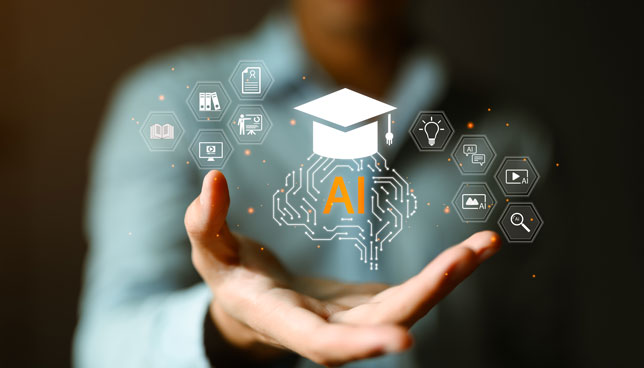
The emphasis on stackable credentials—shorter, focused qualifications that can build towards a larger degree—provides flexibility and immediate employability. Hands-on learning experiences, internships, and partnerships with industry leaders ensure that students gain real-world exposure and practical competencies. By aligning programs directly with industry demands, institutions like DeVry aim to prepare students not just for their next job, but for a lifetime of opportunity, fostering a mindset of continuous growth and adaptability.
Individual Agency: Building a Personal Learning Ecosystem
While employers and educators bear significant responsibility, the onus also falls on individuals to take proactive steps in their own development. Lifelong learning isn’t a one-time event; it’s a continuous commitment to growth, adaptability, and relevance. On a day-to-day level, this involves cultivating several critical habits:
- Staying adaptable: Being open to new ideas, technologies, and ways of working.
- Anticipating what’s next: Actively monitoring industry trends, technological advancements, and shifts in market demand.
- Viewing every experience as a learning opportunity: Extracting lessons from successes, failures, and even routine tasks.
- Preparing intentionally: Setting clear personal learning goals, seeking out relevant resources, and dedicating time for skill development.
In a world shaped by rapid technological change and shifting economic forces, staying curious and committed to learning is the most powerful way to stay prepared. Building a personal learning ecosystem—a network of resources, mentors, and practices—empowers individuals to navigate career transitions with confidence and capitalize on emerging opportunities. This proactive stance ensures personal resilience and positions individuals as valuable assets in any organization.
Conclusion: A Shared Vision for a Future-Ready Workforce
The "silent standoff" between employers and workers regarding upskilling is a critical challenge in the modern talent economy, as highlighted by the DeVry University and Reputation Leaders study. However, it also presents an opportunity for transformative collaboration. By acknowledging the shared value of education, fostering open dialogue, and creating clear, accessible learning pathways, both parties can move beyond the current impasse. Employers must invest strategically, communicate effectively, and cultivate a culture that champions continuous learning. Workers must take ownership of their professional development, actively seek opportunities, and embrace a mindset of perpetual growth. The integration of durable skills with cutting-edge technical competencies, supported by innovative educational models, will be instrumental in building a future-ready workforce capable of thriving amidst unrelenting change. The prosperity of individuals, organizations, and national economies hinges on breaking this stalemate and forging a shared vision for lifelong learning.