


The successful splashdown of the Artemis II mission in the Pacific Ocean marks a transformative moment in human spaceflight, signaling the end of a ten-day journey that pushed the boundaries of crewed exploration. Commander Reid Wiseman, pilot Victor Glover, and mission specialists Christina Koch and Jeremy Hansen returned to Earth after a historic flight that took them further from our planet than any humans in history. While the mission was a rigorous test of the Space Launch System (SLS) and the Orion spacecraft, it also provided a platform for scientific observation and educational outreach, including captivating demonstrations of fluid dynamics in a microgravity environment. These moments, ranging from the playful observation of floating water spheres to the technical troubleshooting of spacecraft systems, offer a comprehensive look at the challenges and triumphs of modern lunar exploration.
The Fluid Mechanics of Zero Gravity
Among the most visually striking moments shared by the crew was a demonstration of how water behaves in the absence of gravitational pull. In a video released by NASA, astronauts Wiseman, Koch, and Hansen were seen observing a large, shimmering sphere of water suspended in the center of the Orion cabin. In the microgravity environment of space, the lack of a downward force allows surface tension to become the dominant physical driver, pulling the liquid into a near-perfect sphere. This phenomenon occurs because a sphere represents the smallest surface area for a given volume, a state of "minimal surface" energy that the water naturally seeks.
The optical properties of these floating spheres provided a live physics lesson for audiences on Earth. As light passes through the water, it undergoes refraction, bending the light rays and creating a distorted, inverted image of the surroundings. This effect transforms the water bubble into a natural wide-angle lens. Retired NASA astronaut Karen Nyberg has previously noted that such demonstrations are more than just entertainment; they serve as a fundamental reminder of how physical laws manifest differently when the constant of Earth’s gravity is removed.
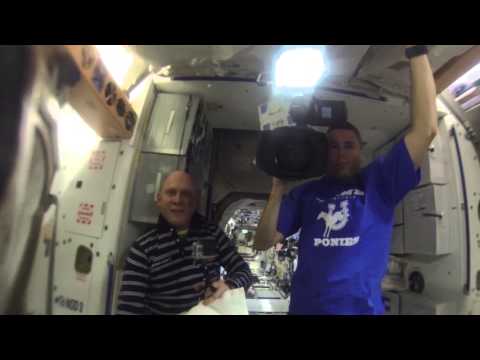
Commander Reid Wiseman is particularly familiar with these experiments, having conducted similar studies during his 2014 mission to the International Space Station (ISS). During that expedition, crew members went as far as inserting a waterproof GoPro camera into a large water bubble to capture a "water’s-eye view" of the station. The Artemis II observations build upon this legacy, providing data on how fluids behave in the specific vibrational and atmospheric conditions of the Orion capsule, which is essential for designing future life-support and fuel-management systems.

Breaking Historical Records: Beyond Apollo 13
The Artemis II mission was not merely a repeat of 20th-century lunar voyages but an expansion of human reach. By following a "hybrid free-return trajectory," the Orion spacecraft utilized the Moon’s gravity to slingshot the crew back toward Earth. This path took the four astronauts significantly further than the 400,171 kilometers (248,655 miles) achieved by the crew of Apollo 13 in 1970. While Apollo 13’s record was the result of an emergency maneuver to save the lives of the crew, Artemis II’s record-setting distance was a planned objective designed to test the communication and navigation systems of the Deep Space Network at extreme ranges.
During their time on the far side of the Moon, the crew captured high-resolution imagery of the lunar surface, focusing on regions that are perpetually hidden from Earth. These photographs provide geologists with new perspectives on cratering patterns and the composition of the lunar highlands. The mission also served as a critical test for the Orion spacecraft’s heat shield, which had to endure temperatures of approximately 5,000 degrees Fahrenheit (2,760 degrees Celsius) during its high-speed re-entry into Earth’s atmosphere—roughly 40,000 kilometers per hour.
The Human Element: Life Inside the Orion Capsule
Living and working in a space roughly the size of a small SUV for ten days presented unique logistical challenges for the Artemis II crew. Beyond the high-level scientific objectives, the astronauts had to navigate the mundane realities of deep-space life. This included troubleshooting the spacecraft’s waste management system, a task that required technical ingenuity and patience. NASA officials noted that the "toilet troubles" experienced during the mission provided invaluable data for engineers who are currently refining the designs for the long-duration missions planned for the future Moon Base and eventual Mars expeditions.
Dietary habits also became a point of interest for the public. The crew reportedly consumed a significant amount of hot sauce, a common occurrence in space. In microgravity, fluids in the human body shift toward the head, causing nasal congestion and a diminished sense of taste. Strong flavors and spicy condiments are often the only way for astronauts to enjoy their meals and maintain the caloric intake necessary for high-stress operations. These human-interest details highlight the physiological adaptations required for deep-space travel, bridging the gap between cold science and the lived experience of the explorers.
A Chronology of the Artemis II Mission
The mission followed a precise timeline designed to validate every system required for the upcoming Artemis III lunar landing:
- Launch and Earth Orbit: The SLS rocket delivered the Orion spacecraft into a high Earth orbit. The crew spent the first 24 hours performing "proximity operations," practicing manual piloting and docking maneuvers to ensure they could take control of the craft if automated systems failed.
- Trans-Lunar Injection: Once systems were verified, the spacecraft performed a burn that sent it toward the Moon. This phase tested the life support systems in the harsh radiation environment beyond the Van Allen belts.
- Lunar Flyby: The crew swung around the far side of the Moon, reaching their maximum distance from Earth. This was the period of peak scientific observation and photography.
- The Return Journey: Utilizing the Moon’s gravity, Orion began its four-day trek back to Earth. It was during this phase that the crew conducted many of their microgravity physics demonstrations and engaged in live broadcasts with schools across the globe.
- Re-entry and Splashdown: The crew module separated from the service module, entered the atmosphere, and deployed a series of parachutes to slow its descent before splashing down in the Pacific Ocean, where they were recovered by the USS John P. Murtha.
Strategic Implications and Official Responses
The success of Artemis II is viewed by NASA as the definitive "green light" for the next phase of lunar exploration. NASA Administrator Bill Nelson praised the crew’s performance, stating that their journey represents the "opening of a new era of discovery." The mission was also a landmark for international cooperation. Jeremy Hansen’s participation marked the first time a non-American has traveled beyond Low Earth Orbit (LEO), a result of the partnership between NASA and the Canadian Space Agency (CSA).
"This mission proves that the Artemis architecture is sound," said a senior NASA flight director during a post-splashdown briefing. "We have the rocket, we have the capsule, and most importantly, we have the team. Every challenge the crew faced, from sensor anomalies to plumbing issues, was handled with the professionalism that defines this program."
The data gathered during Artemis II will now be meticulously analyzed to prepare for Artemis III, which aims to land the first woman and the first person of color on the lunar surface. The mission also provided critical testing for the Gateway, a planned lunar-orbiting space station that will serve as a staging ground for Mars.
Broader Impact on Future Exploration
The implications of Artemis II extend far beyond the immediate return of the four astronauts. By proving that the Orion spacecraft can sustain a crew in deep space for extended periods, NASA has moved closer to establishing a permanent human presence on the Moon. The mission’s focus on both high-level physics and everyday survival illustrates the dual nature of space exploration: it is a pursuit of profound scientific truths and a practical exercise in extreme engineering.
As NASA looks toward the late 2020s, the lessons of Artemis II will inform the development of more robust life-support systems, more efficient radiation shielding, and more intuitive spacecraft interfaces. The images of water spheres and lunar craters captured by Wiseman, Koch, Glover, and Hansen will likely serve as the primary inspiration for the next generation of scientists and engineers who will eventually build the first outposts on the lunar south pole. Through a combination of rigorous testing and moments of scientific wonder, Artemis II has successfully paved the road back to the Moon and beyond.