



The fundamental human inclination to visualize complex ideas for clearer understanding finds a potent, evidence-backed ally in concept mapping. This intuitive practice, often employed spontaneously when explaining intricate subjects, is now being rigorously championed by cognitive scientists as a highly effective pedagogical strategy. Recent insights, particularly those highlighted in the book Smart Teaching Stronger Learning: Practical Tips from 10 Cognitive Scientists, underscore the profound impact concept maps can have on knowledge acquisition and retention. Dr. Kripa Sundar, a leading cognitive scientist specializing in concept mapping, and Dr. Pooja Agarwal, the book’s editor, have brought renewed attention to this unassuming yet powerful learning technique, advocating for its widespread adoption in educational settings.
Concept maps, often interchangeably referred to as mind maps or spider maps, serve as graphic organizers that visually represent knowledge. They comprise key concepts encased in ‘nodes’ (typically boxes or bubbles) interconnected by lines or arrows that articulate their relationships. While seemingly simple in their design and requiring minimal technological overhead, their efficacy in fostering deeper learning is supported by extensive research.
The Historical and Theoretical Foundations of Concept Mapping
The development of concept mapping can be traced back to the 1970s at Cornell University, spearheaded by Professor Joseph D. Novak. His work was rooted in David Ausubel’s assimilation theory, which posits that learning occurs most effectively when new concepts are linked to existing knowledge structures in a meaningful way. Novak and his team developed concept mapping as a tool to help students and researchers externalize their understanding, making their cognitive structures visible. This method allowed educators to assess not just what students knew, but how they understood the relationships between different pieces of information.

Over the decades, concept mapping evolved from a research tool into a widely recognized pedagogical strategy. Its adaptability across various disciplines and educational levels, from primary school to advanced professional training, has solidified its position as a versatile learning aid. The core principle remains consistent: by visually organizing information, learners engage in active construction of knowledge, moving beyond rote memorization to a more profound, integrated understanding.
The Cognitive Science Behind Concept Map Efficacy
Dr. Kripa Sundar emphasizes that concept maps are a "packed strategy," engaging multiple cognitive processes simultaneously. Her contributions to Smart Teaching Stronger Learning and an article for the American Federation of Teachers (AFT) cite multiple meta-analyses that robustly support the effectiveness of concept maps, often demonstrating a greater impact on learning outcomes compared to traditional methods such as lectures, discussions, or simple text summaries.
The profound effectiveness of concept maps can be attributed to their engagement with all three critical stages of memory formation: encoding, storage, and retrieval.
- Encoding: When learners create a concept map, they are actively processing information, identifying key concepts, and determining relationships. This active engagement during encoding makes the information more salient and memorable. The act of summarizing complex ideas into concise nodes and articulating links forces deep semantic processing, which is far more effective than passive reading or listening.
- Storage: The visual and hierarchical nature of concept maps facilitates the organization of knowledge into coherent mental models. By creating a structured representation, learners build a robust framework in long-term memory. This organizational structure aids in the efficient storage of information, making it less prone to decay and more readily accessible. The spatial arrangement inherent in concept maps leverages the brain’s capacity for visual-spatial memory, adding another dimension to storage.
- Retrieval: Concept maps inherently act as powerful retrieval practice tools. When learners revisit a map, or attempt to recreate one, they are actively pulling information from memory. The interconnectedness of concepts means that recalling one piece of information can trigger the recall of related concepts, strengthening neural pathways and improving future retrieval. This aspect aligns with the "testing effect," where retrieval practice itself is a potent learning event.
Beyond the memory formation model, concept maps tap into other well-established cognitive principles:
- Dual Coding Theory: Proposed by Allan Paivio, this theory suggests that information is better remembered if it is presented and processed in both verbal and visual forms. Concept maps inherently combine textual nodes (verbal) with spatial arrangement and connecting lines (visual), thus leveraging both cognitive channels.
- Elaboration Theory: Creating links between concepts and labeling these links with descriptive phrases forces learners to elaborate on their understanding, connecting new information with existing knowledge and creating a richer, more interconnected schema. This active elaboration deepens comprehension and memory.
- Metacognition: The process of constructing a concept map requires learners to think about their own thinking. They must reflect on what they know, what they don’t know, and how different ideas fit together. This metacognitive engagement fosters self-regulation and a deeper awareness of one’s learning process.
Best Practices for Maximizing Concept Map Effectiveness
While the intrinsic benefits of concept maps are significant, Dr. Sundar outlines several best practices that can further amplify their learning potential. These guidelines ensure that concept mapping transitions from a mere activity to a highly strategic educational intervention.
-
Be Clear About Your Motivation: Before embarking on concept mapping, educators and learners must establish a clear purpose. As Dr. Sundar states, "the first question is why?" Concept maps can serve diverse instructional goals:
- Group Activities: Fostering collaborative learning and shared understanding.
- Whole Class Activities: Facilitating collective knowledge construction and identifying common misconceptions.
- Individual Learning/Note-taking: Personalizing understanding and organizing complex information.
- Formative or Summative Assessment: Gauging comprehension and identifying areas for further instruction.
Defining the objective guides the map’s scope, complexity, and expected outcomes.
-
Have a Guiding Question: A well-defined guiding question is paramount for focusing the concept map and preventing cognitive overload. Without a specific inquiry, learners might attempt to include every conceivable detail, leading to a sprawling, unmanageable map that obscures clarity rather than enhancing it.
Dr. Sundar illustrates this with examples related to ocean acidification. A guiding question like "What is the relationship between driving a car and ocean acidification?" leads to a relatively contained map, tracing a specific causal chain. Conversely, "What is the relationship between human activities and ocean acidification?" necessitates a far more complex and expansive map, encompassing multiple contributing factors and their intricate interdependencies. The specificity of the question directly influences the map’s depth and breadth, making it a powerful tool for differentiated instruction and focused inquiry. -
Use Linking Words: A critical distinction between a simple diagram and a powerful concept map lies in the explicit labeling of connecting lines with "linking words" or "linking phrases." These labels describe the precise relationship between the connected concepts, transforming mere connections into meaningful propositions.
While adding these linking words demands greater cognitive effort, Dr. Sundar emphasizes that this "pain in the beep" is precisely what drives deeper learning. It forces learners to articulate how concepts relate, rather than simply acknowledging that they do. For instance, instead of just drawing a line between "Car Emissions" and "Carbon Dioxide," a linking phrase might be "produce" or "release." This act of explicit articulation strengthens semantic networks, promotes critical thinking, and clarifies potential ambiguities in understanding. The directional arrows further enhance clarity, indicating the flow of influence or causality.
Strategic Classroom Applications and Implementation
Concept maps are not just theoretical constructs; they offer practical, adaptable applications for educators seeking to enhance student learning across various stages of a unit.
-
Expert Maps for Unit Overviews: Teachers can create "expert maps" to provide students with a comprehensive visual representation of the key concepts and their relationships within an entire unit of study. These maps serve as invaluable reference tools, offering a "big picture" view from the outset.
Dr. Sundar highlights the benefit of expert maps in combating "concept map shock." Presenting an overly detailed map at the beginning can overwhelm students. Instead, teachers can introduce a simplified expert map featuring only the broadest, most foundational concepts. As the unit progresses, subsequent layers of detail can be gradually revealed, expanding the map to incorporate finer points and more complex relationships. This scaffolding approach allows students to build their understanding incrementally, consistently seeing how new information connects to the overarching structure. An expert map can also act as an advance organizer, preparing students’ minds for new information by activating relevant prior knowledge. -
Concept Maps for Enhanced Note-Taking: Traditional linear note-taking, while common, can often lead to lengthy, unstructured records that obscure the relationships between ideas. Concept maps offer a more efficient and effective alternative, allowing students to capture information in a visually organized manner.
Instead of writing extensive paragraphs, students can use nodes to represent key terms and linking words to define their connections, creating a concise yet comprehensive record. This method encourages active listening and synthesis during lectures or reading, as students must constantly distill information into its core components and identify relationships. Dr. Sundar suggests a simple yet effective approach: maintain a visible list of key terms (on a whiteboard, handout, or digital document) and periodically instruct students to construct a concept map from that list, illustrating how these concepts interrelate. This not only serves as a superior note-taking method but also acts as an ongoing formative assessment. -
Formative Assessment through Concept Mapping: Concept maps are exceptionally valuable as formative assessment tools. By asking students to create or complete a concept map, teachers gain immediate, rich insights into their understanding of content and their ability to connect ideas. Unlike multiple-choice questions, which might only test isolated facts, concept maps reveal the structure of a student’s knowledge.
A highly effective strategy involves providing students with a partially completed concept map and asking them to fill in the missing nodes or linking words. This targeted approach allows teachers to assess specific areas of understanding or identify particular misconceptions. Analyzing student-generated maps can reveal whether they grasp hierarchical relationships, causal links, or comparative connections. This diagnostic power enables teachers to tailor subsequent instruction, address gaps, and reinforce learning precisely where needed. For instance, if many students struggle to correctly link "photosynthesis" and "chlorophyll," it signals a need to revisit that specific relationship.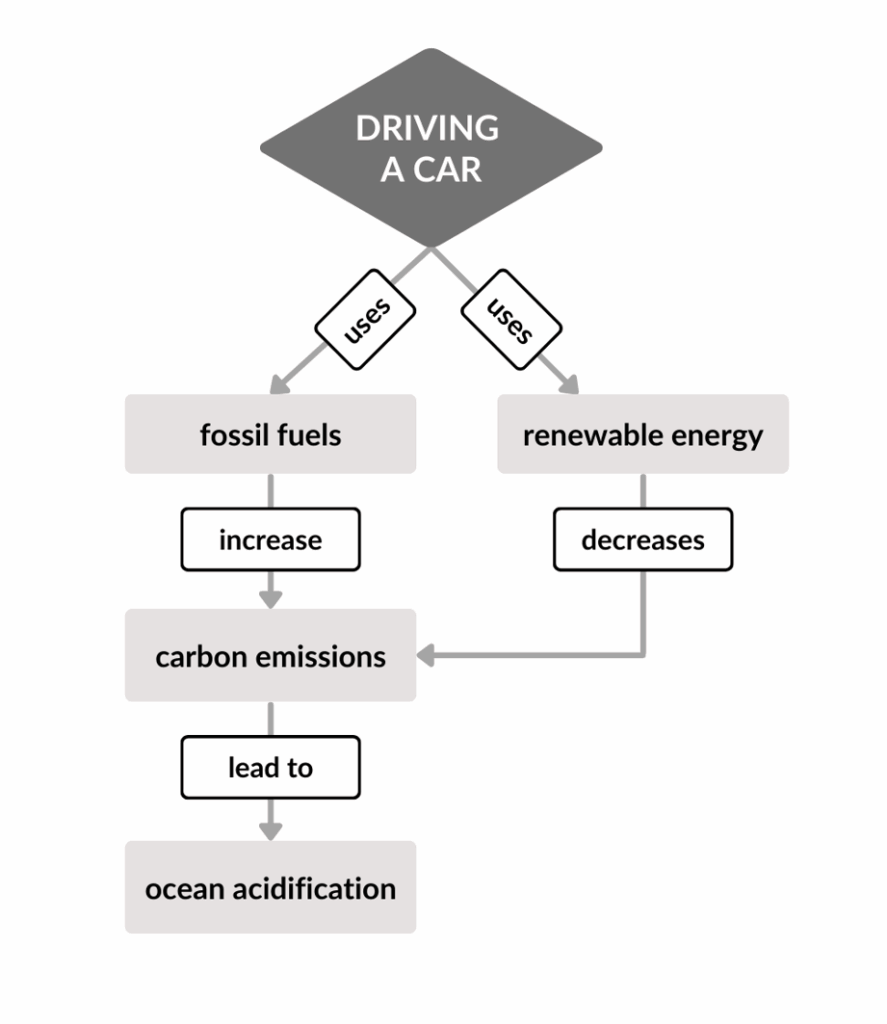
Broader Implications for Education
The renewed emphasis on concept mapping, driven by cognitive science, carries significant implications for the broader educational landscape.
- Curriculum Design: Integrating concept mapping into curriculum design encourages a focus on conceptual understanding rather than mere factual recall. Curricula could be structured around key guiding questions and core concepts, with concept maps serving as a central framework for units and topics.
- Teacher Professional Development: Equipping teachers with the knowledge and skills to effectively implement concept mapping is crucial. Training should cover not only the mechanics of creating maps but also the underlying cognitive science, best practices, and diverse classroom applications.
- Student Metacognitive Skills: Consistent use of concept maps fosters powerful metacognitive skills in students. They learn to self-monitor their understanding, identify gaps in their knowledge, and actively construct meaningful connections. These skills are transferable beyond specific subject matter, empowering students to become more independent and effective learners throughout their academic and professional lives.
- Assessment Diversification: Concept maps offer a valuable alternative or complement to traditional assessment methods. They provide a more holistic view of student comprehension, moving beyond surface-level recall to assess deeper conceptual understanding and the ability to synthesize information.
In an educational environment increasingly focused on critical thinking, problem-solving, and the synthesis of complex information, the strategic deployment of concept maps offers a clear, evidence-based pathway to achieving these goals. As cognitive scientists like Dr. Kripa Sundar and Dr. Pooja Agarwal continue to advocate for such practical, research-informed strategies, educators are provided with powerful tools to transform learning from passive reception to active, meaningful construction. The humble concept map, it turns out, is a cornerstone of robust, enduring understanding.