




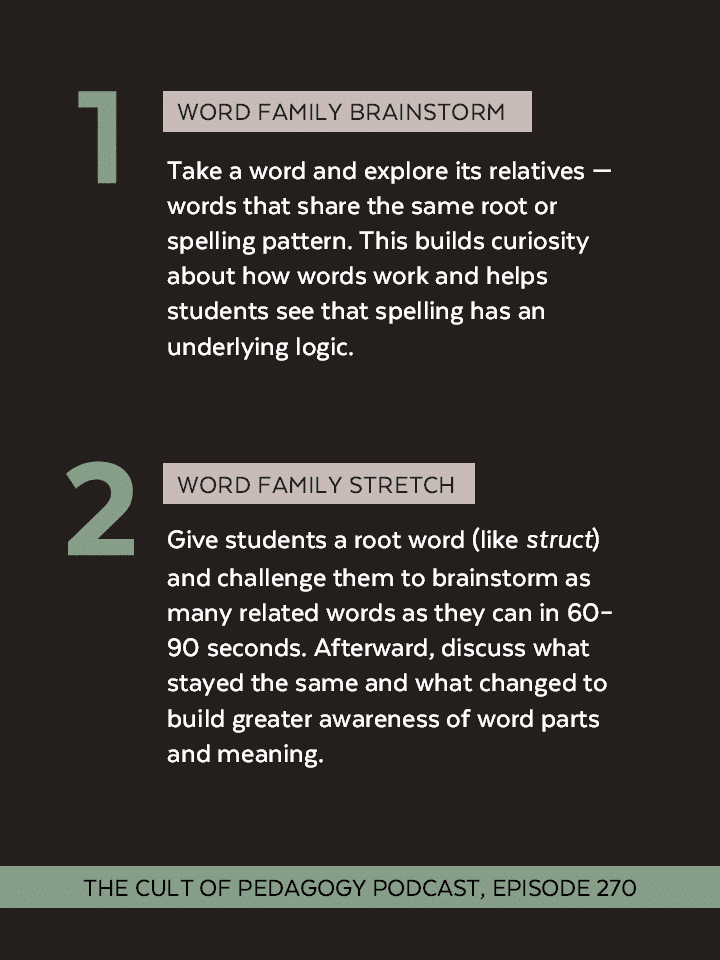
In a period marked by fervent discussions surrounding literacy education, a significant new publication is drawing attention to a long-neglected cornerstone of academic proficiency: writing instruction. While the national discourse has largely concentrated on reading skills, particularly phonics, fluency, and comprehension, the essential role of writing has often been relegated to the periphery. This glaring omission, despite the deep interdependence of reading and writing, is precisely what Melanie Meehan and Maggie Roberts aim to rectify with their recently published book, Foundational Skills for Writing: A Brain-Based Guide to Strengthen Executive Functions, Language, and Other Cornerstones for Writers.
Launched this month, the book emerges at a critical juncture in education, offering a comprehensive framework for understanding the intricate cognitive demands of writing and providing actionable strategies for educators. Meehan, a former curriculum coordinator who now spearheads her own in-person writing center, and Roberts, a seasoned literacy consultant and former middle school teacher with nearly two decades of classroom support experience, bring a wealth of practical expertise and theoretical insight to the subject. Their work seeks to bridge the gap between current literacy discussions and the undeniable need for robust writing pedagogy, exploring the complex interplay of brain functions involved in the act of putting thoughts on paper.

The Overlooked Pillar: Writing in the Literacy Landscape
For years, the "Science of Reading" movement has rightly emphasized explicit, systematic instruction in phonological awareness, phonics, vocabulary, fluency, and comprehension. This focus has led to significant advancements in understanding how children learn to read. However, the parallel "Science of Writing" has received comparatively less attention, creating an imbalance in literacy instruction. Data from national assessments consistently underscore the urgency of addressing this disparity. For instance, the National Assessment of Educational Progress (NAEP) often referred to as "the Nation’s Report Card," has repeatedly shown stagnant or declining writing scores among American students across various grade levels. The 2011 NAEP Writing Assessment (the last one publicly released for full analysis) revealed that only about a quarter of eighth and twelfth graders performed at or above the proficient level. This data paints a stark picture: many students are struggling to articulate their thoughts effectively in written form, a skill crucial not only for academic success but for participation in a knowledge-based economy and democratic society.
The intertwining nature of reading and writing is well-established in cognitive science. Both processes rely on shared underlying linguistic abilities, including phonological processing, vocabulary knowledge, and syntactic understanding. Reading involves decoding written symbols into meaning, while writing involves encoding meaning into written symbols. Strong writing skills reinforce reading comprehension by deepening students’ understanding of text structure, author’s craft, and the nuances of language. Conversely, extensive reading exposure enhances writing by providing models of effective communication and expanding vocabulary and grammatical structures. The neglect of writing instruction, therefore, represents a missed opportunity to foster a more holistic and effective approach to literacy development.
A Brain-Based Approach to Foundational Writing Skills
Meehan and Roberts’s Foundational Skills for Writing directly confronts this challenge by meticulously dissecting the multifaceted nature of writing. Their brain-based approach posits that proficient writing is not a singular skill but rather a complex orchestration of several interconnected foundational abilities. The authors categorize these into three primary areas:
- Transcription Skills: These are the mechanics of putting words on a page. They encompass handwriting, keyboarding proficiency, accurate spelling, and the underlying fine and gross motor development necessary for these tasks. When these skills are not automatized, they consume valuable cognitive resources, diverting attention from higher-order writing processes like idea generation and organization.
- Oral Language: Recognizing that written language is often a reflection of spoken language, the book emphasizes the importance of robust oral language skills as a precursor to effective writing. This includes the ability to construct grammatically correct sentences, express complex ideas verbally, and engage in active listening and speaking. Strong oral language provides the mental blueprint for written expression.
- Executive Functioning: Perhaps the most complex set of skills, executive functions are the cognitive processes that enable goal-directed behavior. In the context of writing, these include:
- Working Memory: The ability to hold and manipulate information in mind while writing (e.g., remembering assignment parameters, vocabulary, sentence structures).
- Cognitive Flexibility: The capacity to adapt strategies, consider alternative approaches, and revise thinking during the writing process.
- Inhibitory Control: The ability to resist distractions and suppress irrelevant thoughts or impulses, allowing writers to stay focused on their task.
- Planning and Organization: Structuring ideas, outlining, and sequencing thoughts logically.
- Self-Monitoring: Evaluating one’s own writing for clarity, coherence, and adherence to purpose.
The authors argue that for students to become proficient writers, they must systematically develop and practice all these skills. Their book provides educators with practical guidance on how to cultivate these foundational elements, thereby freeing up cognitive capacity for the more creative and analytical aspects of writing.

"Minute Moves": High-Impact, Low-Time Strategies
Central to Meehan and Roberts’s methodology is their concept of "Minute Moves" – a collection of brief, flexible activities designed to be easily integrated into daily classroom routines. These activities typically last only a couple of minutes and can be utilized as warm-ups, transitions between lessons, or even during routine moments like walking to lunch. The primary goal of "Minute Moves" is to help students automatize foundational skills, reducing the cognitive load associated with the mechanics of writing and allowing them to dedicate more mental energy to the deeper work of composing.
The authors shared eight illustrative "Minute Moves" from their book, categorized by the foundational skill they target:

Spelling Minute Moves
These activities aim to build students’ orthographic mapping, an essential cognitive process for fluent reading and spelling where words become instantly recognizable units.
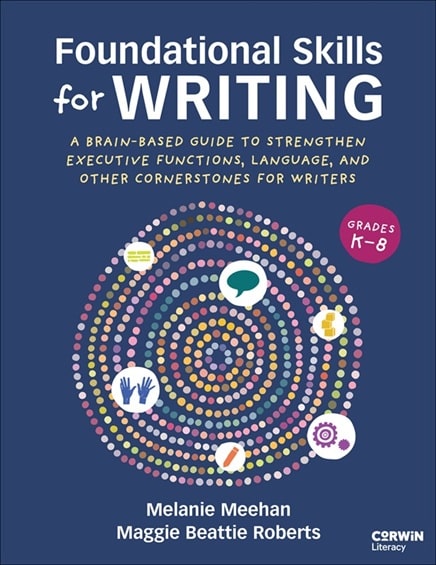
- Word Family Brainstorm: Inspired by spelling researcher Rebecca Treiman, this activity encourages students to explore the etymological connections between words. Instead of rote memorization, students are prompted to uncover "relatives" of a given word. For example, by exploring the connection between "two" (the number) and words like "twin," "twine," and "twenty," students can discern a pattern where the "TW" combination often relates to the concept of "twoness." This fosters curiosity and a deeper understanding of morphological relationships. Meehan recounts a student struggling with "decision," who then connected it to "decide," "incision," "concise," and even "scissors," all tracing back to a Latin root meaning "to cut." This revelation makes the spelling more logical and memorable.
- Word Family Stretch: A variation of the brainstorm, this activity involves giving students a root word, such as "struct" (meaning "to build"), and challenging them to brainstorm as many related words as possible within a 60-90 second timeframe. Examples include "structure," "destruction," "construct," "structural," "instruct," and "instruction." The crucial follow-up is a debriefing session where students discuss what remained constant and what changed in meaning with the addition of prefixes or suffixes. This process solidifies the understanding that word parts carry meaning, revealing consistent patterns across academic vocabulary. Roberts further distinguishes between "bound" roots (like "struct," which cannot stand alone) and "free" roots (like "form," which can stand alone or be part of "reform," "transform," etc.), deepening students’ grasp of word structure.
- Prefix Swap: Building on the previous activities, this minute move specifically focuses on prefixes. Students are given a base word, such as "form," and asked to generate variations by swapping out prefixes (e.g., "reform," "transform," "inform," "deform"). The exercise highlights how prefixes alter meaning, encouraging a systematic exploration of word construction. This strategy is particularly powerful for multilingual learners who may recognize prefixes like "bene" and "mal" from their native languages, providing a valuable bridge to English vocabulary. Meehan emphasizes that these three spelling activities collectively build crucial neurological pathways, enabling students to retrieve words effortlessly rather than constantly struggling.
Sentence Construction Minute Moves
These activities are designed to develop students’ syntactic awareness – their understanding of how words combine to form grammatically correct and meaningful sentences.
- Sentence Scramble: Students are presented with a sentence broken into individual words or phrases, often written on index cards. Their task is to reassemble the sentence. The tactile nature of physical cards allows for experimentation and manipulation. After students construct a sentence, teachers prompt reflection with questions like, "How did you determine the order?" "What clues did you use?" and "Which words had to stay together, and why?" The activity can be scaffolded by removing punctuation, introducing distractor words, or challenging students to extend the sentence. Roberts underscores that the goal is to cultivate an "internalized understanding of sentence patterns and sentence construction," which students can then apply to their own writing.
- Sentence Expander: This activity begins with a concise "kernel" sentence, such as "The cat purrs." Students then collaboratively expand it by answering a series of questions: "Which cat?" "What color?" "Where?" "When?" "Why?" Meehan prefers the terms "doer" and "doing" over "subject" and "predicate" for their accessibility, helping students identify the core action and agent. Once a sentence is fully expanded (e.g., "The orange cat is sleeping on the couch in the afternoon because he is tired"), students experiment with rearranging its components to create new variations. This playful exploration helps students develop the flexibility to craft richer, more complex sentences.
- Sentence Combining: Roberts describes sentence combining as a "high-impact, quick way for kids to graduate from writing a series of simple sentences to ones that are more syntactically complex, interesting, and precise." Students are given two or more short, basic sentences (e.g., "My cat is orange." and "My cat is big.") and challenged to combine them into a single, more sophisticated sentence ("My big orange cat…"). Scaffolding can involve underlining words to be "harvested" or encouraging the use of various conjunctions (e.g., "because," "and," "but") to alter meaning. Regular practice with sentence combining naturally leads students to merge choppy sentences into more fluid and refined prose in their independent writing.
Executive Functioning Minute Moves
These activities directly target cognitive flexibility, a key executive function vital for effective writing and critical thinking.
- What’s Another Way?: This minute move hones cognitive flexibility by challenging students to rewrite a given sentence in multiple ways. Prompts include: "What if you started with the dependent clause?" "What if you replaced the noun with a pronoun?" "What if you made it shorter?" Meehan highlights that effective writing isn’t solely about complexity; sometimes, a concise sentence carries more impact. The art of writing lies in the ability to intentionally vary sentence structure and length to achieve specific effects. Crucially, explicitly naming this skill as "cognitive flexibility" empowers students, especially those who struggle, by affirming that they are developing a sophisticated cognitive ability.
- New Angle: This strategy expands cognitive flexibility from the sentence level to the narrative level. Students are asked to retell a familiar scene from a book, a shared class text, or a short film from the perspective of a different character. Roberts vividly illustrates this with a personal anecdote: a cafeteria food fight she witnessed as a ninth grader would be recounted very differently through the eyes of the teacher who had applesauce spilled on her. This exercise requires students to hold multiple viewpoints simultaneously, make deliberate choices about voice, detail, and interpretation, and develop empathy. Meehan often uses short animated videos, such as Pixar’s "Snack Attack," which depicts the same event from two distinct perspectives. In one tutoring session, she and a student wrote contrasting character perspectives, then swapped and continued writing from the other’s viewpoint. This competitive yet collaborative activity not only sharpened writing skills but also fostered a deeper understanding of diverse perspectives, a skill Meehan rightly connects to "democracy and thinking about how other people think."
Implications and Broader Impact
The release of Foundational Skills for Writing marks a significant contribution to the ongoing dialogue about literacy education. By systematically addressing the often-overlooked components of writing, Meehan and Roberts offer a pragmatic and research-informed approach that can empower educators and transform student outcomes. The book’s emphasis on "Minute Moves" directly tackles a common challenge for teachers: integrating comprehensive writing instruction within already packed curricula. These brief, targeted interventions demonstrate that significant gains in foundational skills do not require extensive dedicated blocks of time, but rather consistent, strategic practice.
The implications extend beyond improved writing scores. Strong writing skills are inextricably linked to critical thinking, analytical reasoning, and effective communication—abilities essential for success in all academic disciplines and future careers. Furthermore, by explicitly linking writing instruction to executive functions, the authors provide educators with a language and framework to discuss cognitive processes with students, demystifying the act of writing and making it more accessible, especially for those with learning differences.
This book serves as a clarion call for a more balanced and integrated approach to literacy, urging educators to recognize writing not as a secondary skill to reading, but as an equally vital and mutually reinforcing component of comprehensive literacy development. As the national conversation around literacy continues to evolve, Foundational Skills for Writing offers a timely and indispensable guide for cultivating a new generation of proficient, confident, and cognitively flexible writers.