



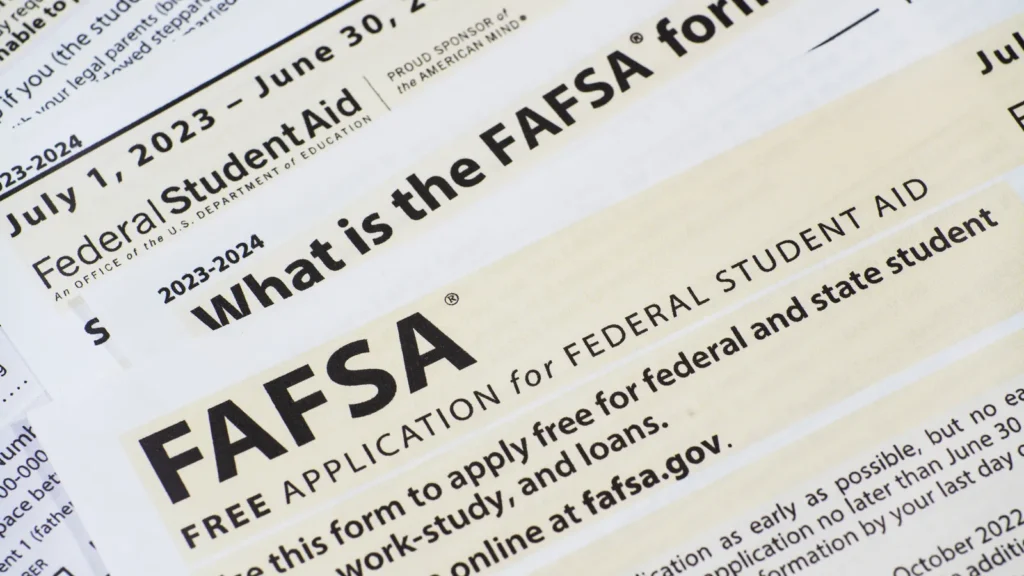
The National College Attainment Network (NCAN) has reported significant positive developments in Free Application for Federal Student Aid (FAFSA) completions for the graduating class of 2026, marking a substantial turnaround following a tumultuous rollout of the modernized form. Data indicates that FAFSA submissions are currently ahead in every U.S. state compared to the previous year, a testament to the ongoing improvements and increased familiarity with the redesigned application.
This positive trend represents a "remarkable, encouraging turnaround," as stated by NCAN. As of early May, the completion rate for the class of 2026 is a notable 7.4 percentage points higher than it was for the class of 2024. This improvement is particularly significant given the widespread issues and technical difficulties that plagued the initial launch of the FAFSA Simplification Act’s overhaul.
A Rocky Road to Simplification
The journey to a more streamlined FAFSA application has been a long and challenging one, marked by delays and persistent technical problems. The FAFSA Simplification Act, enacted by Congress in 2020, aimed to fundamentally restructure the federal student aid application process, which had not undergone a major overhaul in over four decades. The core objective was to reduce the complexity of applying for financial aid, thereby aiming to increase college access for a broader range of students, particularly those from low-income backgrounds.
However, the implementation of these ambitious reforms proved to be a significant hurdle. The new FAFSA form, originally slated for release in December 2023, experienced a considerable delay, ultimately becoming available much later in the application cycle than previous iterations. This late launch was compounded by a barrage of technical glitches and system failures that frustrated students, parents, and educational institutions alike. The chaotic rollout led to widespread confusion and anxiety among prospective college students attempting to secure vital financial aid for the upcoming academic year.
Official Scrutiny and Remediation Efforts
The severity of the FAFSA debacle did not go unnoticed. The U.S. Government Accountability Office (GAO) later released a critical report detailing significant shortcomings in the Department of Education’s management of the FAFSA redesign and rollout. The GAO’s findings pointed to a failure in effectively supervising third-party vendors, a lack of adherence to established procedures, and inadequate communication strategies with both students and colleges. This official indictment highlighted systemic issues within the department’s approach to such a critical educational initiative.

In response to the ongoing challenges, the Biden administration took steps to address the FAFSA program’s deficiencies. Aaron Lemon-Strauss, a seasoned product manager with prior experience at The College Board and Stride Inc., was brought on as a consultant in July 2024 to assist in rectifying the issues with the new FAFSA. He assumed leadership of the FAFSA program in December of the same year, bringing a wealth of experience in managing complex digital products and user-facing applications.
Lemon-Strauss acknowledged the difficulties encountered, referring to the initial implementation as experiencing "some rough patches." However, he also expressed optimism about the progress made. By February 2026, he reported that user satisfaction rates with the FAFSA application had surpassed 90%, and call center wait times had been reduced to under one minute. This stands in stark contrast to the peak of the FAFSA crisis in 2024, when, according to the GAO, nearly three-quarters of incoming calls went unanswered, underscoring the dramatic improvement in customer service and system stability.
Data Highlights Positive Trends and Geographic Successes
The data emerging from NCAN paints a compelling picture of the FAFSA form’s current success. The organization’s analysis reveals that FAFSA completions are not only higher overall but are also demonstrating robust growth across all U.S. states.

- Widespread Improvement: Every state is reporting an increase in FAFSA completions for the graduating class of 2026 compared to the previous year. This indicates a nationwide positive shift in the application process.
- Exceptional Growth States: In Alaska, Arizona, Florida, and New Mexico, FAFSA completion rates have surged by at least 20% year-over-year. These states are experiencing particularly significant gains, suggesting that the improvements to the FAFSA process are resonating effectively with students and families in these regions.
- Bridging the Gap: The current rate of completion is 7.4 percentage points higher than that observed for the class of 2024. This improvement is crucial for ensuring that more students, particularly those from underserved communities, can access the financial aid necessary to pursue higher education.
Contributing Factors to the Turnaround
Several key factors are believed to have contributed to the positive trajectory of FAFSA completions:
- Systemic Fixes and Enhancements: NCAN specifically credited the Department of Education’s Federal Student Aid office for its diligent work in implementing fixes and improvements to the FAFSA process. These efforts have addressed the technical vulnerabilities and user experience issues that plagued the initial launch.
- Instant Verification: A significant innovation highlighted by NCAN is the implementation of instant verification during the StudentAid.gov account creation process for most users with a Social Security Number. This feature dramatically accelerates the application process, allowing students, families, and counselors to move through this critical step much more quickly than the days it previously took, thereby removing a substantial barrier.
- Increased Familiarity and Established Procedures: With this being the third year under the new FAFSA process, a sense of familiarity has begun to develop. Standard operating procedures are now more firmly in place, and college access professionals, educators, and other supportive adults across the country are better equipped to guide students through FAFSA completion activities. This growing institutional knowledge and consistent approach are invaluable in ensuring successful application rates.
Broader Implications for College Access
The successful reform and subsequent improvement of the FAFSA application process carry significant implications for college access and affordability in the United States.
- Enhanced Equity: A simplified and accessible FAFSA is a critical tool for promoting equity in higher education. By reducing the bureaucratic hurdles, more students from diverse socioeconomic backgrounds are empowered to pursue post-secondary education, potentially narrowing achievement gaps and fostering a more diverse and skilled workforce.
- Economic Impact: Increased college enrollment, fueled by accessible financial aid, can have a positive ripple effect on the economy. A more educated populace generally leads to higher earning potential, greater consumer spending, and increased innovation.
- Institutional Support: Colleges and universities rely heavily on timely and accurate FAFSA data to award financial aid packages. The improved reliability of the FAFSA process allows institutions to better plan their financial aid budgets and provide timely support to enrolling students.
- Lessons Learned for Future Reforms: The FAFSA experience serves as a critical case study for future federal initiatives involving complex technological rollouts and large-scale policy changes. The challenges encountered and the subsequent improvements offer valuable lessons in project management, stakeholder communication, and iterative development for government agencies undertaking similar ambitious reforms.
The current positive momentum surrounding the FAFSA application signifies a crucial step forward after a period of considerable difficulty. As the system continues to stabilize and user familiarity grows, the FAFSA Simplification Act, despite its challenging inception, is beginning to fulfill its promise of making federal student aid more accessible and equitable for generations of aspiring college students. The ongoing collaboration between the Department of Education and organizations like NCAN will be vital in sustaining these gains and ensuring that the FAFSA remains a robust and effective gateway to higher education.