



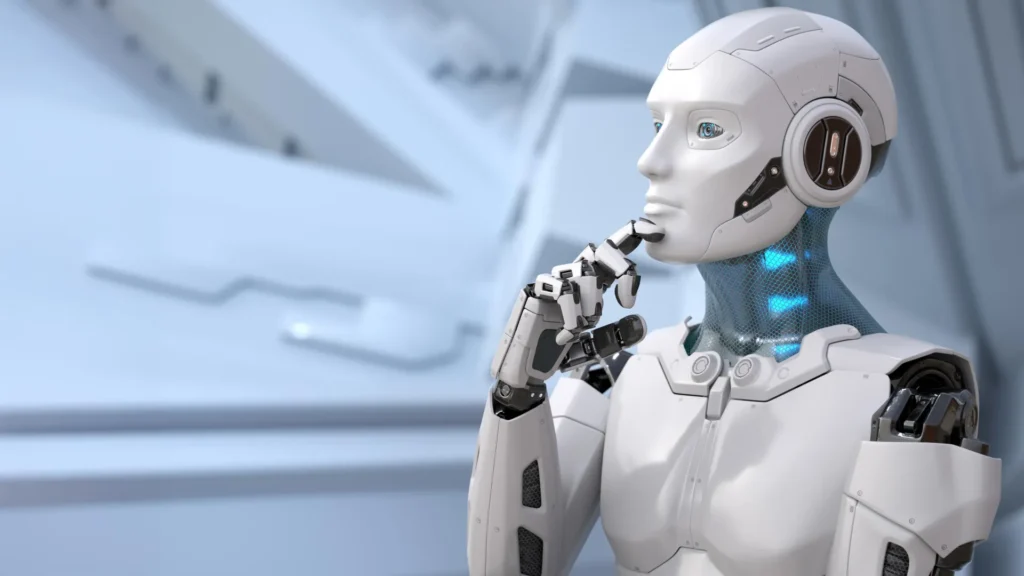
The ability to engage in internal dialogue, often perceived as a uniquely human trait, is now proving to be a powerful mechanism for artificial intelligence to learn and adapt more effectively. New research, published in the esteemed journal Neural Computation, reveals that AI systems trained to utilize a form of "inner speech" alongside short-term memory demonstrate significant performance improvements across a multitude of tasks. This breakthrough, spearheaded by researchers from the Okinawa Institute of Science and Technology (OIST), suggests a profound shift in how we approach AI development, moving beyond mere architectural design to encompass the dynamic internal interactions of a learning system. The findings underscore that the very process of learning for AI is intrinsically shaped not only by its inherent structure but also by the sophisticated ways it interacts with itself during its training phases, mirroring cognitive processes long studied in human psychology.
The Foundational Challenge of AI: Generalization and Adaptability
For decades, the pursuit of truly intelligent machines has been hampered by a critical bottleneck: the inability of AI to generalize knowledge beyond the specific datasets it was trained on. Modern deep learning models, while exhibiting superhuman performance in narrow domains like image recognition or game playing, often struggle with rapid task switching, adapting to unfamiliar situations, or applying learned rules to novel contexts without extensive retraining. This "brittleness" means that an AI trained to identify cats might fail spectacularly when presented with a dog it hasn’t seen before, or a robot programmed for one factory layout becomes useless in a slightly modified environment. This challenge is precisely what OIST’s Cognitive Neurorobotics Research Unit aims to address, drawing inspiration from the biological intelligence that allows humans and animals to navigate a complex, ever-changing world with remarkable flexibility.
Dr. Jeffrey Queißer, Staff Scientist and lead author of the study, articulates this gap, stating, "Rapid task switching and solving unfamiliar problems is something we humans do easily every day. But for AI, it’s much more challenging." He emphasizes the interdisciplinary nature of their approach, which blends insights from developmental neuroscience and psychology with cutting-edge machine learning and robotics. This synergistic methodology is crucial for uncovering novel ways to conceptualize learning and, consequently, to inform the future trajectory of AI development. The quest is not merely to build systems that excel at predefined tasks, but to create AI that can truly learn to learn, an attribute vital for real-world deployment in dynamic and unpredictable environments.
Unlocking Potential: The Synergy of Inner Speech and Working Memory
The OIST team’s innovative approach centered on integrating self-directed internal speech – colloquially described as quiet "mumbling" – with a specialized working memory system. Working memory, a concept central to human cognition, refers to the short-term capacity to hold and actively manipulate information for immediate use, whether it’s remembering a phone number just long enough to dial it or performing mental arithmetic. In AI, simulating this function allows models to temporarily store and process transient data, crucial for multi-step reasoning and problem-solving.
To rigorously test their hypothesis, the researchers began by meticulously examining various memory designs within AI models, focusing keenly on the architecture and function of working memory and its impact on generalization. They designed a series of tasks with varying levels of cognitive load and complexity. A key initial finding was that models equipped with multiple "working memory slots" – analogous to temporary containers for discrete pieces of information – consistently outperformed those with simpler memory structures, especially on challenging problems. These tasks often involved manipulating sequences, such as reversing a list of items or recreating intricate patterns, which demand the simultaneous retention and ordered processing of several data points. For instance, an AI asked to reverse a sequence like "A-B-C" would need to hold A, B, and C in memory, then recall them as "C-B-A," a non-trivial task for traditional AI without robust working memory.
The pivotal breakthrough occurred when the team introduced a mechanism that encouraged the AI system to engage in a specific number of internal "self-talk" iterations. This internal dialogue, effectively a structured process of self-interaction during training, led to further significant improvements in performance. The most pronounced gains were observed during multitasking scenarios and in tasks requiring numerous sequential steps. This suggests that the internal "mumbling" allowed the AI to better organize its temporary thoughts, prioritize information, and strategize its computational steps, much like a human silently rehearsing a complex problem.
Beyond Big Data: Efficiency and Sparse Learning
One of the most compelling aspects of this combined system is its remarkable efficiency. Dr. Queißer highlights this, stating, "Our combined system is particularly exciting because it can work with sparse data instead of the extensive data sets usually required to train such models for generalization. It provides a complementary, lightweight alternative." This addresses another significant challenge in AI development: the insatiable demand for massive datasets. Training large language models or sophisticated image recognition systems often requires petabytes of data, consuming immense computational resources and time. An AI that can learn effectively from "sparse data" – limited examples – has profound implications for democratizing AI development, reducing environmental impact, and enabling the creation of specialized AI in data-scarce domains like rare disease diagnosis or niche scientific research. This "lightweight alternative" paradigm could foster a new generation of AI that is not only more adaptable but also more sustainable and accessible.
A Deeper Dive into Content Agnostic Information Processing
The ultimate ambition behind this research is "content agnostic information processing." This principle refers to an AI’s capacity to apply learned skills and general rules to entirely new situations, rather than simply retrieving memorized examples. Imagine teaching a child the concept of "balance" using blocks. A child learns the underlying principle and can then apply it to riding a bicycle, walking on a beam, or even balancing a budget, without needing explicit training for each scenario. Current AI often struggles with this level of abstract generalization. It might be excellent at identifying specific objects but fails to grasp the underlying physics or logic that governs their interaction in novel contexts. By fostering internal dialogue and robust working memory, the OIST researchers are effectively equipping AI with a mechanism to construct and manipulate these abstract rules internally, making it less reliant on rote memorization and more capable of true understanding and adaptation. This represents a significant step towards achieving Artificial General Intelligence (AGI), where machines possess cognitive abilities akin to humans across a broad spectrum of tasks.
The Broader Implications and Future Trajectory
The implications of this research extend far beyond academic papers, promising to reshape various sectors and our daily lives.
1. Robotics and Autonomous Systems:
Perhaps the most immediate beneficiaries will be robotics and autonomous systems. Robots currently excel in highly structured environments, like assembly lines, where tasks are repetitive and predictable. However, deploying them in dynamic, unpredictable settings – such as homes, agricultural fields, or disaster zones – requires an unprecedented level of adaptability. An AI-powered robot capable of internal monologue and robust working memory could better interpret ambiguous sensor data, plan complex multi-step actions, and recover gracefully from unexpected failures. For example, a household robot encountering a misplaced object could use its "inner speech" to weigh options for navigating around it or moving it, rather than simply freezing or failing. Agricultural robots could adapt to varying terrain, crop conditions, and weather patterns without constant human intervention.
2. Scientific Discovery and Research:
AI’s ability to generalize and learn from sparse data could accelerate scientific discovery. Imagine an AI assisting in drug discovery, not just analyzing vast datasets of known compounds, but formulating novel hypotheses about molecular interactions based on limited experimental results, using its internal reasoning to explore uncharted chemical spaces. This could lead to breakthroughs in medicine, material science, and renewable energy.
3. Education and Training:
Personalized AI tutors could become far more effective. Instead of merely presenting pre-programmed lessons, an AI with enhanced cognitive capabilities could better understand a student’s learning style, identify misconceptions through internal analysis of their responses, and adapt its teaching strategies in real-time, providing truly individualized educational experiences.
4. Enhanced Human-AI Collaboration:
As AI becomes more adaptable and capable of nuanced internal processing, the nature of human-AI collaboration will evolve. AI assistants could become more proactive problem-solvers, anticipating needs and offering solutions based on a deeper, more generalized understanding of context, rather than just executing commands.
Looking ahead, the OIST team plans to move beyond the controlled environments of their laboratory experiments. Dr. Queißer outlines this crucial next step: "In the real world, we’re making decisions and solving problems in complex, noisy, dynamic environments. To better mirror human developmental learning, we need to account for these external factors." This involves introducing real-world complexities, such as sensory noise, unexpected disturbances, and incomplete information, into their training paradigms. This iterative process of bringing AI closer to the messy reality of human experience is essential for developing truly robust and generalizable intelligent systems.
This research also serves a higher purpose: deepening our understanding of human cognition itself. By constructing and analyzing AI models that mimic aspects of human learning, scientists gain invaluable insights into the underlying mechanisms of biological intelligence. "By exploring phenomena like inner speech, and understanding the mechanisms of such processes, we gain fundamental new insights into human biology and behavior," Dr. Queißer concludes. This symbiotic relationship between AI development and cognitive science promises to unravel some of the most enduring mysteries of the human mind, while simultaneously paving the way for a future where AI is not just smart, but truly intelligent and capable of navigating our complex world. The dawn of AI’s inner monologue marks a significant stride towards a future where machines learn, adapt, and reason with a flexibility that brings them ever closer to the sophisticated cognitive abilities of their human creators.