




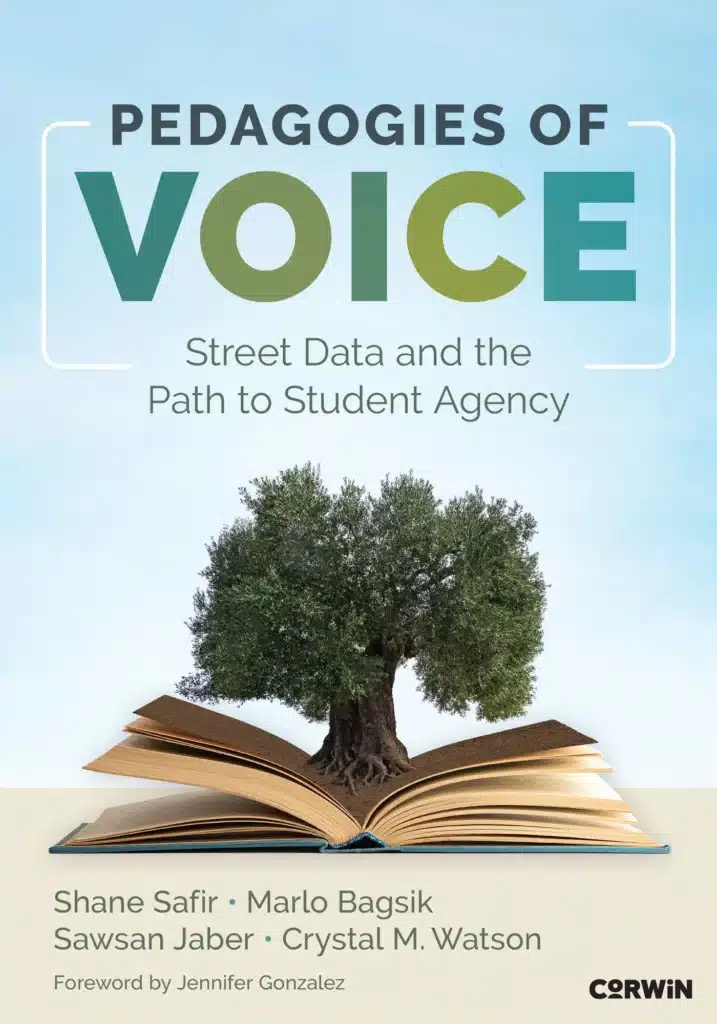
The United States education system faces a critical juncture, grappling with declining academic performance and escalating student disengagement. Despite persistent efforts to improve schools through standardized testing, top-down curricula, and metrics focused primarily on quantifiable outcomes, the human element—specifically, student voice—has become increasingly marginalized. This oversight has not only failed to significantly elevate test scores, as evidenced by recent National Assessment of Educational Progress (NAEP) data revealing record lows in reading scores, particularly for struggling students (Schwartz, 2025), but it has also contributed to a palpable decline in school climate. A 2025 survey indicated that nearly half of educators reported worse student behavior than before the pandemic, a troubling statistic that had grown significantly in just two years (Stephens, 2025). In this landscape of challenge, a new pedagogical movement, rooted in the "Street Data" philosophy, offers a compelling alternative: Pedagogies of Voice: Street Data and the Path to Student Agency, a new book co-authored by Shane Safir, Marlo Bagsik, Crystal Watson, and Sawsan Jaber, which champions the integration of student perspectives as the bedrock of meaningful school improvement.
The Genesis of "Street Data": A New Paradigm
The foundational concept for this shift originated four years prior with the publication of Street Data: A Pathway Toward Equitable, Anti-Racist Schools, co-authored by Shane Safir and Jamila Dugan. This seminal work introduced a revolutionary approach to school reform that diverged sharply from conventional, data-driven strategies. Instead of relying solely on "air data" – standardized test scores and other quantitative metrics that often fail to capture the nuances of student experience – Street Data advocated for "street data": qualitative insights gleaned from deep, empathetic listening sessions with students, particularly those at the margins whose voices are historically overlooked and whose needs are often unmet by the system.
The core premise of Street Data is iterative and human-centered. It involves engaging in "slow, thoughtful listening sessions" with students to understand their lived experiences, challenges, and aspirations within the school environment. From these rich qualitative insights, educators and leaders can collaboratively develop tailored solutions, pilot them in real-world settings, and then refine them through further feedback loops and listening sessions. This process stands in stark contrast to many expensive, externally imposed reform initiatives that often fail to resonate with the specific contexts and populations they aim to serve. The original vision was to empower schools to build solutions from the ground up, ensuring they are relevant, responsive, and truly equitable.
From Theory to Practice: The Evolution of the Movement
The potential of the Street Data methodology quickly garnered attention within educational circles. The initial introduction of the book led to its authors, Shane Safir and Jamila Dugan, being featured on episode 178 of a prominent educational podcast, where they delved into the philosophy and practical applications of their work. This early exposure generated significant interest among educators eager for innovative approaches.

Recognizing the need to demonstrate the methodology in action, a mini-documentary was subsequently produced, showcasing Safir and Dugan guiding two schools through the Street Data process. This visual narrative provided teachers and school leaders with an invaluable, up-close look at how the approach functioned in diverse educational settings, illustrating the nuances of conducting listening sessions, analyzing qualitative data, and co-creating solutions with students. A year later, this was followed by an eight-episode video series, further expanding on the practical implementation of Street Data. The participants from these initiatives shared their experiences on episode 203 of the podcast, offering firsthand accounts of the transformative impact on their schools and classrooms. This chronology of engagement underscored a growing momentum for student-centered reform.
As Street Data gained traction, a recurring question emerged from educators: how do these overarching principles translate into daily classroom practice? If schools commit to the Street Data process and aim to fundamentally shift their approach, what specific pedagogies should teachers adopt to genuinely center student voice and foster student agency? This critical question became the impetus for the new book, Pedagogies of Voice.
Addressing the Classroom Gap: "Pedagogies of Voice"
To bridge the gap between systemic reform and everyday classroom instruction, Shane Safir collaborated with three distinguished educators—Marlo Bagsik, Crystal Watson, and Sawsan Jaber—to co-author Pedagogies of Voice: Street Data and the Path to Student Agency. This book directly addresses the practical application of Street Data principles within the classroom, offering concrete strategies for teachers to embed student voice and agency into their pedagogical approaches.
The authors understand that effective implementation requires flexibility and adaptability rather than a rigid, one-size-fits-all curriculum. Consequently, the book is designed as a "seed store" of practices—a comprehensive collection of adaptable, replicable moves that educators can integrate into their teaching to cultivate student voice, nurture agency, and create spaces for profound and meaningful learning experiences. This approach acknowledges the diverse contexts of schools and classrooms, empowering teachers to select and adapt strategies that best suit their students’ needs and their educational environments.
A "Seed Store" for Empowerment: Core Domains and Practices
Pedagogies of Voice organizes its classroom practices around an "Agency framework" comprising four interconnected domains: Identity, Belonging, Inquiry, and Efficacy. This structured approach ensures that student agency is developed holistically, addressing various facets of a student’s educational experience.
Practices that Awaken Identity
This domain focuses on creating learning environments where every student feels seen, valued, and understood, enabling them to confidently assert, "My ways of being, knowing, and learning are valued here." The book emphasizes that validating students’ identities is crucial for their engagement and success. Sawsan Jaber highlights the power of "storientation," a method that leverages stories as a dynamic springboard for both learning and identity development. Storientation involves using personal narratives, cultural tales, historical accounts, or even fictional works to help students explore their own identities, connect with others, and understand diverse perspectives. For instance, an "identity mandala" exercise, as shared by Jaber, allows students to visually represent the various facets of their identity, such as family heritage, hobbies, values, and aspirations. These mandalas then serve as conversation starters, fostering self-reflection and mutual understanding among peers, and affirming the rich tapestry of experiences within the classroom. This practice moves beyond superficial demographic recognition to deep, authentic validation of each student’s unique self.
Practices that Awaken Belonging
The Belonging domain centers on practices that cultivate a sense of acceptance and connection for every student within the classroom community, ensuring they feel "seen and loved." Crystal Watson advocates strongly for "circling up," a deceptively simple yet profoundly impactful practice. By arranging classroom seats in a circle, educators physically alter the power dynamics and communication patterns within the room. As Watson explains, "When you circle up, you’re all equidistant from the center. At any given time, an identity, an idea, a person can be centered. We’re not centering one or two identities or thoughts or ideals. We can center them all at any given time in our time together." This arrangement fosters equitable participation, encourages active listening, and allows for fluid shifts in focus, ensuring that all voices have the opportunity to be heard.
Watson, whose work often involves math education, finds circling up particularly transformative in this subject area. She observes that many students develop an aversion to math because it’s often presented as a solitary, rote activity: "You just sit there and do problems. That’s the problem. It should be more conversational. Argumentation should be a part of the math classroom." Circling up facilitates rich mathematical discourse, allowing students to explain their reasoning, challenge assumptions, and collaboratively construct understanding, thereby transforming math from an isolating task into a shared intellectual journey.
Practices that Awaken Inquiry
The Inquiry domain is dedicated to empowering students to pose questions, critically examine information, and construct knowledge through increasingly complex processes. Shane Safir laments the diminishing role of inquiry in many learning environments, noting, "Inquiry has been stripped from the learning environments, so many places. The ability for young people to wrestle with big questions about the world, to be curious, to stay curious, to develop not just literacy, but critical literacy about text, about media, about the world." This domain offers strategies that reignite students’ natural curiosity, encouraging them to move beyond passive reception of information to active investigation. Practices here might include "question formulation technique" where students generate and refine their own questions about a topic, or "text wrestling" where they engage in deep, critical analysis of various texts to uncover underlying assumptions and biases. By fostering a culture of questioning, educators equip students with the tools to navigate a complex world and become lifelong learners.
Practices that Awaken Efficacy
The Efficacy domain focuses on cultivating learning spaces where every student believes in their capacity to effect positive change on issues that resonate with them. This is about moving from understanding to action. Marlo Bagsik shares two complementary practices that effectively "bookend" a week, creating a continuous cycle of reflection, goal-setting, and action. These practices instill a sense of purpose and demonstrate the tangible impact of student agency.
At the beginning of the week, students might engage in a "purpose-setting circle" where they articulate personal learning goals, identify areas where they want to make a difference, and collaboratively plan steps towards achieving these goals. This proactive engagement shifts students from being passive recipients of instruction to active architects of their learning journey. At the week’s end, a "reflection and action planning session" provides an opportunity for students to review their progress, share their learning, and critically assess the effectiveness of their actions. They might engage in peer feedback, revise their strategies, and plan next steps for continued engagement. This iterative process not only builds confidence but also teaches valuable lessons in project management, problem-solving, and resilience, demonstrating that their efforts can indeed lead to meaningful outcomes.
The Imperative of Student Voice in Challenging Times
Pedagogies of Voice arrives at a particularly crucial moment in education and society. The current climate in many parts of the country is marked by aggressive attempts to suppress marginalized voices, with widespread book bans, censorship of teachers, and broader threats to democratic principles. In this context, the book offers a powerful and timely directive for educators: to teach in ways that actively amplify student voice.
By creating classroom spaces where students are encouraged to reflect, articulate their thoughts, and act on their convictions, educators can foster critical democratic practices. These practices include not only active listening and respectful challenging of diverse opinions but also genuine collaboration and collective problem-solving. Empowering students in this manner is not merely an academic exercise; it is a vital act of civic preparation. Students who learn to voice their perspectives, engage in constructive dialogue, and work together for common goals are precisely the kind of individuals who will be equipped to navigate, challenge, and ultimately reshape the world for the better.
The implications extend beyond individual classrooms. A system that consistently marginalizes student voices risks alienating an entire generation, leading to disengagement and a lack of civic participation. Conversely, schools that prioritize student agency cultivate active, engaged citizens who are prepared to defend democratic values and contribute meaningfully to their communities. This approach serves as a potent counter-narrative to the current trends of educational curtailment and ideological suppression, advocating for an education system that truly prepares students for a complex and evolving world.
Implications for Educational Reform and Policy
The principles and practices outlined in Pedagogies of Voice carry significant implications for broader educational reform and policy. If widely adopted, this approach could fundamentally alter how curriculum is designed, how teacher professional development is structured, and how school success is measured. Instead of focusing solely on standardized test scores, policies could shift to value qualitative measures of student engagement, social-emotional learning, and civic competence. Teacher training programs could integrate modules on facilitating student-led inquiry, dialogue, and action planning. School leaders might be encouraged to implement "street data" collection at the institutional level, ensuring that student perspectives inform strategic planning and resource allocation. Ultimately, Pedagogies of Voice advocates for a paradigm shift, urging a move away from an industrial model of education towards one that is deeply human-centered, democratic, and truly empowering for every learner.