


The landscape of corporate learning and development (L&D) is undergoing a profound transformation, driven by visionary leaders who are redefining its role from a supportive function to a strategic imperative. In a recent interview, a prominent Chief Learning Officer (CLO) shared insights into their journey, the innovative initiatives they have championed, and their perspective on the future of workplace learning. This discussion, part of ChiefLearningOfficer.com‘s ongoing "Learning Insights" series, highlights a paradigm shift in how organizations approach employee growth, performance enhancement, and ultimately, business success.
The Genesis of a Learning Leader: From Motivation to Strategy
The CLO’s initial attraction to the field of L&D stemmed from a deep-seated motivation to empower individuals and elevate their performance. "I was drawn to L&D because I’ve always been motivated by helping people grow and perform better," the CLO stated. This intrinsic drive has guided their career trajectory, evolving from the tactical design of training programs to a more strategic leadership role. "Over time, my role has evolved from designing training to shaping strategy connecting learning directly to performance, engagement and business outcomes." This evolution reflects a broader industry trend where L&D professionals are increasingly expected to demonstrate tangible business impact, moving beyond simply delivering courses to orchestrating comprehensive learning ecosystems.
This shift in focus is not merely philosophical; it is a response to the growing demand for demonstrable ROI in all corporate functions. In an era where data analytics and performance metrics are paramount, L&D departments are under pressure to prove their value. The CLO’s journey exemplifies this transition, underscoring the necessity for learning leaders to possess a strong understanding of business objectives and to align their strategies accordingly.
Building a Performance Ecosystem: Key Initiatives for Growth
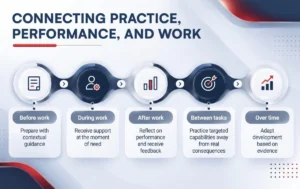
A cornerstone of the CLO’s success lies in their strategic overhaul of L&D from a series of disconnected training events to an integrated performance ecosystem. This approach emphasizes embedding learning into the fabric of daily operations, ensuring that development is not an afterthought but a continuous process. "I’ve shifted L&D from isolated training events to an integrated performance ecosystem," the CLO explained.
Key initiatives that have been instrumental in this transformation include:
- Standardized Onboarding: Implementing consistent onboarding processes across all roles and geographical locations ensures a uniform and effective introduction for new employees. This not only streamlines the integration process but also sets a baseline for performance expectations from day one. A well-structured onboarding program can significantly reduce the time it takes for new hires to become fully productive, a critical factor in talent retention and operational efficiency. Research from the Brandon Hall Group indicates that companies with a strong onboarding process improve new hire retention by 82% and productivity by over 70%.
- Competency-Based Leadership Development: The CLO’s focus on leadership development is directly tied to real-world competencies. This ensures that leadership training is practical, relevant, and equips managers with the skills needed to effectively lead teams and drive business results. Instead of generic leadership modules, programs are tailored to address specific challenges and opportunities within the organization.
- Embedding Learning into Operational Systems: A critical aspect of the integrated ecosystem is making learning accessible and actionable within the systems employees use daily. This might involve in-app guidance, performance support tools, or microlearning modules delivered at the point of need. This approach minimizes disruption to workflow and promotes just-in-time learning.
- Data-Driven Decision Making: The CLO leverages key performance indicators (KPIs) to guide L&D strategy and measure impact. Metrics such as "time to competency," "Top Box scores" (referring to customer satisfaction ratings), and productivity metrics are used to inform program design, resource allocation, and demonstrate the value of learning initiatives. This data-centric approach ensures accountability and allows for continuous improvement.
The overarching goal of these initiatives is to foster consistency, drive accountability, and make development an inherent part of how work is accomplished. This holistic view of learning moves beyond the traditional classroom setting to create an environment where continuous growth is the norm.
The Impact of Redesigned Onboarding and Performance Programs
When asked about the most impactful learning program introduced, the CLO pointed to their redesigned onboarding and front-line performance programs. The results have been demonstrably significant. "By rethinking how we train systems, service and leadership behaviors, we reduced time to competency by more than 60 percent, improved guest experience Top Box scores and saved significant training labor costs."
This dramatic reduction in time to competency means that new employees are contributing to the business at a much faster rate. Improved guest experience Top Box scores directly translate to enhanced customer satisfaction and loyalty, a critical driver of revenue and brand reputation. Furthermore, the efficiency gains realized through these redesigned programs have led to substantial savings in training labor costs, freeing up resources for other strategic investments.
Beyond the quantifiable metrics, the human impact is equally profound. "More important, new hires leave onboarding confident, capable and ready to perform – not just ‘trained.’" This sentiment highlights a crucial distinction: effective learning programs not only impart knowledge and skills but also instill confidence and a sense of readiness, empowering employees to excel in their roles from the outset. This psychological aspect of learning is often overlooked but is vital for long-term engagement and success.
Addressing Misconceptions: L&D as a Strategic Partner, Not a Cost Center
A persistent misconception within the corporate world is that the L&D function is merely a cost center or an "order-taker," fulfilling requests for training without strategic input. The CLO actively combats this perception by leading with a data-driven approach focused on business problems and outcomes. "That L&D is a cost center or an order-taker. I address it by leading with data, business problems and outcomes," they explained.
This proactive stance reframes L&D as a strategic partner, essential for achieving organizational goals. The CLO’s philosophy is clear: "If learning doesn’t move a metric, it doesn’t matter." This principle underscores the importance of aligning learning initiatives with measurable business objectives, such as increasing sales, reducing errors, improving customer satisfaction, or enhancing employee retention. By demonstrating this direct link between learning and business results, L&D professionals can elevate their function from a support role to a driver of organizational success.
This shift requires L&D leaders to possess strong business acumen, understand the financial drivers of the organization, and be able to articulate the value proposition of learning in terms that resonate with senior leadership. The ability to translate learning outcomes into tangible business benefits is paramount in dispelling the "cost center" myth.
The Future of Workplace Learning: Personalization, AI, and Performance Support
The CLO expresses significant excitement about the future of workplace learning, particularly the convergence of personalization, artificial intelligence (AI), and performance support. "The shift toward personalization, AI and performance support excites me most."
- Personalization: The days of one-size-fits-all learning are rapidly fading. Future learning will be tailored to individual needs, learning styles, career aspirations, and current skill gaps. This hyper-personalization can be achieved through adaptive learning platforms and AI-driven recommendations.
- Artificial Intelligence (AI): AI is poised to revolutionize L&D by automating tasks, providing intelligent insights into learning effectiveness, and delivering personalized learning experiences. AI-powered chatbots can offer instant support, while AI analytics can identify trends and predict future learning needs. The potential for AI to enhance learning efficiency and effectiveness is immense, with some estimates suggesting that AI could automate up to 30% of L&D tasks within the next five years.
- Performance Support: This refers to providing employees with the information and resources they need precisely when they need them, directly within their workflow. This can include job aids, checklists, embedded microlearning, and just-in-time coaching. Performance support is crucial for ensuring that learning is applied effectively on the job.
To prepare for this evolving landscape, the CLO’s organization is actively experimenting with new technologies and methodologies. "We’re preparing by experimenting early, upskilling our team and designing learning that fits into the flow of work, not around it." This forward-thinking approach ensures that the organization remains agile and responsive to the changing demands of the modern workforce.
Essential Qualities of a Successful L&D Leader
The CLO identifies three essential qualities for successful L&D leaders: business acumen, courage, and curiosity.
- Business Acumen: A deep understanding of the organization’s business strategy, financial goals, and operational challenges is critical. This allows L&D leaders to align learning initiatives with overarching business objectives.
- Courage: This involves the willingness to challenge the status quo, make difficult decisions, and advocate for innovative approaches, even when faced with resistance. It also means being honest about what works and what doesn’t, fostering transparency and accountability.
- Curiosity: A perpetual desire to learn, explore new ideas, and understand different perspectives is vital for staying ahead in a rapidly changing field. This curiosity fuels innovation and drives continuous improvement.
The CLO actively cultivates these traits within themselves and their team by maintaining close ties to operational teams, fostering an environment of open feedback, and encouraging critical thinking. "I cultivate those by staying close to operations, being honest about what works and what doesn’t, and encouraging my team to challenge assumptions – including mine."
Game-Changing Advice for a Younger Self
Reflecting on their career journey, the CLO offers a piece of "game-changing" advice to their younger self: "Stop trying to prove your value through volume. Focus on impact, speak the language of the business, and trust that clarity is more powerful than complexity." This advice encapsulates a critical lesson learned: the importance of prioritizing meaningful outcomes over the sheer quantity of learning activities. By focusing on impact, communicating in business terms, and embracing simplicity, L&D professionals can significantly amplify their influence and effectiveness.
The Biggest Challenge: Relevance in a Dynamic World
The single biggest challenge facing L&D professionals and the industry as a whole, according to the CLO, is relevance. "Too much learning still exists outside the realities of the job." This statement points to a critical disconnect that many organizations grapple with: learning programs that are not directly applicable to the daily tasks and challenges faced by employees.
To overcome this, the industry must accelerate its pace of adaptation and forge closer connections with the business. This necessitates a willingness to let go of outdated methodologies and embrace new approaches that are more agile, responsive, and integrated with the actual work being done. The future of L&D hinges on its ability to remain acutely relevant and demonstrably impactful in a constantly evolving professional landscape.
The insights shared by this Chief Learning Officer underscore a compelling narrative of transformation within corporate learning. By embracing strategic thinking, data-driven decision-making, and a forward-looking perspective, L&D professionals are no longer just facilitators of knowledge but architects of organizational performance and growth. Their ongoing efforts are shaping a future where learning is seamlessly integrated, highly personalized, and directly contributes to the sustained success of both individuals and businesses.