


A groundbreaking national randomized study, the first of its kind, has revealed that children attending public Montessori preschools demonstrate significantly stronger learning outcomes by the time they enter kindergarten. These students exhibited superior performance in critical areas such as reading, memory, and executive function when compared to their peers enrolled in non-Montessori early childhood programs. Beyond the academic advantages, the research carries profound implications for education policy, as these Montessori programs achieved these gains while operating at a significantly lower cost per child. The comprehensive study tracked 588 children across two dozen public Montessori programs situated in diverse regions of the country, underscoring the vital importance of following these educational trajectories through later academic stages and into adulthood to fully grasp the enduring benefits.
Stronger Outcomes and Significant Cost Savings Unveiled
The extensive national analysis, spearheaded by researchers from the University of Virginia, the University of Pennsylvania, and the American Institutes for Research, presents compelling evidence. Their findings unequivocally show that public Montessori preschool programs, which cater to children aged 3 to 6, not only deliver more robust early learning outcomes than conventional preschool options but also substantially reduce financial burdens for school districts and taxpayers. This landmark research, representing the inaugural randomized controlled trial (RCT) of public Montessori education, was published in the prestigious Proceedings of the National Academy of Sciences. The study’s robust methodology involved tracking nearly 600 children across 24 public Montessori programs nationwide, providing a statistically significant and geographically diverse dataset.
By the culmination of their kindergarten year, children who were randomly selected through a lottery system to attend public Montessori preschools consistently outperformed their counterparts in several key developmental domains. These included foundational reading skills, critical executive function abilities (such as working memory, cognitive flexibility, and inhibitory control), short-term memory capacity, and crucial aspects of social understanding. Simultaneously, the financial analysis revealed that Montessori programs incurred approximately $13,000 less per child compared to traditional preschool programs. This figure, notably, does not encompass additional potential savings that could accrue from factors such as higher teacher satisfaction and lower staff turnover rates—trends that are independently supported by other educational research. These findings stand in stark contrast to the results of many earlier preschool studies, which frequently identified short-term benefits that tended to diminish or "fade out" by the time children reached kindergarten, thereby highlighting the unique and lasting impact observed in the Montessori model.
A Rigorous Methodology: The Randomized Controlled Trial
The strength of this study lies in its design as a randomized controlled trial (RCT), considered the gold standard in research for establishing cause-and-effect relationships. Participants were not self-selected or chosen based on pre-existing conditions; instead, children were randomly assigned to either the Montessori intervention group or a control group attending non-Montessori programs. In this particular study, random assignment was achieved through a lottery system for admission to the public Montessori preschools. This rigorous approach minimizes confounding variables and strengthens the confidence in attributing observed outcomes directly to the Montessori educational experience.
The study carefully followed 588 children from their preschool years through the end of kindergarten. The diverse geographical distribution of the 24 public Montessori programs involved ensured that the findings are not specific to a single region or socioeconomic context but are broadly applicable across the varied landscape of American public education. This comprehensive approach, tracking individual children’s progress over time and across different environments, lends significant credibility to the reported cognitive and social advantages, as well as the economic efficiencies.
The Montessori Method: A Century of Innovation
To fully appreciate the study’s findings, it is essential to understand the historical context and core philosophy of the Montessori method. Dr. Maria Montessori, Italy’s first female physician, opened her inaugural classroom, the "Casa dei Bambini" (Children’s House), in 1907 in the working-class San Lorenzo district of Rome. Her observations of children, particularly those from disadvantaged backgrounds, led her to develop an educational approach radically different from the prevailing didactic models of the time.
Montessori’s philosophy is rooted in several foundational principles:
- Child-Centered Learning: The curriculum and environment are designed around the child’s natural curiosity and innate drive to learn, rather than a teacher-directed, standardized approach.
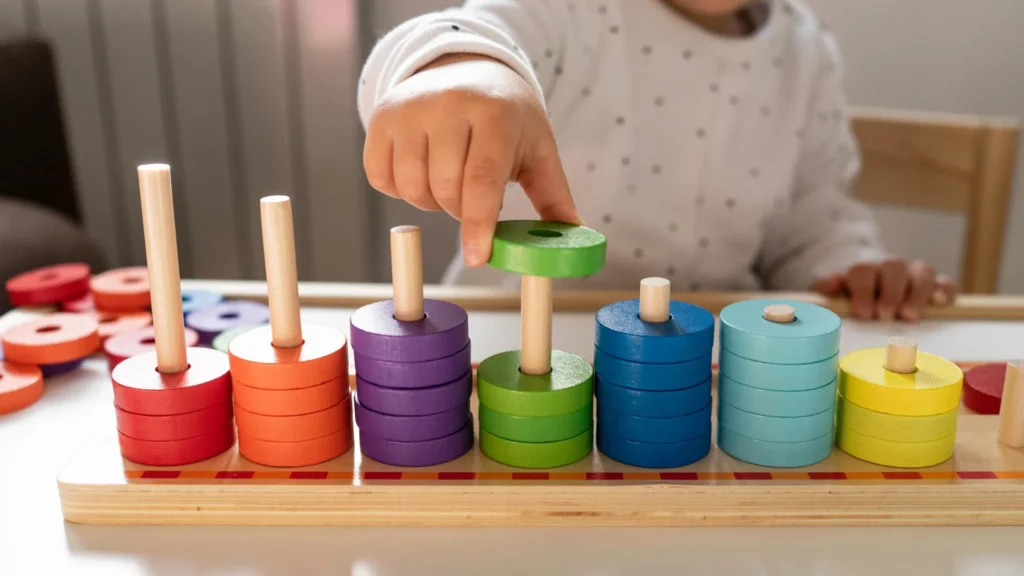
- The Prepared Environment: Classrooms are meticulously organized with a specific set of self-correcting, hands-on learning materials. These materials are designed to engage children in purposeful activity and allow them to discover concepts independently.
- Self-Directed Activity: Children are given considerable freedom within limits to choose their activities, work at their own pace, and engage in extended periods of concentration, fostering self-discipline and intrinsic motivation.
- Mixed-Age Classrooms: Typically, classrooms group children in three-year age spans (e.g., 3-6 years old). This allows older children to mentor younger ones, reinforcing their own learning, while younger children benefit from observing and aspiring to the work of their seniors.
- Role of the Teacher as a Guide: The Montessori teacher, often referred to as a "directress" or "guide," observes children closely, introduces new materials when a child is ready, and facilitates learning without direct instruction or interruption. They act as facilitators, not lecturers.
- Emphasis on Practical Life Skills and Sensorial Exploration: Early Montessori education heavily emphasizes practical life activities (e.g., pouring, buttoning, sweeping) to develop coordination, concentration, and independence. Sensorial materials refine the senses and prepare children for abstract concepts in mathematics and language.
The Montessori method quickly gained international recognition, spreading across Europe, the United States, and beyond in the early 20th century. While initially prevalent in private schools, its principles, particularly its proven effectiveness with children from diverse socioeconomic backgrounds, led to its gradual integration into public education systems. Today, more than 600 public schools in the United States offer Montessori education, making these findings highly relevant to a significant and growing segment of the public schooling landscape.
Economic Efficiency Meets Educational Excellence
The reported savings of approximately $13,000 per child in public Montessori programs compared to conventional preschools is a figure that demands serious attention from policymakers and educational administrators. This cost differential is particularly noteworthy in an era where school districts nationwide grapple with increasingly constrained budgets and intense pressure to demonstrate accountability for public funds.
While the study’s primary focus was on direct operational costs, the mention of potential additional savings from higher teacher satisfaction and lower turnover rates adds another layer of economic benefit. Research in educational economics consistently shows that teacher turnover is an expensive issue for school districts, involving recruitment costs, training new staff, and the loss of experienced educators. If the Montessori environment genuinely fosters greater teacher morale and retention, as other studies suggest, then the total economic advantage could be even more substantial than the direct cost savings identified in this groundbreaking research. This confluence of improved outcomes and reduced costs presents a compelling argument for the scalability and sustainability of public Montessori education.
Expert Voices Affirming the Impact
The researchers involved in the study were quick to highlight the significance of their findings. Angeline Lillard, Commonwealth Professor of Psychology at the University of Virginia and a lead author, articulated the philosophical resonance of the results. "These findings affirm what Maria Montessori believed over a century ago—that when we trust children to learn with purpose and curiosity, they thrive," Lillard stated. She further underscored the dual benefits, adding, "Public Montessori programs are not only effective but cost-efficient." Her comments emphasize the validation of a long-standing pedagogical philosophy through rigorous modern scientific inquiry.
Karen Manship, a co-author and Managing Director at the American Institutes for Research, highlighted the existing prevalence of Montessori programs within public education, giving immediate context to the study’s relevance. "Montessori preschool programs are already being used in hundreds of U.S. public schools, and our research shows that they are having a positive impact in key areas of early learning," she observed. Manship’s perspective is particularly crucial for bridging research with practical application, noting, "These findings provide valuable evidence to policymakers and educational leaders who are seeking to deliver better outcomes with increasingly limited resources."
David Loeb of the University of Pennsylvania drew attention to the enduring legacy and original mission of the Montessori approach. "Montessori began in the low-income housing of early 20th century Rome," Loeb reminded, emphasizing its origins as a tool for empowering marginalized children. He concluded by asserting, "This research shows it still delivers on that promise for America’s children today." His statement powerfully connects the historical roots of the method, designed to serve children in challenging environments, with its contemporary efficacy in diverse American public school settings.
Implications for Education Policy and Practice
The convergence of stronger learning outcomes and significant cost savings presents a powerful impetus for reconsideration and potential reform within early childhood education policy. The findings suggest several critical implications:
- Policy Recommendations: State and federal policymakers, as well as local school boards, now have robust evidence to consider expanding public Montessori programs. This could involve allocating funds for new Montessori schools, converting existing preschools, or integrating Montessori principles into current curricula. The cost-effectiveness makes it an attractive option for budget-conscious legislative bodies seeking high-impact investments.
- Curriculum Development: The success of the Montessori model challenges conventional approaches to early learning. It may prompt educators and curriculum developers to re-evaluate the balance between structured, teacher-led instruction and child-initiated, discovery-based learning. The emphasis on executive function and social understanding, often overlooked in traditional academic metrics, could gain greater prominence.
- Teacher Training and Professional Development: A significant expansion of public Montessori would necessitate a corresponding increase in qualified Montessori-certified teachers. This implies a need for greater investment in Montessori teacher training programs, ensuring that the quality and fidelity of the method are maintained as it scales. Challenges in scaling quality training while meeting demand would need to be addressed.
- Addressing Educational Equity: The study’s reinforcement of Montessori’s historical success in low-income communities, as highlighted by David Loeb, positions it as a potential tool for addressing educational disparities. Public Montessori programs could provide high-quality early education to all children, regardless of socioeconomic background, thereby promoting equity and closing achievement gaps from an early age.
- Parental Choice and Demand: With strong evidence of both educational effectiveness and cost efficiency, public awareness of Montessori benefits is likely to increase. This could lead to greater parental demand for Montessori options within public school systems, influencing district decisions.
The Call for Longitudinal Research
Despite the compelling nature of these initial findings, the researchers themselves advocate for continued longitudinal tracking of the children involved in the study. The importance of monitoring these outcomes through later grades and into adulthood cannot be overstated. While the study demonstrates immediate benefits by kindergarten, the ultimate goal of early childhood education is to foster long-term success in academic achievement, social-emotional well-being, civic engagement, and career pathways.
Longitudinal studies would help determine if the gains in reading, executive function, and social understanding persist through elementary school, middle school, high school, and beyond. Such research could explore impacts on high school graduation rates, college enrollment, career choices, and even broader measures of life satisfaction and civic participation. Understanding the full, enduring impact would further solidify the evidence base for widespread adoption of the public Montessori model and provide invaluable insights into human development and educational efficacy.
A Glimpse into the Future of Early Education
The findings from this nationwide randomized controlled trial offer a compelling vision for the future of early childhood education in the United States. They validate a century-old pedagogical model with modern, rigorous scientific evidence, demonstrating that an approach rooted in child-centered learning, independence, and intrinsic motivation can yield superior academic and social outcomes. Crucially, these benefits are achieved not at a premium, but at a significant reduction in cost.
As education leaders and policymakers seek innovative, effective, and fiscally responsible solutions to improve early learning, the public Montessori model stands out. This study reinforces the idea that Maria Montessori’s vision remains a powerful tool for nurturing children’s potential, capable of producing lasting benefits for individual children, their families, and the broader community. The paper’s co-authors also included researchers from the American Institutes for Research (Juliette Berg, Maya Escueta, Alison Hauser) and University of Virginia graduate student Emily Daggett, whose collective efforts have brought this pivotal research to light. The conversation around early childhood education has undoubtedly been enriched and redirected by these significant findings, potentially ushering in an era of greater adoption and appreciation for the Montessori approach in public schooling.