



The landscape of education is increasingly recognizing the invaluable contributions of neurodivergent professionals, a cohort of educators whose unique cognitive profiles — encompassing conditions such as ADHD, autism, dyslexia, and Tourette’s syndrome — bring distinct strengths to the classroom. While these teachers often excel in areas like innovative pedagogy, empathetic student connections, and creative problem-solving, they frequently navigate educational systems not inherently designed to support their neurocognitive differences. This discrepancy often leads to significant challenges, including heightened executive functioning demands, sensory overload, and the pervasive issue of burnout, highlighting an urgent need for systemic reform and greater understanding within school communities.
The Unseen Workforce: A "Lost Generation" Emerges
A significant proportion of neurodivergent educators, particularly those in their 30s, 40s, and 50s, belong to what is often termed the "lost generation." These individuals grew up during an era when the understanding and diagnosis of neurodevelopmental conditions were far less comprehensive and nuanced than today. For decades, diagnostic criteria for conditions like Attention-Deficit/Hyperactivity Disorder (ADHD) were predominantly focused on hyperactive presentations, often observed in boys, leading to many girls and high-achieving individuals being overlooked. Similarly, the diagnostic scope for autism spectrum disorder (ASD) was considerably narrower, frequently resulting in late or missed diagnoses for individuals who masked their traits effectively or presented atypically. Recent data indicates that approximately 5-10% of adults worldwide are estimated to have ADHD, while autism prevalence is estimated at 1-2% of the global population. Dyslexia affects another 5-10%. Given these figures, it is statistically probable that a substantial number of educators within the workforce are neurodivergent, many of whom may only discover their neurotype later in life.

This delayed recognition often occurs through serendipitous encounters – a child receiving a diagnosis, exposure to increased neurodiversity awareness via social media or podcasts, or a personal journey of self-reflection. For these educators, the realization brings a complex mix of relief and disorientation. Relief comes from finally having a framework to understand lifelong patterns of struggle, inconsistency, and overwhelm. Disorientation arises from re-evaluating personal histories through a new lens, often accompanied by a sense of grief for years spent self-blaming or expending immense energy trying to conform to neurotypical expectations. The irony is profound: these educators, trained to identify and support neurodivergent traits in their students, often remained unaware of their own neurocognitive profiles, silently grappling with challenges that felt uniquely personal.
Executive Functioning Demands: A Core Challenge in Education
The teaching profession, by its very nature, is exceptionally demanding on executive functioning skills. Educators are constantly engaged in a complex dance of lesson planning, classroom management, curriculum differentiation, student assessment, communication with parents, administrative paperwork, and adapting to unforeseen circumstances. This requires continuous cognitive juggling, meticulous organization, flexible thinking, and sustained attention – precisely the areas where many neurodivergent individuals may experience inherent challenges. For a teacher with ADHD, for instance, the perpetual cycle of initiating tasks, managing time, prioritizing, and maintaining focus can be an exhausting endeavor. The sensory environment of a classroom – constant noise, visual stimuli, unexpected interruptions, and the need for rapid transitions – can be particularly taxing for autistic educators or those with sensory processing differences, leading to significant energy drain and potential burnout.
Recent studies on teacher well-being consistently highlight high rates of stress and burnout across the profession, with some reports indicating that up to 40-50% of teachers consider leaving the profession annually. While these figures encompass all educators, it is reasonable to infer that neurodivergent teachers, operating within systems that do not adequately accommodate their needs, may experience these pressures more acutely. The mental load of "masking" – the conscious or unconscious effort to suppress neurodivergent traits to fit in – further exacerbates this, leading to chronic exhaustion and contributing to the national teacher shortage crisis.
Beyond Deficit: The Strengths Neurodiversity Brings
Despite these systemic hurdles, neurodivergent educators are not merely surviving; they are thriving and innovating in profound ways when supported. Their cognitive diversity often translates into significant professional strengths:
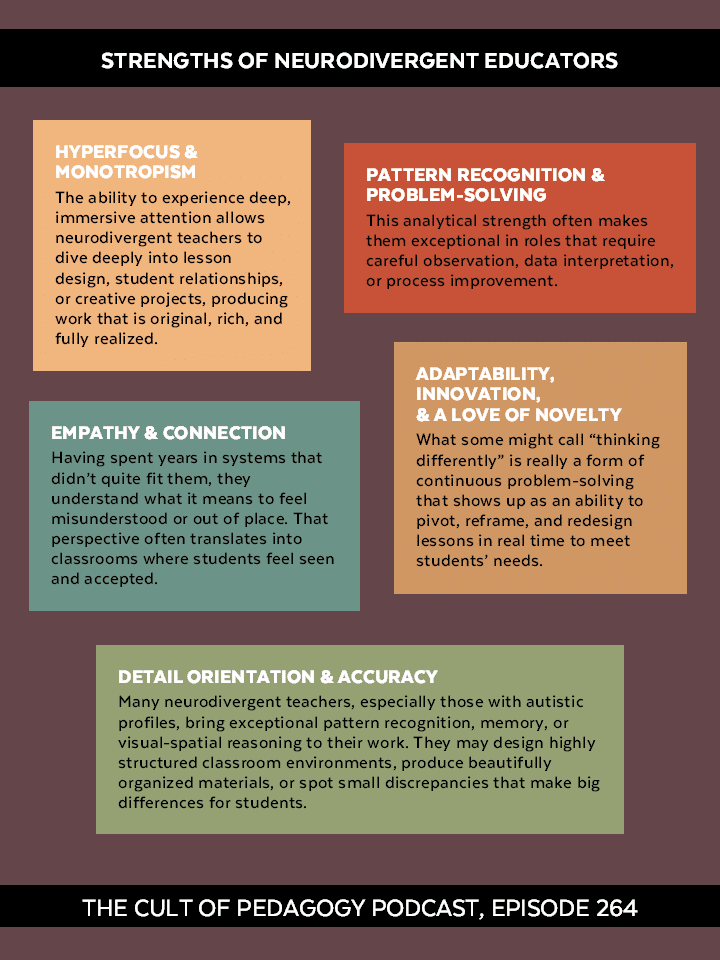
- Innovative Thinking and Creativity: Neurodivergent minds often approach problems from unconventional angles, fostering unique lesson designs, engaging activities, and creative solutions to classroom challenges. This can lead to more dynamic and memorable learning experiences for students.
- Deep Empathy and Connection: Many neurodivergent individuals possess a heightened sense of empathy, particularly towards students who may also struggle or feel different. This allows them to build strong, authentic relationships, create inclusive classroom environments, and advocate effectively for marginalized learners.
- Authenticity and Role Modeling: When neurodivergent teachers feel safe to express their authentic selves, they become powerful role models. They demonstrate that there isn’t a singular "right" way to learn or think, teaching students the value of self-acceptance, self-advocacy, and leveraging individual strengths.
- Specialized Interests and Expertise: For autistic educators, intense interests can translate into deep subject matter expertise and an infectious passion for their chosen field, inspiring students to explore subjects in depth.
- Pattern Recognition and Attention to Detail: Individuals with certain neurodivergent profiles may excel at noticing intricate patterns or details that others miss, which can be invaluable in identifying student learning needs or designing structured, predictable learning environments.
- Resilience and Problem-Solving: Having navigated a world often not built for them, many neurodivergent educators develop exceptional resilience and adaptive problem-solving skills, which they can then impart to their students.
These strengths, when fostered rather than suppressed, enrich the entire school community, promoting a more diverse and inclusive educational philosophy that benefits all students.
Systemic Barriers and the Call for Adaptation
The traditional structures of schooling, largely designed for neurotypical cognitive processing, frequently pose significant barriers for neurodivergent teachers. These include:
- Rigid Schedules and Rapid Transitions: The constant shifting between tasks, subjects, and student groups without adequate processing time can be highly dysregulating.
- Sensory Overload: Fluorescent lighting, constant noise, crowded hallways, and unpredictable stimuli can lead to sensory overwhelm, impacting focus and energy.
- Administrative Burden: Extensive paperwork, bureaucratic processes, and often unclear or inconsistent communication styles can be particularly challenging for those with executive function difficulties.
- Social and Communication Expectations: Navigating complex social dynamics among colleagues, parents, and administrators, alongside unwritten social rules, can be exhausting for autistic educators.
- Lack of Flexibility: Standardized approaches to lesson planning, assessment, and professional development often fail to accommodate diverse working styles.
Educational leaders and policy makers are increasingly being urged by advocacy groups such as the Neurodiversity in Education Association and the Autistic Self Advocacy Network to move beyond theoretical recognition of diversity to practical implementation of support. They argue that celebrating differences in theory is insufficient without tangible changes to school environments and policies.
Strategies for Sustainability: Individual and Institutional
While systemic change is the ultimate goal, neurodivergent educators have developed and utilize a range of personal strategies to manage the demands of their profession:
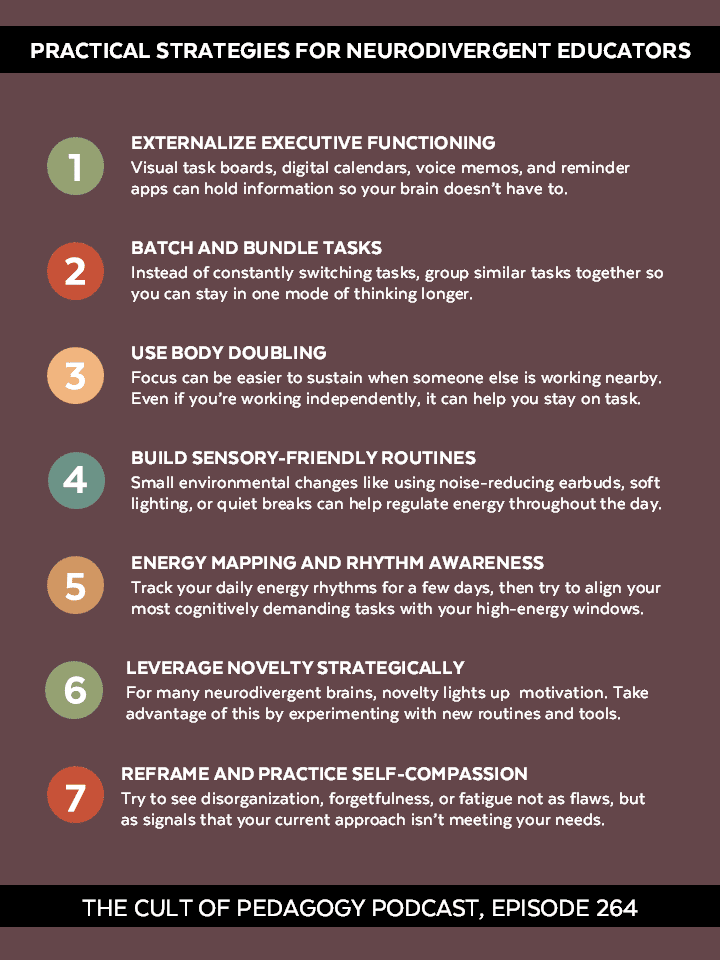
- Externalizing Executive Functioning: Employing visual task boards, digital calendars, reminder apps, and voice memos to offload mental burdens and create reliable external systems. Automation tools (like IFTTT) can streamline routine tasks.
- Batching and Bundling Tasks: Grouping similar tasks to minimize "cognitive gear-shifting," dedicating specific blocks of time for grading, lesson planning, or communication.
- Body Doubling: Collaborating with colleagues during planning periods or utilizing virtual co-working sessions to leverage the accountability and focus-enhancing effect of another person’s presence.
- Sensory-Friendly Routines: Implementing noise-reducing earbuds, adjusting lighting, incorporating short movement breaks, and developing "reset rituals" to manage sensory input and regulate energy throughout the day.
- Energy Mapping: Tracking personal energy peaks and troughs to strategically align cognitively demanding tasks with high-energy windows and less taxing activities with lower-energy periods.
- Strategic Novelty: Introducing small variations in routines or lesson formats to harness the motivational power of novelty, preventing stagnation and maintaining engagement.
- Self-Compassion and Reframing: Viewing challenges not as personal failures but as signals that current systems are not meeting individual needs, fostering a mindset of experimentation and self-acceptance.
These individual adaptations, while crucial for personal well-being, underscore the need for institutional support. Schools and administrators play a pivotal role in creating truly inclusive environments:
- Promoting Awareness and Training: Implementing professional development programs that educate staff on neurodiversity, challenging stereotypes, and fostering a culture of acceptance.
- Flexible Work Arrangements and Accommodations: Offering reasonable accommodations such as modified schedules, quiet workspaces, reduced meeting loads, or assistive technologies. This aligns with disability rights legislation, though many neurodivergent teachers may not formally disclose.
- Rethinking Communication and Procedures: Standardizing communication protocols, using visual aids for instructions, and streamlining administrative processes to reduce ambiguity and cognitive load.
- Cultivating Inclusive Leadership: Leaders who model empathy, actively listen to staff needs, and champion flexible approaches create a safe space for neurodivergent educators to thrive without fear of stigma.
- Mentorship and Peer Support Networks: Establishing networks where neurodivergent teachers can connect, share strategies, and offer mutual support.
- Designing Sensory-Conscious Environments: Considering lighting, noise levels, and classroom layouts to minimize sensory overload for both staff and students.
Broader Impact and Implications for the Future of Education
The intentional support of neurodivergent educators extends far beyond the individuals themselves. When schools embrace neurodiversity, they cultivate a more inclusive and resilient educational ecosystem. Teachers who feel valued and supported are more likely to remain in the profession, mitigating the impact of teacher shortages. Furthermore, an environment that celebrates diverse ways of thinking and working provides invaluable lessons for students. Children see adults openly utilizing strategies like visual schedules, taking sensory breaks, or discussing their unique learning styles, normalizing these tools as pathways to success rather than signs of weakness. This fosters a classroom culture where difference is not just tolerated but understood as a fundamental aspect of human variation and a source of strength.
Ultimately, the conversation is shifting from "fixing" neurodivergent individuals to "fixing" the systems that inadvertently exclude them. By designing for flexibility, clarity, and belonging, schools don’t merely improve the working conditions for neurodivergent staff; they create enriched learning environments where every teacher and every student can engage authentically, contribute their unique talents, and realize their full potential. This paradigm shift is not just an act of equity; it is an investment in the innovation, empathy, and resilience that define the future of education.