


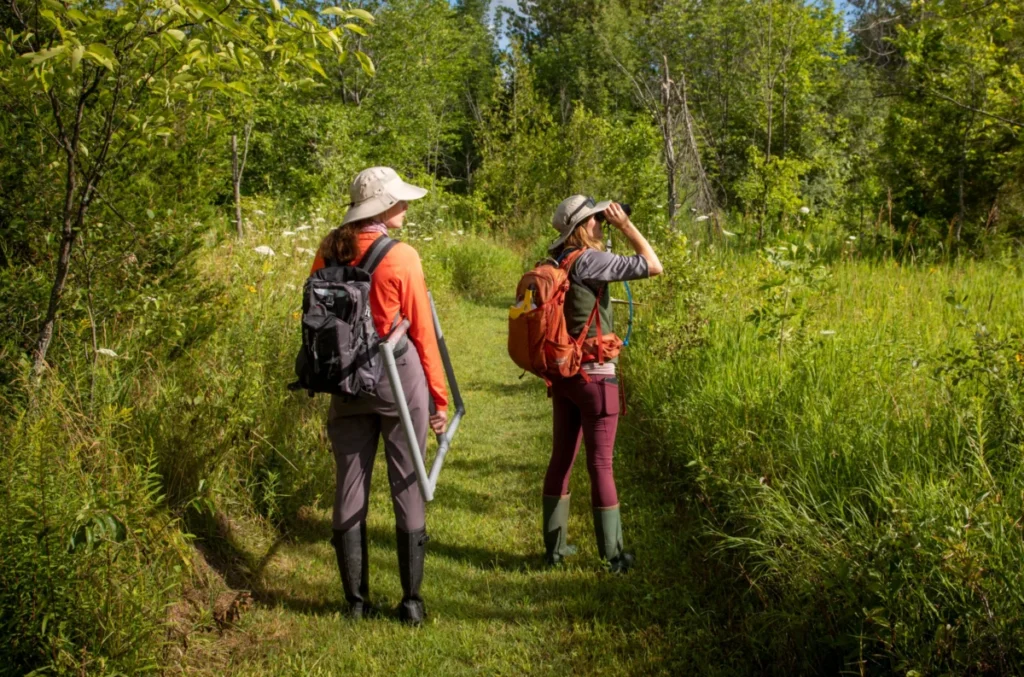
Trent University in Peterborough, Ontario, is embarking on a transformative seven-year initiative to reshape its expansive 360-hectare Green Network, integrating Indigenous knowledge systems into its environmental management, research, and education. The newly announced Ggwepnandizamin Stewardship Plan signifies a profound commitment to fostering a connected community of ecological spaces while honoring and embedding the wisdom of Michi Saagiig First Nations into the very fabric of the university’s land stewardship. This pioneering approach aims to redefine how the university understands and interacts with its natural environment, fostering a more holistic and respectful relationship with the land for present and future generations.
A Vision for Integrated Land Stewardship
The Ggwepnandizamin Stewardship Plan, unveiled in late April, establishes a comprehensive seven-year framework designed to guide the management and protection of Trent University’s significant green spaces. This plan is distinguished by its deliberate focus on the integration of Indigenous knowledge into all facets of environmental engagement. This includes not only ecological research and educational programming but also hands-on land-based learning and the practical management of the university’s vast natural resources. The initiative represents a significant step forward in reconciliation, acknowledging the deep historical and cultural connections Indigenous peoples have with the land.
The development of the plan has been a collaborative undertaking, forged in partnership with Michi Saagiig First Nations, including representatives from Hiawatha First Nation, and local environmental organizations. This collaborative spirit extends to ongoing engagement with Trent Elders and the Knowledge Holder’s Council, as well as Michi Saagiig land consultation officers. This ensures that the plan is not merely a document but a living testament to shared responsibility and mutual respect.
Indigenous Perspectives on Land and Life
Tom Cowie, consultation Indigenous Knowledge lead from Hiawatha First Nation, articulates the profound significance of Trent University’s green spaces from an Indigenous perspective. "When we’re looking at different things, especially around the park or around the school… there’s a lot of significant wetlands," Cowie stated. He emphasized that these wetlands are not just ecological features but also "medicine gardens," holding immense cultural and medicinal value.
Cowie’s perspective underscores a fundamental difference in worldview: these spaces are viewed as more than mere ecological reservoirs. They are integral to a broader understanding of the land as a living entity, interconnected with humanity. "We’ve always been taught that we look after the lands, to ensure that they are better for the generations to come," he explained. "We look at the land as a familial relationship, as opposed to being a commodity or a resource. We treat it as family." This familial relationship with the land fosters a deep sense of responsibility and stewardship, a stark contrast to a purely extractive or utilitarian view.
This understanding also reflects a distinctive cultural approach to knowledge dissemination within Indigenous communities. "We’re not keepers of knowledge, we’re sharers," Cowie added, highlighting a philosophy of open and communal wisdom. This ethos is crucial for the success of initiatives that seek to integrate diverse knowledge systems.
A Foundation for Reconciliation and Understanding
The Ggwepnandizamin Stewardship Plan arrives at a pivotal time in Canada’s history, as the nation prepares to observe National Indigenous Peoples Day on June 21st. Initiatives like the one at Trent University serve as tangible examples of how institutions can actively recognize and celebrate the rich cultures, histories, and invaluable contributions of First Nations, Inuit, and Métis peoples. This day serves as an annual reminder for Canadians to reflect on and support efforts that amplify Indigenous knowledge and voices, particularly within academic and governmental institutions that have historically marginalized them.
Julie Davis, Trent University’s Vice President of External Relations and Development, articulated the transformative impact of embracing Indigenous worldviews. "When we listen and understand an Anishinaabe world view, and we understand familial relations and the spirit of all those species, we feel a higher calling to how we do the work," she stated. This indicates a profound shift in motivation and ethical consideration guiding the university’s environmental practices.
Davis further elaborated on the intentionality required to bridge Western and Indigenous knowledge systems. "Maintaining what is called an ethical space, where that knowledge system and the Western system are equal, happens through talking and working together," she explained. This concept of an "ethical space" is critical, creating a platform where different ways of knowing can coexist and inform each other without hierarchy. "How arrogant would it be for us not to recognize, and acknowledge, and collaborate," she added, underscoring the imperative for inclusivity and partnership.
Research, Sustainability, and Capacity Building
The integration of Indigenous knowledge is not merely about philosophical alignment; it has tangible implications for environmental research and outcomes. Dr. Barbara Wall, an Associate Professor and dual-tradition scholar at Trent University’s Chanie Wenjack School for Indigenous Studies, emphasized the practical benefits. "Doing research for and with Indigenous communities will lead to increased environmental sustainability, increased environmental health, and thus increased human health on so many different levels," Dr. Wall noted. This suggests a direct correlation between inclusive research practices and improved ecological and human well-being.
However, Dr. Wall also pointed to significant barriers that Indigenous-led research often faces, particularly concerning funding and the development of necessary capacity within communities. Partnerships with academic institutions, such as the one at Trent, can play a crucial role in addressing these challenges. By providing access to resources, infrastructure, and collaborative opportunities, universities can support Indigenous-led initiatives. The success of these partnerships hinges on maintaining environments that are genuinely welcoming, respectful, and equitable.
"There needs to be trusting, respectful relationships, and many times those have to be created before you can jump into any research," Dr. Wall stressed. This highlights the importance of relationship-building as a prerequisite for effective and ethical collaboration. The Ggwepnandizamin Stewardship Plan’s emphasis on ongoing dialogue and partnership directly addresses this need.
A Chronology of Collaboration and Vision
The journey towards the Ggwepnandizamin Stewardship Plan can be traced through a series of evolving commitments at Trent University. While the formal announcement of the plan occurred in late April, its conceptualization and development have been an ongoing process spanning several years. This period has been characterized by increasing dialogue and collaboration between university administration, faculty, Indigenous community leaders, and environmental experts.
- Early to Mid-2010s: Trent University begins to more formally recognize and integrate Indigenous perspectives into its curriculum and campus operations. This includes the establishment of the Chanie Wenjack School for Indigenous Studies and a growing emphasis on Indigenous land-based learning.
- Late 2010s: Discussions and consultations intensify regarding the future stewardship of the university’s extensive green spaces. The concept of a comprehensive plan that actively incorporates Indigenous knowledge gains traction.
- Early 2020s: Formal partnerships are solidified with Michi Saagiig First Nations and relevant local environmental organizations. Working groups are established to co-develop the stewardship framework.
- 2023-2024: Extensive consultation with Elders, Knowledge Holders, and community members from Michi Saagiig First Nations takes place. This period is critical for ensuring the plan reflects deep-seated cultural values and practical knowledge.
- April 2024: The Ggwepnandizamin Stewardship Plan is officially announced, outlining the seven-year framework for integrated land management.
This timeline underscores that the plan is not a sudden development but the culmination of sustained effort, relationship-building, and a shared vision for a more harmonized approach to environmental stewardship.
Supporting Data and Context
Trent University’s Green Network encompasses a remarkable 360 hectares of diverse ecosystems, including significant forest areas, wetlands, and the Otonabee River corridor. This vast natural landscape provides critical habitat for a wide array of flora and fauna, contributing to regional biodiversity. The university’s location in Peterborough, an area rich in Anishinaabe history and traditional territories, further amplifies the importance of this initiative.
Globally, there is a growing recognition of the efficacy of Indigenous land management practices. Studies have shown that Indigenous territories often exhibit higher levels of biodiversity and lower rates of deforestation compared to non-Indigenous managed lands. For instance, research published in journals like Nature Sustainability has highlighted how Indigenous communities, guided by traditional ecological knowledge, are often at the forefront of conservation efforts, effectively safeguarding ecosystems for generations. The Ggwepnandizamin Stewardship Plan aligns with this broader global trend, aiming to leverage this proven wisdom.
The plan’s emphasis on "ethical space" also finds resonance in academic discourse. Scholars like Dr. Willie Ermine have explored this concept as a crucial element for fostering genuine dialogue and collaboration between Indigenous and Western knowledge systems, acknowledging historical power imbalances and creating a foundation for mutual respect and understanding.
Broader Impact and Implications
The Ggwepnandizamin Stewardship Plan at Trent University has far-reaching implications, extending beyond the campus boundaries.
Environmental Sustainability
By integrating Indigenous knowledge, the plan has the potential to enhance the long-term ecological health and resilience of the Green Network. Traditional practices often emphasize cyclical understanding, biodiversity conservation, and holistic ecosystem management, which can lead to more sustainable outcomes than solely relying on Western scientific approaches. This could serve as a model for other institutions seeking to improve their environmental stewardship.
Educational Innovation
The plan promises to enrich educational experiences at Trent by embedding land-based learning and Indigenous perspectives across various disciplines. Students will have opportunities to engage with environmental issues through an Indigenous lens, fostering a deeper understanding of interconnectedness and responsibility. This can cultivate a new generation of environmental leaders with a more comprehensive and culturally informed approach.
Reconciliation in Practice
This initiative represents a concrete step towards reconciliation. By actively involving Michi Saagiig First Nations in the stewardship of their ancestral lands within the university’s domain, Trent is demonstrating a commitment to honoring Indigenous rights, knowledge, and cultural heritage. This can serve as a powerful example for other academic institutions and organizations seeking to advance reconciliation efforts.
Community Engagement and Partnership
The success of the Ggwepnandizamin Stewardship Plan relies on robust and ongoing partnerships. The collaborative framework established between the university, Michi Saagiig First Nations, and environmental organizations can foster stronger community ties and create a more cohesive approach to environmental protection in the broader Peterborough region.
A Shift in Paradigm
Ultimately, the Ggwepnandizamin Stewardship Plan signifies a fundamental shift in how the environment and land are understood. It moves beyond a purely scientific or economic valuation to embrace a more relational and spiritual connection. This inclusive approach offers a meaningful pathway toward a future where diverse ways of knowing are valued, leading to enhanced understanding of the land, water, and the myriad life forms they sustain. The plan is not just about managing land; it is about fostering a deeper, more respectful, and ultimately more sustainable relationship with the natural world, grounded in the wisdom of those who have been its custodians for millennia.