



A common frustration echoes through the halls of educational institutions: teachers observe students diligently following instructions, yet sense a palpable lack of genuine ownership over their learning journey. This sentiment, recently voiced by an exasperated teacher during instructional rounds, highlights a pervasive challenge in modern pedagogy: how to cultivate students who are not just compliant, but intrinsically motivated and strategically adept learners. The answer, increasingly supported by cognitive science and championed by educational thought leaders like Zaretta Hammond, lies in explicitly coaching students in "learn-to-learn" skills.
While popular pedagogical approaches such as project-based learning, Universal Design for Learning (UDL), and makerspace learning are undeniably powerful and evidence-backed, they alone do not automatically imbue students with the metacognitive tools necessary to fully leverage them. These methods provide rich environments, but the internal cognitive processes remain solely the responsibility of the learner. As Hammond argues, "learning isn’t up to us, the teacher. It is solely up to the learner." If a student’s intellectual curiosity isn’t ignited, if the learning environment doesn’t foster intellectual safety, or if the student lacks the specific skills to navigate the attention, elaboration, and consolidation phases of information processing, genuine and lasting learning often fails to materialize. Teachers can dedicate immense effort to lesson planning and scaffolding, but without the learner’s active engagement in how they learn, the transfer of knowledge remains fragile.
The Cognitive Imperative: Understanding How Learning Happens
The human brain’s information processing cycle is a complex, multi-stage operation. It begins with attention, where new information is initially registered. This is followed by elaboration, the critical phase where new content is actively linked to existing knowledge, forming deeper connections. Finally, consolidation is the process by which these new connections are strengthened and stored in long-term memory. Each phase presents its own "choke points"—natural cognitive limitations, such as the brain’s working memory capacity (typically 3-5 "chunks" of information at a time) or the rapid decay of unreinforced memories. Beyond these inherent constraints, learners also face "pitfalls"—self-sabotaging habits like cramming or multitasking that undermine effective learning.
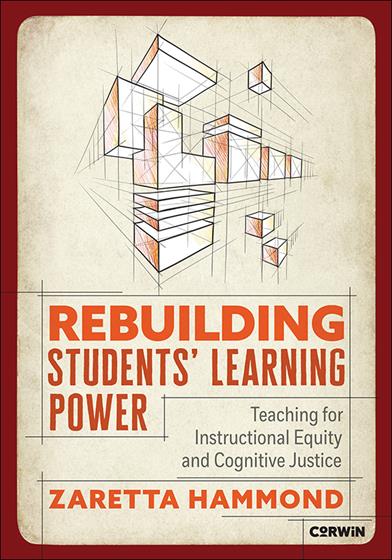
Recognizing these cognitive realities, the focus shifts from merely delivering content to empowering students to become proficient information processors. This involves equipping them with specific tools and "moves" that make learning "sticky." This paradigm shift is central to Hammond’s upcoming work, Rebuilding Students’ Learning Power (Corwin, 2025), which advocates for a deliberate instructional framework centered on these learn-to-learn skills.
Defining Learn-to-Learn Skills: The Craftsmanship of Cognition
What precisely are "learn-to-learn" skills? Far from a pedagogical buzzword, this concept represents a fundamental aspect of cognitive development. David Perkins of Harvard’s Project Zero refers to it as the "game of learning," while Ron Berger, founder of EL Education, calls it the "craftsmanship of learning." Hammond aptly describes them as the "trade secrets" of learning, often hidden in plain sight. From an equity perspective, these skills constitute a vital "hidden curriculum" that can significantly bridge opportunity gaps and advance more equitable academic outcomes, particularly for students who may not have acquired these metacognitive strategies organically.
It is crucial to distinguish learn-to-learn skills from executive function skills. While executive function skills—such as planning, organization, time management, and self-regulation—are undoubtedly important for academic success, they primarily address the management of learning. Learn-to-learn skills, conversely, directly enhance a student’s capacity to handle a greater cognitive load by improving how they process, integrate, and retain new information. They are the active cognitive strategies employed during the act of learning.
Hammond frames these learn-to-learn skills as a set of five individual "moves." A "move" is a discrete, specific action or technique executed in a particular moment (like a chess move), whereas a "skill" is a broader, developed ability to effectively choose and execute various moves, encompassing understanding, judgment, and adaptability. Skills are built through the practice of moves, fostering the judgment and flexibility to apply them appropriately. Thus, these five moves collectively form a robust skill set for processing new content meaningfully and deeply.
The Five Foundational Learn-to-Learn Moves
-
Move 1: Size It Up and Break It Down
This foundational move initiates the learning process by engaging students in rigorous task analysis. It prompts the learner to "size up" the task, using a structured cognitive routine to decipher its requirements. This involves asking a series of decision-making questions that help identify the appropriate emotional stance and craft an effective plan of attack. Subsequently, the "break it down" phase focuses on deconstructing the task into its constituent cognitive activities, allowing the student to assess which tools and strategies will be necessary. This metacognitive planning activates the brain’s information processing cycle, setting the stage for focused engagement. Research consistently shows that expert learners spend more time planning and analyzing tasks before diving into execution, a stark contrast to novice learners who often jump directly into problem-solving. -
Move 2: Scan the Hard Drive
Central to effective learning is the principle that all new information must connect with existing knowledge. The "Scan the Hard Drive" move is designed to activate and leverage a student’s prior knowledge, or "funds of knowledge" (schema), in preparation for new content. When encountering novel or confusing information during the attention phase, the brain embarks on a "scavenger hunt" through its stored schemas, seeking any related experiences, definitions, or concepts, no matter how tangential. This deliberate activation helps create hooks for new information, making it more comprehensible and facilitating its integration. Studies in cognitive psychology underscore the profound impact of prior knowledge activation on comprehension and retention; learners who explicitly link new information to what they already know demonstrate significantly deeper understanding. -
Move 3: Chew and Remix
This move directly targets the elaboration phase of information processing. Once a student has activated their schema, they must actively "chew and remix" the new content with their identified related schema. This involves integrating the "new with the known," a dynamic process of meaning-making that requires productive struggle within the learner’s zone of proximal development (ZPD). This active engagement allows students to move beyond surface-level understanding to deeper learning, aligning with higher levels of Bloom’s Taxonomy or Webb’s Depth of Knowledge. It is through this active manipulation, questioning, and restructuring of information that complex, conflicting, or competing ideas are reconciled, leading to profound insights and a more robust internal representation of knowledge.
-
Move 4: Engage in Skillful Practice
While "Chew and Remix" focuses on general meaning-making, "Skillful Practice" is dedicated to deepening understanding of core concepts and building automaticity with specific skills and procedures, particularly in areas like mathematics and reading. This move emphasizes deliberate practice—a highly focused form of repetition with continuous refinement. The goal is to myelinate new neural pathways, making cognitive processes more efficient and automatic. Students execute this move when they need to refine their application of a skill or strategy, zeroing in on a specific area for improvement. This iterative process, involving self-assessment and targeted adjustment, is crucial for moving from conscious effort to fluent, unconscious competence, a hallmark of expertise. The neurological process of myelination, where fatty sheaths insulate neural pathways, demonstrably speeds up information transfer, reinforcing the biological basis for this practice. -
Move 5: Make It Sticky
The final move, "Make It Sticky," addresses the critical consolidation phase of information processing and counteracts the brain’s natural pruning mechanism. Without reinforcement, fragile dendrites—the branches of neurons that form new connections—can be deleted within 24 to 48 hours. This move focuses on transforming these fragile connections into strong neural pathways through the application of newly learned content in diverse settings. Students are encouraged to use this move at the end of a learning episode and crucially, within 12-48 hours thereafter, often outside of traditional classroom settings. Rehearsal strategies like self-quizzing, explaining concepts to others, or applying knowledge in real-world scenarios prompt the brain to revisit and solidify the information, deactivating the pruning feature and embedding learning into long-term memory. Research on the "forgetting curve" and the efficacy of spaced retrieval practice strongly supports the necessity of this timely and applied reinforcement.
Cultivating Cognitive Independence: The Path to Ownership
The true challenge lies not just in introducing these moves but in ensuring students consistently adopt and internalize them, fostering genuine cognitive independence. Simply demonstrating these strategies or using them as engagement tactics from the front of the classroom is often insufficient; students tend to follow directions rather than consciously own the strategies themselves. For students to truly own their learning, they must grasp a fundamental truth: they must be the ones actively working the moves, much like an athlete must practice and correct their own execution, even with expert coaching.
To facilitate this transition to self-directed learning, educators can employ three powerful strategies:
-
Initiate Students into a Cognitive Apprenticeship: Drawing parallels to traditional apprenticeships in crafts like carpentry or culinary arts, the classroom can be structured as a "cognitive apprenticeship." This involves an explicit onboarding process, dedicated skill-building phases, and habit formation, leading students toward mastery of learning how to learn. This initiation, ideally spanning 4-6 weeks, clearly outlines the path to becoming a proficient learner. During this period, the teacher acts as a master artisan, modeling, guiding, and gradually releasing responsibility to the apprentice. The ultimate goal is to develop six key capacities of a good information processor, cultivating not just competence but a deep understanding of the learning process itself. This approach aligns with Vygotsky’s theories on social learning and scaffolding, where expert guidance helps learners internalize complex processes.
-
Invite Students to Revise Their Learner Identity: A critical component of a cognitive apprenticeship is encouraging students to reflect on and potentially revise their self-perception as learners. Learner identity encompasses an individual’s beliefs about their abilities, motivations, and place within the academic world, profoundly impacting their sense of belonging and agency. Many underperforming students struggle not just with content, but with a debilitating self-image (e.g., "I’m not a math person"). By explicitly teaching learn-to-learn skills, educators can provide tangible evidence of growth and competence, empowering students to see themselves as capable, strategic learners. This fosters a growth mindset, where intelligence is viewed as malleable and effort-dependent, rather than fixed. Research by Carol Dweck and others demonstrates the transformative power of shifting from a fixed to a growth mindset, leading to greater resilience and academic persistence.
-
Integrate Regular Opportunities for Reflection: Developing robust learning power is an iterative process requiring continuous reflection and feedback. Educators must create structured opportunities several times a week for students to engage in "instructional conversations" about their learning journey. These conversations should prompt students to articulate how they are managing their learning process, navigating mistakes, addressing confusions, and consciously employing specific learn-to-learn moves to overcome challenges. Such metacognitive reflection helps students become aware of their own thinking processes, identify what works and what doesn’t, and internalize effective strategies. This practice aligns with formative assessment principles, where feedback loops are designed to improve learning during the process, not just evaluate it at the end.
Broader Implications and the Future of Education
Creating these conditions and explicitly inviting students to adopt learn-to-learn skills represents a profound shift towards instructional equity. These are not merely individual strategies to enhance lesson engagement; they are the fundamental components of a hidden equity curriculum that every student deserves. By mastering the craftsmanship of learning, students are not only better equipped to succeed academically but are also prepared for a future that demands continuous adaptation and lifelong learning.
In an increasingly complex and rapidly changing world, the ability to acquire new knowledge and skills independently is paramount. Employers consistently rank critical thinking, problem-solving, and adaptability among the most desired competencies. These are precisely the outcomes fostered by a robust set of learn-to-learn skills. Furthermore, by democratizing access to these metacognitive strategies, education systems can move closer to dismantling systemic barriers that perpetuate achievement gaps, ensuring that all students, regardless of their background, have the opportunity to become truly independent and powerful learners. This pedagogical evolution is not just about improving grades; it’s about empowering individuals to navigate their intellectual landscape with confidence, curiosity, and strategic prowess, fundamentally reshaping their relationship with knowledge and their potential in the world.