


The profound narrative of human existence, as poetically recounted in the second chapter of Genesis, establishes speech not merely as a faculty but as a foundational element of what it means to be human. The scripture states, "The Lord formed Adam from the dust of the earth; He blew into his nostrils the breath of life and man became a living being." This foundational text, Genesis 2:7, offers a starting point for understanding humanity’s unique relationship with verbal communication, a relationship now being re-evaluated in the age of advanced artificial intelligence. The Hebrew term "nefesh chaya," often translated as "living being," carries deeper implications, particularly through the interpretive lens of ancient scholars, which illuminate the contemporary ethical challenges posed by machine-generated language.
The Sacred Nexus of Human Speech: An Ancient Perspective
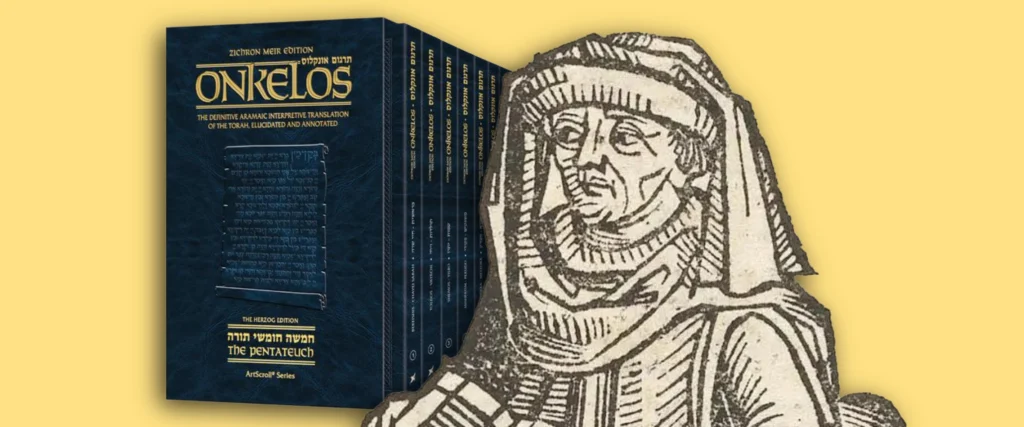
The interpretation of "nefesh chaya" has been a subject of rigorous scholarly inquiry for millennia. One of the most influential interpretations comes from Onkelos, a Roman nobleman who famously converted to Judaism in the 1st or 2nd century CE and authored the authoritative Aramaic translation of the Torah, known as Targum Onkelos. Onkelos rendered "nefesh chaya" as "ruach memalela," meaning "speaking spirit." As Rabbi Shai Held elaborates in "The Heart of the Torah," Onkelos’s translation is profoundly significant because it implies that "speech is constitutive of what it means to be a human — a core part of our humanity is our ability to communicate with words." This perspective elevates speech from a mere biological function to an essential, defining characteristic of human identity. It suggests that the breath of life instilled by the divine did not just animate a physical form, but imbued it with the capacity for articulate expression, thereby differentiating humanity from all other forms of life.
This understanding is echoed and further developed by other revered Jewish commentators. The medieval scholar Rashi (Rabbi Shlomo Yitzchaki), whose commentaries are indispensable to Jewish study, affirmed that speech is not only central to human identity but also key to human uniqueness. Jewish tradition, as interpreted by Rashi, posits that humans alone among God’s creations possess the capacity for complex, meaningful speech. This uniqueness is not merely about making sounds; it encompasses the ability to convey abstract thought, emotion, and intent through structured language. This ancient emphasis on speech reflects a profound recognition of its transformative power, both for individual consciousness and for collective human experience. From this perspective, speech is an almost sacred act, a direct manifestation of the divine spark within humanity, allowing for a miraculous "human-to-human telepathy" where internal states of mind are alchemized into vocalized phonemes or written symbols, decoded and understood by another.
From Oral Traditions to Written Word: The Evolution of Human Cognition and Society
The historical trajectory of human civilization underscores the central role words have played since the post-Paleolithic era. Before the advent of widespread literacy, oral traditions were the primary means of transmitting knowledge, culture, and history across generations. The development of complex languages allowed for the articulation of abstract concepts, the formation of intricate social structures, and the planning of cooperative endeavors on unprecedented scales. This linguistic capacity was a critical driver of human cognitive evolution, fostering theory of mind, shared intentionality, and the ability to build cumulative culture.
The true revolution, however, arrived with the emergence of alphabet systems in the ancient Near East, beginning around the second millennium BCE. Prior to this, writing systems like cuneiform and hieroglyphs were largely logographic or syllabic, complex and requiring years of specialized training, thus confining literacy to a small elite of scribes and priests. The Phoenician alphabet, developed around 1050 BCE, marked a pivotal shift by simplifying written language into a phonetic system where a limited set of symbols represented basic sounds. This innovation made writing significantly easier to learn and disseminate. As this system spread and was adapted by cultures like the Aramaeans (leading to the Aramaic script from which Hebrew and Arabic scripts descended) and the Greeks, it progressively democratized literacy.
The democratization of literacy had profound societal implications. It enabled a broader segment of the population to access religious texts, legal codes, and philosophical treatises directly, rather than relying solely on intermediaries. This direct access fundamentally challenged existing hierarchies, particularly religious ones, by fostering individual interpretation and engagement with sacred texts. In doing so, it arguably "birthed the notions of human dignity and universal justice that we take for granted today." When individuals could read and interpret foundational documents like the Mosaic Law or early democratic principles, they gained a deeper understanding of their rights, responsibilities, and intrinsic worth. The ability to articulate and codify laws, ethics, and human values in a universally accessible format laid the groundwork for modern civil societies and the concept of inherent human rights. This historical progression firmly establishes speech and its written manifestation as indispensable pillars of human advancement and moral development.
The Dawn of Artificial Intelligence: Mimicry and the Modern Dilemma
Against this backdrop of speech as a sacred and defining human attribute, the rapid ascent of generative artificial intelligence (AI) introduces a complex modern dilemma. The past decade has witnessed an explosion in AI capabilities, particularly with Large Language Models (LLMs) that can produce highly coherent, contextually relevant, and lexically fluid text and speech. These systems, powered by advanced neural network architectures like the transformer, are trained on vast datasets of human-generated text, learning statistical patterns to predict the most probable next word or "token" in a sequence. The result is an astonishing ability to mimic human communication, generating essays, poems, conversations, and even entire articles that can be difficult to distinguish from human output.
Despite the impressive fluency, many individuals, including those deeply engaged with AI development, report a visceral sense of unease when interacting with these sophisticated chatbots. This discomfort stems from the understanding that this "lexical fluidity" is, at its core, an illusion—the outcome of "endless matrix multiplications, autoregressively generating one token after another." Unlike human speech, which is understood to emerge from consciousness, intent, and embodied experience, AI’s linguistic output is a sophisticated statistical prediction machine. It lacks genuine comprehension, self-awareness, or the subjective experience that underpins human communication. The feeling, for many, is one of "transgression," as if a boundary sacred to human experience is being blurred or even violated. This unease directly taps into the ancient understanding of speech as unique to the human "speaking spirit." When machines appear to emulate this sacred human capacity, it raises fundamental questions about what constitutes authentic communication and, by extension, authentic humanity.
The applications of AI-generated speech and text are vast and rapidly expanding. From AI-powered customer service agents and virtual assistants that engage in natural language conversations, to advanced tools that generate creative writing, news articles, or even voiceovers for videos, AI is increasingly becoming an "active participant" in domains traditionally exclusive to human expression. The prospect of allowing AI to "write and speak on our behalf, or serve as a golemic conversation partner when authentic human companionship isn’t readily available," evokes a sense of the "profane" for many. This isn’t merely a technological challenge; it is a profound philosophical and ethical one, probing the very essence of human connection and the unique value of human-to-human interaction.
Ethical Crossroads: Extending "Ruach Memalela" to Machines?
The core question presented by the generative AI revolution is whether society should be so quick to extend the role of "ruach memalela"—the speaking spirit—to machines. This is not a simple query but one that delves into the ontological distinctions between human and artificial intelligence. If speech is constitutive of human identity, what are the implications of creating entities that can articulate complex thoughts, engage in persuasive rhetoric, and even simulate empathy, without possessing the underlying consciousness or lived experience that gives human speech its depth and meaning?
This predicament draws striking parallels to the emergence of bioethics five decades ago. In the mid-20th century, rapid advancements in medical technology—such as organ transplantation, life support systems, genetic engineering, and new reproductive technologies—began to force tough moral quandaries that existing ethical frameworks were ill-equipped to handle. The Nuremberg Code (1947), for instance, arose from the atrocities of Nazi human experimentation, establishing principles for ethical human research. Subsequently, cases like the first heart transplant (1967) and the advent of ventilators prompted intense debates about the definition of death, the allocation of scarce medical resources, and patient autonomy. The field of bioethics coalesced to systematically address these novel dilemmas, bringing together philosophers, theologians, medical professionals, and legal scholars to forge new ethical guidelines and principles (e.g., beneficence, non-maleficence, autonomy, justice).
The current AI revolution presents a similar inflection point. Just as bioethics grappled with redefining life, death, and human intervention in biological processes, digital ethics must now confront what it means to be a "speaking spirit" in an age where machines can flawlessly mimic human communication. This is not merely about preventing harm, but about preserving the integrity of human experience and interaction. The idea of a "golemic conversation partner," referencing the legendary artificial being of Jewish folklore, highlights the unease: a creation brought to life through human ingenuity, powerful yet lacking a soul, raising questions about control, purpose, and the boundaries of creation. The discomfort arises from the potential erosion of authentic human interaction, where the nuanced, unpredictable, and empathetic qualities of human speech might be overshadowed by the perfectly optimized, yet ultimately hollow, responses of an AI.
Navigating the Uncharted Territory: The Imperative of Digital Ethics
The newly emerging field of digital ethics is thus positioned in a foundational phase, akin to bioethics in its infancy. It must establish principles and frameworks to guide the development and deployment of AI in ways that align with human values and preserve human flourishing. This field, in which many academics and practitioners are now actively engaged (such as those at Georgetown University’s Digital Ethics program), is tasked with addressing a spectrum of complex challenges.
Key areas of concern within digital ethics include:
- Authenticity and Deception: How do we ensure transparency when interacting with AI, preventing deepfakes and other forms of synthetic media from misleading or manipulating individuals?
- Autonomy and Agency: As AI systems become more sophisticated in decision-making, how do we protect human autonomy and ensure that AI serves human ends, rather than dictating them?
- Bias and Fairness: Given that AI models are trained on historical data, they often perpetuate and amplify existing societal biases. Ensuring algorithmic fairness and preventing discrimination is paramount.
- Privacy and Surveillance: The vast data collection required for AI training and operation raises significant privacy concerns, requiring robust regulations and ethical safeguards.
- Responsibility and Accountability: When AI systems make errors or cause harm, who bears responsibility? Establishing clear lines of accountability for AI’s actions is crucial.
- Impact on Human Connection and Social Fabric: The potential for AI to displace human interaction, create echo chambers, or erode social trust necessitates careful consideration of its long-term societal effects.
Regulatory bodies and governments globally are beginning to respond. The European Union’s AI Act, for instance, represents a landmark effort to establish a comprehensive legal framework for AI, categorizing systems by risk level and imposing strict requirements on high-risk applications. Similar discussions are underway in the United States and other nations, indicating a growing recognition that self-regulation by the tech industry is insufficient to address the profound ethical implications. Scholars, policymakers, and industry leaders must engage in a robust, multi-stakeholder dialogue to articulate clear ethical boundaries and implement effective governance mechanisms. This collective effort is essential to prevent a future where technological "inevitability," as sometimes declared by industry figures like Sam Altman of OpenAI or Dario Amodei of Anthropic, overrides careful societal deliberation.
Redefining Humanity: Broader Societal and Philosophical Implications
The questions posed by generative AI extend far beyond immediate ethical guidelines; they challenge humanity to redefine itself in relation to its most powerful creations. If machines can perform tasks once thought to be exclusively human—including creative expression, empathetic communication, and even philosophical inquiry—what then remains the unique domain of human identity? This is not merely an academic exercise but a practical imperative with far-reaching societal and philosophical implications.
The implications for human identity are profound. If AI can craft compelling narratives, compose moving music, or generate insightful analysis, does it diminish the value of human creativity and intellect? The impact on workforces is equally significant, with many jobs requiring linguistic and cognitive skills potentially being automated. Societies must grapple with how to adapt to these shifts, fostering new forms of human endeavor and ensuring equitable access to the benefits of AI while mitigating its disruptive potential.
Ultimately, the advent of AI compels humanity to engage in a collective introspection, to determine "what we’re willing to accept" as the boundaries of artificial intelligence. This involves a societal consensus on how AI should be integrated into daily life, what roles it should play, and crucially, where human agency and authentic human expression must remain sacrosanct. This is not about rejecting technological progress but about steering it with wisdom, foresight, and a profound respect for the enduring essence of human experience, particularly the "speaking spirit" that has defined us since the dawn of our story. The dialogue must be ongoing, inclusive, and grounded in a deep understanding of both ancient wisdom and modern technological capabilities, ensuring that humanity remains the arbiter of its own future.