


The Technological Configuration of the Study
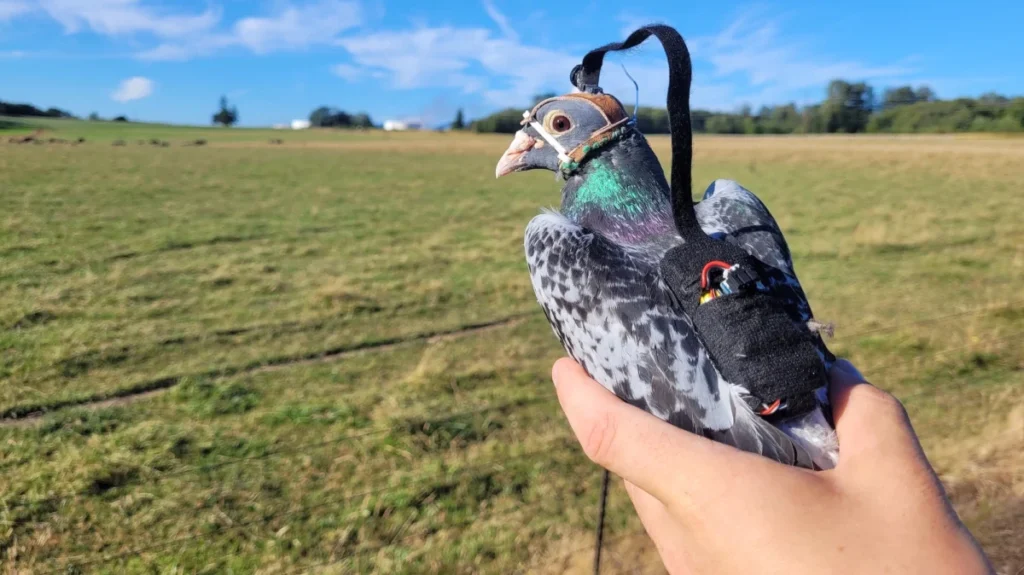
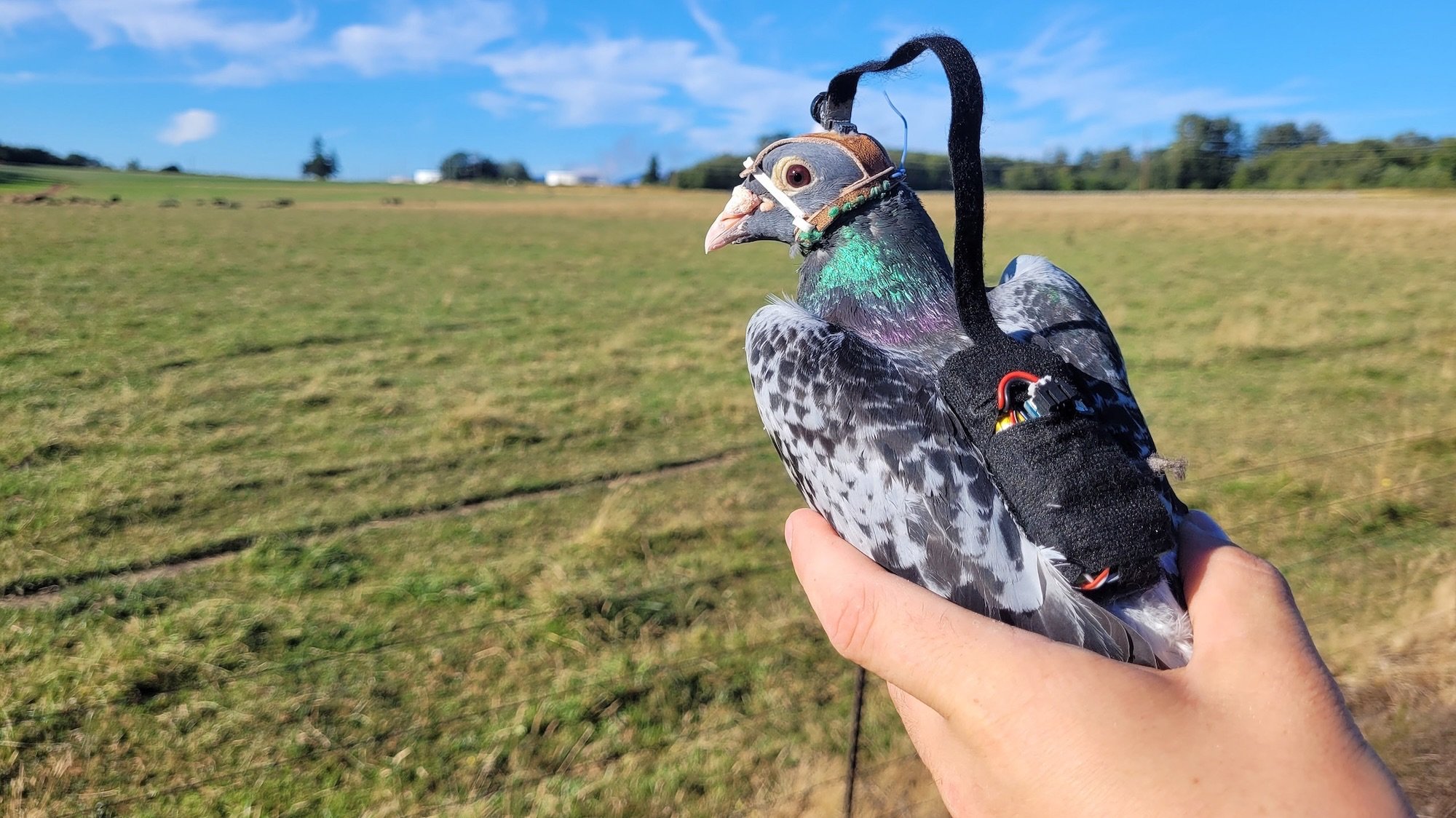
The study, published in the journal Current Biology, utilized a sophisticated suite of miniature electronics to track the movements of more than a dozen homing pigeons. To capture data that was previously inaccessible to researchers, the team designed a custom-built "backpack" and "hood" system. The total weight of the apparatus was strictly limited to 27 grams—a critical engineering constraint designed to ensure that the equipment did not impede the birds’ natural flight mechanics or alter their behavior.
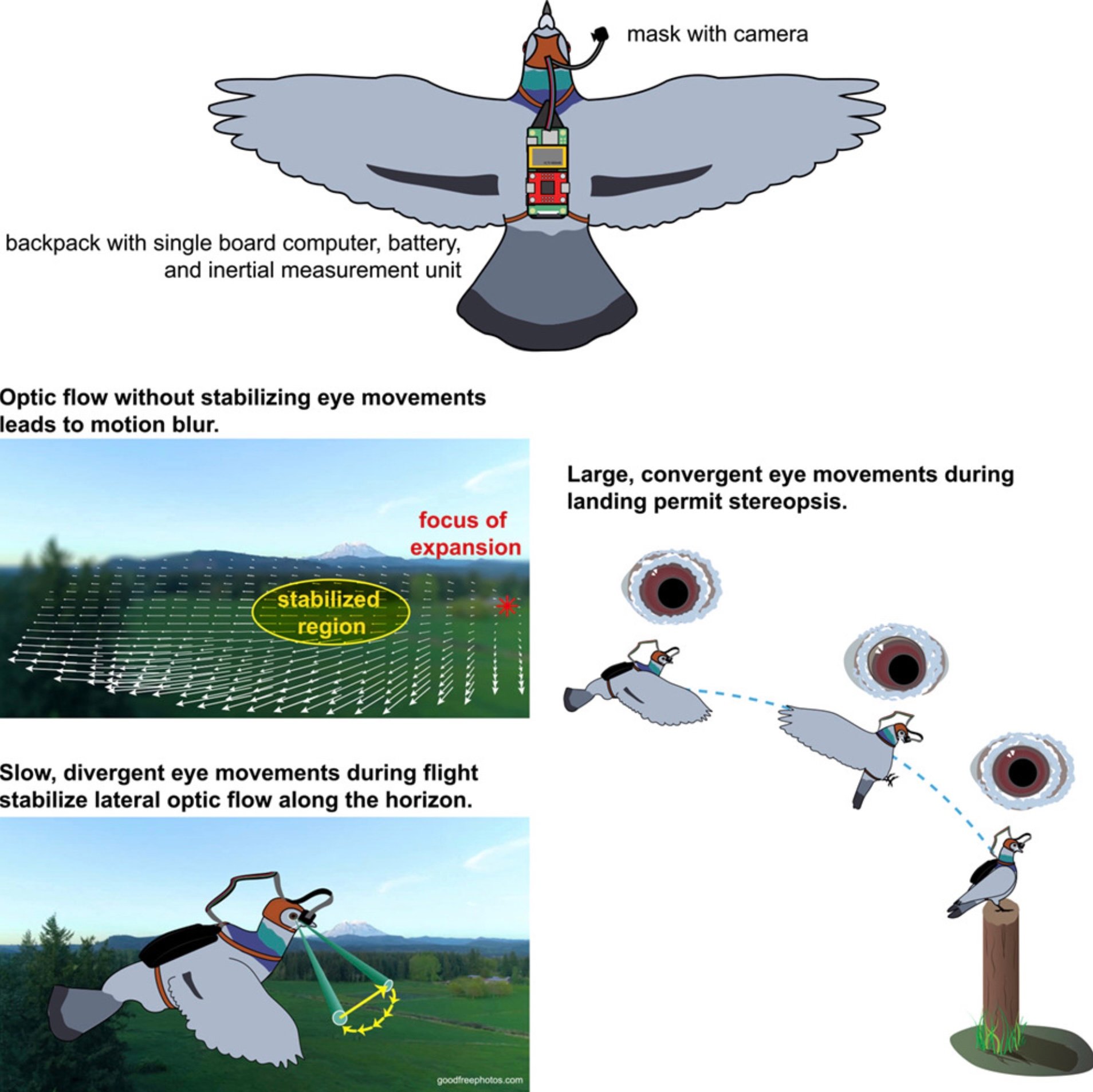
The head-mounted component consisted of a tiny, high-definition camera secured by a lightweight fabric hood. This camera was positioned to track the pigeon’s eye movements relative to its head and the horizon. Meanwhile, the backpack housed a motion and orientation measurement unit (often referred to as an Inertial Measurement Unit or IMU), a miniature computer for data logging, and a power source. By synchronizing the video feed with the IMU data, the researchers were able to distinguish between the movement of the bird’s head and the independent movement of its eyes.
Anthony Lapsansky, an organismal biologist at Northwest Indian College and co-lead author of the study, noted that the integration of these technologies allowed the team to observe the birds in a free-flight environment rather than a controlled laboratory setting. This ecological validity was essential for discovering the subtle "drifting" eye movements that had been missed in previous studies using stationary or tethered subjects.
Challenging the "Fixed Gaze" Paradigm
Historically, ornithologists and neurobiologists believed that birds with eyes on the sides of their heads (lateral vision) kept their eyes locked in place during forward movement. The logic was based on the concept of "optic flow"—the pattern of apparent motion of objects in a visual scene caused by the relative motion between the observer and the scene. It was thought that any independent eye movement would introduce "noise" into this optic flow, making it difficult for the bird to calculate its speed, direction, and distance from obstacles.
The new data suggests the opposite. Instead of a rigid gaze, pigeons exhibit slow, drifting eye movements as they fly forward. These movements appear to be a compensatory mechanism. By shifting their eyes slightly, pigeons can stabilize certain parts of their visual field, allowing them to resolve finer details of their environment that would otherwise be blurred by the speed of their flight. This suggests that pigeons are not merely reacting to the motion of the world around them but are actively managing their visual input to extract high-priority information, such as the texture of a landing surface or the presence of distant landmarks.
Chronology of the Research and Data Collection
The research project spanned several phases, beginning with the development of the 27-gram sensor suite. Once the technology was refined, the team selected a group of homing pigeons known for their reliable flight patterns.
- Phase One (Equipment Integration): The birds were gradually introduced to the hoods and backpacks to ensure they were comfortable and that their flight paths remained consistent with unburdened birds.
- Phase Two (Free Flight Trials): The pigeons were released from various distances, allowing the cameras to record thousands of frames of data during takeoff, sustained flight, and landing.
- Phase Three (Data Synthesis): Researchers used custom algorithms to subtract the head’s rotation and pitch from the camera’s visual field. What remained was the "residual" movement—the independent shifting of the eyeballs.
- Phase Four (Analysis of Landing): A specific focus was placed on the final seconds of flight, where the bird transitioned from cruising to perching.
During these trials, the researchers discovered another surprising behavior: as pigeons approach a landing spot, they rotate their eyes inward. This behavior is indicative of stereopsis, or binocular depth perception.
Stereopsis and the Precision of Landing
Stereopsis is the process by which the brain combines two slightly different perspectives from each eye to perceive depth and three-dimensional structure. While humans and birds of prey (like hawks and owls) rely heavily on binocular vision, it was previously thought that pigeons—with their wide-set eyes—relied almost exclusively on monocular cues to judge distance.
The UBC study found that as a pigeon prepares to land on a perch, it shifts its gaze to create a zone of binocular overlap directly in front of its beak. This allows the bird to gauge the distance to its landing target with extreme accuracy. This shift in visual strategy—from monocular "scanning" during cruise flight to binocular "targeting" during landing—showcases a level of neurological flexibility that was previously underestimated in common bird species.
Implications for Autonomous Systems and Robotics
The findings have significant implications for the field of biomimicry, particularly in the development of Unmanned Aerial Vehicles (UAVs). Currently, most commercial and military drones use rigid camera systems. These drones rely on complex algorithms to interpret optic flow and avoid collisions. However, these systems often struggle in "cluttered" environments, such as forests or urban canyons, where visual data can become overwhelming or ambiguous.
By studying how pigeons use "drifting" eye movements to filter visual noise, engineers may be able to develop "active" camera systems for drones. Rather than a static lens, a drone could use a gimbaled or software-stabilized "eye" that mimics the pigeon’s ability to focus on specific environmental features while in motion.
"We could potentially use these strategies to make autonomous flying robots or drones more animal-like," Lapsansky explained. "By mimicking the way birds extract visual information, we can create machines that are more skilled at navigating complex environments, moving us closer to truly autonomous flight that doesn’t rely on external signals like GPS."
Comparative Analysis: Birds vs. Machines
The study highlights a fundamental difference between biological and artificial vision. Artificial systems typically prioritize high frame rates and massive data processing to ensure safety. In contrast, the pigeon’s visual system is optimized for efficiency. The bird’s ability to selectively stabilize its gaze means it can process only the most relevant information, reducing the "computational" load on its brain.
Data from the study suggests that the pigeon’s eye movements are synchronized with its wingbeats and head bobs, creating a multi-layered system of stabilization. For robotics, this suggests that the future of drone navigation may not lie in faster processors, but in smarter, more specialized sensor movements that "pre-filter" the world before the data even reaches the central computer.

Broader Impact and Future Directions
The success of this study opens the door for similar research into other bird species. Scientists are now interested in whether high-speed maneuverers, such as swifts or falcons, utilize similar drifting eye movements or if they have evolved entirely different visual strategies for hunting.
Furthermore, the study confirms that pigeons—often dismissed as simple urban birds—possess one of the most sophisticated navigational and visual processing systems in the animal kingdom. Their ability to integrate motion sensing, visual drift, and binocular depth perception into a single flight maneuver is a feat of biological engineering that continues to inspire both biologists and roboticists alike.
As the research community moves forward, the focus will likely shift toward "bio-inspired" sensor fusion. By combining the lessons learned from pigeon eye movements with existing AI, the next generation of drones may not just fly through the world, but "see" it with the same nuanced clarity as the birds that have mastered the skies over millions of years of evolution. The 27-gram backpack has not only weighed down a few pigeons but has also lifted the veil on a complex biological secret, providing a clear flight path for the future of autonomous technology.