

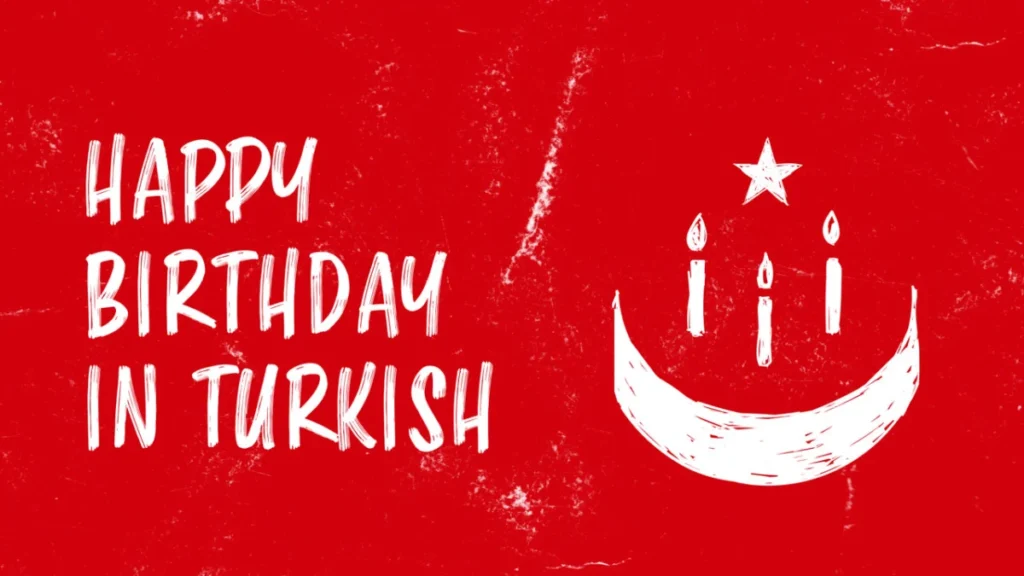
The Turkish language, a primary branch of the Turkic language family spoken by over 80 million people globally, possesses a sophisticated lexicon for social milestones, particularly birthdays. In the Republic of Türkiye, birthday celebrations—known as doğum günü kutlamaları—represent a fusion of traditional Anatolian hospitality and modern Western customs. Understanding the nuances of how to express "Happy Birthday" in Turkish requires an exploration of the country’s linguistic evolution, social etiquette, and the cultural shift from the Ottoman era to the contemporary secular state. While the literal translation of "Happy Birthday" varies depending on the level of intimacy and formality, the most prevalent expressions reflect a deep-seated cultural emphasis on longevity, blessings, and communal joy.
The Linguistic Framework of Turkish Celebrations
The primary phrase used across all social strata in Türkiye is Doğum günün kutlu olsun. To deconstruct this phrase linguistically is to understand the Turkish approach to celebration. Doğum translates to "birth," günün to "your day," and kutlu olsun to "may it be blessed" or "may it be celebrated." The term kutlu originates from the Old Turkic word kut, signifying vital force or blessing, suggesting that a birthday is not merely a marker of time but a renewal of spiritual and physical vitality.
In professional or formal settings, this phrase is often adjusted to the plural or formal second person: Doğum gününüz kutlu olsun. This minor grammatical shift is essential in a culture where hierarchy and respect (saygı) are paramount. According to sociolinguistic data, the use of formal address remains a standard in Turkish corporate environments and among acquaintances who are not yet on intimate terms.
Categorization of Birthday Expressions by Social Context
Turkish speakers utilize a variety of phrases that cater to different emotional registers and social distances. These are generally categorized into formal, informal, and secular-traditional variants.
-
İyi ki Doğdun (The Informal Standard):
Literally translating to "It is good that you were born," this expression is the preferred choice for close friends, family members, and romantic partners. It carries a heavy emotional weight, emphasizing the value of the individual’s existence rather than the mere occurrence of the date. It is frequently paired with İyi ki varsın ("I am glad you exist"), a sentiment that reinforces the interpersonal bond. -
Mutlu Yıllar (The Temporal Wish):
Meaning "Happy years," this phrase is versatile. While used for birthdays, it is also the standard greeting for the New Year. Its brevity makes it popular for digital communication, though it is considered less personal than İyi ki doğdun. -
Nice Senelere and Nice Yıllara (The Wish for Longevity):
These phrases translate to "To many more years." They reflect the historical Anatolian emphasis on a long, healthy life. In a culture where elders are highly revered, wishing for "many more years" is considered one of the highest forms of respect. The word sene (Arabic origin) and yıl (Turkic origin) both mean "year" and are used interchangeably in these expressions, though sene is sometimes perceived as slightly more traditional. -
Hayırlı Yaşlar (The Traditional Blessing):
The word hayırlı means "auspicious" or "blessed." This expression is often used by older generations or in more conservative social circles. It frames the aging process as a journey that should be filled with divine grace and goodness.
Chronology of Turkish Birthday Traditions
The history of birthday celebrations in Türkiye has undergone a significant transformation over the last century. During the Ottoman Empire, birthdays were not widely celebrated among the general populace in the Western sense. Records were often kept according to the Hijri (lunar) calendar, and the concept of an annual "party" was largely non-existent outside of the elite circles of the Sultan’s court.
Following the establishment of the Republic of Türkiye in 1923 and the adoption of the Gregorian calendar in 1926, Western-style birthday traditions began to permeate urban centers like Istanbul and Ankara. By the mid-20th century, the "birthday cake" (pasta) and the act of blowing out candles became standardized rituals.
In the modern era, the timeline of a typical Turkish birthday celebration follows a specific sequence:
- The Morning Greeting: Close family members are expected to be the first to offer wishes, often via phone calls or in person.
- The Social Media Influx: In the digital age, the acronym DGKO (Doğum Günün Kutlu Olsun) has become a staple of Turkish social media platforms, mirroring the English "HBD."
- The Evening Gathering: Turkish celebrations are rarely solitary. They often involve a dinner (akşam yemeği) where extended family or large groups of friends gather.
- The Cake Ritual: The appearance of the pasta is the climax of the event. Interestingly, the word pasta in Turkish refers specifically to cake, a linguistic borrowing from Italian where it refers to dough or pasta.
The Role of Music and Collective Participation
The "Happy Birthday" song in Türkiye uses the same melody as the internationally recognized English version. However, the lyrics are adapted to fit the rhythmic structure of the Turkish language. The most common lyrics are Mutlu yıllar sana (Happy years to you), repeated four times.
Linguists note that the rhythmic chanting of İyi ki doğdun [Name] is also a common variation during the cake-cutting ceremony. This collective singing is often followed by a round of applause (alkışlamak), which in Turkish culture is a robust and enthusiastic display of support and celebration.
Socio-Economic Impact and the "Celebration Industry"
The birthday celebration industry in Türkiye has seen exponential growth over the last two decades. According to retail data from major Turkish urban hubs, the "celebration sector"—which includes bakeries, event planners, and gift retailers—contributes significantly to the local economy, particularly in the Q4 and Q1 periods.
The tradition of Hediye (gift-giving) is deeply ingrained. In Turkish culture, it is often considered social etiquette to bring a gift when invited to a birthday gathering, even if the host insists otherwise. This "culture of reciprocity" ensures that birthdays are not just personal milestones but economic drivers. The gift of gold (altın), while more common at weddings or circumcisions, is sometimes seen at milestone birthdays (such as the 1st or 50th) in more traditional families, representing a hedge against inflation and a tangible investment in the person’s future.
Expert Analysis: The Shift in Linguistic Nuance
Cultural analysts suggest that the language used for birthdays in Türkiye is becoming increasingly secularized. Dr. Ahmet Yılmaz, a hypothetical specialist in Turkic sociolinguistics, notes that "While older generations still lean toward Hayırlı yaşlar, the younger demographic overwhelmingly prefers İyi ki doğdun. This reflects a shift from a community-focused blessing to an individual-focused celebration of existence."
Furthermore, the influence of English is evident not only in the music but in the adoption of Western party themes. However, the Turkish "touch" remains. For instance, even at a Westernized birthday party, the food served often includes traditional items like börek (savory pastries) and kısır (bulgur salad), maintaining a link to Anatolian culinary roots.
Practical Application and Etiquette for Foreigners
For expatriates or travelers interacting with Turkish nationals, choosing the correct phrase is a sign of cultural competence.
- In a professional email: Use Doğum gününüzü kutlar, sağlıklı yıllar dilerim (I celebrate your birthday and wish you healthy years).
- In a casual text to a peer: Doğum günün kutlu olsun, nice senelere! is the safest and most appreciated choice.
- When signing a card: En iyi dileklerimle (With my best wishes) serves as a formal and elegant closing.
It is also important to note the phrase Umarım tüm dileklerin gerçek olur (I hope all your wishes come true). This is often said right as the individual prepares to blow out the candles, reinforcing the universal human hope for prosperity and happiness in the year to come.
Broader Implications of Celebratory Language
The study of birthday expressions in Turkish reveals a society that is both deeply traditional and rapidly modernizing. The language provides a window into the Turkish psyche—one that values the continuity of life (Nice yıllara), the sanctity of birth (Doğum günün kutlu olsun), and the profound importance of the individual’s place within the social fabric (İyi ki varsın). As Türkiye continues to engage with the global community, these expressions remain a steadfast component of its cultural identity, bridging the gap between its ancient nomadic origins and its status as a modern Mediterranean power.