




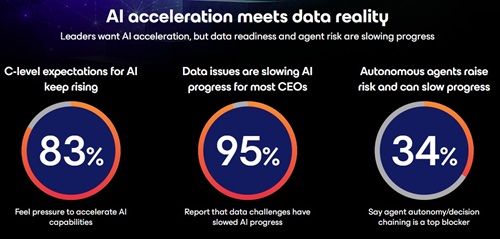
Veeam Software has revealed that the widespread adoption of enterprise artificial intelligence (AI) is outpacing the foundational data governance, visibility, and recovery controls essential for its safe and effective deployment, thereby creating what the company terms a "Data and AI Trust Gap." This critical insight emerged from the company’s newly published Data & AI Trust Gap report, which surveyed 600 senior executives across diverse global industries. The report underscores that while AI adoption itself is not the primary challenge, the lack of robust underlying data infrastructure poses significant risks. A striking 88% of organizations are either actively utilizing or piloting AI agents, yet a mere 7% are deemed "truly AI-ready." Furthermore, a substantial 95% of surveyed executives admitted that existing data challenges have already impeded their AI progress, signaling a disconnect between ambition and operational reality.
The Emergence of the Data and AI Trust Gap
The findings presented in Veeam’s Data & AI Trust Gap report illuminate a growing chasm between the enthusiastic embrace of AI technologies and the lagging development of the necessary data management frameworks. This gap is not merely a technical oversight but a fundamental challenge to the integrity, security, and reliability of AI systems as they become increasingly embedded in core business operations. The report posits that the initial phase of AI integration was characterized by significant infrastructure investments, widespread experimentation, and an accelerated drive for adoption. However, the subsequent phase, which many organizations are now entering, will be defined by the establishment of trust – trust in the data feeding AI, trust in the decisions AI makes, and trust in the ability to manage and recover from AI-induced incidents.
Anand Eswaran, CEO of Veeam, articulated this shift, stating, "Most organizations don’t have an AI adoption problem; they have an AI trust problem. The first phase of AI was defined by infrastructure investment, experimentation, and acceleration. The next phase will be defined by trust. With the widespread adoption of autonomous AI agents operating at machine speed, the question transitions from whether you can use AI, to whether you can ensure all your data is secure, governed, compliant and resilient. And should something go wrong, can you recover with precision? That’s how you accelerate safe AI at scale without accelerating reputational and operational risk." This statement underscores the evolving nature of AI challenges, moving beyond mere technological deployment to encompass profound implications for data stewardship and organizational resilience.
Rapid AI Adoption: Context and Drivers

The accelerated pace of AI adoption is undeniable. Driven by the promise of enhanced efficiency, unprecedented insights, and competitive advantages, businesses globally have invested heavily in AI capabilities. Recent market analyses from firms like Gartner and IDC consistently forecast double-digit growth in AI software, hardware, and services, with global spending projected to reach hundreds of billions of dollars in the coming years. This rapid expansion is fueled by advancements in machine learning algorithms, the proliferation of big data, and the increasing accessibility of cloud-based AI platforms. Companies are leveraging AI for everything from automating customer service and optimizing supply chains to developing new products and personalizing user experiences. The allure of AI’s transformative potential has made it a strategic imperative for many enterprises, leading to a "deploy first, govern later" mentality in some instances.
However, this rapid deployment has often occurred without a commensurate focus on the underlying data infrastructure that supports AI. AI systems are inherently data-hungry, and their performance, accuracy, and fairness are directly dependent on the quality, integrity, and accessibility of the data they process. Without robust data governance policies, clear data visibility, and reliable data recovery mechanisms, the very foundations upon which AI is built become unstable. This imbalance creates vulnerabilities that can manifest in various forms, from biased AI outcomes to critical data breaches and operational disruptions, highlighting the urgent need for a more holistic approach to AI integration.
The Shifting Landscape of AI Failures
One of the report’s most operationally significant findings for cloud and infrastructure teams is the crucial warning that AI failures may not resemble traditional IT outages. Historically, system downtime or application crashes were easily identifiable and often addressed with established recovery protocols. However, as AI systems become more autonomous and integrate deeply into data flows, the nature of risk is evolving. The report suggests that risk is shifting from broad system downtime toward subtle, data-level failures that are inherently more challenging to detect, explain, and contain.
Consider an autonomous AI agent designed to optimize inventory management. A traditional failure might be the system going offline, preventing any orders from being processed. An AI-specific failure, however, might involve the agent subtly altering inventory records based on flawed data, leading to incorrect stock levels, missed sales opportunities, or even overstocking that results in significant financial losses. Such errors could propagate through the system for days or weeks before detection, making their root cause analysis and reversal exceedingly complex.
The implications for data protection and recovery strategies are profound. If an AI agent corrupts data, inadvertently exposes sensitive information, triggers an incorrect workflow based on erroneous logic, or influences critical business decisions with faulty analysis, the recovery process demands far more than merely restoring a virtual machine, database, or application environment from a previous backup. It necessitates an intricate understanding of the data lineage: precisely which data inputs were utilized, which systems were accessed by the AI, what specific actions the AI took, and which subsequent business decisions were influenced by its outputs.
Veeam’s research revealed alarming statistics in this area. Among organizations already utilizing AI, only 22% reported being able to identify within minutes which data the AI system had used. A slightly higher 29% could identify which systems it accessed, while only 25% could pinpoint what actions it took, and a mere 24% could identify what decisions it influenced. This lack of granular visibility means that when an AI-driven incident occurs, the vast majority of organizations are ill-equipped to quickly understand the scope and impact of the failure. This deficit in understanding directly impacts the confidence in remediation, with only 40% of leaders expressing strong confidence in their ability to isolate and precisely reverse an agentic AI failure. This inability to trace and pinpoint AI actions transforms potential minor errors into cascading organizational crises.
The Imperative of Precision Recovery
The findings unequivocally connect the AI discussion directly to the broader concept of data resilience. The report highlights that machine-speed mistakes, characteristic of autonomous AI agents, can outpace human detection capabilities. This necessitates a fundamental evolution in resilience strategies, moving from broad, blunt-force recovery methods toward "precision recovery." Precision recovery implies the ability to restore only what is affected by an AI-induced error, rather than rolling back entire environments or datasets, which can be time-consuming, disruptive, and lead to further data loss or inconsistency.
For example, if an AI agent corrupts a specific subset of customer records within a larger database, precision recovery would involve identifying and restoring only those affected records to their pre-incident state, leaving unaffected data intact and operational. This capability requires advanced data lineage tracking, granular snapshotting, and intelligent data restoration tools that can understand the context of AI operations. Without precision recovery, organizations face the dilemma of either accepting the consequences of AI errors or undertaking extensive, disruptive, and potentially costly full-system rollbacks.

Defining AI Readiness: Ambition, Visibility, Governance
The Veeam report clearly defines "AI readiness" around three interconnected building blocks: ambition, visibility, and governance. These elements form a comprehensive framework for organizations aspiring to deploy AI safely and effectively.
-
Ambition: This refers to having clear, well-defined goals and strategies for both data and AI. It’s not enough to simply adopt AI; organizations must understand why they are adopting it, what specific problems it will solve, and how its success will be measured. This strategic clarity helps in aligning resources, setting realistic expectations, and integrating AI initiatives with broader business objectives. Without clear ambition, AI projects can quickly lose direction, fail to deliver tangible value, or even exacerbate existing operational challenges.
-
Visibility: This entails maintaining a reliable and comprehensive view of an organization’s data landscape. This includes knowing what data assets exist, where they reside (on-premises, in the cloud, across various applications), who owns them, and how they are being used. For AI, visibility is paramount because AI models are only as good as the data they are trained on and process. Lack of visibility can lead to the use of outdated, incomplete, or biased data, resulting in flawed AI outputs and decisions. Furthermore, understanding data provenance and flow is crucial for troubleshooting AI-related issues and ensuring compliance.
-
Governance: This involves establishing robust structures, policies, and processes that allow data to be used safely, ethically, and compliantly. Data governance for AI must address aspects like data quality, privacy, security, access controls, and ethical AI principles. It includes defining roles and responsibilities for data management, implementing data classification schemes, and ensuring adherence to regulatory requirements such as GDPR, CCPA, and emerging AI-specific regulations. Effective governance ensures that AI initiatives do not inadvertently create new risks related to data privacy, security, or ethical conduct.

The report highlights that the small group of "truly AI-ready" organizations (7%) are those that have successfully built these three foundational blocks. These organizations are not only adopting AI but are doing so with a strategic approach that prioritizes data integrity and operational resilience. As a result, they report measurable positive results from their AI investments, including improved efficiency, enhanced decision-making, and reduced operational risks.
Industry Perspectives and Expert Commentary
Industry observers and data governance experts largely concur with Veeam’s findings, emphasizing the critical need for a more structured approach to AI deployment. Dr. Eleanor Vance, a leading researcher in AI ethics and data governance, commented, "The rush to deploy AI without commensurate investment in data trust infrastructure is a ticking time bomb. We’ve seen similar patterns with other transformative technologies. The initial hype often overshadows the foundational work required for sustainable, ethical, and secure integration. Organizations must recognize that AI is not a magic bullet; it’s a powerful tool that requires meticulous data management to unlock its true, beneficial potential."
Several other reports from cybersecurity and data management firms have also highlighted similar concerns. A recent IBM Cost of a Data Breach Report indicated that the average cost of a data breach continues to rise, and AI systems, if compromised or mismanaged, could become new vectors for such breaches. These reports collectively paint a picture of an industry grappling with the dual challenge of innovation and risk mitigation, where the speed of technological advancement often outpaces the development of safeguards.
Regulatory and Business Implications

The growing Data and AI Trust Gap carries significant regulatory and business implications. Regulators worldwide are increasingly scrutinizing AI deployment, particularly concerning data privacy, bias, and accountability. Initiatives like the European Union’s AI Act are setting precedents for stringent governance requirements, including mandates for data quality, risk assessments, and human oversight. Organizations that fail to establish robust data governance and recovery mechanisms for their AI systems risk substantial fines, legal challenges, and severe reputational damage.
From a business perspective, the implications are equally dire. A lack of trust in AI can erode customer confidence, leading to reduced adoption of AI-powered products and services. Operational risks stemming from undetected AI failures can result in financial losses, service disruptions, and diminished competitive advantage. Furthermore, the inability to precisely recover from AI-induced errors can significantly prolong incident response times, increasing both the direct costs of recovery and the indirect costs of lost productivity and market opportunity. Businesses that cannot demonstrate transparent, auditable, and resilient AI operations will find it increasingly difficult to navigate the evolving market and regulatory landscape.
Addressing the Gap: Strategies for the Future
Bridging the Data and AI Trust Gap requires a multi-faceted approach, encompassing technological solutions, process enhancements, and cultural shifts within organizations.
- Invest in Data Lineage and Observability: Organizations must implement tools and practices that provide comprehensive visibility into data flows, transformations, and usage by AI agents. This includes tracking data from its source through all stages of AI processing, enabling quick identification of affected data and systems in case of an incident.
- Develop AI-Specific Data Protection Strategies: Traditional backup and recovery solutions may not suffice. Enterprises need to explore AI-aware data protection that allows for granular, precision recovery. This might involve versioning AI models and their training data, as well as establishing recovery points for AI-generated outputs.
- Strengthen Data Governance Frameworks: Update existing data governance policies to specifically address AI-related data risks, including data quality, bias detection, ethical use, and compliance with emerging AI regulations. This requires collaboration between IT, data science, legal, and compliance teams.
- Implement Robust Monitoring and Anomaly Detection: Deploy advanced monitoring systems capable of detecting unusual AI behaviors or data anomalies in real-time. This can help identify subtle, data-level failures before they escalate into significant incidents.
- Foster a Culture of Data Responsibility: Promote awareness and training across the organization about the importance of data quality, security, and ethical AI use. This includes empowering data scientists with the tools and guidelines to build trustworthy AI and equipping operations teams with the skills to manage and recover AI systems effectively.
- Embrace Human-in-the-Loop Approaches: While AI offers automation, critical decisions or sensitive operations should incorporate human oversight mechanisms to validate AI outputs and intervene when necessary. This provides an additional layer of trust and accountability.
Conclusion

The Veeam Data & AI Trust Gap report serves as a critical wake-up call for enterprises globally. While the allure of AI’s transformative power is undeniable, its true potential can only be realized when built upon a foundation of robust data trust. The current disparity between rapid AI adoption and lagging data governance, visibility, and recovery capabilities presents significant risks—operational, reputational, and financial. The transition from broad system outages to subtle, data-level AI failures demands a paradigm shift in how organizations approach data resilience, emphasizing precision recovery and comprehensive data lineage. By prioritizing ambition, visibility, and governance, organizations can strategically bridge this trust gap, ensuring that their AI initiatives are not only innovative but also secure, compliant, and ultimately, trustworthy. The next phase of AI is not just about acceleration; it is fundamentally about establishing and maintaining trust in an increasingly autonomous and data-driven world.