


The intersection of rapidly advancing artificial intelligence and enduring human values has become a critical focal point for global discourse, drawing unlikely participants into dialogue. Last fall, this convergence was vividly illustrated when Meghan Sullivan, a distinguished philosopher from Notre Dame, found herself in a closed-door meeting at the Vatican. Her presence underscored a growing recognition among diverse stakeholders – religious thinkers, academics, and titans of the technology industry – that the ethical implications of AI demand profound, multi-faceted consideration. This assembly, designed to foster a rich exchange on AI ethics, revealed the complex motivations and anxieties permeating the development of technologies poised to reshape human existence.
The Vatican’s Engagement: A Dialogue on Humanity’s Future
The Vatican meeting was more than a mere conference; it was a deliberate effort by one of the world’s oldest institutions to engage with one of its newest and most transformative technologies. Participants, representing a wide spectrum of expertise and worldviews, gathered to deliberate on the moral and societal challenges posed by AI. Sullivan recounted a particularly striking moment from the first morning: attending an optional Catholic Mass in an ancient church, she observed a prominent tech leader, typically associated with Silicon Valley’s informal attire, dressed in a brown suit and tie, quietly absorbed in the sanctuary’s ambiance. This individual, later revealed not to be Catholic, articulated his reason for attending: "We’re building something that is going to change life as we know it. I want to make sure I keep in touch with what humans have always cared about. This is a place that takes care of those values."
This candid admission highlights a profound paradox within the AI industry: while striving to innovate at an unprecedented pace, some of its most influential architects are simultaneously seeking anchors in traditional moral frameworks. It suggests an underlying unease, a recognition that the immense power being unleashed requires a corresponding ethical ballast. The Vatican, with its millennia-long tradition of moral philosophy and its emphasis on human dignity, naturally emerges as a significant voice in this complex conversation. The Church’s earlier "Rome Call for AI Ethics," initiated in 2020 and signed by IBM and Microsoft, further solidified its proactive stance, advocating for principles like transparency, inclusion, responsibility, impartiality, reliability, and security in AI development. These principles aim to ensure that AI serves humanity, rather than diminishing it.
"Magnifica Humanitas": A Papal Encyclical Challenges AI Hubris
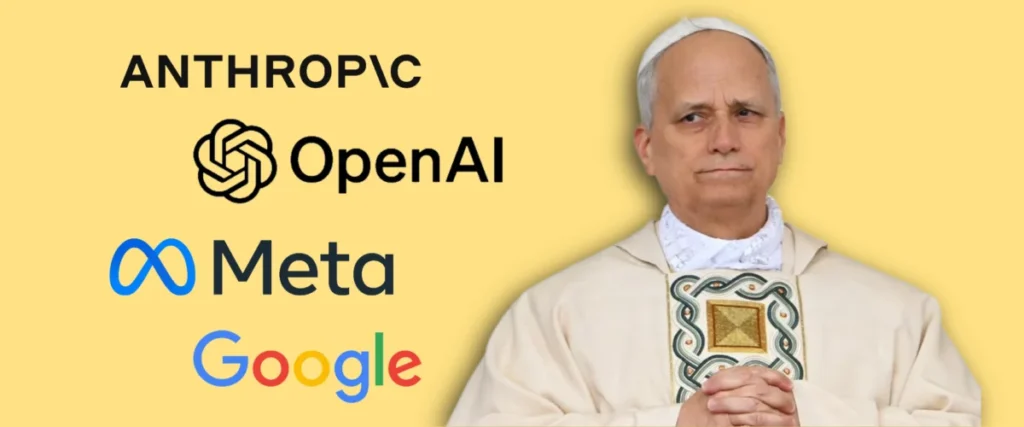
The dialogue initiated at such meetings culminated in a powerful official statement from the Holy See. Just last week, Pope Leo XIV released a monumental 42,000-word encyclical titled "Magnifica Humanitas" (Magnificent Humanity), specifically addressing the multifaceted challenges presented by artificial intelligence. Encyclicals are among the most authoritative forms of papal teaching, traditionally used to communicate on matters of doctrine, morality, or social concern, and carry significant weight for over a billion Catholics worldwide. The sheer length and detailed nature of "Magnifica Humanitas" underscore the gravity with which the Vatican views the AI revolution.
While still being thoroughly digested by theologians, ethicists, and policy analysts globally, early summaries indicate a clear and resolute message: the Pope is not prepared to passively accept a preordained, technologically driven future that might compromise human flourishing. The encyclical critiques what it perceives as an industry narrative often characterized by technological determinism and a quasi-religious fervor, where AI is presented as an inevitable force that humanity must simply adapt to.
A particularly poignant exhortation from the encyclical calls for a collective reorientation: "With the heart of a shepherd and a father, I ask everyone to abandon the construction of yet another Tower of Babel and to join forces in building up the common good, so that humanity will never lose its beauty, and the world once again will come to recognize the human heart as the place where God desires to dwell." This powerful metaphor of the Tower of Babel, drawn from biblical scripture, serves as a stark warning against hubris and attempts to transcend human limitations without divine or ethical grounding. It suggests that unbridled technological ambition, disconnected from human values and the common good, risks leading to fragmentation and ultimately, societal downfall, rather than progress.
The encyclical is understood to elaborate on several key ethical dimensions of AI, including:
- The Dignity of Labor: Expressing concern over potential mass job displacement and the devaluing of human work, emphasizing that technology should augment, not replace, human creativity and purpose.
- Human Autonomy and Agency: Warning against systems that could manipulate human behavior, diminish free will, or reduce individuals to mere data points.
- Algorithmic Bias and Discrimination: Highlighting the imperative for AI systems to be developed with justice and equity, avoiding the perpetuation or amplification of societal prejudices.
- The Common Good: Reaffirming the Church’s long-standing social teaching that all technological development must ultimately serve the welfare of all people, especially the most vulnerable, rather than exclusively benefiting a select few.
- Environmental Impact: While perhaps less direct, an encyclical on modern technology would likely touch upon the vast energy consumption of AI and its broader ecological footprint, consistent with previous papal teachings like Laudato Si’.
The Tech Industry’s Shifting Narrative: From Prophets to Pragmatists?
The Pope’s intervention comes at a critical juncture, as the narrative surrounding artificial intelligence within the tech industry itself appears to be undergoing a significant recalibration. For a considerable period, many prominent AI developers and executives adopted a tone that some critics, including the original article’s author, describe as having a "religious fervor." This era was marked by grand pronouncements about "inventing the future," often accompanied by dire warnings of existential risks (x-risk) and predictions of widespread job automation requiring universal basic income (UBI). Figures like Sam Altman and Dario Amodei, among others, frequently discussed scenarios where AI would fundamentally alter the labor market, necessitating radical societal adjustments like UBI, or envisioned a future living alongside "machines of loving grace."
This rhetoric, while perhaps intended to convey the transformative power of AI, inadvertently fueled public anxiety and painted a picture of an unstoppable, almost divine, technological force. It cast tech leaders in a dual role: as prophets revealing an inevitable future and as priests guiding humanity through its tumultuous arrival. However, recent weeks have witnessed a notable shift in this tone, moving away from apocalyptic pronouncements towards a more grounded, pragmatic perspective.
Nvidia CEO Jensen Huang, a key figure in the AI hardware revolution, publicly "called BS" on executives who attribute layoffs solely to AI, labeling such excuses as "lazy" and "just a way for them to sound smart." Huang’s comments challenge the notion that AI is an immediate, widespread job destroyer, suggesting instead that organizational inefficiencies or other economic factors are often the true culprits. His statement resonated widely, particularly as some companies, despite record profits and AI investments, have announced significant workforce reductions.
Even more remarkably, Sam Altman, CEO of OpenAI and a prominent voice in the x-risk discourse, recently admitted he had been "pretty wrong" about his earlier predictions regarding AI’s rapid and extensive automation of jobs. This admission represents a significant walk-back from previous statements that contributed to widespread fears of mass unemployment. Altman’s revised outlook suggests a longer, more gradual integration of AI into the workforce, with human-AI collaboration being a more likely near-term outcome than wholesale replacement.
Analysis of the Shift and its Implications
This change in rhetoric from leading tech figures is multifaceted. While some attribute it to genuine introspection and a more realistic assessment of AI’s current capabilities and deployment timelines, others view it primarily as a strategic move in public relations. The previous narrative, with its emphasis on x-risk and job displacement, generated considerable public fear and regulatory scrutiny. Public opinion polls consistently show significant concern among citizens regarding AI’s impact on employment, privacy, and societal control. For instance, a 2023 Pew Research Center study found that a majority of Americans (52%) were more concerned than excited about the increasing use of AI.
The pivot towards a more measured and human-centric discourse could be an attempt to mitigate these fears, reduce regulatory pressure, and foster greater public acceptance of AI technologies. It might also reflect an evolving understanding within the industry itself, as the practical challenges of deploying AI in real-world scenarios become clearer, tempering some of the earlier, more abstract predictions. The initial hype cycle around AI, characterized by bold claims and futuristic visions, may be giving way to a more sober assessment of its immediate applications and limitations.
The implications of this evolving dialogue are profound. The Pope’s encyclical provides a powerful moral framework, urging a redirection of technological ambition towards the common good and away from a "Tower of Babel" mentality. It reinforces the idea that technology is a tool, and like any tool, its value is determined by how it is wielded and for what purpose. This perspective challenges the deterministic view that AI’s trajectory is inevitable and uncontrollable, asserting instead that human agency and ethical choices remain paramount.
The shift in tone from tech leaders, whether driven by genuine change of heart or strategic repositioning, is nonetheless a positive development. It suggests a growing acknowledgment that the industry must engage more responsibly with public concerns and avoid rhetoric that generates unnecessary anxiety. Moving forward, a collaborative approach that integrates ethical considerations, human values, and practical utility will be crucial. This involves not only religious leaders and academics but also policymakers, civil society organizations, and the broader public, all working to ensure that AI serves to enhance "Magnifica Humanitas" rather than diminish it.
The current period represents a pivotal moment for AI development. The challenge now is to move beyond the extremes of uncritical enthusiasm and paralyzing fear, fostering a balanced approach that harnesses AI’s transformative potential while rigorously upholding human dignity and the common good. The Vatican’s strong moral voice and the tech industry’s recent recalibration offer a hopeful, albeit nascent, pathway toward a future where technology truly serves humanity.