



The proliferation of artificial intelligence (AI) tools, particularly generative AI, has sparked a burgeoning discourse among academics and educators concerning its potential impact on human cognitive and creative capacities. A growing body of research, published across a spectrum of reputable academic journals including Societies, Springer Nature, Science Direct, and the Journal of Computer Information Systems, is beginning to illuminate a phenomenon termed "cognitive offloading," where individuals increasingly delegate mental tasks to AI, potentially leading to a decline in their own abilities. This trend has emerged as a significant concern for educators, particularly at the university level, who are observing a profound and often unquestioning reliance on AI among students.
The Rise of Cognitive Offloading
Cognitive offloading, in essence, describes the act of using external tools or technologies to reduce the mental effort required to perform a task. While the use of calculators or search engines can be seen as forms of cognitive offloading that have historically aided productivity, the current wave of generative AI presents a more complex challenge. These tools are capable of producing human-like text, code, images, and other content, offering immediate solutions and creative outputs that can bypass the traditional processes of learning, critical thinking, and original ideation.
Early academic explorations into this phenomenon have highlighted several key areas of concern. Studies have begun to investigate how the convenience of AI-generated summaries might diminish a student’s capacity for deep reading and synthesis. Similarly, the ability of AI to draft essays or generate code raises questions about the development of writing and problem-solving skills. The very nature of these AI systems, designed to be responsive and helpful, can inadvertently foster a dependency that discourages the rigorous engagement with material that is fundamental to intellectual growth.
Echoes from the Pandemic and Digital Natives
The current landscape of AI reliance among students is, in part, a product of recent educational shifts and demographic trends. The widespread adoption of online learning during the COVID-19 pandemic, coupled with the increasing accessibility of advanced AI tools in high school, has created a generation of learners who have grown up with readily available digital assistance. For these "digital natives," the integration of AI into their academic lives may feel like a natural progression, rather than a potential compromise of their own cognitive development.
Anecdotal evidence from educators underscores this observation. In a first-year ancient global history course, a informal poll revealed that every student had utilized AI for at least one assignment within the past year, a striking statistic in a class of 45. This sentiment is echoed in broader surveys. A 2025 KPMG report indicated that a significant 73 percent of Canadian high school students self-reported using generative AI to aid their schoolwork. These figures suggest that AI has moved beyond being a niche tool to becoming an embedded component of the modern student’s academic toolkit, often without a full understanding of its limitations.
The Unseen Risks: Hallucinations, Formulaic Output, and Bias
The uncritical acceptance of AI-generated content carries inherent risks, many of which are not immediately apparent to users. A primary concern is the phenomenon of AI "hallucinations," where models generate plausible-sounding but factually incorrect information, including fabricated citations. Free versions of widely used AI chatbots, such as Copilot and ChatGPT, have been observed to regularly produce such inaccuracies.
Furthermore, the creative output of AI, while often impressive in its fluency, can be inherently formulaic and superficial. Lacking genuine understanding, context, or lived experience, AI-generated "literature" may be grammatically sound but devoid of the depth, nuance, and originality that characterize human creativity. This can manifest in essays that lack specific examples or insightful analysis, or in creative pieces that feel derivative and uninspired.
The inherent design of these AI models, optimized for user engagement and to provide helpful responses, can also lead to an overestimation of their reliability. For instance, attempts to use AI for complex linguistic tasks, such as parsing ancient languages, have revealed a tendency for chatbots to agree with a wide range of translations, indicating a lack of genuine discernment. Similarly, when tasked with analyzing historical legal codes, such as Hammurabi’s Law Code, AI has demonstrated an inability to consistently apply fundamental legal principles like lex talionis, showcasing a significant gap in analytical reasoning.
Beyond factual and analytical inaccuracies, AI models are susceptible to inheriting and amplifying biases present in their training data. This raises the specter of AI being used as a conduit for disinformation. Recent analyses have exposed how pro-Kremlin forces have actively sought to influence AI models, potentially leading to the propagation of propaganda disguised as reliable information. This underscores the critical need for users to be able to critically evaluate AI outputs and distinguish between factual information and potentially manipulated content.

A Classroom Experiment in AI Literacy
To address the growing reliance on AI and to cultivate essential AI literacy skills, educators are beginning to implement pedagogical strategies that engage students directly with AI’s capabilities and limitations. One such initiative involved a first-year premodern global history class that designed four assignments centered on prompting AI tools and critically analyzing their outputs. Microsoft Copilot was chosen for this exercise, leveraging a university-wide Microsoft Enterprise license that offered a degree of data protection for student interactions.
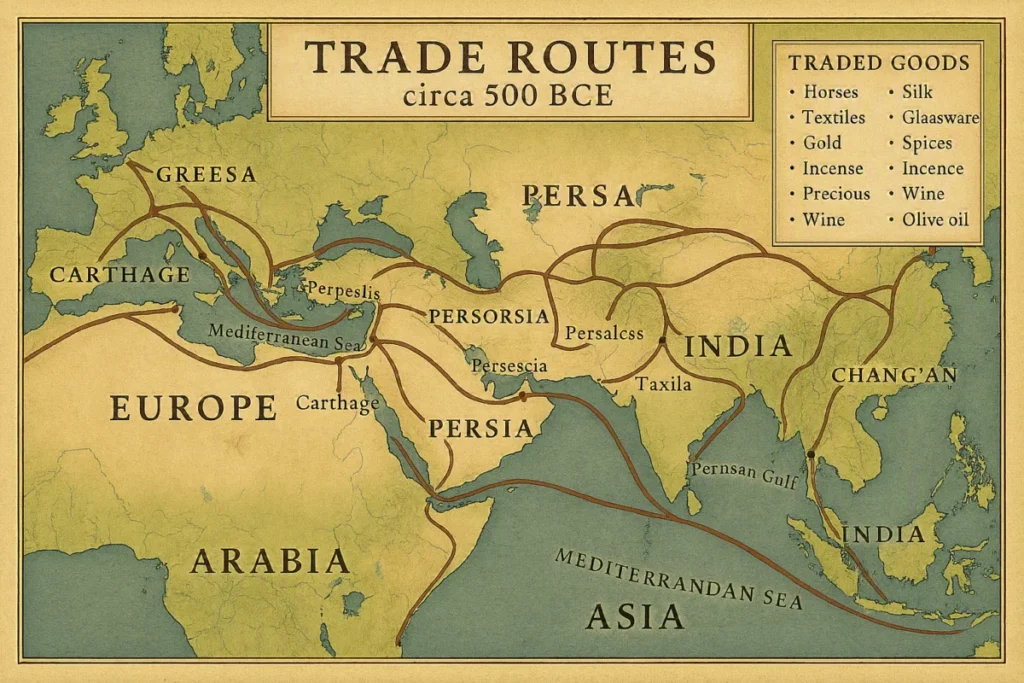
The assignments varied in scope, including tasks such as editing AI-generated essays for accuracy and coherence, evaluating Copilot’s ability to summarize academic articles, and refining prompts to guide the AI in creating an accurate historical map. It was the latter assignment, focused on geographical representation, that starkly illuminated the extent of student over-reliance on AI.
The Case of the Erroneous Maps
The assignment requiring students to prompt Copilot to generate a map of common trade routes across Afro-Eurasia circa 500 BCE yielded alarming results. The AI-produced maps contained a multitude of egregious geographical errors. Continents were mislabeled, with Africa appearing as Australia, and India being depicted within Europe. Landmasses were frequently confused with oceans, and vice versa. These were not minor discrepancies but fundamental misrepresentations of global geography.
Despite the visually apparent inaccuracies, a striking majority of students accepted the AI-generated maps at face value. Out of 45 students who attempted the assignment, only approximately 25 percent identified the maps as problematic. This suggests that the issue was not a lack of basic geographical knowledge among the students, but rather an absence of critical engagement with the AI’s output. The inherent trust placed in the technology led most students to bypass any attempt at verification, assuming the AI’s representation was inherently correct. This unquestioning acceptance, even when confronted with blatant inaccuracies, poses a significant concern for educators.
The Critical Need for Skepticism and Analysis
The widespread uncritical acceptance of AI output, as demonstrated by the map assignment, is a central concern for educators. If students struggle to identify glaring errors like mislabeled continents, it raises serious questions about their ability to detect more subtle inaccuracies, logical fallacies, or the insidious introduction of disinformation. The implications are far-reaching, potentially impacting students’ ability to engage with complex information, form well-reasoned arguments, and develop a nuanced understanding of the world.
To reinforce the critical importance of scrutinizing AI-generated content, a question was included on the final exam of the aforementioned history course. Students were tasked with identifying six errors, both geographical and related to ancient trade routes, within a Copilot-generated map of Afro-Eurasian trade routes from circa 500 BCE. The map, which contained numerous inaccuracies, was presented to the students, and the question was designed to assess their ability to critically analyze the AI’s output when specifically prompted to do so.
The results of this exam question were telling. Students performed exceptionally well, accurately identifying a multitude of errors. This indicates that the capacity for critical analysis and geographical awareness is present. However, the previous assignment demonstrated that this capacity is not automatically engaged when interacting with AI. Students needed a direct prompt and a structured task to activate their critical faculties. This highlights a critical pedagogical imperative: to instill a habit of automatic questioning and rigorous analysis when interacting with AI-generated content.
Cultivating Human Intelligence in the Age of AI
The current educational environment necessitates a proactive approach to cultivating AI literacy. The goal is not to reject AI tools outright, but to equip students with the skills to use them responsibly and effectively, ensuring that AI serves as a supplement to, rather than a substitute for, human cognitive and creative processes.
Educators must endeavor to prove to students that their own intellect and analytical abilities are superior to those of AI, particularly in areas requiring nuanced understanding, critical judgment, and original thought. This can be achieved through comprehensive AI literacy education integrated into high school curricula and university programs. Even within the humanities, disciplines that traditionally emphasize analytical reading, knowledge construction, and critical thinking, there is a vital role for AI literacy. These foundational humanistic skills can provide the essential framework for students to navigate the complexities of AI, fostering an environment where technology enhances, rather than erodes, human intellectual capacity. The future of learning hinges on our ability to foster a generation of discerning users who can leverage AI’s power without sacrificing their own cognitive autonomy.