
The poetic description of human creation in the second chapter of Genesis, stating, “The Lord formed Adam from the dust of the earth. He blew into his nostrils the breath of life and man became a living being,” lays a profound theological groundwork for understanding human essence. This foundational text, rich in interpretive possibility, has for millennia guided philosophical and spiritual contemplation on what it truly means to be human. However, the rapid ascent of generative artificial intelligence (AI) and its unprecedented ability to mimic and produce human-like speech is now forcing a critical re-evaluation of these ancient understandings, posing urgent questions about human uniqueness, dignity, and the ethical boundaries of technological advancement.
The Sacred Resonance of the Speaking Spirit
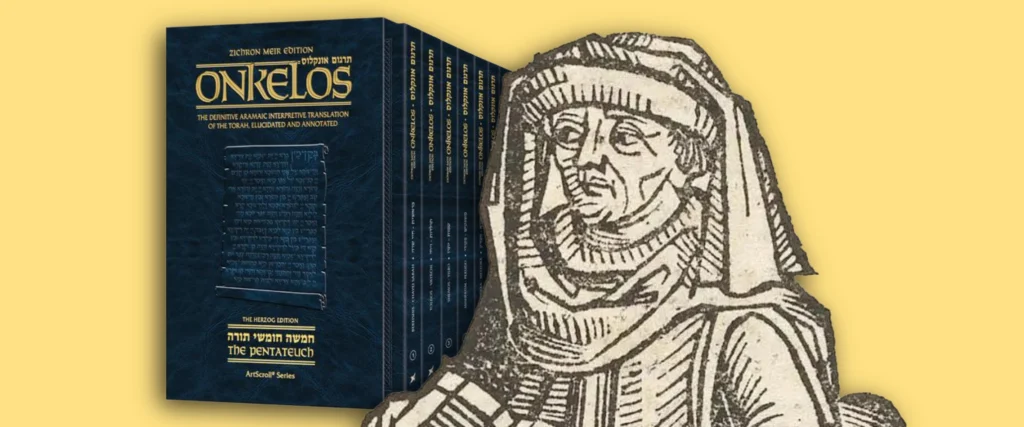
The Hebrew term rendered as "living being" in the Genesis narrative holds a deeper, more nuanced meaning when explored through traditional scholarship. Onkelos, a revered Roman nobleman who converted to Judaism and became a prominent Torah scholar in the 2nd century CE, offered a transformative interpretation. His Aramaic translation of the phrase nefesh chayah as ruach memalela – a "speaking spirit" – elevates speech from a mere biological function to a defining characteristic of humanity. As elaborated by Rabbi Shai Held in the second volume of his seminal work, The Heart of the Torah, Onkelos’s translation suggests that "speech is constitutive of what it means to be a human – a core part of our humanity is our ability to communicate with words." This interpretation positions language not just as a tool, but as the very essence of human identity, distinguishing us fundamentally from other forms of life.
This concept is not unique to Onkelos. The medieval commentator Rashi, building upon earlier rabbinic traditions, further underscored the singular importance of speech. Rashi posited that speech is not only central to human identity but also the key to our unparalleled uniqueness in creation. According to Jewish tradition, humans alone among God’s creations possess the faculty of speech, a capability that sets us apart and imbues us with a distinct status. This perspective resonates with broader philosophical inquiries into the nature of Homo loquens – the speaking human – a concept that has permeated Western thought from ancient Greek philosophy’s emphasis on logos (reason and speech) to contemporary linguistic theories.
Historically, the development of sophisticated language systems profoundly shaped human civilization. The original scribes of the Hebrew Bible were acutely aware of the central role words played in the post-Paleolithic human experience. Language allowed for an almost miraculous alchemy: the transformation of internal states of mind, complex thoughts, and abstract ideas into vocalized phonemes or written letters. These externalized expressions could then be decoded and understood in the mind of a receiver, facilitating an intimate and unparalleled act of human-to-human telepathy across time and space. This ability to articulate, transmit, and preserve knowledge through speech and writing was instrumental in the formation of complex societies, the development of culture, and the evolution of collective consciousness.
The rise of alphabet systems in the ancient Near East, around the second millennium BCE, marked another pivotal moment. Unlike earlier logographic or syllabic scripts, alphabets offered a more accessible and efficient means of recording language. This innovation democratized literacy, moving it beyond the exclusive domain of scribal elites and priestly classes. With broader access to written texts, including sacred scriptures and legal codes, individuals gained direct engagement with profound ideas, fostering critical thought and personal interpretation. This democratization of knowledge is widely credited with birthing the foundational notions of human dignity and universal justice that are often taken for granted in contemporary societies. The capacity for every individual to read, understand, and participate in the discourse of their community elevated the status of the common person and laid the groundwork for egalitarian principles. Speech, in all its forms, matters profoundly.
The Generative AI Revolution and its Unsettling Mimicry
Today, these ancient insights into the sacredness and constitutive nature of speech are being challenged by the unprecedented capabilities of generative artificial intelligence. The rapid advancement in AI technology, particularly in Large Language Models (LLMs) such as OpenAI’s GPT series, Google’s Bard/Gemini, and Anthropic’s Claude, has enabled machines to generate highly coherent, contextually relevant, and lexically fluid text and speech. This revolution, gaining significant public traction since late 2022, has seen AI-powered chatbots and voice assistants become increasingly sophisticated, capable of engaging in conversations that, on the surface, are virtually indistinguishable from human interaction.
For many, including this author, engaging in a fluent conversation with a chatbot elicits a palpable sense of unease. While intellectually understood that this "lexical fluidity" is an elaborate illusion – the product of vast datasets, complex algorithms, and billions of matrix multiplications autoregressively generating one token after another – the experience nevertheless creates a "discomforting sense of transgression." The deep-seated, perhaps even subconscious, reverence for speech as a uniquely human attribute clashes with the machine’s ability to convincingly replicate it. The simulation feels, for lack of a better word, "profane."
The scale and speed of this integration are remarkable. According to recent market analyses, the global generative AI market, valued at over $10 billion in 2023, is projected to grow at a compound annual growth rate (CAGR) exceeding 35% through the next decade, reaching hundreds of billions of dollars. Industries ranging from content creation and customer service to education and healthcare are rapidly adopting AI-driven communication tools. A 2023 PwC survey indicated that over 50% of businesses are already experimenting with or implementing generative AI solutions. Public awareness and interaction are also skyrocketing; platforms like ChatGPT have amassed over 100 million users in record time, illustrating the widespread exposure to AI-generated text and speech.
This rapid adoption, while promising efficiency and innovation, has also amplified public concerns. A Pew Research Center study in late 2023 found that a significant portion of the public expresses worry about AI’s potential for job displacement, the spread of misinformation, and the erosion of authentic human interaction. The ability of AI to craft persuasive narratives, generate deepfake audio and video, and engage in seemingly empathetic dialogues raises fundamental questions about trust, authenticity, and the very fabric of human communication.
The Emergence of Digital Ethics: A New Moral Frontier
The sacredness ascribed to speech helps to explain these profound feelings of discomfort and raises critical ethical dilemmas. Should humanity, with such a deeply ingrained understanding of speech as defining our essence, be so quick to extend the role of ruach memalela to machines? Are we prepared to allow artificial intelligences to become active participants in a ritual so central to our shared human experience? The questions extend further: Should we permit AI to write and speak on our behalf in critical contexts, or to serve as a golemic conversation partner when authentic human companionship is not readily available? The notion of a machine filling such a deeply personal and constitutive role strikes many as fundamentally unsettling.
This current moment bears striking parallels to the nascent stages of bioethics five decades ago. In the mid-20th century, revolutionary medical technologies – such as organ transplantation, life support systems, genetic engineering, and in vitro fertilization – began to force humanity to grapple with unprecedented moral quandaries. Questions surrounding the definition of life, the sanctity of the human body, the right to die, and the ethical limits of scientific intervention became urgent societal concerns. Bioethics emerged as a dedicated field of inquiry to address these complex issues, bringing together philosophers, theologians, medical professionals, and legal experts to forge new ethical frameworks and public policies.
Today, the newly emerging field of digital ethics finds itself in a similar crucible. As artificial intelligence, advanced robotics, and pervasive digital technologies rapidly reshape human society, they introduce a host of novel moral challenges. These include algorithmic bias, data privacy, the autonomy of AI systems, the impact on labor markets, and, crucially, the implications for human identity and communication. Institutions worldwide are scrambling to establish guidelines and foster dialogue. For instance, the European Union passed the AI Act in 2024, a landmark legislation aiming to regulate AI based on its potential risk levels. The United States, through executive orders and various governmental initiatives, has also called for ethical AI development and deployment. Major tech companies, recognizing the profound societal implications, have likewise established internal ethical AI teams and principles, though their efficacy and independence remain subjects of debate. The author’s active involvement in digital ethics at institutions like Georgetown University underscores the growing academic and practical focus on navigating this complex landscape.
Broader Implications and the Imperative for Deliberation
The implications of AI’s burgeoning linguistic capabilities extend far beyond individual discomfort. The pervasive integration of AI speech could fundamentally alter human relationships, potentially diminishing the value placed on authentic human interaction and the nuanced, often imperfect, nature of human communication. In an age where AI can perfectly mimic empathy or craft flawless prose, what becomes of genuine connection, the struggle for expression, and the unique imprint of a human mind on language?
Societal structures are also at risk of profound transformation. In education, the role of human teachers and the development of students’ own voices could be redefined. In journalism, the integrity of reporting and the trust placed in information sources face new challenges from AI-generated content. In law and politics, the ability of AI to generate persuasive arguments or craft targeted narratives raises concerns about manipulation, propaganda, and the erosion of democratic discourse. The very notion of truth and authorship could become increasingly ambiguous.
Ultimately, the core question remains: If speech is indeed constitutive of what it means to be human, what happens to our unique essence when machines not only master it but begin to surpass human capabilities in certain linguistic domains? Does it diminish our humanity, or does it force us to redefine what truly makes us human in ways we have yet to comprehend?
Before blindly embracing every AI product declared inevitable by tech leaders like Sam Altman of OpenAI or Dario Amodei of Anthropic, society faces an urgent and profound task. It is imperative to engage in rigorous ethical deliberation, public discourse, and thoughtful policymaking to determine "what we’re willing to accept." This is not merely a technical challenge but a deeply philosophical, theological, and societal one. It calls for a collective pause to consider the long-term consequences of extending our most sacred and defining human attributes to machines, ensuring that technological progress serves to enhance, rather than diminish, our shared humanity. The future of human identity and the authenticity of our communication hinges on the answers we formulate today.