



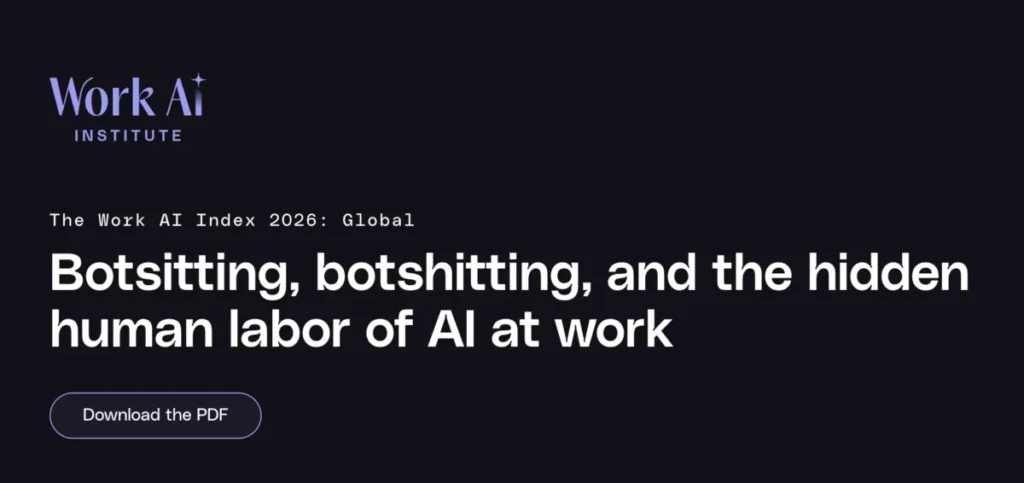
A recent report by the Financial Times brought to light a paradoxical finding from a survey of 6,000 digital workers, conducted by Rebecca Hinds, head of the Work AI Institute. The survey revealed that while respondents claimed AI saved them an average of 11 hours per week, a mere 13% reported any tangible improvement in their company’s overall performance. This striking discrepancy has ignited a critical conversation about the true impact of artificial intelligence on workplace productivity, suggesting that AI may be less of a revolutionary fix and more of an amplifier of pre-existing systemic inefficiencies within the modern professional landscape.
The Productivity Paradox: A Deep Dive into Discrepancy
The core finding from the Work AI Institute’s survey presents a modern iteration of the long-standing "productivity paradox," a phenomenon where significant technological advancements fail to translate into measurable improvements in aggregate productivity statistics. This paradox gained prominence in the 1980s with the widespread adoption of computers, leading economist Robert Solow to famously quip, "You can see the computer age everywhere but in the productivity statistics." Today, as generative AI permeates various industries, a similar skepticism is emerging, challenging the prevalent narrative that AI is an immediate, unequivocal booster of efficiency.
Rebecca Hinds offered three primary explanations for this counterintuitive outcome, explanations that resonate deeply with observations made long before the current AI boom:
- Lack of Strategic Integration: Many companies are deploying AI tools without a clear, overarching strategy for how these technologies should integrate with existing workflows or contribute to specific business objectives. AI is often adopted as a standalone tool rather than a seamlessly integrated component of a redesigned process.
- Increased "Pseudo-Productivity": The time "saved" by AI might not be reallocated to higher-value, impactful work. Instead, it could be absorbed by what productivity expert Cal Newport, in his 2024 book Slow Productivity, terms "pseudo-productivity" – the illusion of busyness generated by rapid context-switching, managing diverse digital tools, and engaging in low-value administrative tasks. This digital overhead existed prior to AI and is now potentially exacerbated.
- Exacerbating Existing Workload Issues: AI may free up time on specific tasks, but it often does not reduce the overall volume of work or address underlying issues of overloaded schedules and inefficient project management. Workers might simply find themselves with more capacity to take on additional, often non-strategic, tasks, perpetuating a cycle of busyness without true progress.
These findings are particularly pertinent given the current investment climate, with major AI developers like OpenAI and Anthropic reportedly preparing for potential initial public offerings (IPOs). The market’s high expectations for AI’s transformative power underscore the urgency of understanding these real-world implementation challenges.
A Historical Echo: Digital Tools and the Illusion of Efficiency
The issues highlighted by Hinds and echoed by Newport are not entirely novel to the era of artificial intelligence. An earlier generation of digital tools — email, instant messaging platforms like Slack, video conferencing, and mobile computing — promised similar leaps in productivity. Yet, their widespread adoption often led to unforeseen consequences that fragmented attention, increased communication overhead, and blurred the lines between work and personal life.
Before AI, workers were already grappling with the immense time wasted "wrangling diverse devices, applications, and rapidly toggling back and forth between different tasks and channels," as Newport notes. The constant stream of notifications, the pressure to respond immediately, and the sheer volume of digital communication created an environment ripe for distraction and superficial engagement. Workplace "theater," or pseudo-productivity, where individuals appear busy without necessarily advancing meaningful goals, became a pervasive issue. Tasks like excessive email checking, attending non-essential meetings, or meticulously organizing digital files often masked a lack of deep, focused work.
The chronology of digital work illustrates this progression:
- 1990s-Early 2000s: The Dawn of Email and Internet: Email revolutionized communication, promising speed and efficiency. However, it quickly became an inbox management burden, creating a constant pull on attention.
- Mid-2000s: Mobile Computing and Always-On Culture: Smartphones and pervasive internet access tethered employees to work, blurring boundaries and increasing expectations for immediate availability.
- Late 2000s-2010s: Collaboration Platforms (Slack, Microsoft Teams, Zoom): These tools aimed to streamline team communication and collaboration but often led to information overload, notification fatigue, and an exponential increase in context switching. The "always-on" culture intensified, making sustained, deep work increasingly challenging.
- Early 2020s: The AI Influx: The latest wave of generative AI tools promises to automate repetitive tasks, draft content, and synthesize information. However, without a fundamental re-evaluation of how work is structured, these tools risk simply adding another layer of complexity to an already fractured work environment, amplifying existing problems rather than solving them.
Inferred Reactions and Expert Perspectives
The findings from the Work AI Institute likely elicit varied responses from different stakeholders:
- AI Developers (e.g., OpenAI, Anthropic): While acknowledging the implementation challenges, these companies would likely emphasize the nascent stage of AI adoption, highlighting the immense potential that is yet to be fully realized. Their narrative would focus on ongoing advancements in AI capabilities, user-friendliness, and future integration possibilities, urging businesses to invest in training and strategic deployment rather than dismissing the technology’s long-term value. They might point to early adopters who have seen significant gains as proof of concept, suggesting that widespread impact requires more sophisticated integration strategies.
- Business Leaders and CIOs: For many executives, the survey results would confirm existing anxieties about the return on investment (ROI) for their AI expenditures. They are grappling with significant investments in AI technologies, often driven by competitive pressure and the fear of being left behind. These leaders might feel a renewed urgency to develop clearer AI strategies, invest in change management, and focus on specific, high-impact use cases rather than broad, unfocused deployment. The data would serve as a crucial reality check, prompting a shift from merely acquiring AI tools to strategically leveraging them.
- HR and Organizational Development Specialists: These professionals would likely see the findings as validation of their concerns regarding employee well-being, skill gaps, and the need for comprehensive workforce planning. They would advocate for more human-centric approaches to AI integration, emphasizing training, upskilling, and a focus on how AI can augment human capabilities rather than simply replace tasks. The data would underscore the importance of redesigning roles and processes to maximize AI’s benefits while minimizing its potential negative impacts on employee engagement and mental health.
- Workplace Productivity Researchers (e.g., Cal Newport, Rebecca Hinds): These experts would reinforce their long-standing arguments that technology alone cannot solve fundamental problems in work design. They would emphasize the need for a holistic approach that includes strategic process re-engineering, fostering a culture of deep work, and rethinking organizational structures. The AI phenomenon, in their view, merely provides a potent new lens through which to observe and address these persistent issues.
Broader Impact and Implications: A Catalyst for Change
The current AI discourse offers a potential silver lining. The novelty and excitement surrounding artificial intelligence are compelling business leaders to pay unprecedented attention to its impacts on the workplace. In their earnest pursuit of understanding how to make AI effective, they might finally be forced to confront and rectify what has been fundamentally broken in work for decades.
This critical examination could lead to several significant implications:
- Re-evaluation of Work Design: Organizations might move beyond simply layering AI onto existing, inefficient processes. Instead, they could undertake a fundamental re-evaluation of how work is structured, identifying opportunities to eliminate unnecessary tasks, streamline workflows, and foster environments conducive to deep, focused work. This could involve redefining job roles, optimizing collaboration strategies, and setting clear boundaries around digital communication.
- Strategic AI Adoption: Companies may shift from a reactive, tool-centric approach to a proactive, strategy-driven one. This means identifying specific business problems or opportunities where AI can deliver measurable value, investing in pilot programs, and scaling solutions only after demonstrating tangible benefits. A focus on "augmented intelligence," where AI enhances human capabilities rather than replacing them indiscriminately, could become paramount.
- Investment in Human Capital: The paradox highlights the crucial role of human skills in leveraging AI effectively. This will necessitate greater investment in training employees not just on how to use AI tools, but when and why to use them, and how to integrate AI-generated outputs into higher-level strategic thinking. Skills in critical thinking, problem-solving, creativity, and effective communication will become even more valuable as AI handles routine tasks.
- Addressing Digital Overload and Burnout: The amplified "pseudo-productivity" brought about by AI could force organizations to finally tackle issues like notification fatigue, excessive meetings, and the always-on culture that contributes to employee burnout. Implementing policies that protect focused work time, encourage asynchronous communication, and promote digital well-being might gain traction.
- New Metrics for Productivity: The inadequacy of simply measuring "hours saved" suggests a need for more sophisticated productivity metrics. These could include measures of impact, innovation, quality of output, and employee engagement, moving beyond mere efficiency to assess true effectiveness and value creation.
In conclusion, the narrative that AI is "breaking work" misses a crucial point. Instead, it appears to be holding a mirror up to a workplace that was already fractured by decades of digital distraction, unstrategic tool adoption, and a culture of perpetual busyness. The significant investment and attention currently being directed towards AI provide a unique window of opportunity. By understanding why AI isn’t yet delivering on its promised productivity gains, businesses have a chance to not only optimize their AI deployments but, more importantly, to fundamentally redesign work for the better, fostering environments where true accomplishment can flourish without the pervasive specter of burnout. This moment calls for introspection, strategic foresight, and a commitment to addressing the foundational issues that have long hampered human potential in the digital age.