



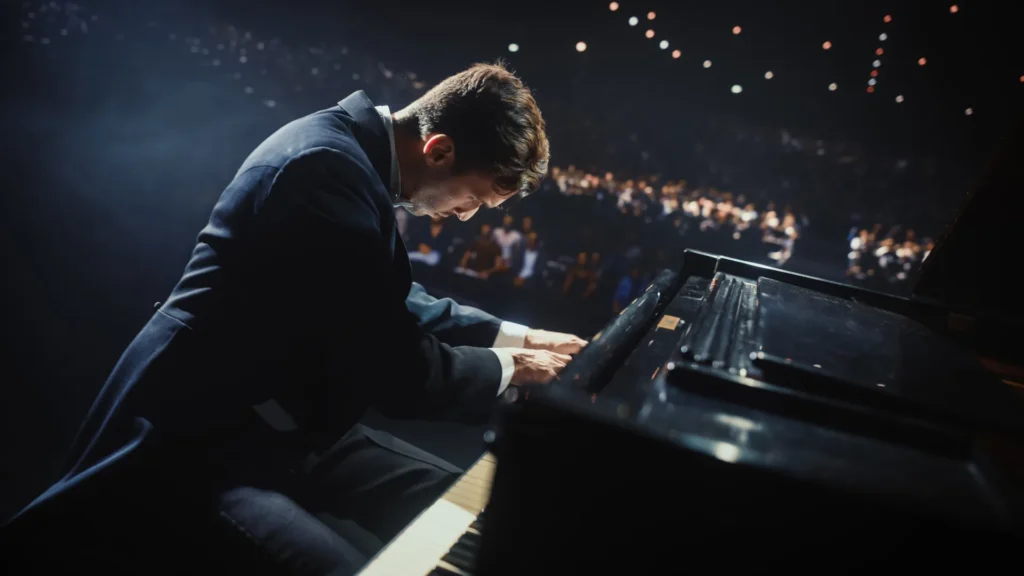
For generations, the nuanced artistry of piano performance has been a subject of fervent discussion, with pianists and music teachers steadfastly asserting that a performer’s touch imparts a unique character to a piano’s sound. This deeply held intuition, however, has long faced skepticism from a segment of the scientific community. Critics argued that once a piano hammer strikes a string, the resulting tone is determined almost entirely by the instrument’s inherent physics – its construction, materials, and tuning. Any perceived differences in tonal quality, they contended, were merely psychological or attributable to variations in loudness, timing, or articulation, rather than an intrinsic alteration of timbre through touch. This long-standing dichotomy between artistic belief and scientific doubt has now been significantly addressed by groundbreaking research.
A Century of Debate: The Scientific vs. Artistic Divide
The question of whether pianists possess the ability to truly alter timbre through their touch has been a cornerstone debate in music performance science since the early 20th century. While musicians frequently employ a rich vocabulary to describe tonal qualities—terms like "warm," "dark," "bright," "heavy," "singing," or "percussive"—many early acousticians and scientists struggled to find measurable physical correlates for these subjective descriptions that were independent of volume or duration.
The scientific skepticism was largely rooted in the understanding of piano mechanics. When a key is pressed, it triggers a hammer, which then strikes a string. The initial impact velocity of the hammer dictates the string’s amplitude (loudness) and to some extent, the harmonic content (timbre) by exciting different overtones. However, skeptics argued that beyond this initial velocity, the pianist’s finger loses contact with the key, and thus, has no further influence on the vibrating string. From this perspective, any perceived timbral variation was either an illusion or a consequence of other performance parameters like dynamics, articulation, or pedaling.
Conversely, celebrated pianists from Frederic Chopin to Vladimir Horowitz, and esteemed pedagogues from Theodor Leschetizky to Heinrich Neuhaus, consistently emphasized the paramount importance of "touch" in shaping the expressive landscape of a piece. They spoke of finding the "soul" of the sound through the fingers, developing a unique "sound signature" that transcended mere technical proficiency. This artistic intuition, passed down through generations of teaching, lacked empirical validation, leaving it vulnerable to scientific challenge. The debate often simmered, with each side possessing compelling, yet ultimately unquantifiable, arguments.
The Breakthrough Methodology: Unveiling the Unseen
The new research, led by Dr. Shinichi Furuya of the NeuroPiano Institute and Sony Computer Science Laboratories, Inc., represents a significant leap forward in resolving this enduring mystery. Published in the prestigious Proceedings of the National Academy of Sciences (PNAS), the study leveraged cutting-edge ultra-high-speed sensing technology to meticulously uncover the hidden movements that underpin expressive piano playing.
The core of their methodology involved a custom-built non-contact sensing system dubbed "HackKey." This innovative system was capable of recording the movements of all 88 piano keys with unprecedented precision: at a staggering speed of 1,000 frames per second and with microscopic spatial resolution, down to a few micrometers. This level of detail allowed the researchers to capture the minutiae of key depression and release, finger-key interaction, and the subtle mechanics that occur within milliseconds of a key press—details previously invisible to conventional measurement techniques.
To gather empirical data, twenty internationally acclaimed pianists were recruited for the study. These virtuosos, each with an average of over 25 years of intensive training and extensive concert experience, were tasked with playing individual notes and short musical phrases while intentionally producing contrasting tonal qualities. Specifically, they were asked to elicit "bright" versus "dark" sounds, and "light" versus "heavy" sounds. This experimental design was crucial, as it allowed researchers to isolate the performer’s intent to alter timbre, rather than merely observing spontaneous expressive variations. The data collected from HackKey included millions of data points across various performance parameters, providing a comprehensive kinematic profile of each touch.
The subsequent phase of the study involved extensive listening tests. Audiences, comprising both individuals with no formal musical training and professional pianists, were played the recorded performances and asked to identify the intended timbral qualities (e.g., "Was this sound bright or dark?"). The results were striking: listeners consistently recognized the intended timbres with high accuracy, often exceeding 85% correct identification. This was true even for participants without musical backgrounds, suggesting that the timbral differences were perceptually robust and not merely artifacts of expert listening. Professional pianists, as expected, exhibited an even greater sensitivity to these subtle differences, demonstrating near-perfect identification rates and often articulating the nuances with precise musical terminology.
Precise Movements, Profound Impact: Key Findings
The meticulous analysis of the colossal dataset generated by HackKey revealed that only a handful of extremely precise movement features were strongly and causally connected to changes in perceived timbre. These were not gross movements or simple changes in key velocity, but rather micro-variations that occur within the initial fractions of a second of the key’s descent and the finger’s interaction with it. The identified features included:
- Tiny variations in acceleration profiles: How quickly and smoothly the key accelerates and decelerates during its descent, not just its final velocity.
- Micro-timing adjustments: Minute differences in the exact moment of key bottoming out and the precise synchronization (or subtle desynchronization) between the actions of multiple fingers or hands.
- Subtle finger-key interaction characteristics: The specific way the finger applies pressure and releases from the key, influencing the hammer’s trajectory and contact with the string.
One of the most compelling findings was the demonstration that altering a single movement feature could reliably and reproducibly change how listeners described the sound. This provided direct, quantifiable evidence that touch itself plays a causal role in shaping timbre, rather than merely accompanying other musical effects like loudness or tempo. For instance, specific micro-adjustments in the key’s acceleration profile were found to correlate directly with perceptions of "brightness" or "darkness," independent of the note’s overall volume. This debunks the long-held skeptical view that only hammer velocity matters, revealing a much more intricate interplay of forces.
The study described these subtle gestures not as accidental variations but as part of a shared, highly refined motor skill developed through years of advanced piano training. According to Dr. Furuya, this means that the artistry behind piano tone is not merely metaphorical, subjective, or an illusion. It is grounded in measurable, repeatable physical actions, honed through dedicated practice and embodied cognition. "Our work helps to bring a long-standing artistic intuition into the realm of science," Dr. Furuya explained in a follow-up interview. "These findings support what many pianists have believed for decades, while also offering a clearer, scientific understanding of precisely how skilled movement creates emotional and aesthetic experiences in music." The research effectively bridges the gap between the subjective experience of the artist and the objective analysis of the scientist, providing empirical validation for a core tenet of piano pedagogy.
Vindication for Artists, Foundation for Science: Expert Reactions
The publication of these findings has been met with significant excitement across various disciplines, particularly within the music and neuroscience communities. For professional pianists and music educators, the study offers a powerful validation of their lifelong dedication to cultivating a refined "touch."
A representative from the International Federation of Musicians, commenting on the study’s implications, stated, "This research provides concrete scientific backing for what pianists have intuitively understood and taught for centuries. It’s a profound vindication of the artistry involved in manipulating sound through the instrument, and it underscores the depth of skill required to be a truly expressive performer." This sentiment resonates deeply with the artistic community, providing empirical weight to concepts that were previously considered elusive or purely subjective.
Leading music educators have also expressed enthusiasm for the potential pedagogical applications. Dr. Elena Petrova, a renowned piano pedagogue, remarked, "Teaching ‘warmth’ or ‘brilliance’ in tone has always relied heavily on metaphor and demonstration. Now, with this kind of data, we can envision a future where students receive objective feedback on the precise micro-movements of their fingers and hands, directly correlating them to desired timbral outcomes. This could revolutionize how we train future generations of pianists, making the path to expressive mastery more efficient and perhaps even accessible."
From a scientific perspective, the study is lauded for its rigorous methodology and its contribution to the nascent field of "dynaformics"—the science of music performance. Dr. Anya Sharma, a neuroscientist specializing in motor control, noted, "Furuya’s work is a masterful demonstration of how advanced sensor technology can unpack incredibly complex human motor skills. It highlights the exquisite precision of the human sensorimotor system and offers new avenues for understanding how the brain orchestrates subtle physical actions to produce specific perceptual and emotional effects." This interdisciplinary appeal underscores the broad impact of the research beyond the confines of music.
Beyond the Concert Hall: Far-Reaching Implications
The implications of this groundbreaking research extend far beyond the practice rooms and concert halls, promising to influence diverse fields such as music education, neuroscience, rehabilitation science, robotics, and human-computer interaction.
Transforming Music Education: One of the most immediate and impactful applications lies in music pedagogy. The ability to objectively measure and visualize the precise movements associated with specific timbral qualities could fundamentally transform how expressive techniques are taught. Instead of relying solely on vague instructions such as "play warmer" or "use a lighter touch," future training systems could leverage this data. Imagine an AI-powered tutor that provides real-time visual feedback, showing students the exact physical movements—down to micrometer variations in finger acceleration—associated with producing a "singing" tone versus a "percussive" one. This could significantly accelerate learning, demystify complex expressive concepts, and help students develop a nuanced touch more efficiently.
Advancing Neuroscience and Rehabilitation: The study’s findings offer crucial insights into the intricate relationship between advanced motor control and sensory perception. By identifying the specific neural and physical mechanisms through which minute movements shape sound perception, researchers can gain a deeper understanding of how the brain integrates motor commands with auditory feedback. This has profound implications for rehabilitation science, particularly for individuals recovering from neurological injuries such as stroke, which often impair fine motor control. Training systems inspired by expressive musical performance could be developed to help patients regain dexterity, coordination, and proprioception by focusing on the precise, goal-oriented movements required to produce specific musical timbres.
Revolutionizing Robotics and Human-Computer Interaction: The detailed kinematic data on expressive piano playing provides an invaluable blueprint for the development of more sophisticated and human-like robotic systems. Current music-playing robots often struggle to replicate the subtle nuances of human performance, tending to sound mechanical. By integrating the movement features identified in this study, future musical robots could be programmed to generate more expressive digital instruments or even physical robotic performers capable of reproducing subtle timbral nuances. This also extends to human-computer interaction, where understanding how subtle physical gestures convey complex information could lead to more intuitive and responsive interfaces, perhaps in areas like virtual reality or teleoperation.
Enhancing Dynaformics and Performance Science: The research significantly strengthens the field of "dynaformics," which studies the science of music performance. By rigorously quantifying the physical basis of artistic expression, it provides new tools for understanding the biomechanics of playing, identifying movement patterns that contribute to injury, and developing optimized training regimens. This could help musicians train more efficiently, avoid repetitive strain injuries, and overcome physical limitations that often accompany years of intense practice. It elevates music performance from an art to a scientific discipline, allowing for data-driven insights into peak performance.
Unlocking the Science of Creativity: Finally, the study contributes to a broader scientific effort to understand the nature of creativity itself. For decades, research on perception in music largely focused on quantifiable elements such as pitch, loudness, and rhythm. Timbre, however, has been notoriously difficult to study because it involves higher-level sensory interpretation, emotional response, and subjective aesthetic judgment. By identifying specific physical actions linked to timbre perception, Dr. Furuya and his team have opened the door to studying how artistic expression emerges from the dynamic interaction between the body, brain, and sound. It suggests that creativity is not just a cognitive process, but an embodied one, where the most profound emotional and aesthetic experiences can be rooted in movements so small they are nearly invisible, yet precise enough for human listeners to feel the difference. This breakthrough paves the way for a more holistic understanding of human artistic potential.