


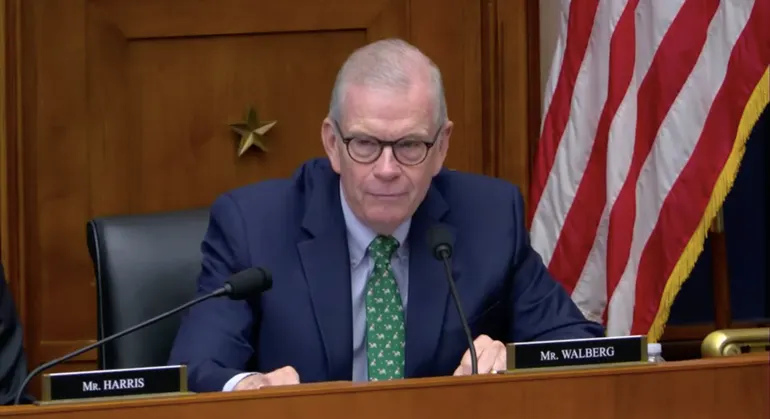
Two significant pieces of legislation, the CHARLIE Act (H.R. 8705) and the Stopping Indoctrination and Protecting Kids Act (H.R. 2616), have recently been advanced by Republican lawmakers in the House of Representatives, signaling a concerted effort to influence curriculum and student rights in K-12 education. Spearheaded by Representative Burgess Owens, R-Utah, and with Rep. Tim Walberg, R-Mich., chair of the House Education and Workforce Committee, lending his support to H.R. 2616, these bills appear to draw heavily from the framework of executive orders previously issued by the Trump administration. These legislative proposals aim to restrict discussions and policies related to what proponents term "discriminatory equity ideology" and "gender ideology," while also targeting certain race-related topics and the facilitation of social transitions for transgender students without parental consent.
The core tenets of these bills echo the language and intent of several executive orders signed during the Trump presidency. Notably, Executive Orders 14168, 14185, and 14190 sought to limit transgender students’ access to facilities and programs aligned with their gender identity and to prohibit specific race-based educational initiatives. These orders, in turn, have triggered federal civil rights investigations by the Department of Education, including inquiries into the participation of transgender student-athletes in women’s and girls’ sports across various states. The legislative push by Owens and Walberg suggests a renewed focus on codifying these restrictions into federal law, potentially expanding their reach and impact beyond the scope of executive directives.
Representative Owens has been a vocal proponent of these measures, articulating his stance in a May 20 statement regarding H.R. 2616: "There are only two sexes: male and female. Sex is a biological fact, not an ideological whim. Yet across the country, school districts are actively pushing radical gender ideology on children and, in some cases, facilitating social transitions without parental knowledge or consent." This statement highlights the central argument of supporters: that these policies are necessary to protect children from what they perceive as ideological indoctrination and to uphold parental rights in education.
Further bolstering the momentum for H.R. 2616, the White House Office of Management and Budget (OMB) issued a memo last week signaling its support. The OMB indicated that advisors would recommend that then-President Trump sign the bill into law should it successfully navigate the legislative process in both the House and the Senate. This endorsement from the executive branch underscores the administration’s alignment with the objectives of these legislative efforts. As of the latest available information from Congress.gov, there does not appear to be companion legislation for either the CHARLIE Act or the Stopping Indoctrination and Protecting Kids Act currently active in the Senate.
The controversy surrounding these types of educational policies is not new. The executive orders that partially inspired the current legislation have faced significant legal challenges. The American Civil Liberties Union (ACLU) has filed a lawsuit on behalf of twelve students attending Department of Defense Education Activity (DoDEA) schools, alleging that these executive orders violate students’ First Amendment rights. According to the ACLU’s complaint, filed last year, the DoDEA schools experienced a chilling effect from these orders, leading to the removal of books, cancellation of events, and alterations to curriculum. The lawsuit specifically cites changes in topics such as slavery, Native American history, LGBTQ+ identities and history, sexual harassment and abuse prevention, and even portions of the Advanced Placement Psychology curriculum.
In October, a federal judge overseeing the case in the U.S. District Court for the Eastern District of Virginia’s Alexandria Division issued a temporary pause on the enforcement of the order for the schools involved in the ACLU’s lawsuit. However, the broader constitutional questions surrounding the executive orders and, by extension, the principles embodied in the new legislation, remain under active legal review. Critics, including the ACLU, contend that these policies stifle student expression and lead to the censorship of vital educational content, hindering a comprehensive understanding of history and societal issues.
Conversely, proponents of the legislation and the preceding executive orders argue that these measures are crucial for restoring an academic focus that they believe has been eroded by the inclusion of certain social and political topics in the classroom. They posit that schools should prioritize core academic subjects, and that discussions around "divisive concepts," "woke ideology," or sensitive social issues are distractions from this primary mission. This perspective often frames the debate as a necessary correction to what is perceived as an overemphasis on social justice issues at the expense of traditional learning.
This legislative trend is not confined to the federal level. In recent years, a wave of similar legislation has swept through Republican-led states. Numerous states have enacted or are considering policies that restrict the teaching of "divisive concepts," "woke ideology," and material deemed "pornographic" in K-12 classrooms. These state-level policies often include specific prohibitions against discussing certain LGBTQ+ topics or aspects of race relations, mirroring the concerns articulated in the federal bills. This widespread adoption at the state level suggests a coordinated ideological movement within the Republican party aimed at reshaping educational landscapes across the nation.
Background and Chronology of Legislative Efforts
The current legislative push by Reps. Owens and Walberg is not an isolated incident but rather a continuation of a broader political and ideological debate that has been intensifying over the past several years. The roots of these legislative efforts can be traced back to the Trump administration’s focus on what it termed "political correctness" and "indoctrination" in schools.
- 2020: During the Trump administration, several executive orders were signed that laid the groundwork for the current legislative proposals. Executive Order 14168, signed in September 2020, directed federal agencies to combat "divisive concepts" in employee training, which was later extended to broader discussions about its potential application in educational settings. Subsequent executive orders in late 2020 further solidified the administration’s stance on gender identity and race-related curriculum in federal institutions, including DoDEA schools.
- 2021-2023: Following the transition of power, the Biden administration did not immediately rescind these Trump-era executive orders. However, the legal challenges initiated by organizations like the ACLU began to scrutinize their legality and impact. Concurrently, numerous state legislatures began introducing and passing their own bills aimed at restricting certain topics in schools, often using similar language and targeting similar themes as the federal executive orders.
- May 2024: The introduction of the CHARLIE Act (H.R. 8705) and the Stopping Indoctrination and Protecting Kids Act (H.R. 2616) in the House of Representatives marks a significant escalation of these efforts at the federal level. Rep. Owens has been a prominent voice in advocating for these bills, framing them as essential for protecting children and parental rights. The timing of their introduction, close to a presidential election year, suggests a strategic effort to galvanize a particular segment of the electorate.
- Recent Weeks: The White House Office of Management and Budget’s signaled support for H.R. 2616 indicates a potential alignment with a future Republican administration, should one be elected. This endorsement provides a preview of how such legislation might fare under different political leadership.
Key Provisions and Supporting Data
While the full text of the CHARLIE Act is not detailed in the provided excerpt, the Stopping Indoctrination and Protecting Kids Act (H.R. 2616) and its underlying principles are largely derived from the previous executive orders. These policies generally aim to:
- Restrict "Gender Ideology": Prohibit the promotion of "gender ideology" in schools, which opponents interpret as any discussion or affirmation of gender identities beyond the binary of male and female. This can include policies on bathroom access, sports participation, and social transitions for students.
- Limit "Discriminatory Equity Ideology": Oppose curriculum or policies that proponents argue create division based on race or sex, often categorizing them under the umbrella of "critical race theory" or other equity initiatives.
- Uphold Parental Rights: Emphasize parental involvement and consent in decisions regarding a child’s education, particularly concerning sensitive topics like gender identity and social transitions.
- Focus on Academics: Reorient school priorities towards core academic subjects, with supporters arguing that social and political issues have encroached on instructional time.
Supporting Data and Context:
- Transgender Youth Statistics: According to the Williams Institute at UCLA School of Law, an estimated 1.3% of U.S. youth aged 13-17 identify as transgender. This demographic is at the center of many of the debates surrounding school policies on gender identity.
- Parental Involvement in Education: Surveys consistently show that a large majority of parents value their involvement in their children’s education. However, there is significant divergence in opinions regarding what constitutes appropriate parental involvement versus school autonomy on sensitive topics.
- Curriculum Debates: A 2023 survey by the Pew Research Center found that while most Americans believe schools should teach about racism, there are sharp partisan divides on how extensively and in what manner such topics should be addressed. Similarly, debates surrounding LGBTQ+ issues in schools show significant partisan and demographic differences in public opinion.
- Legal Challenges: The ongoing litigation by the ACLU against Trump-era executive orders highlights the tension between federal directives, educational autonomy, and constitutional rights. The temporary injunction granted in the DoDEA case underscores the legal complexities and the potential for courts to intervene in the implementation of such policies.
Official Responses and Broader Implications
The introduction of these bills and the OMB’s supportive memo have drawn strong reactions from various stakeholders.
Supporters’ Perspective:
Beyond Representative Owens’ stated concerns, supporters of these legislative efforts often cite a desire to protect children from what they perceive as radical social agendas being imposed on them without their parents’ knowledge or consent. They argue that schools should be neutral environments focused on foundational learning, not arenas for social experimentation or political activism. The emphasis on "biological sex" and parental rights resonates with a segment of the population concerned about the perceived influence of progressive ideologies in educational institutions. They believe that restoring a focus on academics will lead to improved educational outcomes and a more cohesive societal understanding.
Critics’ Perspective:
Civil liberties organizations, LGBTQ+ advocacy groups, and many educators have voiced strong opposition to these bills. They argue that the legislation is discriminatory, harmful to transgender students, and amounts to censorship. The ACLU’s lawsuit, for instance, claims that the executive orders have led to a climate of fear and a suppression of important historical and social topics that are crucial for a well-rounded education. Critics contend that the language used in the bills, such as "indoctrination" and "ideology," is politically charged and designed to stigmatize certain groups and educational approaches. They emphasize that inclusive education fosters empathy, understanding, and prepares students for a diverse world. The potential for these bills to lead to widespread censorship and a narrowing of the curriculum is a primary concern.
Broader Implications:
The passage of such legislation at the federal level could have profound implications for K-12 education across the United States.
- Federal Overreach vs. State Control: These bills represent a significant federal attempt to dictate educational content and policy, potentially encroaching on the traditional authority of states and local school districts to set curricula. This could lead to legal challenges based on federalism principles.
- Impact on LGBTQ+ Students: For transgender and gender non-conforming students, these policies could create hostile school environments, limit access to essential support services, and exacerbate mental health challenges. The fear of being outed or facing discrimination could lead to increased anxiety and disengagement from school.
- Curriculum Censorship: Critics warn that the broad language used in these bills could lead to the removal of a wide range of educational materials and discussions, including accurate historical accounts of race and gender, literature that features diverse characters and experiences, and comprehensive health and sex education. This could result in a less accurate and less inclusive understanding of the world for all students.
- Chilling Effect on Educators: Teachers may become hesitant to address sensitive topics or engage in discussions that could be perceived as violating these new standards, leading to a self-censorship that further narrows the scope of education.
- Political Polarization: The debate surrounding these bills is highly polarized and reflects broader cultural and political divisions in the United States. Their passage or defeat will likely be seen as a victory by opposing political factions, further intensifying these societal cleavages.
The legislative journey of the CHARLIE Act and the Stopping Indoctrination and Protecting Kids Act will be closely watched as they progress through the House of Representatives. Their potential enactment into law could mark a significant shift in federal policy regarding education, with far-reaching consequences for students, educators, and the very nature of public schooling in America. The ongoing legal battles over similar Trump-era executive orders will also play a crucial role in shaping the future landscape of these contentious issues in education.