


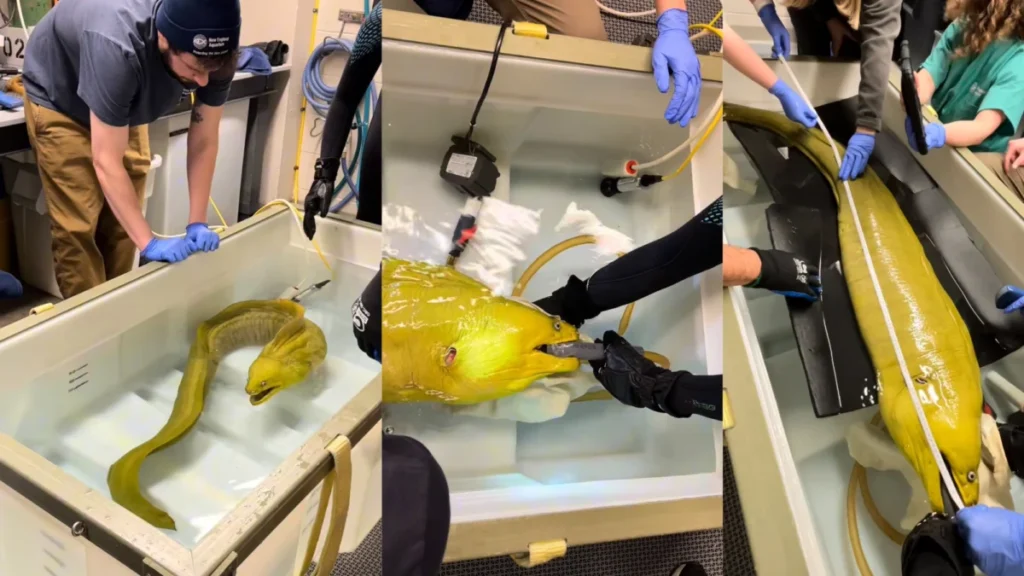
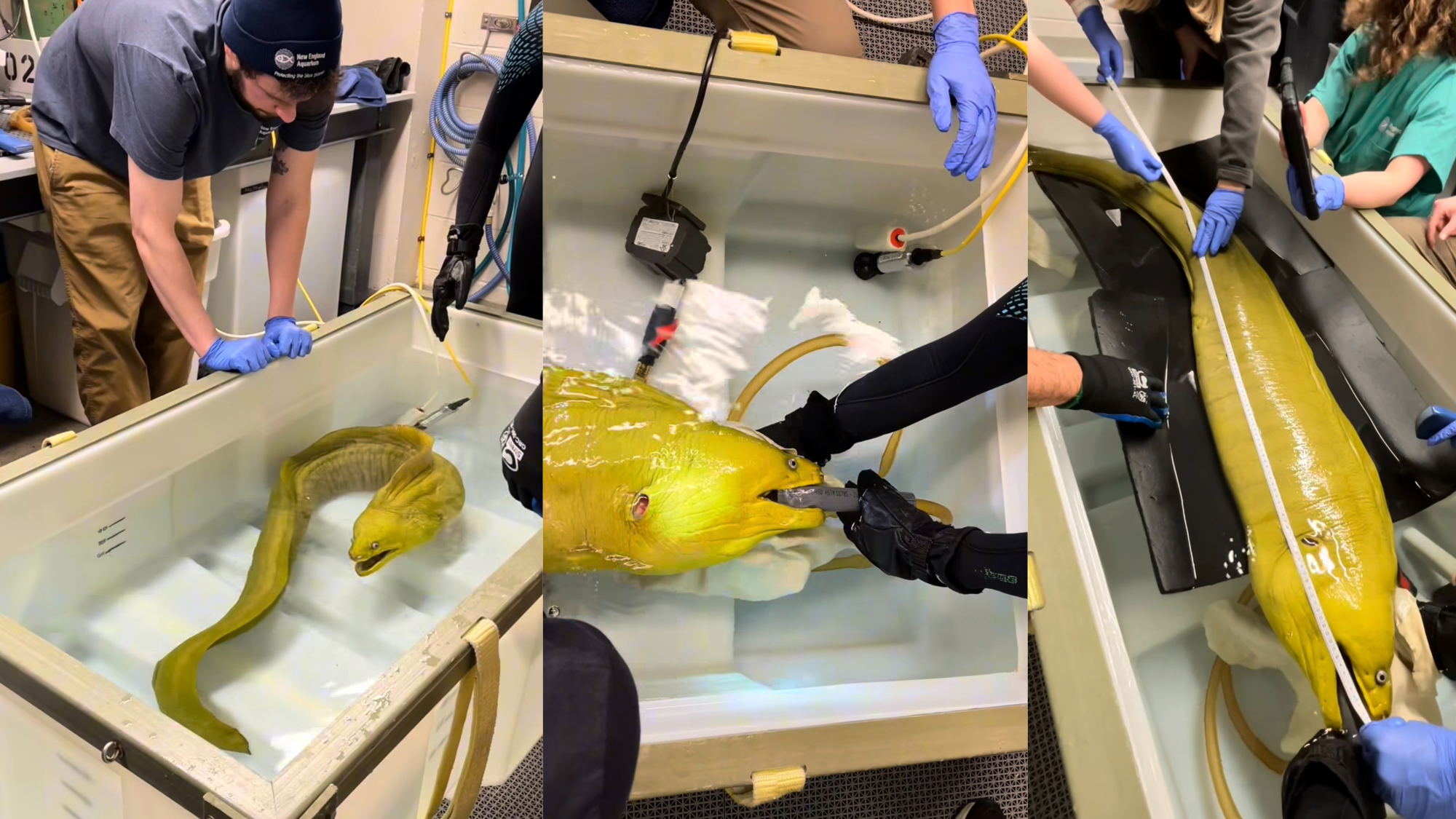
The New England Aquarium recently completed a comprehensive annual medical examination for one of its most prominent residents, an 18- to 21-year-old green moray eel named Thomas. This procedure, which requires a highly coordinated effort between divers, veterinary technicians, and marine biologists, underscores the complexities of providing preventative healthcare to large-scale marine predators. Thomas, a specimen of Gymnothorax funebris, represents both a biological marvel and a logistical challenge for the aquarium’s Animal Health Department. As part of a routine wellness program, the examination serves as a critical diagnostic tool to ensure the longevity of the animal and to gather data that contributes to the broader understanding of moray eel physiology in controlled environments.
The Logistics of Subaquatic Sedation
Conducting a medical exam on a green moray eel is significantly more complex than a standard veterinary visit for domestic animals. The process begins with the extraction of the animal from the New England Aquarium’s Giant Ocean Tank, a 200,000-gallon exhibit that replicates a Caribbean coral reef. Given the strength and potential aggression of a green moray eel, which possesses powerful jaws and sharp, backward-curving teeth, safety is the primary concern for the dive team.
To facilitate the move, divers maneuver Thomas into a specialized plastic barrel while underwater. This method minimizes stress for the animal and protects the staff from accidental bites. Once secured, the barrel is transported to a secondary medical tank. This environment is treated with a powdered anesthetic agent, typically MS-222 (tricaine methanesulfonate), which is absorbed through the eel’s gills. According to Melissa Joblon, the New England Aquarium’s Director of Animal Health, achieving a deep level of anesthesia is vital. The slippery nature of the eel’s skin, combined with its ability to "slither" with significant force, makes handling a conscious or semi-conscious specimen nearly impossible and dangerous for both the animal and the medical team.
Once the anesthetic takes effect and the eel reaches a state of total sedation, it is carefully lifted onto a specialized medical rack. To maintain life support during the procedure, the team utilizes a continuous flow system that flushes oxygenated water—also containing a maintenance dose of anesthesia—directly over the eel’s gills. This allows the veterinary team to perform an "out-of-water" exam while ensuring the animal remains stable and respirating.
Comprehensive Diagnostic Protocols
The annual exam for Thomas is modeled after high-level preventative medicine practiced in human and small-animal clinics. The goal is to establish a health baseline and detect subtle changes in internal organs before they manifest as clinical illness. The 2024 examination included a full physical assessment, bloodwork, a comprehensive ultrasound, and an electrocardiogram (EKG).
The physical exam involves a head-to-tail inspection of the eel’s skin, eyes, and oral cavity. Green moray eels are known for their thick, scale-less skin covered in a protective layer of mucus. This mucus serves as a barrier against parasites and infections, but it can also hide abrasions or lesions. Following the external check, the team proceeds to internal imaging.
The use of ultrasound technology in moray eels allows veterinarians to visualize the heart, liver, and gastrointestinal tract. Because morays have an elongated anatomy, the placement of the ultrasound probe must be precise to capture the internal structures through the dense muscle and skin. Similarly, the EKG provides a real-time look at the eel’s cardiac rhythm. Monitoring the heart rate during anesthesia is a critical safety measure, ensuring the animal is not under undue physiological stress.
Bloodwork remains one of the most informative aspects of the checkup. By drawing blood from the caudal vein located in the tail, technicians can analyze white and red blood cell counts, as well as chemistry panels that indicate kidney and liver function. These data points are added to Thomas’s decades-long medical history, providing a longitudinal view of his aging process.
The Journey from Private Ownership to Public Education
Thomas’s presence at the New England Aquarium is the result of a common issue in the exotic pet trade. He was originally acquired as a juvenile by a private individual. However, as is often the case with Gymnothorax funebris, the animal quickly outgrew the confines of a home aquarium. Green moray eels are among the largest of the moray species, capable of reaching lengths of up to eight feet and weighing over 60 pounds.
Recognizing that they could no longer provide the space or specialized care required for a maturing predator, the owner surrendered Thomas to the aquarium. This transition allowed Thomas to live in a world-class facility where his needs are met by professional aquarists and veterinarians. His story serves as a cautionary tale regarding the responsibilities of exotic pet ownership and the importance of researching a species’ maximum size and lifespan before acquisition.
In captivity, green moray eels can live for 20 to 30 years or more, provided they receive proper nutrition and medical care. Thomas, currently estimated to be in his late teens or early twenties, is considered an aging adult. His longevity is a testament to the aquarium’s husbandry standards, which include a controlled diet of high-quality seafood and a habitat that mimics the crevices and caves of their natural reef environments.
Biological and Ecological Context of the Green Moray
The green moray eel is a misunderstood species often portrayed as aggressive due to its habit of constantly opening and closing its mouth. In reality, this behavior is a respiratory necessity; the eel must pump water through its mouth and over its gills to breathe. While they are apex predators within their niche, they are generally shy and nocturnal, preferring to hide in rocky outcrops during daylight hours.
Interestingly, the "green" moray is not actually green. Its skin is a dark brown or greyish hue. The vibrant green color observed by divers and aquarium visitors is the result of a yellow-tinted mucus that covers its body. This mucus, combined with the underlying blue-grey skin, creates the characteristic emerald appearance. This biological feature is not just aesthetic; the mucus contains toxins that deter predators and antibacterial properties that protect the eel from the pathogens found in tropical waters.
In the wild, these eels are found throughout the Western Atlantic, ranging from New Jersey and Bermuda down to Brazil, including the Gulf of Mexico and the Caribbean. They play a vital role in reef ecosystems by controlling the populations of crustaceans, cephalopods, and small fish. By maintaining the health of individuals like Thomas, aquariums can educate the public on the necessity of preserving reef habitats, which are currently under threat from climate change and ocean acidification.
Broader Implications for Marine Veterinary Science
The medical procedures performed on Thomas contribute to a growing database of marine veterinary knowledge. Unlike domestic cats or dogs, there is relatively limited peer-reviewed data on the geriatric care of moray eels. Every successful EKG, ultrasound, and blood panel performed at institutions like the New England Aquarium adds to the global understanding of how these animals age and how they respond to various treatments.
This preventative approach marks a significant shift in zoo and aquarium management over the last several decades. Historically, veterinary intervention was often reactive, occurring only when an animal showed obvious signs of distress. Modern standards, set by accrediting bodies such as the Association of Zoos and Aquariums (AZA), emphasize the importance of routine diagnostic screenings. By treating Thomas with the same level of care one would expect for a prized stallion or a beloved household pet, the New England Aquarium demonstrates its commitment to the highest standards of animal welfare.
The successful completion of Thomas’s annual exam ensures that he will remain a fixture of the Giant Ocean Tank for years to come. As an "ambassador animal," he provides millions of visitors with a close-up look at a species they might otherwise never encounter. These interactions are vital for fostering a sense of stewardship for the ocean. When the public sees the level of care and expertise required to maintain the health of a single eel, it reinforces the value of individual lives within the broader context of global biodiversity.
As Thomas recovers from his checkup and returns to his favorite crevices in the reef exhibit, the data gathered by Dr. Joblon and her team will be analyzed and archived. This information not only ensures Thomas "eels good," as the staff colloquially notes, but also paves the way for better medical outcomes for other moray eels in professional care around the world. The intersection of technology, biology, and specialized husbandry continues to push the boundaries of what is possible in the field of aquatic medicine.