



For over a century, organizations have invested billions in corporate leadership training, viewing it as the primary engine for organizational growth and succession planning. Yet, despite the longevity of these programs, a persistent challenge remains: how to design curriculum that transcends theoretical engagement to drive verifiable changes in core business indicators. The historical reliance on "off-the-shelf" management courses, often disconnected from the specific operational realities of a firm, has frequently led to stagnant returns on investment. Recent industry data suggests that while global spending on corporate training exceeds $370 billion annually, less than 25% of managers report that training significantly improves their performance. This discrepancy highlights a critical failure in the traditional methodology—one that prioritizes course completion over the systematic application of skills within the unique context of the business.
A Chronology of Corporate Learning Evolution
The history of management training is a trajectory from industrial-age compliance to modern, agile development. In the early 20th century, following the principles of scientific management pioneered by Frederick Winslow Taylor, training focused on task efficiency and standardized workflows. By the mid-1950s, the focus shifted toward behavioral science and interpersonal dynamics, emphasizing the "soft skills" of leadership.
The late 20th century saw the rise of the "competency model" era, where human resources departments mapped out complex matrices of required skills for various roles. However, as business environments became more volatile, uncertain, complex, and ambiguous (VUCA), these static models began to falter. Organizations that blindly adopted industry-standard programs often found that their leaders could articulate management theories but struggled to implement them during times of crisis. The current era represents a pivot toward "contextualized learning," where the focus is not merely on the acquisition of knowledge but on the systemic integration of learning into the daily rhythm of the enterprise.
The Systemic Approach: An Integrated Framework
The core issue with most contemporary training initiatives is their "eclectic" nature—a collection of disparate modules lacking logical progression or connection to business KPIs. To move beyond this, a systemic approach is required, where every learning intervention is tethered to a specific business objective. Based on an analysis of over 1,200 leaders across 15 large and medium-sized enterprises, successful programs follow a rigorous, eight-pillar framework that ensures learning becomes a natural extension of work.
1. Strategic Alignment and Objective Setting
Designing a program must begin with an audit of current business challenges. Instead of assembling a menu of general management topics, developers must define the exact management behaviors required to hit target KPIs. Every training module must provide a clear answer to the question: How does this specific skill change a leader’s behavior, and what is the tangible economic benefit to the firm?
2. Pre-Launch Performance Metrics
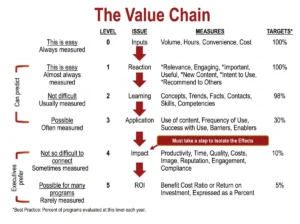
Measurement cannot be an afterthought. Using the Kirkpatrick Model, organizations must define success at four levels before the first module launches:
- Reaction: How do participants perceive the relevance and utility of the training?
- Learning: What new knowledge and skills have been internalized?
- Behavior: Are participants applying these new tools in their daily decision-making?
- Results: Is there a quantifiable impact on business indicators such as revenue, retention, or operational efficiency?
3. Leveraging Internal Expertise
The reliance on external consultants for line and middle management training is increasingly questioned. Internal business coaches, who possess an intimate understanding of the company’s culture and specific "battle-tested" case studies, often produce superior results. By utilizing internal experts, companies eliminate the "transfer problem"—the tendency for participants to dismiss concepts from other industries as inapplicable to their own unique challenges.
4. Senior Leadership Engagement
A common pitfall is the isolation of management training to lower tiers of the hierarchy. Effective programs require senior managers to participate alongside their subordinates. This creates a shared management language, fosters empathy, and allows subordinates to observe their superiors modeling the very behaviors they are being taught to adopt. This alignment reduces the cognitive dissonance that often occurs when a manager learns a new approach but is then subjected to contradictory management styles by their own supervisor.
5. Inter-Modular Integration
Learning is a process of memory consolidation. To ensure long-term retention, programs should incorporate inter-modular meetings and homework assignments that require the application of theory to real-world tasks. This "Learn-Test-Reflect" cycle—where a tool is introduced, practiced in a safe environment, implemented in the field, and then discussed in subsequent sessions—allows for iterative improvement. Furthermore, these sessions should encourage horizontal networking, strengthening the organization’s internal support system.
6. The Value of Analog Synthesis
In an era dominated by AI-generated content and digital automation, the practice of manual, analog synthesis—such as mind-mapping or handwritten reflection—remains a powerful tool for cognitive engagement. Requiring participants to create maps of their own management mistakes or draft personal commitments by hand forces a deeper level of mental processing than automated note-taking. This physical act of synthesis aids in the transition from short-term comprehension to long-term behavioral change.
7. Cascading Knowledge
A definitive test of a leader’s mastery is their ability to teach the material to their own team. By tasking participants with delivering modules to their direct reports, companies achieve two goals: they reinforce the leader’s own learning through the "protégé effect," and they ensure that management standards are propagated throughout the entire organizational structure, fostering a unified culture.
8. Top-Down Advocacy
Finally, no program can succeed without the explicit support of the C-suite. This support is not merely budgetary; it is ideological. Executive advocacy ensures that the training environment is protected from bureaucratic interference and that the company’s operational rhythm is adjusted to accommodate the learning process.
Implications for Modern Business Strategy
The implications of this integrated approach are significant. When training is treated as a strategic partner to the business rather than a peripheral HR initiative, the entire organization experiences a shift in performance. Managers who develop skills through solving actual, pressing problems generate greater immediate profit for the company.
Furthermore, the data suggests that such a program creates a "natural" learning environment. When the curriculum is logically structured and deeply integrated into the work, the resistance typically associated with mandatory training dissipates. Leaders begin to view development as a core component of their professional identity, and the "learning gap"—the distance between what is taught and what is practiced—is effectively bridged.
As organizations navigate an increasingly competitive global landscape, the ability to rapidly upskill leadership becomes a primary differentiator. The evidence indicates that the most successful companies are those that stop viewing training as a periodic event and start treating it as a continuous, systemic, and deeply contextualized business strategy. By aligning individual development with organizational survival, firms do more than just train leaders; they institutionalize excellence.