



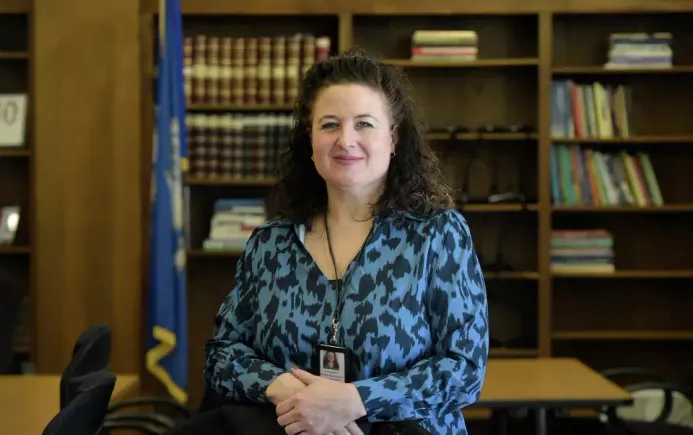
Danbury Public Schools Superintendent Kara Casimiro has spent more than three decades navigating the corridors of Connecticut’s public education system, transitioning from student teaching and internships to the district’s top leadership role ahead of the 2023-24 academic year. Throughout her tenure, Casimiro has witnessed firsthand the evolving demands placed on modern graduates. Her journey through Danbury’s administrative ranks—including serving as director of instruction and assessment and assistant superintendent for teaching and learning—culminated in a sweeping district-wide transformation aimed at tackling declining graduation rates, student disengagement, and a widening preparedness gap between high school diplomas and the real-world demands of higher education and the modern workforce.
The centerpiece of this educational evolution is a total redesign of Danbury High School, the state’s largest comprehensive high school. Confronted by systemic stagnation prior to the COVID-19 pandemic, district leadership abandoned the traditional, one-size-fits-all model in favor of an immersive career academies framework. Today, Danbury’s high school students navigate a wall-to-wall academy model comprising seven distinct career academies and twenty-one specialized pathways. Every student participates, creating an equitable pipeline designed to ensure that career-connected learning is not an elective privilege, but a foundational pillar of the public school experience.
The Genesis of High School Transformation
The impetus for Danbury’s structural overhaul began well before global disruptions shifted the educational landscape. In the years leading up to 2020, school administrators noticed subtle yet alarming downward trends in graduation metrics. More pressing, however, was the growing disconnect between traditional classroom instruction and the complex entry requirements mandated by modern colleges, technical training programs, and regional employers. District leadership recognized that passive learning models were failing to capture student interest or adequately equip young adults for economic independence.
Seeking innovative solutions, Danbury Public Schools secured a prestigious Barr Foundation grant, providing the financial backing necessary to research high-performing educational models nationwide. A dedicated team of educators, administrators, and community stakeholders embarked on a multi-state fact-finding mission. They visited pioneering institutions such as the academies of Nashville in Tennessee, the Cherry Creek Innovation Center in Colorado, and High Tech High in California. Through a vital partnership with the National Career Academies Coalition, the Danbury delegation observed firsthand how career-connected learning directly correlates with elevated student engagement, improved retention rates, and more purposeful post-secondary decision-making.
Armed with empirical observations and proven methodologies, the district returned to Connecticut with a blueprint for systemic change. The resulting strategy decentralized the sprawling student body of Danbury High School by establishing a multi-campus approach. The district recently opened a satellite campus housing three specialized academies, while the main campus accommodates a freshman academy alongside four upper-level career academies. This physical and philosophical division transforms a massive, intimidating institution into smaller, highly structured learning communities where students receive tailored academic guidance and targeted career exploration.
Anatomy of the Career Academy Model
Danbury’s career academy model is built upon a rigorous sequence of college-preparatory curricula fused with distinct industry themes. Rather than tracking students into rigid, terminal vocational paths or traditional academic silos, the academies blend foundational core subjects with hands-on professional experiences. Every student has the opportunity to earn valuable industry-recognized credentials and certifications before receiving their high school diploma, giving them a distinct competitive advantage whether they enter the workforce directly or pursue advanced university degrees.
A critical component of this framework is the integration of work-based learning experiences. By forging strategic partnerships with regional employers, institutions of higher education, and community organizations, Danbury Public Schools bridges the gap between theoretical knowledge and practical application. These collaborations are overseen by industry advisory boards, ensuring that the school district’s curriculum remains aligned with current labor market demands and technological advancements.
For local employers, the model offers a proactive approach to workforce development. Companies can cultivate relationships with students early in their educational journeys, occasionally providing mentorships, internships, or post-secondary scholarships. In return, businesses secure a reliable pipeline of locally trained talent equipped with the specific competencies needed to thrive in the regional economy.
Challenging Misconceptions and Expanding Equity
Despite the clear benefits of career-connected learning, district leadership faced initial hurdles regarding community perception. When Casimiro and her team first unveiled the academy proposal to parents, questions and concerns inevitably arose, most notably regarding comparisons to traditional technical high schools. Community members questioned whether Danbury was attempting to replicate vocational schools that focus exclusively on manual trades.
Casimiro and her administration worked diligently to provide clarity, emphasizing that the academy model serves a dual purpose: preparing students for both immediate career entry and rigorous four-year university programs. The twenty-one pathways extend far beyond traditional shop classes, encompassing high-tech, high-demand fields such as biomedical science, computer-integrated manufacturing, cybersecurity, architectural engineering, audio engineering and design, and green design and environmental stewardship. Furthermore, non-technical pathways such as education, human development, and justice and law ensure that students across all academic interests find relevant engagement.
Addressing another common parental concern, Casimiro clarified that selecting an academy does not lock a student into a permanent career or force them to declare an artificial college major at age fourteen. Instead, the curriculum provides structured exploratory electives designed to help students discover their passions—and equally importantly, identify career paths that do not suit them. Drawing from her own background as a first-generation college student who changed her major multiple times due to a lack of early career guidance, Casimiro emphasized that high school is the ideal, low-risk environment for students to test professional interests and avoid costly collegiate missteps.
Equity remains a driving force behind the academy structure. Students from lower socioeconomic backgrounds often experience narrower career exposure, frequently limited to the professions observed within their immediate neighborhoods and family circles. Danbury’s mandatory ninth-grade exploration course systematically exposes all incoming students to the full breadth of available industries, leveling the playing field and ensuring that every young person possesses the foundational knowledge necessary to make informed choices about their future.
Preparing Students for the Durable Skills Economy
Beyond technical competencies, Danbury’s curriculum places heavy emphasis on the "durable skills" universally demanded by modern employers across all sectors. Conversations with hiring managers consistently highlight that technical proficiency alone is insufficient; companies actively seek workers who excel in collaboration, communication, critical thinking, reliability, and emotional intelligence.
By embedding project-based learning and collaborative problem-solving into daily coursework, the academies cultivate executive functioning skills that prepare students to adapt to an evolving labor market. Whether a graduate pursues a career as an advanced manufacturing technician or an engineer, the underlying competencies remain consistent: organization, effective teamwork, and a strong work ethic.
Broadening the Vision: Middle School Alignment and Future Outlook
Recognizing that career awareness and identity development begin long before ninth grade, Danbury Public Schools is actively extending the academy philosophy downward into its middle school system. This preliminary phase involves structural updates to physical classrooms to facilitate project-based learning, along with targeted staffing additions, such as hiring specialized engineering educators at the middle school level.
This pre-academy experience introduces younger students to foundational concepts regarding salary expectations, workplace environments, aptitudes, and career pathways through guest speakers and exploratory activities. By initiating this dialogue early, the district aims to help students build a cohesive self-identity regarding their strengths and interests well before they enter high school.
As Danbury Public Schools continues to refine its comprehensive academy model, the district serves as a compelling case study for educational leaders nationwide. By proactively addressing systemic disengagement, aligning curriculum with real-world economic realities, and prioritizing equity through universal access, Casimiro and her administration have established a scalable blueprint for modern public education—one that equips students not merely to graduate, but to thrive in an increasingly complex world.