

The intersection of advanced manufacturing and veterinary medicine has offered a renewed lease on life for a juvenile green sea turtle receiving critical care at the Georgia Sea Turtle Center on Jekyll Island. Admitted following a severe boat strike that inflicted debilitating spinal cord trauma, the young turtle—affectionately named Cebu—has become the focus of an innovative rehabilitation regimen. By combining a specially engineered, 3D-printed floating harness with cutting-edge regenerative medicine, marine veterinary specialists are charting new territory in the recovery of marine wildlife suffering from traumatic mobility impairments.
The Incident and Initial Condition
Cebu arrived at the Georgia Sea Turtle Center in critical condition after a collision with a watercraft. Boat strikes represent one of the most prevalent anthropogenic threats to sea turtles globally, frequently resulting in devastating shell fractures, pulmonary damage, and neurological trauma. In Cebu’s case, the impact caused significant spinal cord injury, severely impairing the turtle’s motor functions and rendering it unable to control its buoyancy or coordinate natural swimming movements.
Upon admission, the juvenile green sea turtle (Chelonia mydas) was profoundly weak. Because of the compromised spinal cord and associated muscle atrophy, Cebu could not safely navigate standard water depths in the rehabilitation tanks. Prolonged exposure to deep water in this condition poses an immediate drowning hazard for sea turtles, as they must surface regularly to breathe. Consequently, the veterinary and rehabilitation teams initially kept Cebu in extremely shallow water, and at times, completely out of water on specialized medical bedding to stabilize the patient and prevent secondary infections.
Determining the sex of juvenile green sea turtles like Cebu remains clinically challenging during early development stages. Because external sexual characteristics do not fully manifest until maturity, medical staff often defer sex identification. According to Jaynie L. Gaskin, director of the Georgia Sea Turtle Center, this biological ambiguity has no bearing on the clinical treatment pathway or the overarching rehabilitation protocol.
A Chronology of Innovation in Physical Therapy
As Cebu’s baseline health stabilized and systemic healing began, the medical staff faced a critical therapeutic hurdle: facilitating physical therapy in deeper water without risking the animal’s safety. Natural flipper movements are essential for rebuilding muscle mass, improving cardiovascular health, and encouraging neurological recovery in trauma patients. However, supporting a developing sea turtle during aquatic therapy presented logistical challenges.
Initially, the rehabilitation staff relied on manual support, requiring human handlers to stay in the water with Cebu during sessions, or employing improvised flotation aids. While these methods provided short-term solutions, they had distinct limitations. Continuous human handling induces significant stress in wild animals, potentially undermining recovery. Furthermore, makeshift flotation devices can exert uneven pressure on a recovering shell, risking structural damage to the fragile carapace and plastron.
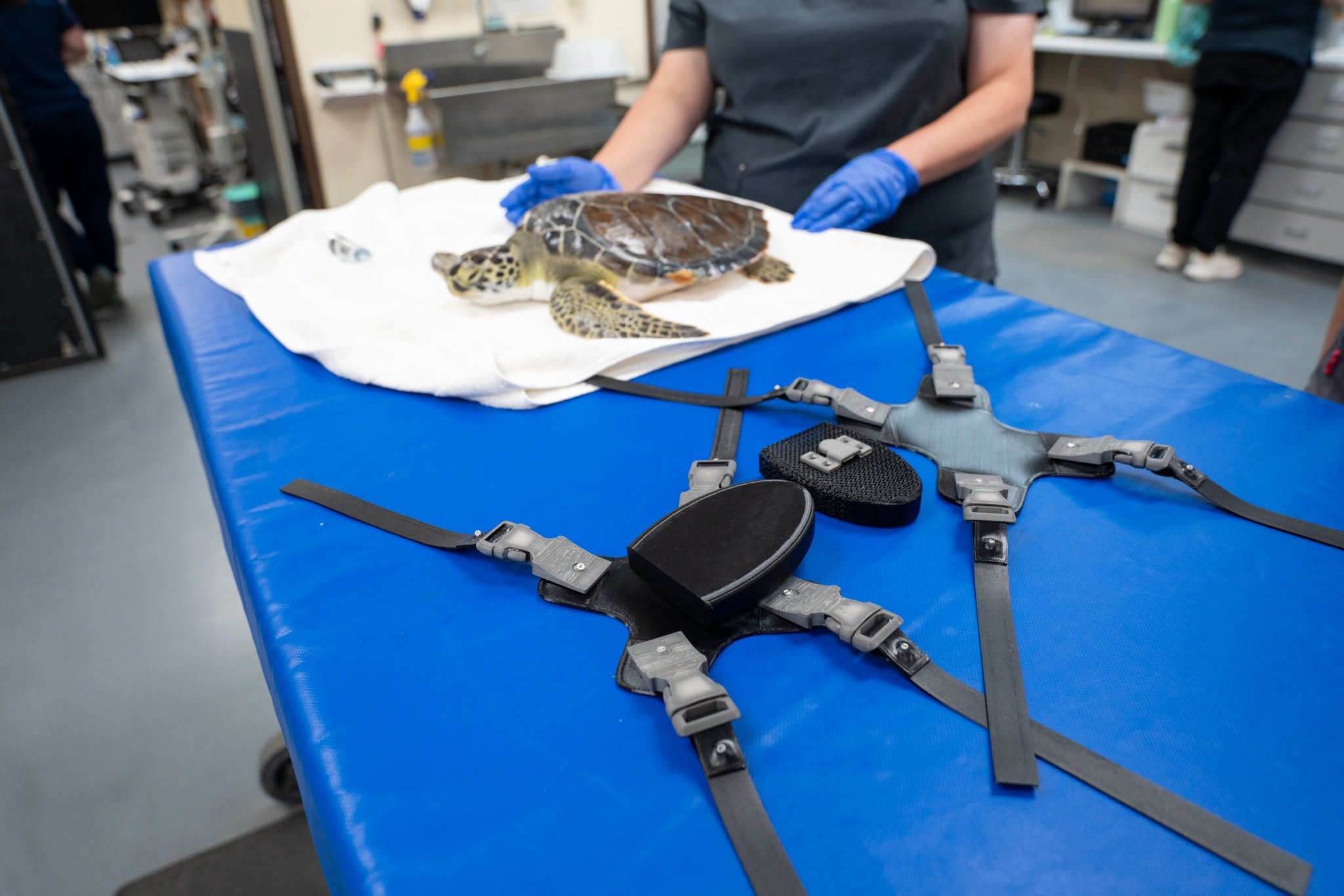
Recognizing the need for a sustainable, specialized approach, the center’s veterinary personnel collaborated directly with its in-house conservation technology team. Leveraging the facility’s 3D-printing infrastructure, the team designed a custom floating harness tailored precisely to Cebu’s anatomical dimensions.
"We’ve created harnesses for other cases in the past, but Cebu needed something completely customized," Gaskin explains. "Our conservation team has 3D-printing capabilities, so our veterinary and conservation teams worked together to develop a solution specifically for Cebu."
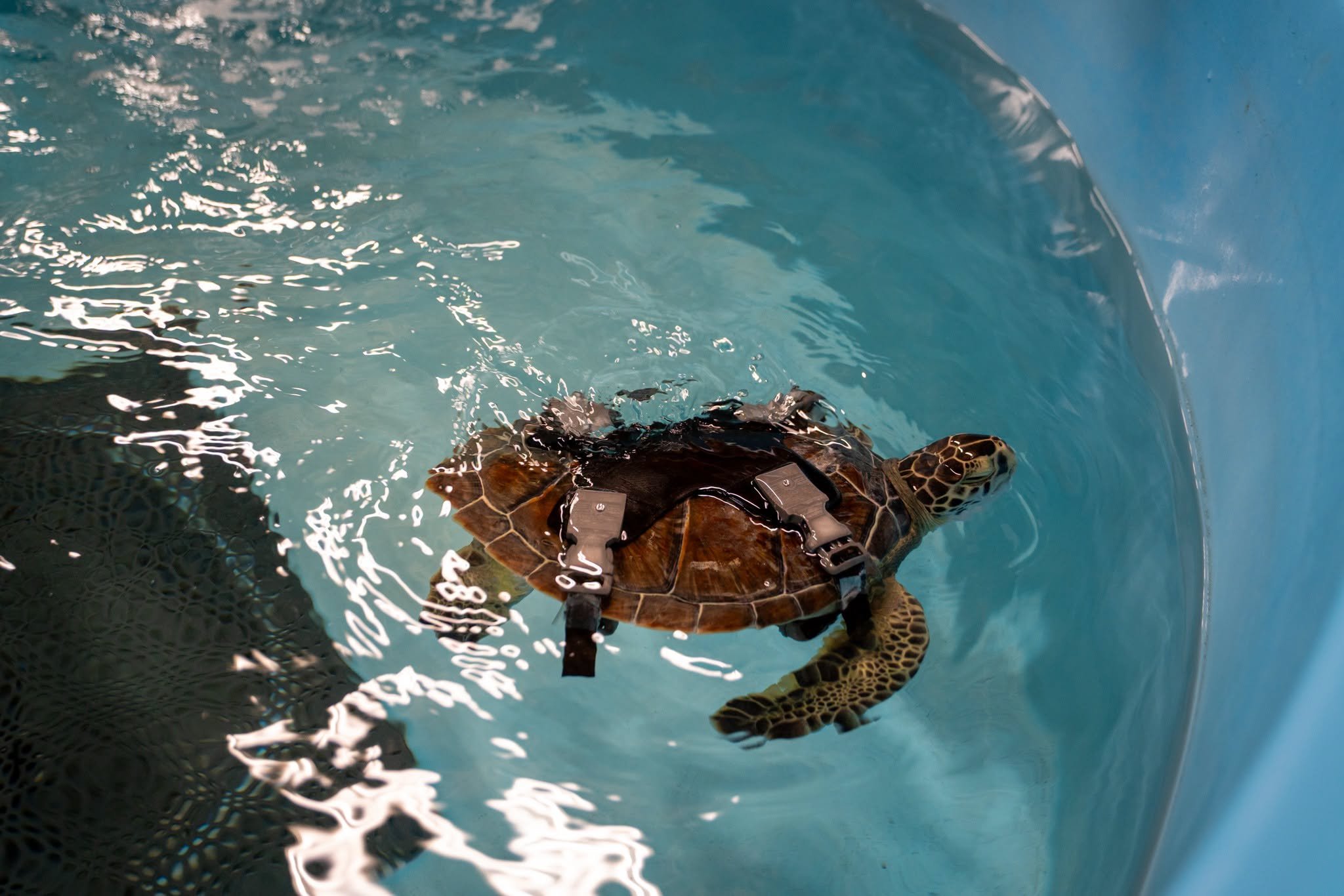
The resulting 3D-printed apparatus securely distributes buoyancy across the turtle’s shell, keeping Cebu safely suspended at the water’s surface while allowing full, unimpeded range of motion in all four flippers. This technological intervention transformed Cebu’s physical therapy sessions, enabling the turtle to practice natural swimming strokes in deeper water independently and securely.
Integrating Regenerative Medicine: Stem Cell Therapy
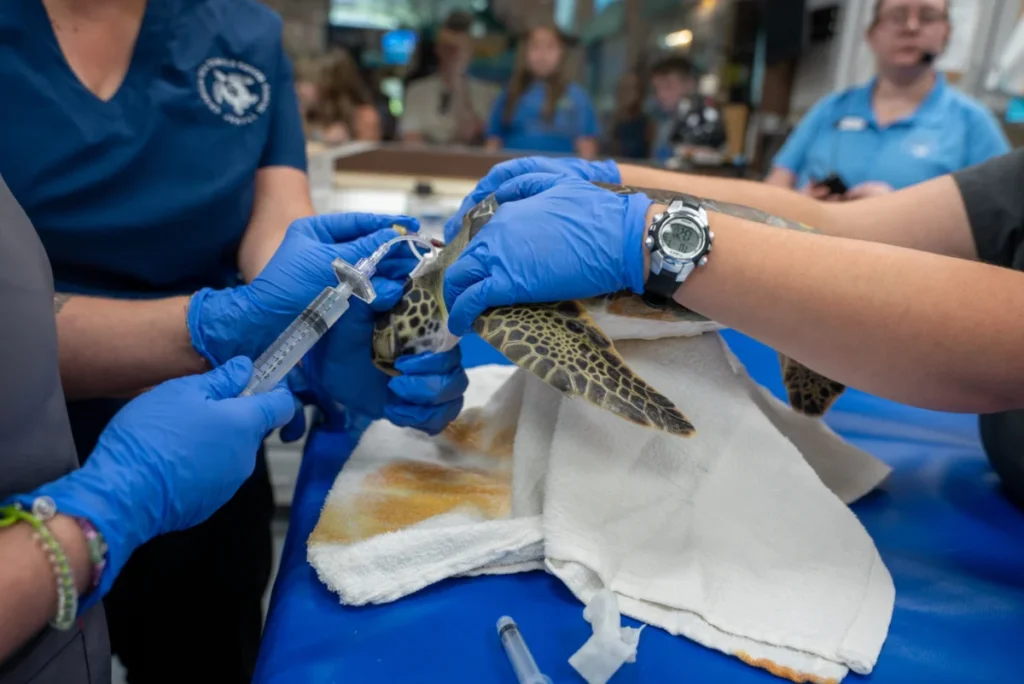
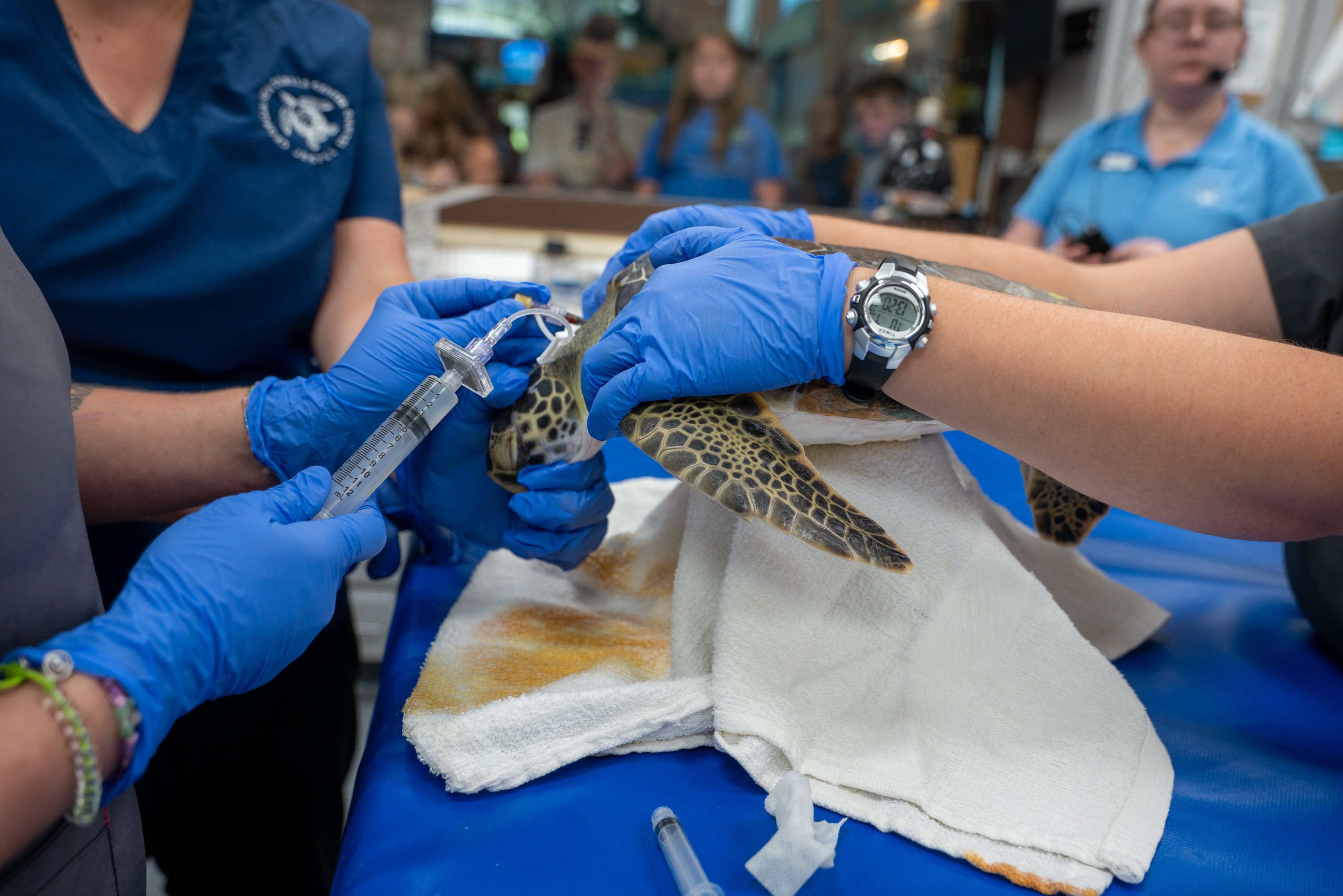
While the 3D-printed harness addresses mechanical mobility and buoyancy, veterinary specialists are simultaneously targeting the root neurological damage using advanced regenerative medicine. Cebu is currently undergoing experimental stem cell therapy, a cutting-edge veterinary application designed to repair diseased, dysfunctional, or injured tissues.
Stem cell therapy utilizes undifferentiated cells capable of developing into specialized cell types. In cases of spinal cord trauma, these therapies aim to reduce inflammation, promote axonal regeneration, and restore neural pathways disrupted by physical impact.
Cebu recently reached a significant clinical milestone, completing the timeline approximately one month past its second stem cell treatment. According to the medical team, the combination of targeted regenerative injections and advanced aquatic physical therapy is beginning to yield measurable results. Gaskin noted that Cebu recently completed its most successful physical therapy session to date, displaying encouraging improvements in muscle responsiveness and energy levels during supported and harnessed swimming routines.
Broader Impacts and Prognosis
Despite these positive developments, institutional leaders remain cautious regarding the long-term prognosis. Spinal cord injuries in marine species are notoriously difficult to reverse entirely, and the path to full recovery requires sustained, meticulous observation.
"There is still a long way to go before we know whether release will be possible," Gaskin states. "At this point, Cebu’s prognosis remains guarded, but we are encouraged by the progress we are beginning to see."
The case of Cebu highlights a broader trend within modern wildlife rehabilitation: the increasing reliance on multidisciplinary collaboration between marine biologists, veterinarians, and additive manufacturing engineers. Technologies such as 3D printing have evolved from prototyping novelties into critical medical manufacturing tools capable of producing patient-specific prosthetics, orthotics, and rehabilitation aids for endangered and threatened species.
As marine habitats increasingly overlap with heavy commercial and recreational watercraft traffic, incidents involving sea turtle trauma will likely continue to challenge wildlife centers. Innovations demonstrated at institutions like the Georgia Sea Turtle Center provide a scalable blueprint for addressing complex veterinary cases, offering hope that advanced technology can bridge the gap between permanent disability and successful reintroduction into the wild. For now, Cebu remains under round-the-clock professional care, continuing a rigorous regimen designed to maximize its potential for recovery.