


The discovery of a new species of box jellyfish, named Chironex blakangmati, off the coast of Singapore has sent ripples through the international marine biology community. This find, led by Cheryl Ames, a prominent marine biologist at Japan’s Tohoku University, highlights the presence of highly venomous "sea wasps" in one of the world’s busiest maritime hubs. While the species was initially mistaken for a closely related relative, advanced genomic testing and meticulous morphological analysis have confirmed that C. blakangmati is a distinct entity within the lethal Chironex genus. This discovery not only expands the known biodiversity of the region but also raises critical questions regarding public safety and the evolutionary adaptations of these complex marine invertebrates.
The Discovery and Initial Misidentification
The journey to identifying Chironex blakangmati began during a scientific expedition near the shores of Sentosa Island, a popular tourist destination in Singapore. Cheryl Ames and her research team were surveying the local waters when they collected several specimens of a large, translucent box jellyfish. At first glance, the creatures appeared identical to Chironex yamaguchii, a species Ames herself had previously described and which is known to inhabit the waters around Japan and northern Australia.
The similarity between the two species is a classic example of "cryptic speciation," where two distinct species evolve to look nearly identical to the naked eye. For years, it was assumed that the box jellyfish sightings in Singapore belonged to the yamaguchii lineage. However, upon returning to the laboratory, the team utilized high-resolution genomic sequencing to look beneath the surface. The results were definitive: the Singaporean specimens possessed a genetic profile that diverged significantly from C. yamaguchii. To confirm these findings, Ames retrieved preserved samples of C. yamaguchii from storage in Okinawa, Japan, to conduct a side-by-side comparison. The genetic distance between the two populations was too great to be considered a single species, necessitating the classification of C. blakangmati as a new member of the animal kingdom.
Anatomical Distinctions: The Perradial Lappets
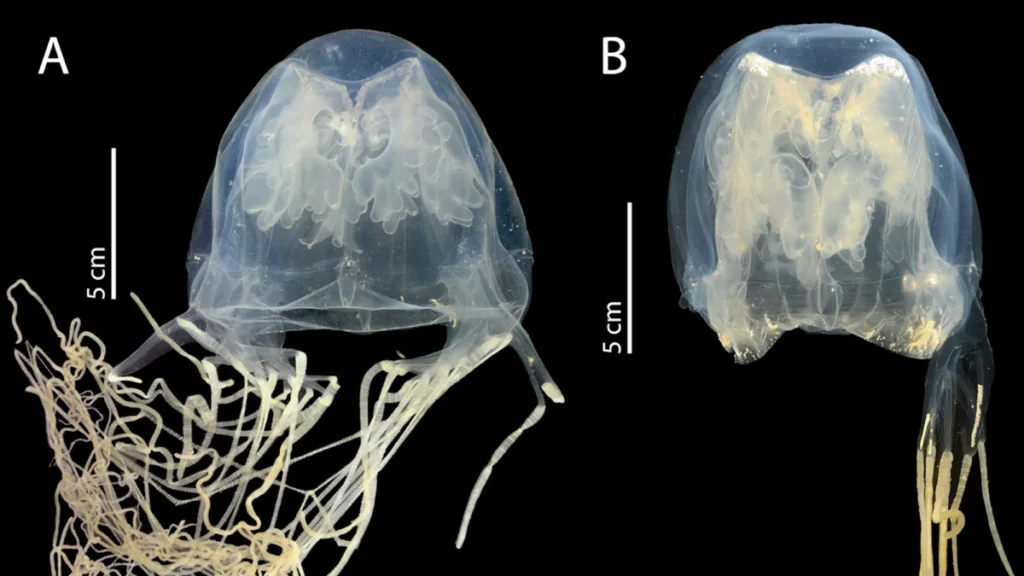
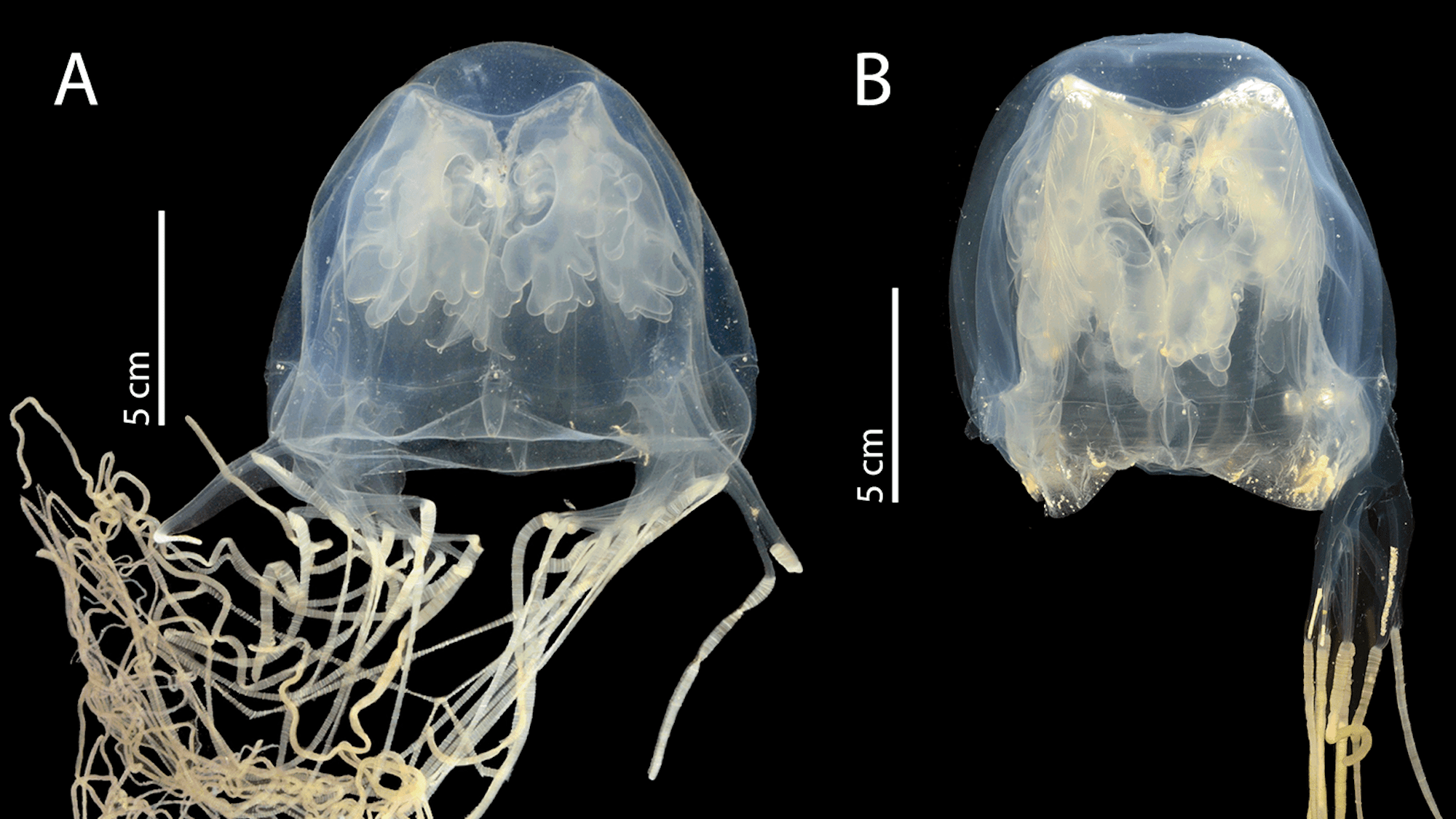
While the genetic evidence was the primary catalyst for the reclassification, a closer inspection of the jellyfish’s anatomy revealed subtle but significant physical differences. The most notable distinction lies in the structure of the perradial lappets. These are specialized flaps of tissue located at the base of the jellyfish’s bell-shaped body. They play a crucial role in the animal’s locomotion, providing structural support to the pulsating muscles that allow box jellyfish to swim actively rather than drifting passively like most other jellyfish species.
In other members of the Chironex genus, such as C. fleckeri and C. yamaguchii, the perradial lappets feature small, pointy canals at their tips. These canals are believed to assist in the distribution of nutrients or sensory information during the high-energy process of swimming. However, C. blakangmati lacks these pointy canals entirely. This anatomical quirk serves as a physical "fingerprint" for the species, allowing researchers to distinguish it from its relatives without needing to perform DNA sequencing for every specimen found in the field.
Evolutionary Sophistication: Vision and Movement
The discovery of C. blakangmati provides further insight into the remarkable evolutionary trajectory of the Cubozoa class. Unlike the "true jellyfish" (Scyphozoa), which generally rely on rudimentary light-sensing organs called ocelli, box jellyfish have evolved highly complex visual systems. They possess four sensory structures called rhopalia, each containing six eyes, for a total of 24 eyes per individual. These eyes include sophisticated lens-bearing structures that are capable of forming images, much like the eyes of vertebrates.
This advanced vision allows C. blakangmati to be an active predator. Instead of waiting for prey to stumble into its tentacles, it can actively hunt small fish and crustaceans. The combination of its powerful swimming musculature, supported by the perradial lappets, and its keen eyesight makes it one of the most efficient hunters in the marine environment. This active lifestyle is a necessity for the genus, as their potent venom requires a significant metabolic investment, which must be offset by high-quality caloric intake.
Etymology and Historical Context: The Island of Death
The naming of the new species, Chironex blakangmati, is a nod to the somber history of its primary habitat. Sentosa Island, where the specimens were collected, was not always known by its current name, which translates to "peace and tranquility" in Malay. Historically, the island was known as Pulau Blakang Mati.
The translation of "Blakang Mati" is often cited as "Island of Death from Behind" or "The Island After Death." While the exact origin of the old name is debated—some attribute it to piracy, others to a malaria outbreak in the 1840s—the moniker is chillingly appropriate for a habitat teeming with box jellyfish. These creatures are often nearly invisible in the water, and their stings can be fatal within minutes, essentially striking a victim "from behind" or without warning. By choosing this name, the researchers have created a permanent link between the species and the cultural history of the Singaporean landscape.
Comparative Analysis of the Chironex Genus
To understand the significance of C. blakangmati, it must be viewed within the context of its relatives. The Chironex genus contains some of the most venomous animals on Earth.
- Chironex fleckeri: Known as the Australian box jellyfish, this is the largest and most dangerous member of the genus. Its tentacles can reach up to three meters in length, and it carries enough venom to kill 60 adult humans.
- Chironex yamaguchii: Found primarily in Japanese waters (where it is known as Habu-kurage) and parts of the Philippines, it is smaller than C. fleckeri but still highly lethal.
- Chironex indrasaksajiae: A species found in the Gulf of Thailand, described relatively recently, which also poses a significant threat to swimmers and fishermen.
C. blakangmati now joins this group as a fourth recognized species. While the exact potency of its venom compared to C. fleckeri is still being studied, researchers warn that all members of the genus should be treated with extreme caution. The venom of Chironex species typically contains porins, which create holes in red blood cells, and neurotoxins that can cause rapid cardiac arrest.
Chronology of the Research Project
The identification of C. blakangmati was the result of a multi-year effort involving international collaboration.
- 2020–2021: Reports of box jellyfish stings in Singaporean waters increased, prompting local authorities and researchers to take a closer look at the species responsible.
- 2022: Cheryl Ames and her team conducted field sampling near Sentosa Island and the Southern Islands of Singapore. Several live specimens were captured using specialized nets to ensure the delicate tissues remained intact.
- Late 2022: Initial morphological exams suggested the specimens were C. yamaguchii, but discrepancies in the perradial lappet structures prompted further investigation.
- 2023: Genomic sequencing was conducted at Tohoku University. The data revealed a significant genetic divergence from known Chironex species.
- 2024: The research was peer-reviewed and officially published, formalizing the name Chironex blakangmati and establishing its place in the taxonomic record.
Public Health and Safety Implications
The formal recognition of C. blakangmati has immediate implications for public health in Singapore. For decades, box jellyfish were considered a rarity in the region, with most stings attributed to less dangerous species like the sea nettle. However, the confirmation of a resident Chironex species changes the risk profile for Singapore’s coastal waters.
Health officials and beach managers are now being urged to update their safety protocols. This includes the installation of "stinger kits" containing vinegar—which can neutralize undischarged venom cells (nematocysts) on the skin—at popular beaches. Furthermore, there is a call for increased public awareness campaigns to educate swimmers on how to identify box jellyfish and the importance of wearing protective clothing, such as Lycra stinger suits, when swimming in areas where these jellyfish are known to congregate.
Broader Ecological Impact and Future Research
The discovery also highlights the "Blue Economy" and the importance of monitoring marine biodiversity in urbanized coastal environments. Singapore is one of the most heavily modified coastlines in the world, yet it continues to yield new and significant biological discoveries.
Ecologists are now investigating whether the population of C. blakangmati is increasing due to environmental factors. Jellyfish blooms are often linked to rising sea temperatures, overfishing (which removes their natural predators and competitors), and nutrient runoff from urban areas. Understanding the life cycle and population dynamics of C. blakangmati is essential for predicting future outbreaks and protecting both human life and the local marine ecosystem.
Future research will focus on the specific toxicology of C. blakangmati venom. By deconstructing the proteins within the venom, scientists hope to develop more effective antivenoms and perhaps even discover new compounds for medical use, as many jellyfish toxins have shown potential in pain management and cancer research.
The discovery of Chironex blakangmati serves as a potent reminder that the ocean still holds many secrets, even in the shadows of major metropolitan cities. As human activity continues to intersect with the natural habitats of these ancient and deadly predators, the work of scientists like Cheryl Ames becomes ever more vital in bridging the gap between discovery and safety.