

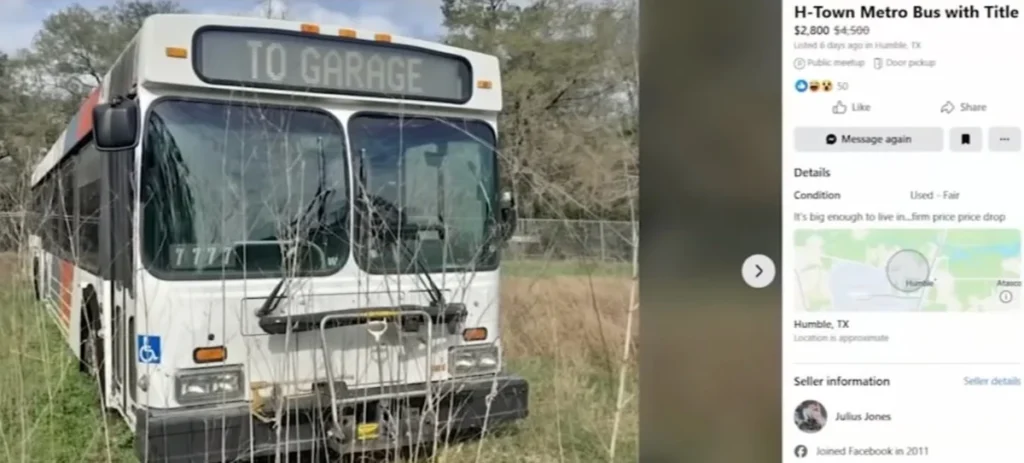
The digital aisles of Facebook Marketplace, known for hosting everything from mid-century modern furniture to peculiar curiosities like suitcases of oversized teeth and historic shipwrecks, recently featured a notable addition to its automotive section: a 2002 Houston METRO transit bus. Listed for the remarkably low price of $2,800, the vehicle has captured the attention of both bargain hunters and enthusiasts of the "skoolie" movement, a growing subculture dedicated to converting retired buses into mobile homes or unconventional living spaces. The listing, posted by software developer Julius Jones, offers a rare glimpse into the secondary market for heavy-duty municipal equipment and the complex logistics involved in transitioning a public service vehicle into a private asset.
The bus in question represents a significant piece of Houston’s transit history, having served the city’s metropolitan area for over a decade before being phased out of active duty. While the price point is comparable to that of a high-end laptop or a used economy sedan, the acquisition of a 40-foot transit vehicle carries with it a unique set of challenges, histories, and mechanical considerations. For Jones and his business partner, the journey with this particular bus began nearly eight years ago, and its return to the market comes with a backstory that has added a layer of urban legend to the sale.
A Chronology of Ownership and the Marriage-Ending Bus
The timeline of this specific 2002 METRO bus began in the early 2000s when it was part of a fleet expansion for the Metropolitan Transit Authority of Harris County (METRO). After reaching its designated service ceiling—typically measured by a combination of years in service and total mileage—the bus was decommissioned. In 2017, Julius Jones and a friend purchased the vehicle at a public auction, a common venue for the disposal of government surplus.
Following the initial purchase, the bus was sold to an individual who intended to renovate the interior for residential use. However, the transaction took an unexpected turn when the buyer eventually returned the vehicle to Jones. According to Jones, the buyer claimed that the ambitious project of converting the bus had placed an irreparable strain on his personal life, ultimately blaming the vehicle for the dissolution of his marriage. This anecdotal "curse" has become a talking point of the listing, serving as a cautionary tale for those who underestimate the emotional and financial toll of large-scale DIY renovations. Despite this colorful history, the bus has remained a functional, albeit stationary, piece of machinery, now awaiting a new owner with perhaps more robust interpersonal stability or a clearer conversion plan.
Official Decommissioning Protocols and Public Safety
The transition of a vehicle from a public transit fleet to a private individual is governed by strict municipal and federal guidelines. A spokesperson for METRO Houston clarified the procedures that occur before any bus hits the auction block. When a bus is decommissioned, the agency is required to remove all onboard proprietary equipment. This includes fare boxes, GPS tracking systems, radio communication hardware, and any sensitive identifying information.
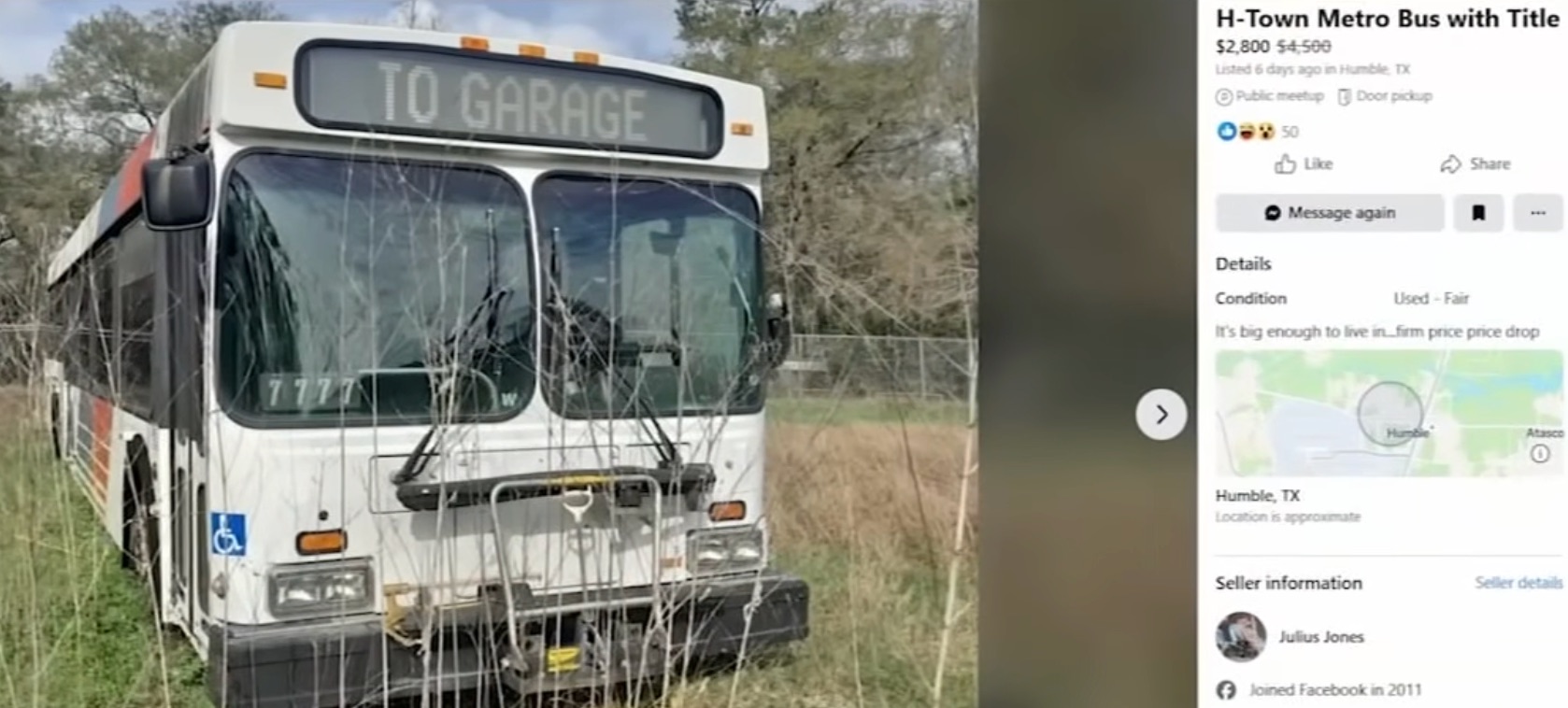
Furthermore, METRO is tasked with removing bus numbers and most exterior decals to prevent the vehicle from being mistaken for an active-duty transit unit. In some instances, larger exterior graphics or wraps may remain if they are difficult to remove without damaging the underlying structure, but the goal is to ensure the vehicle is clearly identified as "retired." These steps are not merely aesthetic; they are mandated by federal requirements to ensure that public funds are handled appropriately and that the agency is shielded from liability once the vehicle enters the private sector. If a vehicle fails to sell at a public auction, it is typically designated for scrap, making the survival of this 2002 model a testament to its perceived remaining value.
Technical Specifications and the Cost of Reactivation
A 2002 transit bus is a formidable piece of engineering, but at over two decades old, its mechanical needs are substantial. Jones has indicated that while the engine was in working order during its last period of operation, the bus currently requires new batteries to be road-ready. For a vehicle of this size, "new batteries" is not a minor expense. Transit buses typically utilize heavy-duty 8D batteries, which can cost several hundred dollars each, and the systems often require multiple units to provide the necessary cranking amps for a large diesel engine.
From a technical standpoint, buses from this era were often equipped with robust powerplants, such as Detroit Diesel or Cummins engines, paired with Allison transmissions. While these components are designed for million-mile lifespans, they require specialized maintenance that differs significantly from standard passenger vehicles. Potential buyers must also consider the logistics of moving a 40-foot, 30,000-pound vehicle that may not be immediately driveable. Towing a transit bus can cost upwards of $1,000 depending on the distance, often rivaling a significant portion of the bus’s actual purchase price.
Supporting Data: The Economics of the Skoolie Movement
The listing of the Houston bus coincides with a broader national trend in alternative housing. The "skoolie" and "van life" movements have seen a surge in popularity, driven by rising housing costs and a desire for geographic mobility. According to industry estimates, a professional tiny home can cost anywhere from $50,000 to $150,000. In contrast, a retired bus purchased for under $3,000 provides a massive structural shell for a fraction of the cost.
However, the "bargain" of the initial purchase is often offset by conversion expenses. Data from DIY conversion forums and professional builders suggest that a comprehensive bus-to-home conversion typically requires an investment of $20,000 to $50,000. This includes:
- Mechanical Overhauls: $2,000 – $5,000 for tires, fluids, and minor repairs.
- Insulation and Flooring: $1,500 – $3,000.
- Electrical Systems: $3,000 – $7,000 (especially if solar power is integrated).
- Plumbing and Appliances: $2,000 – $5,000.
For a buyer of the 2002 Houston bus, the $2,800 entry fee is merely the first step in a long financial journey. The appeal lies in the "sweat equity" and the ability to own a home without a traditional mortgage, provided the owner has the mechanical aptitude to maintain a vintage transit vehicle.

Broader Impact and Regulatory Challenges
While the idea of living in a former METRO bus is romanticized on social media, the reality involves navigating a complex web of regulations. In many jurisdictions, a 40-foot bus requires a Commercial Driver’s License (CDL) to operate unless it is officially re-titled as a Recreational Vehicle (RV). The process of re-titling usually requires proof that the vehicle has been permanently modified to include sleeping quarters, a kitchen, and a bathroom.
Insurance is another significant hurdle. Many traditional auto insurance providers are hesitant to cover DIY bus conversions due to the lack of standardized safety testing for home-built interiors. Specialized insurers often require professional inspections of electrical and propane systems before issuing a policy. Furthermore, finding a place to park a 40-foot bus is increasingly difficult. Many RV parks have "ten-year rules," refusing entry to vehicles older than a decade, which would exclude this 2002 model. Municipal zoning laws in many cities also prohibit the use of a bus as a permanent primary residence on private lots.
Analysis of the Secondary Market for Public Assets
The sale of this bus highlights the efficiency—and the oddity—of the secondary market. For municipal agencies like Houston METRO, auctions are a vital tool for recovering value from depreciated assets. For the public, these auctions represent an opportunity to acquire high-grade machinery that would be unaffordable if purchased new. A new transit bus in today’s market can cost between $500,000 and $1,000,000, depending on whether it is diesel, hybrid, or electric.
The fact that a vehicle once worth half a million dollars is now trading for less than $3,000 illustrates the steep depreciation curve of specialized commercial equipment. It also reflects a shift in how people view "trash versus treasure." Where a transit agency sees a liability that has aged out of its safety window, an entrepreneur or a DIYer sees a blank canvas for innovation.
Conclusion: The Future of the 2002 METRO Bus
As the listing continues to circulate on social media, the 2002 Houston METRO bus remains a symbol of the intersection between public infrastructure and private imagination. Whether it will eventually become a chic mobile studio, a stationary guest house, or simply be sold for its weight in scrap metal remains to be seen.
Julius Jones’s listing serves as a reminder that the items we find on digital marketplaces carry more than just a price tag; they carry the histories of the cities they served and the personal dramas of the people who owned them. For $2,800, a buyer isn’t just getting a bus; they are getting 40 feet of potential, a mechanical challenge, and perhaps, a story about a marriage that just couldn’t survive the "bus life." In the current economic climate, where traditional paths to property ownership are increasingly blocked, such unconventional opportunities will likely continue to thrive, "curse" or no curse.