




The persistent challenge of fostering genuine student ownership in learning, a common lament among educators, is being addressed by a groundbreaking framework proposed by educational consultant Zaretta Hammond. Her upcoming book, Rebuilding Students’ Learning Power (Corwin, 2025), introduces a set of five explicit "learn-to-learn" skills designed to equip students with the metacognitive tools necessary to become effective and independent information processors. This approach shifts the focus from merely engaging students to actively coaching them in the fundamental mechanics of how their brains acquire, process, and retain new knowledge.
The Educational Landscape: A Call for Deeper Engagement
The scenario described by a teacher during instructional rounds—"They do what I ask, but they just won’t own it"—resonates deeply within the educational community. Despite widespread adoption of innovative pedagogical approaches such as project-based learning, Universal Design for Learning (UDL), and makerspace initiatives, a critical gap often remains. While these methods are powerful and evidence-backed, they frequently presuppose an inherent capacity in students to leverage these rich environments for deep learning. The reality, however, is that without explicit instruction in the mechanics of learning itself, many students struggle to move beyond compliance to true intellectual engagement and self-directed mastery.
The core premise underpinning Hammond’s work is rooted in cognitive science: learning is an inherently internal process. A teacher can design the most captivating lesson, provide extensive scaffolding, and create a stimulating environment, but the actual act of information processing—attention, elaboration, and consolidation—rests solely with the learner. If a student’s intellectual curiosity isn’t sparked, if the classroom environment doesn’t feel psychologically safe for intellectual risk-taking, or if they lack the cognitive strategies to integrate new content, then effective learning will not occur. This principle underscores the necessity of moving beyond motivational tactics to providing concrete, actionable tools that empower students to navigate their own cognitive processes.
Distinguishing "Learn-to-Learn" from Executive Function Skills

It is crucial to differentiate "learn-to-learn" skills from executive function skills, a distinction Hammond emphasizes. While executive function skills, such as planning, organization, and time management, are vital for academic success—manifesting in practices like binder organization or study schedules—they primarily support the management of learning. "Learn-to-learn" skills, in contrast, are directly focused on improving a student’s ability to carry the cognitive load and efficiently process information. They are the "trade secrets" of learning, akin to what David Perkins of Harvard’s Project Zero terms the "game of learning" or Ron Berger of EL Education calls the "craftsmanship of learning." From an equity perspective, these skills represent a crucial "hidden curriculum" that can significantly narrow opportunity gaps and promote more equitable academic outcomes by demystifying the learning process for all students.
Hammond introduces these as a set of five "moves" that collectively form a "skill set." A "move" is a discrete action or technique, like a specific strategy in chess or a particular dance step. A "skill," however, is a broader competency that encompasses the judgment and adaptability to choose and execute various moves effectively based on the context. In essence, students learn individual "moves" which, through practice and reflection, coalesce into a comprehensive "skill" of learning how to learn. This adaptive application, rather than a rigid, linear sequence, is key to fostering cognitive independence.
The Five Learn-to-Learn Moves: A Deep Dive
Hammond’s framework delineates five specific "moves" that empower students to take active control of their learning journey:
-
Move 1: Size It Up and Break It Down
This foundational move initiates the information processing cycle by engaging students in rigorous task analysis. The "Size It Up" phase involves a structured cognitive routine where learners deconstruct the task, identifying its explicit and implicit demands. This is followed by "Break It Down," where students formulate a strategic plan of attack, disaggregating the task into its constituent cognitive activities and anticipating the tools and strategies required for completion. This prompts the brain to ask critical decision-making questions, such as:- What is the desired outcome of this task?
- What kind of thinking (e.g., analytical, creative, problem-solving) does this task demand?
- What resources or prior knowledge might be relevant?
- What are the potential challenges, and how can I mitigate them?
- How will I know if I’m successful?
This proactive engagement helps students adopt an appropriate emotional stance and develop a clear roadmap, reducing anxiety and increasing efficiency.
-
Move 2: Scan the Hard Drive
Central to effective learning is connecting new information with existing knowledge. The "Scan the Hard Drive" move explicitly trains students to activate their background knowledge, or "funds of knowledge" (schema), in preparation for integrating new content. Neuroscientific research consistently shows that all new learning is more robustly encoded when linked to pre-existing neural pathways. When confronted with novel information during the attention phase of processing, the brain is prompted to actively search its vast repository for any related experiences, definitions, or concepts, no matter how tangential the initial connection may seem. This move can be employed immediately after task analysis or whenever a learner encounters new or confusing information, fostering a habit of active retrieval and schema activation. This deliberate search for connections transforms passive reception into active meaning-making.
-
Move 3: Chew and Remix
This move directly targets the elaboration phase of information processing. After activating relevant schema, students are guided to actively "chew" on new content, mixing it with their identified background knowledge. This process of "new with the known" is where deeper understanding begins to form. "Chewing" involves critical thinking, questioning, comparing, contrasting, and synthesizing information, leading to a "remix" where the new content is integrated into and transforms existing mental models. This move necessitates productive struggle within the student’s Zone of Proximal Development (ZPD), moving them beyond surface-level comprehension to higher-order thinking, aligning with advanced levels of Bloom’s Taxonomy or Webb’s Depth of Knowledge. Examples include:- Rephrasing concepts in their own words.
- Creating analogies or metaphors.
- Debating different interpretations.
- Mapping relationships between ideas.
- Synthesizing information from multiple sources.
-
Move 4: Engage in Skillful Practice
While "Chew and Remix" focuses on general meaning-making, "Skillful Practice" is dedicated to solidifying core concepts and building automaticity, particularly in areas like mathematics and reading development. This move emphasizes deliberate practice—repetition with continuous refinement—aimed at myelinating new neural pathways. Myelination, the process of forming a myelin sheath around nerve fibers, increases the speed and efficiency of signal transmission, leading to greater proficiency and automaticity in skills. Students learn to use metastrategic awareness to identify specific weaknesses in their execution of a skill or understanding of a concept and then concentrate on improving those precise areas. This targeted approach to practice, whether it’s mastering a math formula or deepening comprehension of a historical event, distinguishes it from rote memorization. Key elements include:- Self-assessment to identify areas needing improvement.
- Breaking down complex skills into smaller, manageable components.
- Focused repetition with immediate feedback.
- Adjusting strategies based on performance.
- Tracking progress over time.
-
Move 5: Make It Sticky
The final move addresses the critical consolidation phase of information processing and counteracts the brain’s natural "pruning" mechanism, which eliminates fragile dendrites if new learning isn’t reinforced within 24 to 48 hours. "Make It Sticky" involves strengthening these neural connections through the application of newly learned content in diverse settings, ideally outside the immediate classroom context. This strategic revisiting and application, often occurring during out-of-school time, transforms fragile connections into robust, long-lasting neural pathways. This move can be facilitated by:- Teaching the concept to someone else.
- Applying the skill in a real-world scenario.
- Creating a personal summary or mind map.
- Engaging in spaced retrieval practice (self-quizzing).
- Reflecting on how the new learning connects to personal experiences or future goals.
This deliberate post-learning activity is essential for cementing knowledge and ensuring long-term retention.
Cultivating Cognitively Independent Learners: Implementation Strategies
The true challenge lies not in merely introducing these moves but in ensuring students consistently adopt and internalize them, transitioning from following directions to becoming cognitively independent learners. Hammond proposes three interconnected strategies for achieving this:
-
Initiate Students into a Cognitive Apprenticeship:
Drawing parallels with traditional apprenticeships in crafts like carpentry or culinary arts, Hammond advocates for establishing the classroom as a cognitive apprenticeship. This involves an explicit onboarding process, followed by phases of skill-building and habit formation, leading ultimately to mastery of learning how to learn. During an initial 4-6 week initiation period, teachers explicitly outline the path to becoming a skilled learner, fostering the six capacities of a good information processor: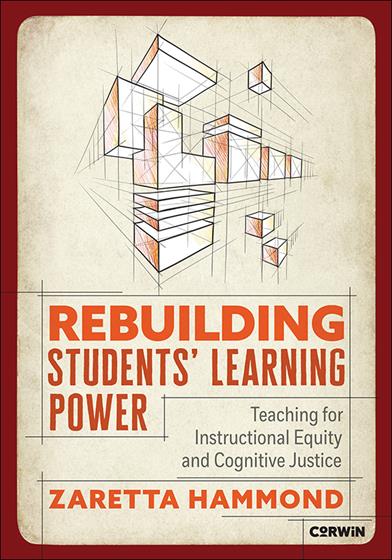
- Metacognition: Awareness and control of one’s own thinking.
- Self-Regulation: Managing one’s learning process.
- Growth Mindset: Belief in one’s ability to develop skills.
- Resilience: Persistence through challenges.
- Intellectual Curiosity: A drive to explore and understand.
- Strategic Thinking: Applying appropriate strategies.
This structured initiation helps students understand the "why" behind the "what" of learning.
-
Invite Students to Revise Their Learner Identity:
A critical, yet often overlooked, aspect of student ownership is learner identity—an individual’s perception of their abilities, motivations, and place within the academic world. Many students, particularly those who underperform, internalize negative self-beliefs (e.g., "I’m not a math person"). As part of the cognitive apprenticeship, students are explicitly invited to reflect on and revise these self-perceptions. By providing them with concrete tools and demonstrating their capacity for growth, educators can help students dismantle limiting beliefs and cultivate a sense of agency and capability. This fosters a sense of belonging and empowers them to see themselves as competent, capable learners who can master complex challenges. -
Integrate Regular Opportunities for Reflection:
Developing learning power is an iterative process requiring consistent reflection and feedback. Hammond stresses the importance of regular, structured instructional conversations where students can discuss their progress in developing their "craftsmanship of learning." This involves reflecting on how they navigate challenges, manage mistakes, overcome confusions, and strategically employ the learn-to-learn moves. Examples of such reflection opportunities include:- Learning Journals: Documenting strategies used and outcomes.
- Metacognitive Check-ins: Brief discussions about learning process.
- "Think Alouds": Articulating their thought process while problem-solving.
- Peer Feedback: Critiquing and learning from classmates’ approaches.
- Self-Assessment Rubrics: Evaluating their own use of the moves.
These opportunities help students identify "choke points"—natural constraints in information processing, such as limited working memory capacity—and "pitfalls"—self-sabotaging behaviors like cramming or multitasking. By understanding these, students can develop strategies to work within constraints and avoid counterproductive habits, leading to more efficient and effective learning.
Broader Implications and The Path to Instructional Equity
The implementation of Zaretta Hammond’s "learn-to-learn" skills framework carries profound implications for instructional equity. By explicitly teaching these metacognitive strategies, educators can demystify the learning process, making it accessible to all students, regardless of their prior academic background or socio-economic status. This framework moves beyond superficial engagement to cultivate deep intellectual agency, thereby closing opportunity gaps and fostering truly independent learners.
This approach is more than a collection of individual classroom strategies; it represents a systemic shift towards an "hidden equity curriculum." When students are equipped with the knowledge of how their brains learn and the tools to manage that process, they gain a powerful sense of control and capability. This not only enhances academic performance but also cultivates lifelong learners who are adaptable, resilient, and prepared to navigate an ever-changing world. The goal is not just to teach content, but to teach students how to learn content, ensuring every student has the opportunity to master the craftsmanship of learning and achieve their full intellectual potential. This comprehensive framework offers a tangible path for educators to foster true student ownership and build a more equitable and effective educational system.