



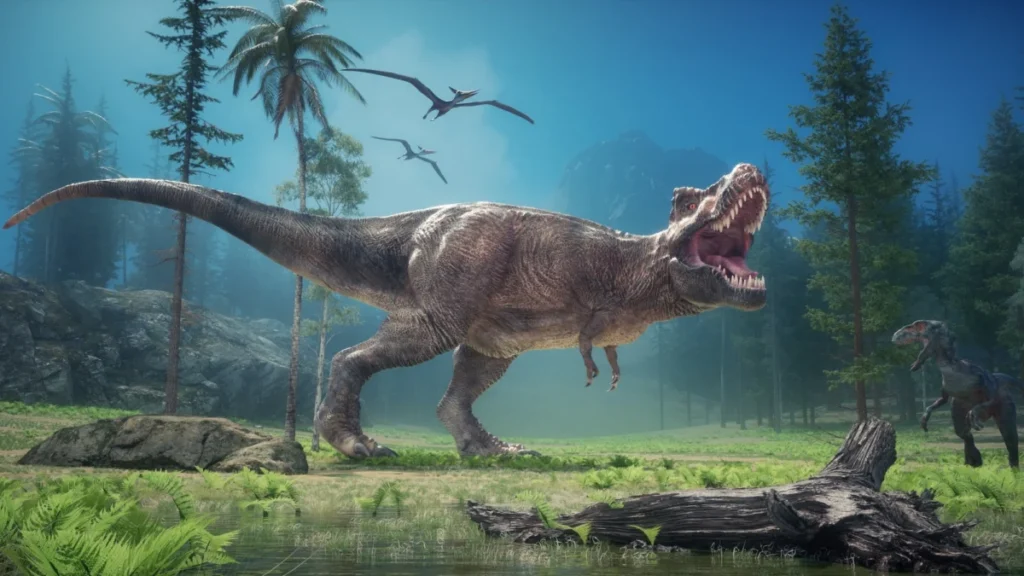
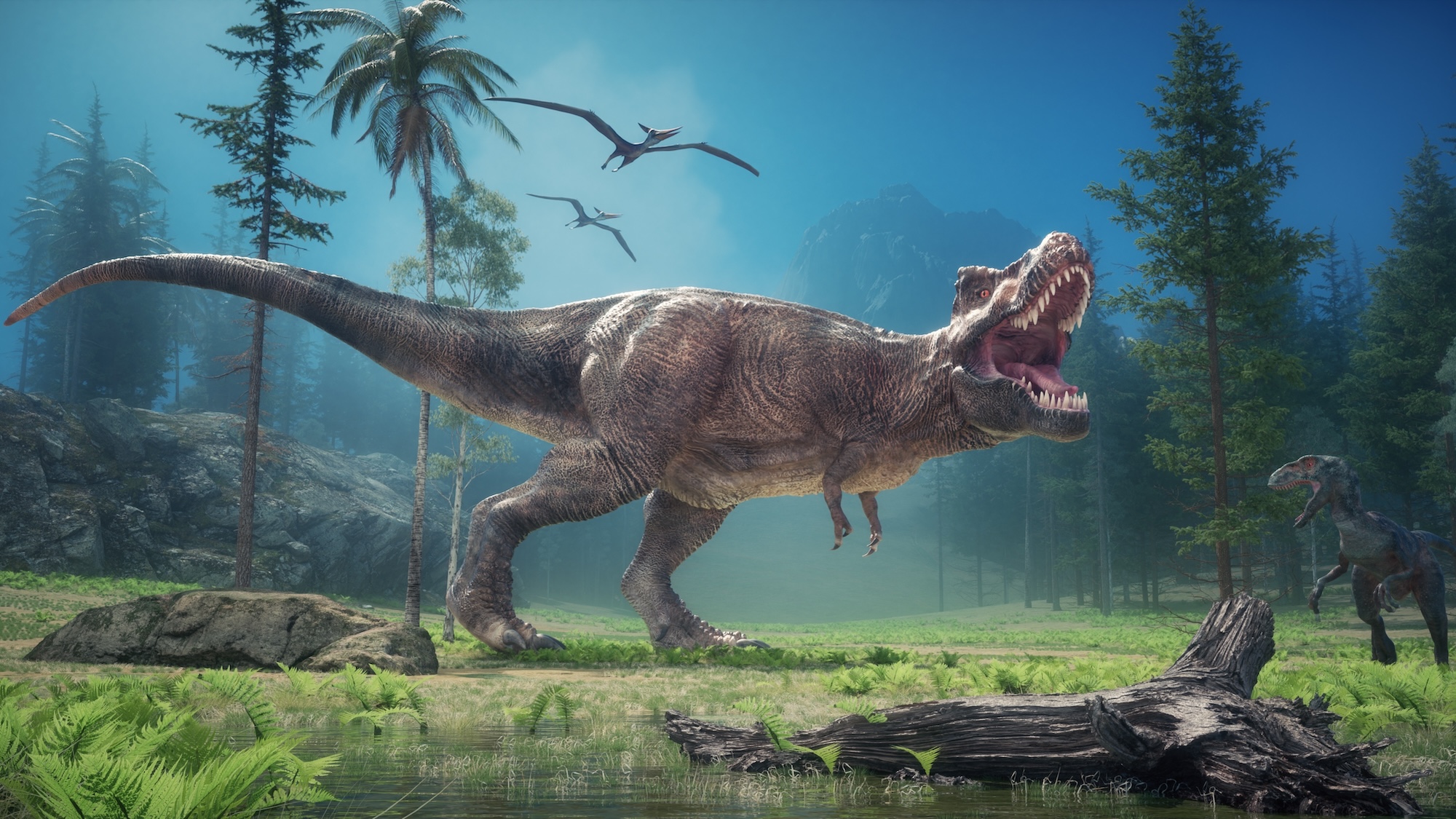
The evolutionary trajectory of the world’s most formidable land predators has long been a subject of both scientific scrutiny and public fascination, particularly regarding the seemingly mismatched proportions of the Tyrannosaurus rex. For decades, the image of a multi-ton apex predator equipped with arms no longer than those of a human has been viewed as a biological paradox. However, a comprehensive new study led by paleontologists at University College London (UCL) suggests that these diminutive limbs were not a random evolutionary quirk but rather a direct consequence of a radical shift in hunting mechanics. By examining 82 different theropod species, researchers have concluded that as these dinosaurs developed increasingly massive skulls and devastating bite forces, their reliance on forelimbs dwindled, leading to a "use it or lose it" evolutionary downsizing.
The Biomechanics of the Theropod Evolution
The study, published in the journal Proceedings of the Royal Society B Biological Sciences, provides a data-driven explanation for a phenomenon observed across at least five distinct groups of two-legged, primarily carnivorous dinosaurs known as theropods. Lead researcher Charlie Scherer and his team sought to identify the specific drivers behind the shortening of upper arms, a trait that appeared independently in several lineages over millions of years. The findings indicate a powerful correlation between skull robustness and limb reduction. As theropods evolved to tackle larger, more dangerous prey, their heads became their primary weapons, rendering their arms increasingly redundant for the purposes of subduing a kill.
To reach these conclusions, the research team developed a sophisticated scoring system to assess the structural integrity and functional strength of dinosaur skulls. This system accounted for various anatomical factors, including the overall dimensions of the cranium, the density and fusion of the bones within the head, and the estimated bite force. The results were telling: there was a significant inverse relationship between the strength of a dinosaur’s skull and the length of its arms. In essence, the more a dinosaur relied on its jaws to deliver a killing blow, the more its forelimbs retreated into a vestigial state.
A Chronology of Carnivorous Specialization
The evolutionary trend toward "head-first" hunting did not happen overnight. It was a gradual process that spanned the Jurassic and Cretaceous periods. Early theropods, such as those found in the Triassic and Early Jurassic, often possessed relatively long arms equipped with sharp claws, which they likely used to grasp and rake smaller prey. However, as the Middle and Late Jurassic progressed, a new class of "megatheropods" began to emerge.
During the Early Cretaceous, approximately 125 million years ago, species like the Tyrannotitan in South America began to exhibit the hallmarks of this anatomical trade-off. While not a direct ancestor of the T. rex, the Tyrannotitan belonged to the Carcharodontosauridae family, which followed a similar evolutionary path. These predators were massive, reaching lengths of nearly 40 feet, and possessed skulls designed for high-impact biting. By the time the Tyrannosaurus rex appeared in the Late Cretaceous, roughly 68 to 66 million years ago, the transition was complete. The T. rex boasted a bite force estimated at 8,000 to 12,000 pounds—enough to crush bone and pierce the thickest hides—while its arms had shrunk to less than three feet in length.
This chronology suggests that the reduction of limbs was a recurring theme in theropod evolution, driven by the ecological necessity of hunting larger prey, such as the long-necked sauropods or the heavily armored ceratopsians. When facing a 100-foot-long herbivore, reaching out with claws was not only ineffective but potentially dangerous for the predator, as a thrashing prey item could easily break a theropod’s slender arm. Using the head as a massive, stable anchor for attack was a much safer and more efficient strategy.
Comparative Anatomy: Beyond the Tyrannosaurids
While the T. rex is the most famous example of this trend, the UCL study highlights that the "small arm" phenomenon was widespread. The researchers pointed to the Abelisauridae, a group of theropods that thrived in the southern hemisphere. A prime example is the Majungasaurus, which roamed Madagascar approximately 70 million years ago. Despite being significantly smaller than the T. rex—weighing roughly 1.75 tons compared to the 8-ton average of a full-grown Tyrannosaur—the Majungasaurus followed the same evolutionary logic. It possessed a short, deep skull and incredibly stunted forelimbs.
Interestingly, the study found that different groups of dinosaurs "lost" their arms in different ways. In Abelisaurids, the reduction was most extreme in the lower arm and hand; many species in this group lacked even the ability to flex their elbows. In contrast, Tyrannosaurids like the T. rex saw a more proportional reduction across the entire limb, though they still retained two functional fingers with sharp claws.
The most extreme case of limb reduction identified by the researchers was the Carnotaurus. This "meat-eating bull" of the Late Cretaceous had arms so small they are frequently described by paleontologists as "ridiculous." Its forelimbs were essentially vestigial, lacking the range of motion required for any predatory function. This supports the "use it or lose it" hypothesis: because the Carnotaurus had evolved a highly specialized skull for rapid-fire biting, its arms had no remaining functional role, leading to their near-disappearance.
Supporting Data and Bite Force Analysis
The core of the study’s argument lies in the sheer physics of the theropod bite. The researchers analyzed bite force data across the 82 species and found that the apex predators with the shortest arms consistently ranked at the top of the charts. The T. rex remains the undisputed champion of bite force, but the Tyrannotitan and Giganotosaurus were not far behind.
The data suggests that the energy required to grow and maintain large, muscular arms is significant. In the brutal world of the Mesozoic, biological "real estate" was expensive. If a dinosaur could achieve its hunting goals using only its head, the evolutionary pressure to maintain heavy, energy-consuming arms would vanish. Natural selection would then favor individuals that diverted those biological resources toward growing larger jaw muscles or thicker neck vertebrae to support a massive skull.
Furthermore, the study analyzed the correlation between body size and arm length. While it is true that larger dinosaurs tended to have smaller arms relative to their bodies, the researchers found that skull strength was a much more accurate predictor of arm size than total body mass. This reinforces the idea that the change was a functional adaptation to a specific hunting style rather than a mere side effect of getting bigger.
Scientific Perspectives and Broader Implications
The findings have been met with significant interest from the broader paleontological community. For years, alternative theories have attempted to explain the T. rex’s small arms, ranging from the idea that they were used to help the dinosaur push itself off the ground after a nap, to the theory that they were used to hold onto mates during reproduction. Some researchers even suggested that the arms shrank to prevent them from being accidentally bitten off by fellow Tyrannosaurs during a group feeding frenzy.
While Scherer’s team does not entirely rule out secondary uses for these limbs, they argue that these functions were likely incidental. "The head took over from the arms as the method of attack," Scherer stated, emphasizing that the primary driver was the shift in predatory mechanics.
This research has broader implications for our understanding of convergent evolution—the process where different species independently evolve similar traits. The fact that five different groups of theropods all moved toward smaller arms and larger heads suggests that this was an "optimal" solution for large-scale terrestrial carnivores. It provides a blueprint for how apex predators adapt to their environments and the prey they pursue.
Conclusion: The Legacy of the Apex Predator
The image of the Tyrannosaurus rex as a lopsided monster may now be replaced by the image of a perfectly honed biological machine. The reduction of its arms was not a "mistake" of nature, but a testament to the efficiency of its jaws. By streamlining its anatomy to focus entirely on its primary weapon—the head—the T. rex and its relatives became some of the most successful predators in Earth’s history.
As paleontology moves further into the era of big data and biomechanical modeling, studies like this one from University College London provide a clearer picture of the ancient world. They remind us that every aspect of a dinosaur’s anatomy, no matter how comically small it may seem to modern eyes, was shaped by millions of years of survival, competition, and the relentless logic of evolution. The mystery of the tiny arms, it seems, has finally been gripped by the firm jaws of scientific evidence.