


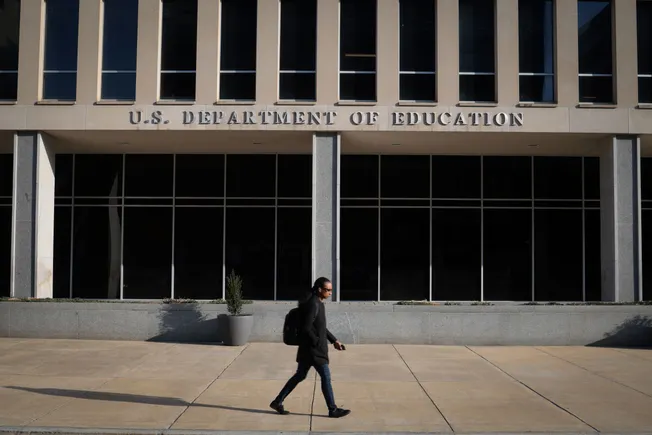
A federal court has invalidated a controversial U.S. Department of Education directive that led to the abrupt cancellation of tens of millions of dollars in federal teacher preparation grants, delivering a significant legal setback to the administration’s broader efforts to dismantle diversity, equity, and inclusion initiatives within federally funded programs.
In a ruling issued by the U.S. District Court for the District of Massachusetts, the court determined that the February 5, 2025, directive—titled Eliminating Discrimination and Fraud in Department Grant Awards—was arbitrary, capricious, and in direct violation of the Administrative Procedure Act (APA). The decision brings a temporary halt to sweeping federal efforts targeting grant recipients whose professional development workshops and educational frameworks touch upon systemic inequities, racial bias, and institutional accountability.
The ruling marks a pivotal moment in an escalating legal and political battle between state attorneys general and federal education authorities over the scope of executive authority, administrative rule-making procedures, and the role of federal oversight in local educational curricula. As affected states evaluate the operational fallout of the interrupted grant cycles, education advocates and legal scholars are closely watching to see how the Department of Education responds to the court’s rebuke.
Chronology of Events and the Legal Challenge
The origins of the dispute trace back to early February 2025, when the Department of Education issued the directive instructing agency personnel to conduct immediate reviews of all new and previously issued grant awards. The explicit goal was to ensure that federal taxpayer dollars did not fund what the administration categorized as discriminatory practices, specifically targeting initiatives associated with diversity, equity, and inclusion (DEI).
Just twelve days after the issuance of the directive, on February 17, 2025, the department announced sweeping cuts to major federal grant programs, most notably the Teacher Quality Partnership (TQP) and Supporting Effective Educator Development (SEED) grants. The abrupt terminations affected institutions across the country that relied on the funding to recruit, train, and retain educators, particularly in high-need rural and urban school districts.
In response to the sudden loss of funding, a coalition of state attorneys general from California, Colorado, Illinois, Maryland, Massachusetts, New Jersey, New York, and Wisconsin filed a multi-state lawsuit against the Education Department. The plaintiffs argued that the sudden termination of multi-year grants mid-cycle violated federal administrative law, disrupted state-level workforce planning, and exceeded the statutory authority of the agency.
Following months of legal arguments, the U.S. District Court for the District of Massachusetts issued its memorandum and order on September 17. The court zeroed in on the expedited timeline and the lack of evidentiary backing within the administrative record.
"The Department’s hasty implementation of the Directive over less than two weeks, the magnitude of the effects of the termination, as well as the lack of evidence of reasoned decisionmaking in the Administrative Record leave serious doubts as to the Department’s choice to adopt the Directive," the court stated in the order.
Scope of the Impact on State Teacher Pipelines
The fallout from the February directive was immediate and widespread, particularly in states with robust educator preparation programs. California alone faced the cancellation of at least $148 million in teacher training grant funds, according to figures released by California Attorney General Rob Bonta.
The impacted programs were originally established to combat persistent teacher shortages across the state by building specialized teacher pipelines in underserved communities. Many of these targeted initiatives were specifically designed to fill hard-to-staff classrooms, such as secondary mathematics and physical sciences, while incorporating mentorship structures proven to boost long-term teacher retention rates.
Following the September 17 ruling, Attorney General Bonta issued a statement denouncing the administration’s policy choices. "Since Day One, the Trump Administration has pursued an anti-education agenda, repeatedly attempting to slash funding to undermine teacher training, student mental health, classroom technology, and more. Once again, a court said no," Bonta remarked. "There is nothing more important than our students’ educational future—and their success relies on ensuring we’re continuing to train up the teachers of tomorrow."
Across other plaintiff states, similar concerns were raised regarding the stability of teacher residency programs, professional development frameworks, and partnerships between higher education institutions and local school districts. Administrators warned that pulling federal support without warning threatened to shutter ongoing cohorts of aspiring teachers at a time when nationwide recruitment and retention challenges remain acute.
Official Responses from Federal Authorities and Educational Associations
As of late September, the U.S. Department of Education had not formally announced whether it would appeal the Massachusetts federal district court’s decision. However, the agency has stood firmly by the policy motivations underpinning the original directive.
Education Department Press Secretary Savannah Newhouse defended the agency’s overarching stance in a statement provided to media outlets following the ruling. "Taxpayer dollars should support preparing teachers for meaningful student learning, expanding the pipeline of high-quality teachers, and retaining top talent—not funding divisive ideology or racial preferences," Newhouse said.
The administration’s core argument rests on the premise that certain professional development programs—particularly those incorporating workshops on dismantling racial bias or requiring educators to adopt personal and institutional responsibility for systemic inequities—constitute unlawful practices that conflict with civil rights laws and prioritize ideological frameworks over traditional academic merit.
Conversely, professional education associations have lauded the court’s decision as a necessary validation of the importance of federal investments in teacher preparation. Cheryl Holcomb-McCoy, CEO and president of the American Association of Colleges for Teacher Education (AACTE), expressed strong approval of the ruling.
The order "affirms what AACTE and our partner organizations have consistently emphasized for the past two years: federal investment in educator preparation is essential to strengthening our nation’s teacher workforce and ensuring every student has access to a well-prepared teacher," Holcomb-McCoy stated. She added that withdrawing critical funding mid-cycle causes "immediate and lasting harm to institutions, communities, and students."
Broader Implications for Administrative Law and Education Policy
The legal defeat for the Department of Education highlights ongoing tensions surrounding the Administrative Procedure Act and the latitude executive agencies possess when shifting policy priorities between presidential administrations. Under the APA, federal agencies are required to engage in reasoned decision-making, provide adequate notice and justification for policy shifts, and adequately consider the reliance interests of regulated parties and grant recipients.
Legal analysts note that the court’s emphasis on the department’s "hasty implementation" and the magnitude of the funding terminations underscores the judiciary’s scrutiny of abrupt regulatory reversals. When federal agencies attempt to cancel existing multi-year grants based on new ideological or policy directives, courts increasingly demand a robust administrative record demonstrating that the agency weighed the practical consequences of its actions.
For school districts and educator preparation programs, the immediate implications of the ruling mean that previously canceled grants may be reinstated or subjected to further administrative review as the litigation proceeds. However, uncertainty remains regarding the long-term security of federal funding streams dedicated to equity-focused professional development and teacher preparation.
As the legal battle moves forward, the case serves as a major test of the boundaries governing federal grant administration, state sovereignty in educational governance, and the ongoing national debate over the role of diversity, equity, and inclusion initiatives in American public education.