


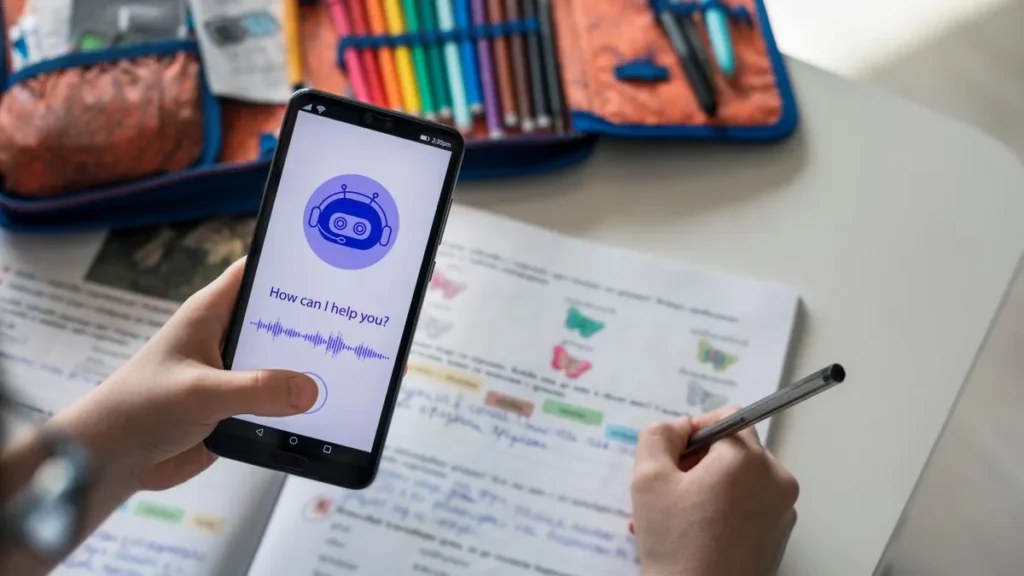
A student stares at a challenging assignment, pencil down, muttering, "I don’t get it," before sliding the paper aside. This moment, common in classrooms globally, represents a pivotal crossroads for educators. The teacher’s response—whether to lower the bar out of pity or to provide the scaffold necessary for success—defines the trajectory of that student’s academic life. This delicate balancing act, known in educational circles as "Warm Demander" pedagogy, is gaining renewed attention as school systems struggle to reconcile the demand for high academic standards with the urgent need for inclusive, culturally responsive teaching.
Defining the Framework: Origins and Philosophy
The Warm Demander model is not a new invention, but rather a synthesized framework rooted in decades of educational research regarding student motivation and achievement. The term gained prominence through the work of educators like Judith Kleinfeld in the 1970s and was later refined by scholars such as Lisa Delpit and Franita Ware. At its core, the pedagogy rejects the binary choice between being a "strict" teacher and a "nurturing" one. Instead, it posits that the most effective classroom environment is one where high expectations are explicitly paired with deep, relational support.
The philosophy rests on the understanding that for students—particularly those from marginalized backgrounds or those facing significant external stressors—the classroom must be a site of "productive struggle." Without the "warmth," high standards can be perceived as punitive, leading to student disengagement. Conversely, without the "demand," teachers often fall into the trap of the "soft bigotry of low expectations," where academic rigor is sacrificed under the guise of empathy, ultimately depriving students of the skills required for long-term success.
A Chronology of the Pedagogical Shift
The evolution of the Warm Demander approach reflects broader shifts in American education. Following the desegregation era of the mid-20th century, research began to focus heavily on how teacher expectations—often influenced by implicit biases—impacted student performance. The "Pygmalion in the Classroom" studies by Rosenthal and Jacobson in the late 1960s provided the foundational data showing that when teachers believe in a student’s potential, that student is more likely to succeed.
By the 1990s, the focus shifted toward "culturally relevant pedagogy," popularized by Gloria Ladson-Billings, which emphasized the importance of acknowledging a student’s cultural identity. In the early 2000s, the No Child Left Behind Act placed a hyper-focus on standardized testing, which led many schools to adopt rigid, high-stakes testing environments that often neglected the "warmth" necessary to foster student buy-in. Today, the modern iteration of the Warm Demander model seeks to reclaim that human element, moving away from the "test-prep" culture toward a model that emphasizes student agency and intrinsic motivation.
Data and Impact: Why It Matters
Empirical evidence suggests that student outcomes are inextricably linked to the quality of the teacher-student relationship. A 2016 study published in the journal Educational Researcher found that students who perceived their teachers as both demanding and caring showed higher levels of academic self-efficacy and classroom engagement compared to those who perceived their teachers as either purely supportive or purely demanding.
Furthermore, data from the National Center for Education Statistics (NCES) indicates that chronic absenteeism and dropout rates are significantly lower in schools where students report feeling "seen" and "supported" by their instructors. When a teacher sets a high bar but provides the specific, granular support needed to reach it, students are less likely to experience the frustration that leads to behavioral issues or withdrawal. This approach directly counters the phenomenon of academic "coasting," where students in lower-track classes are rarely challenged to engage with complex, critical-thinking-based curricula.
The Anatomy of a Warm Demander Classroom
In practice, a Warm Demander classroom is characterized by several observable behaviors that distinguish it from traditional instructional models. Rather than relying on a lecture-heavy format, these classrooms prioritize:
- Intentional Relationship Mapping: Educators go beyond surface-level rapport, gathering data on student aspirations, family dynamics, and cultural identities to customize instructional delivery.
- Precision Feedback: Feedback is immediate, actionable, and non-judgmental. It focuses on the process of learning rather than the final grade, viewing errors as essential data points.
- Scaffolded Rigor: The curriculum is not diluted. Instead, teachers break down complex tasks into manageable milestones, ensuring that the cognitive load remains high while the anxiety level remains low.
- Collective Accountability: Students are treated as partners in their own education. They are given agency over goal setting and are expected to hold themselves and their peers to high behavioral and academic standards.
Challenges to Implementation: The Role of Teacher Well-being
While the model is widely praised for its efficacy, its implementation is fraught with challenges. The most significant barrier is "compassion fatigue." Being a Warm Demander requires a high level of emotional labor. Teachers must remain consistently present, vigilant, and empathetic, which can lead to rapid burnout if not balanced with structural support from school administration.
Franita Ware, in her 2024 work, emphasizes that "radical self-care" is not a luxury but a professional necessity. For the model to succeed at scale, administrators must shift their own management styles. If principals treat their teachers with the same combination of warmth and high expectations that teachers are expected to show their students, the entire school ecosystem becomes more sustainable. Conversely, if administrators impose high standards without providing the necessary resources—such as time for planning, manageable class sizes, and mental health support—the "warmth" of the faculty will inevitably deplete, leaving behind only the "demand," which often manifests as authoritarianism.
Addressing the "Soft Bigotry" of Low Expectations
A central tenet of this pedagogy is the rejection of lowered standards. When educators lower expectations because they believe a student is "going through too much," they are inadvertently signaling that they do not believe the student is capable of resilience. This is particularly problematic in Title I schools or districts serving high-poverty populations.
Research consistently shows that students who are held to high standards perform better, provided they have access to the resources required to meet those standards. A Warm Demander teacher acknowledges the student’s external circumstances—poverty, systemic inequality, or personal hardship—without allowing those factors to dictate the quality of the education provided. By maintaining the bar, the teacher provides the student with the best possible tool for long-term social mobility: a rigorous education.
Future Implications and Policy Directions
The movement toward Warm Demander pedagogy arrives at a time when school systems are heavily polarized over curricula and the role of identity in the classroom. However, the Warm Demander model offers a pragmatic, non-partisan path forward. It focuses on the fundamental, universal needs of the student: to be respected, to be challenged, and to be successful.
Moving forward, school districts aiming to improve student outcomes should prioritize professional development that focuses on this dual-axis approach. This includes:
- Reframing Professional Development: Shifting away from abstract theoretical workshops toward actionable "habit stacking," where teachers learn how to integrate small, high-impact moves into their daily routines.
- Administrative Modeling: Training school leaders to use the Warm Demander framework in their evaluations and interactions with staff.
- Data-Driven Relationship Building: Encouraging teachers to use student surveys and feedback loops to measure the effectiveness of their classroom culture, just as they would measure academic progress in math or literacy.
As education continues to evolve in the digital age, the human connection remains the most vital component of the classroom. The Warm Demander pedagogy provides a roadmap for educators to navigate the complexities of modern teaching, ensuring that the pursuit of equity does not come at the expense of excellence. By holding space for both the student’s humanity and their potential, educators can create a sustainable environment where every learner is equipped to tackle the challenges of the future. The transition to this model is not merely a pedagogical adjustment; it is a fundamental commitment to the belief that every student, regardless of their background, is capable of brilliance.