

The international wildlife photography community has officially unveiled the victors of the 2026 Bird Photographer of the Year competition, awarding top honors to British photographer Henley Spiers for his mesmerizing, high-speed capture of a northern gannet plunging into the Atlantic Ocean. Selected from a vast pool of global submissions, this year’s winning imagery highlights not only the breathtaking aesthetic qualities of avian wildlife across diverse ecosystems, but also underscores an urgent imperative for wildlife conservation amidst a rapidly changing climate and encroaching human infrastructure.
The competition, which serves as a premier annual showcase for avian artistry and ecological documentation, successfully raised more than £5,000 for Birds on the Brink. This UK-registered charity provides vital financial grants to grassroots bird conservation projects operating around the globe. As artificial intelligence and digitally manipulated media increasingly saturate modern visual culture, the 2026 exhibition stands as a resolute testament to the unvarnished realities of the natural world, demanding immense patience, fieldcraft, and technical precision from its participants.
Main Facts and the Grand Prize Winner
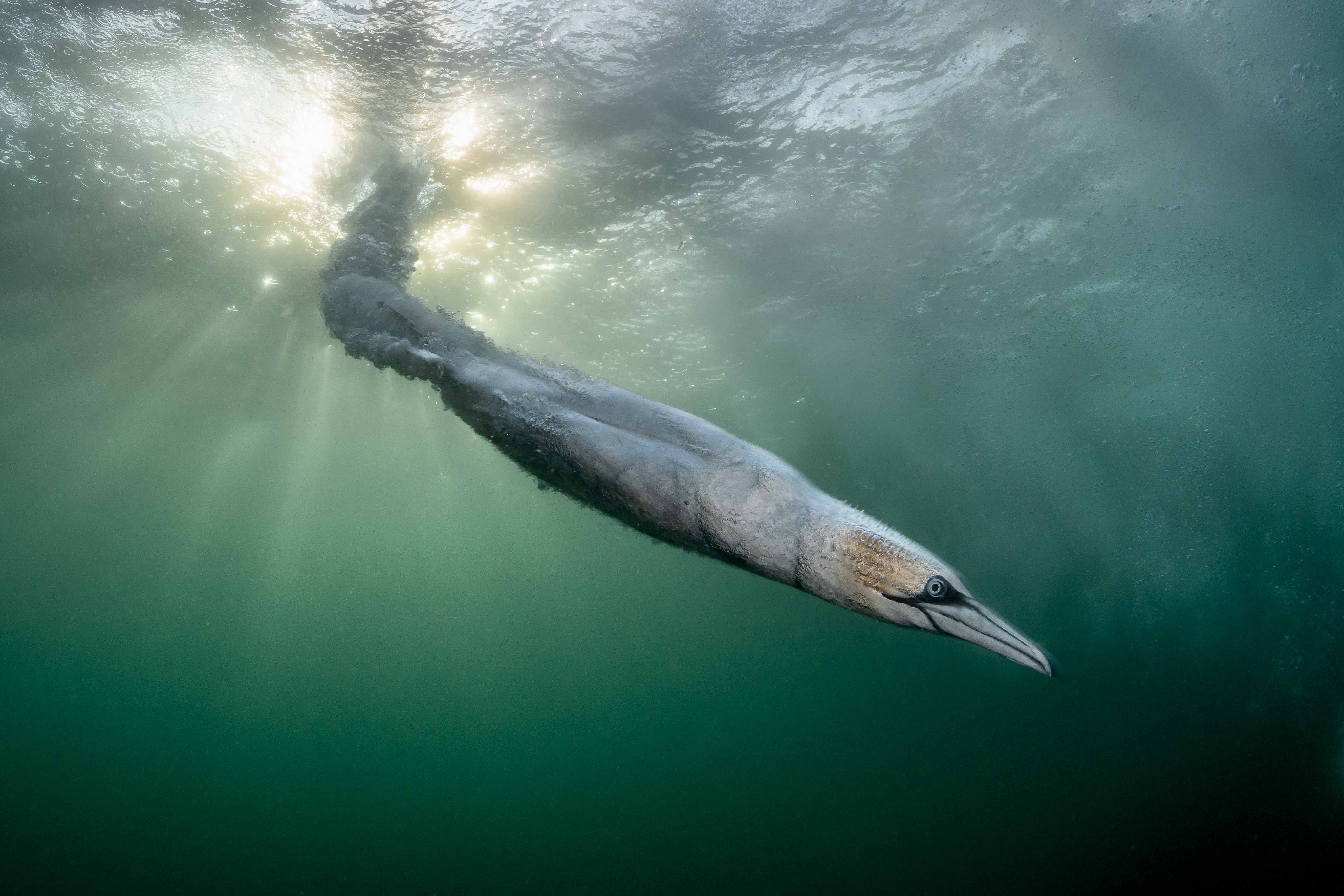
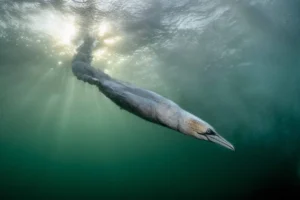
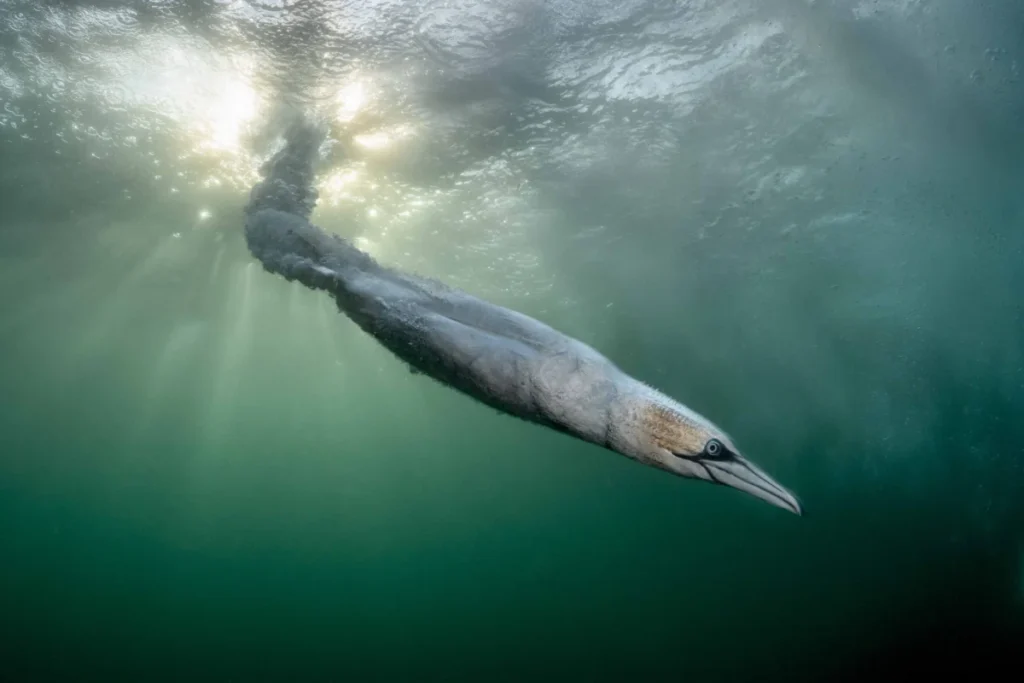
At the pinnacle of this year’s awards sits Henley Spiers’ arresting image, titled Sunball Rocket. The photograph depicts a northern gannet transforming mid-air into an aerodynamic torpedo, slicing through the ocean surface at staggering velocities of up to 86 kilometers per hour (53 miles per hour). Spiers captured the split-second impact as the seabird pierced the water, framed against a brilliant burst of subsurface sunlight that illuminates the trailing bubbles and emerald-green depths.
Spiers noted the fascinating dual existence of the northern gannet during his field observations. On land and within the confines of the nesting colony, these birds display profound tenderness, reinforcing lifelong pair bonds by pointing their sharp beaks skyward and gently stroking their white necks together while carefully nurturing their newborns. However, upon taking flight, a formidable hunting instinct assumes control. Equipped with piercing yellow eyes fringed by striking blue circles, the gannets methodically scan the marine expanse for shoals of fish.
The mechanics of the gannet’s dive are a marvel of evolutionary biology. Possessing a generous wingspan and a streamlined physique, the seabirds glide effortlessly above the waves before identifying their quarry. Upon spotting a fish, they fly directly into the wind, extending their wings as dynamic air brakes to precisely calibrate their position. In a fraction of a second, they tuck their wings tightly against their bodies, morphing into a living projectile that routinely surpasses the speeds of Olympic platform divers, who rarely exceed 60 kilometers per hour.
To withstand the violent kinetic forces of water entry, northern gannets feature highly specialized anatomical adaptations. Specialized neck muscles lock their vertebrae rigidly into place upon impact, while subcutaneous air sacs situated in the face and chest deploy like biological airbags. Furthermore, their nostrils have evolved to be entirely internal, preventing water ingress during high-speed plunge dives.
Chronology and Background of the Competition
Established to celebrate the staggering beauty of birds while simultaneously drawing attention to their fragile ecological status, the Bird Photographer of the Year competition has evolved into one of the most prestigious fixtures in the international natural history calendar. The selection process spans several months, with an expert panel of judges evaluating tens of thousands of entries across a multitude of specialized categories, including Best Portrait, Bird Behaviour, Birds in Flight, Birds in the Environment, Black and White, Urban Birds, and dedicated Youth divisions.
The genesis of the competition lies in a shared desire among conservationists and photographers to bridge the gap between artistic expression and environmental advocacy. Over the past decade, the platform has grown exponentially, attracting talent from every continent and fostering a global community dedicated to documenting avian life. The 2026 edition reflects a maturation of photographic techniques, ranging from advanced high-speed shutter captures in remote polar regions to intimately framed urban wildlife portraits that challenge traditional perceptions of animal habitats.
Category Winners and Standout Portfolios
Across the various competitive divisions, photographers demonstrated extraordinary dedication, often enduring grueling field conditions to secure their frames.
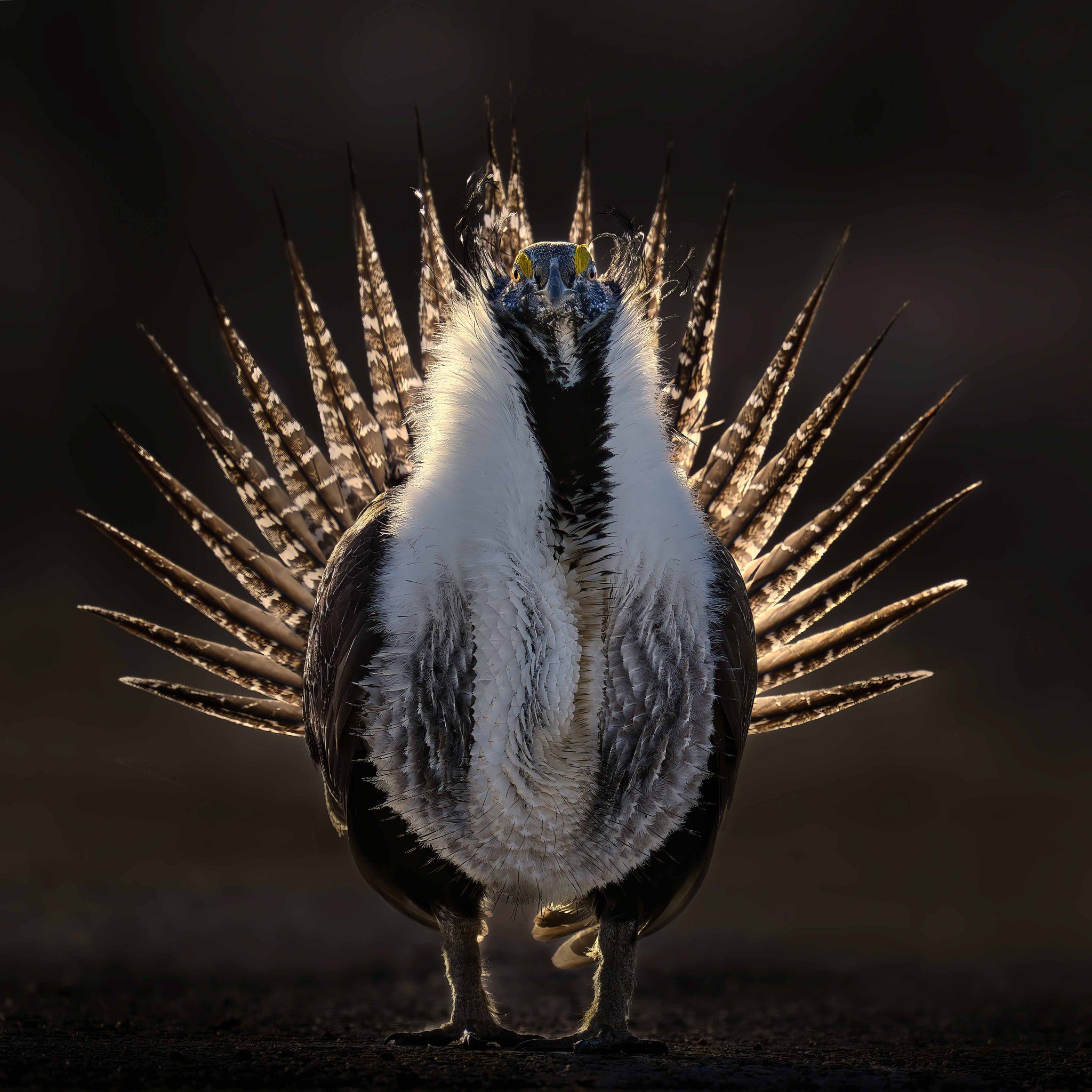
In the Best Portrait category, Thomas Deliberto secured the Gold award with Radiant, an ethereal capture of a male greater sage-grouse during its dawn courtship display. Crouched behind rocks before sunrise on a Wyoming lek—a communal mating ground—Deliberto positioned himself to capture the bird in dramatic backlighting. As the sun crested the shadowed sagebrush hills, it illuminated the grouse’s tail feathers, causing them to appear as though they were radiating internal light. Deliberto’s work poignantly highlights the plight of the greater sage-grouse, North America’s largest native grouse species, whose populations have suffered precipitous declines due to the systematic fragmentation and loss of Intermountain West sagebrush ecosystems.
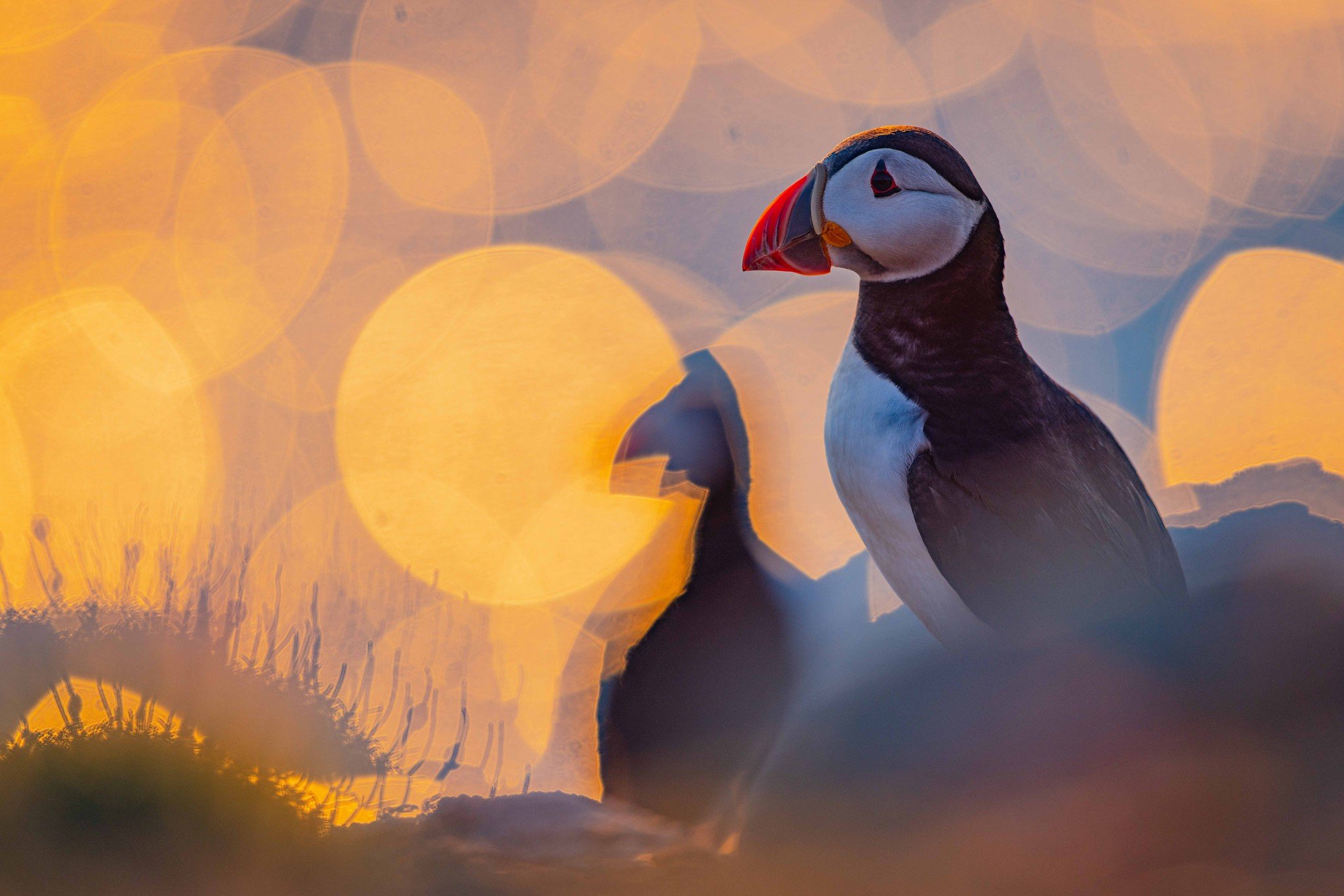
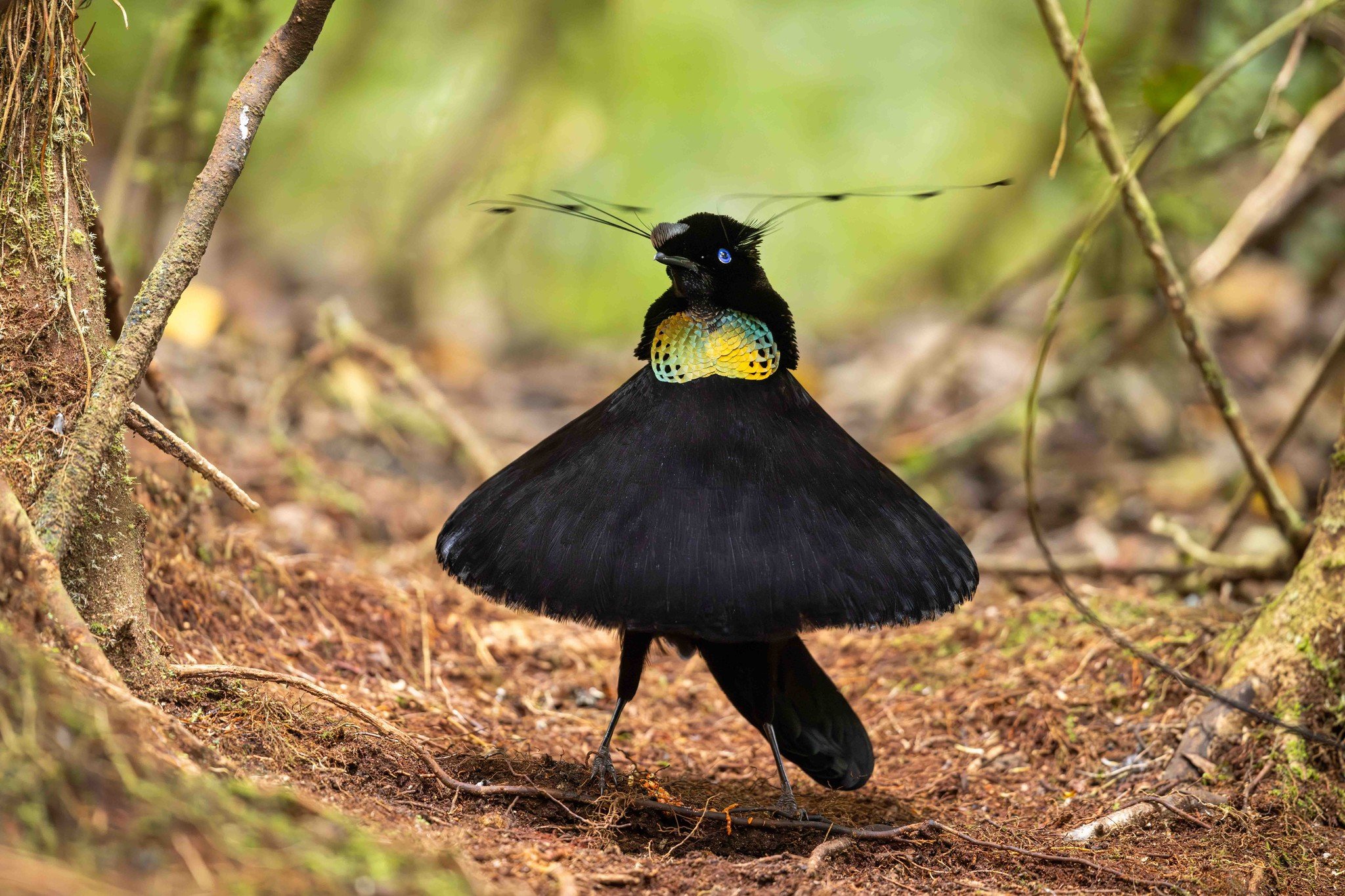
The Silver award in the same category went to Volker Widmann for Sunset Puffin, captured on the Welsh island of Skomer. Widmann spent several consecutive days observing the Atlantic puffin colony, waiting patiently until day tourists departed and the fading evening sun cast warm, golden reflections across the ocean surface. Meanwhile, David Stowe claimed Bronze with Tiny Dancer, a remarkable visualization of a male western parotia performing its intricate, dazzling courtship dance in the murky rainforests of West Papua.
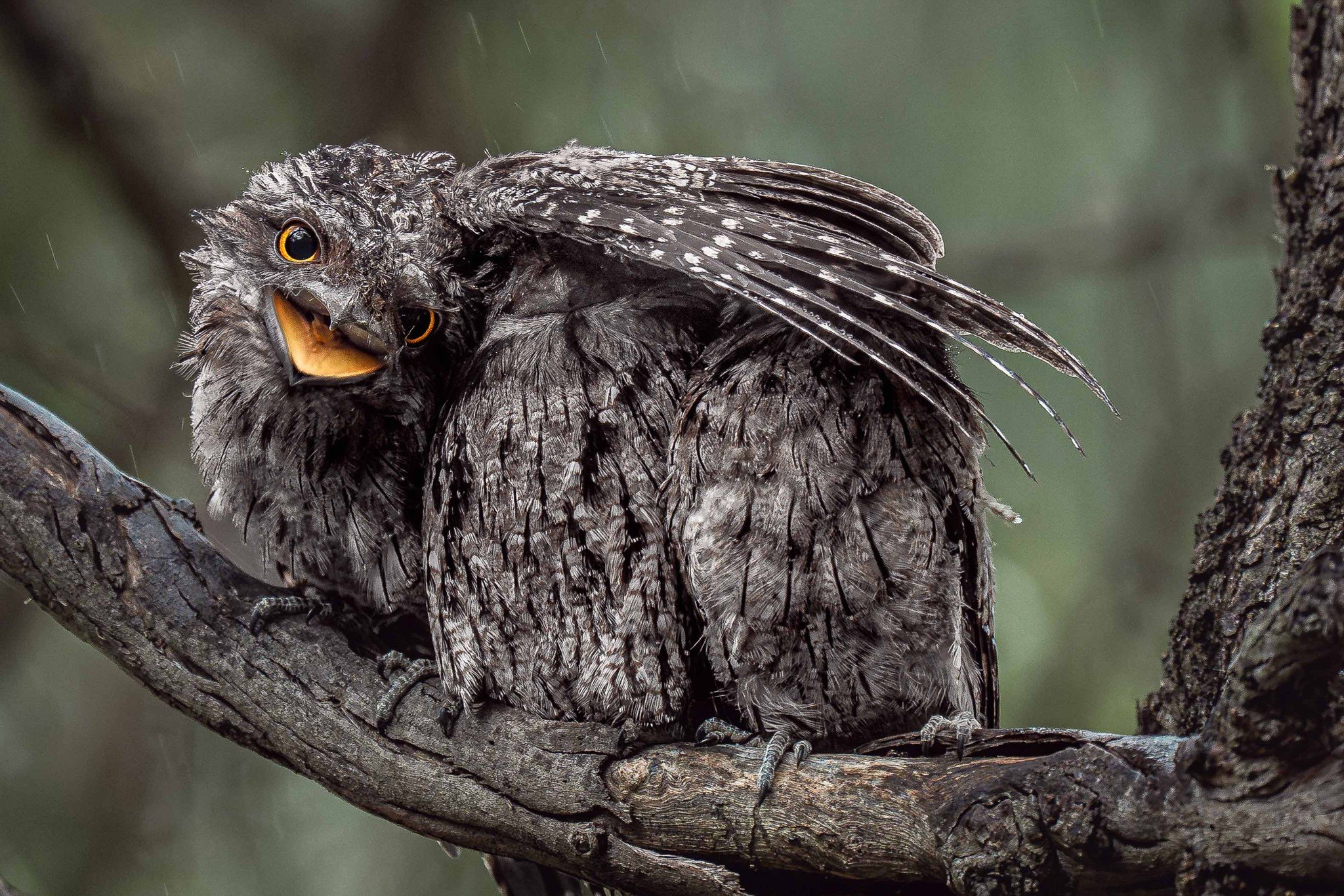
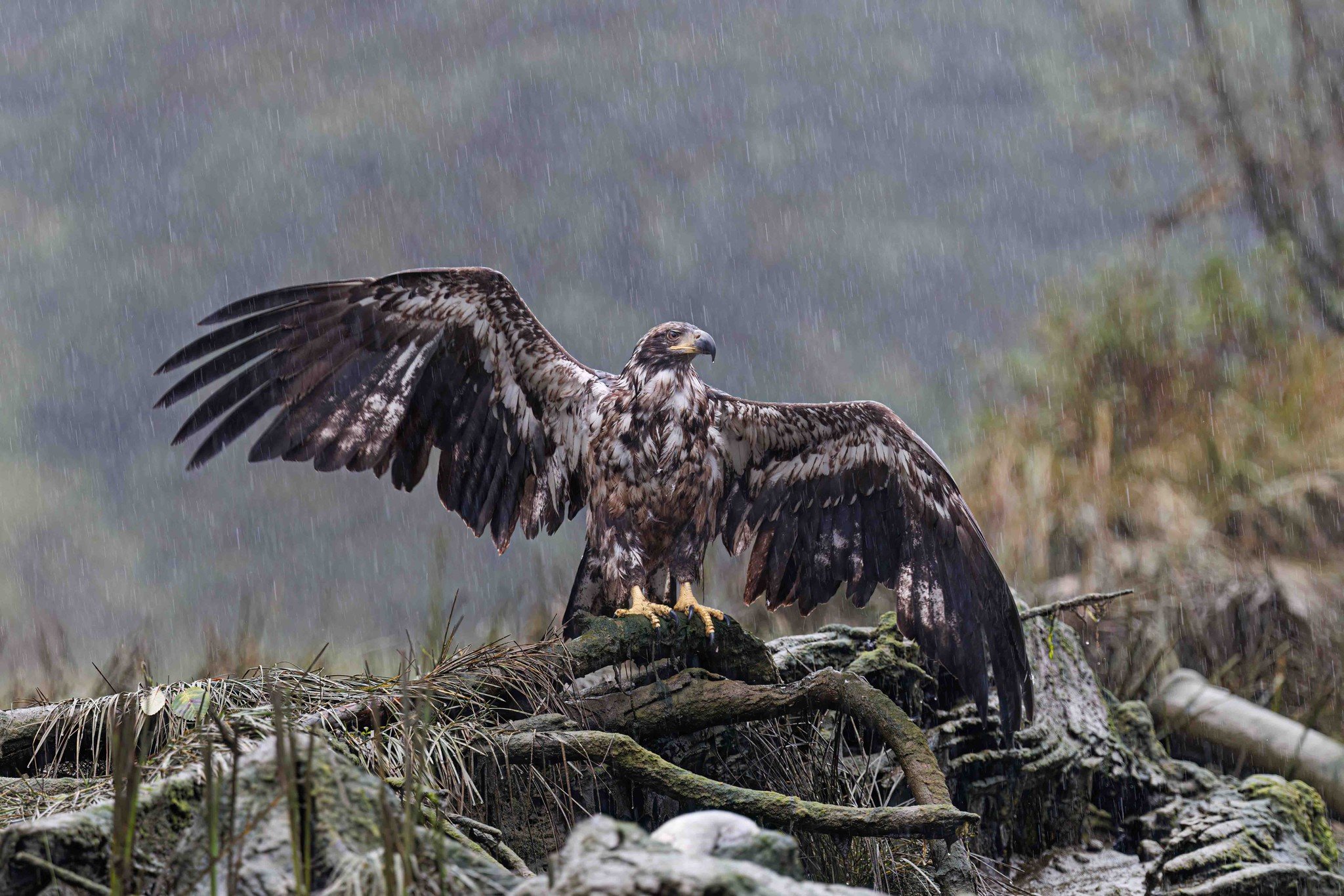
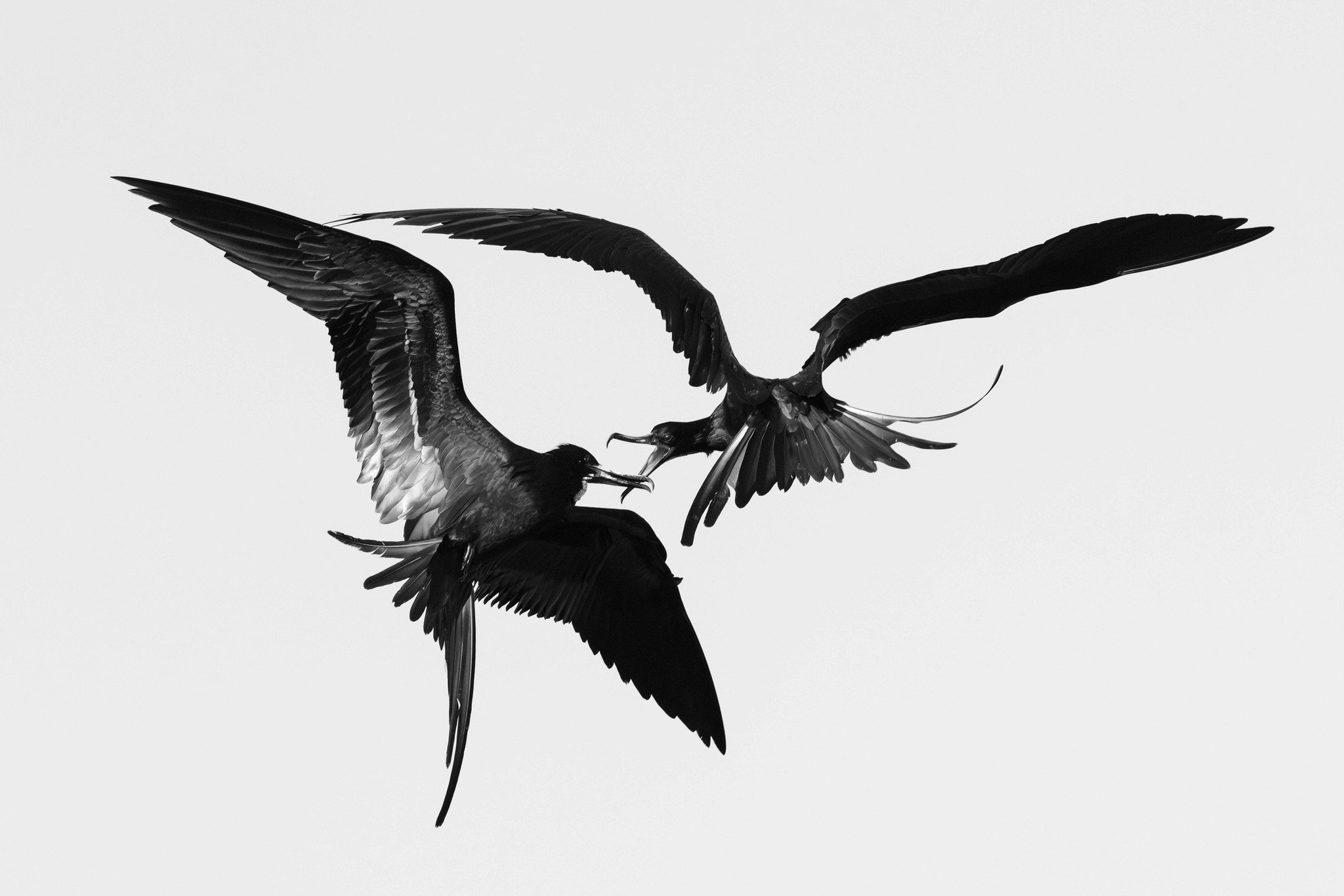
In the Bird Behaviour division, Donald Chin took Gold with I’m Keeping Everyone Dry. The image portrays a fledgling tawny frogmouth stretching its wings amidst relentless forest rainfall, seemingly sheltering its siblings from incoming water droplets. The quiet resilience captured in the stillness of the frame contrasts sharply with the frantic pace of modern existence. The Silver award was presented to veteran wildlife photographer Mark Carwardine for Spread Eagle, depicting a juvenile bald eagle maintaining its wide-winged posture through torrential downpours in Canada’s Great Bear Rainforest. Bernhard Schubert rounded out the category with Bronze for Kleptoparasitism, an action-packed frame documenting the aggressive aerial skirmishes of magnificent frigatebirds along the beaches of Tulum, Mexico.
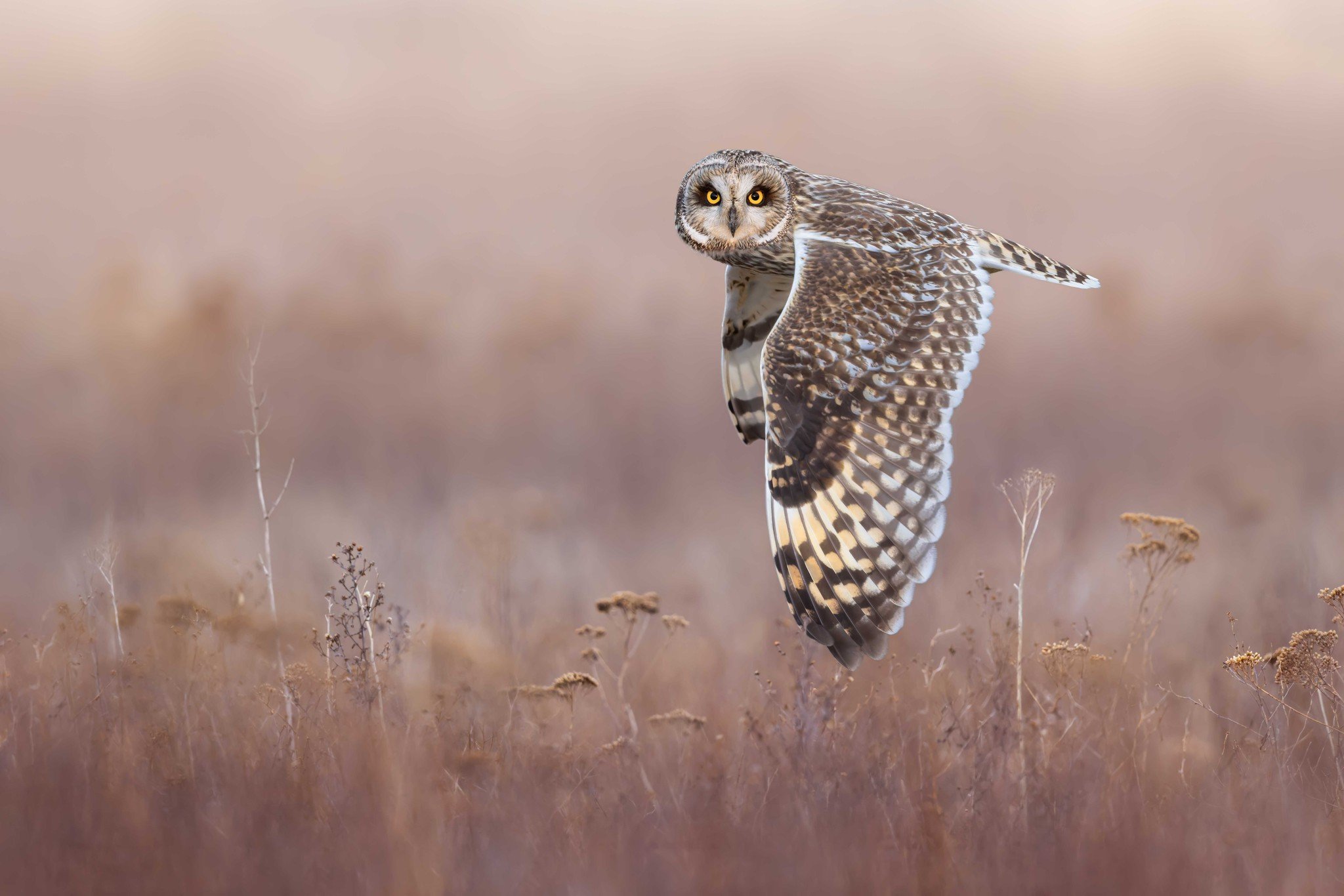
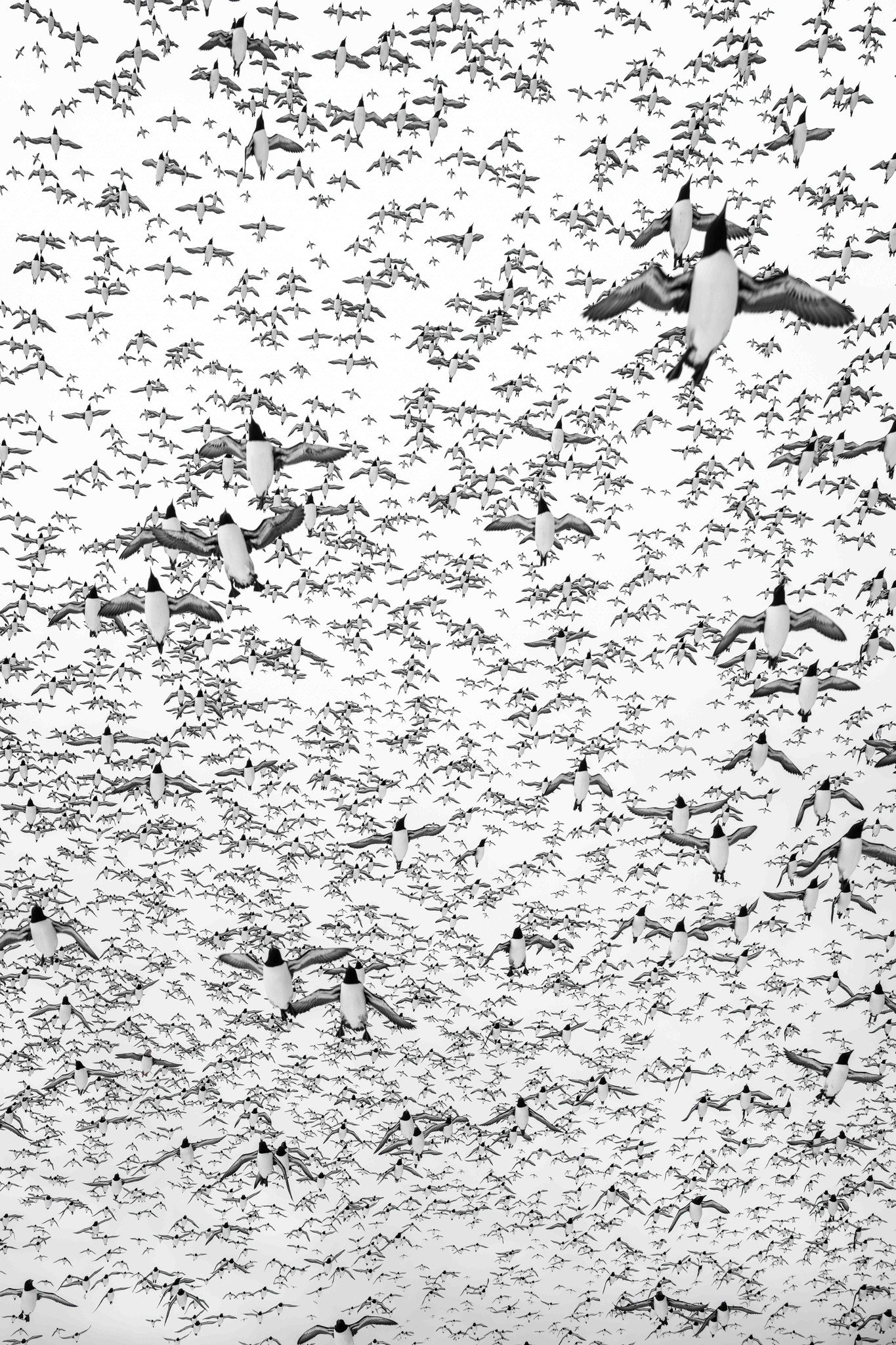
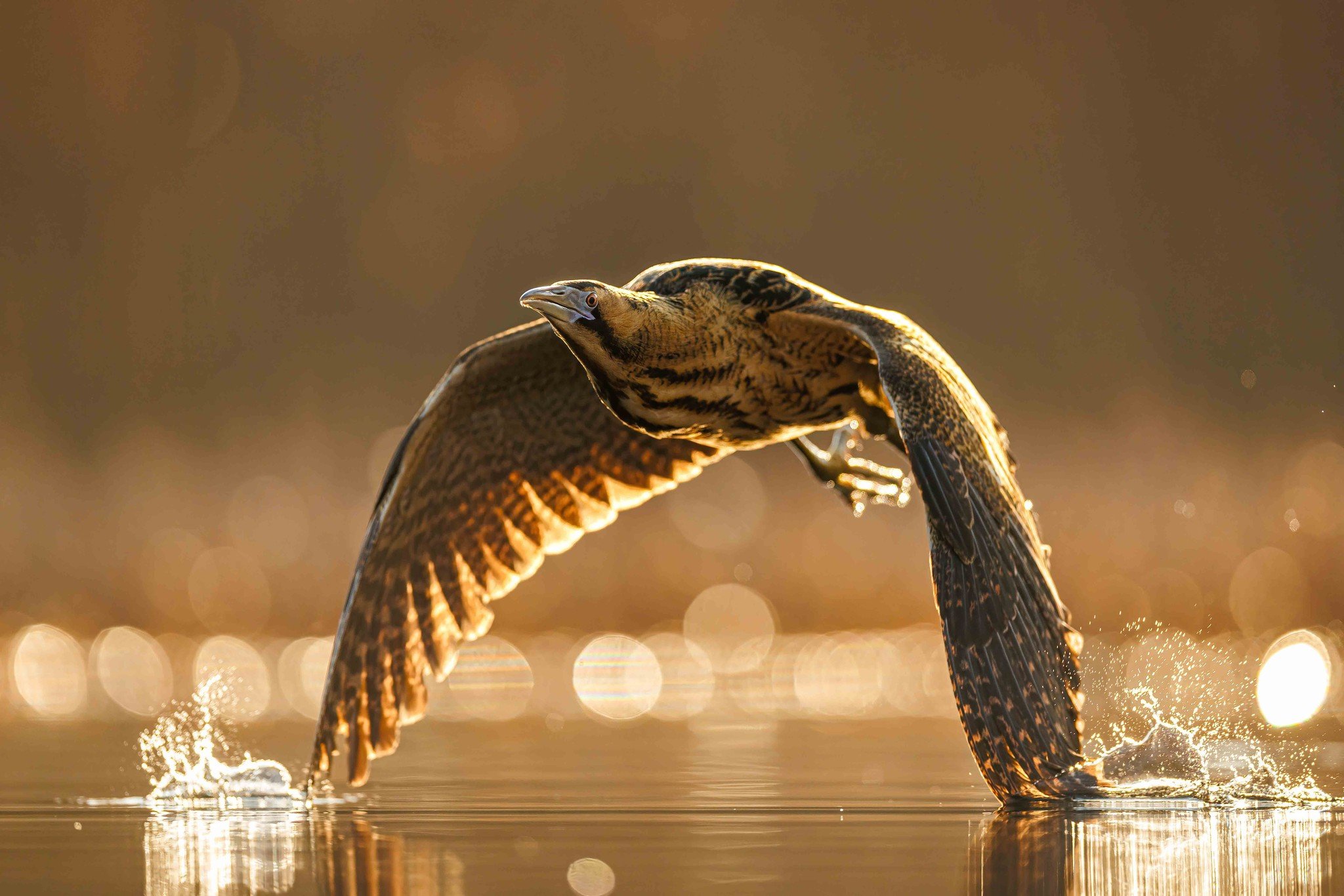
The Birds in Flight category yielded equally stunning results. Ivan Sjögren secured Gold with Eye-to-Eye with a Short-Eared Owl, capturing a silent hunter coursing low over the salt marshes of British Columbia’s Fraser River Delta. By patiently hunker-down in the coastal grasses, Sjögren anticipated the owl’s hunting routes, freezing the exact moment the raptor turned its head to lock gaze with the camera. Alex Pansier earned Silver with Patterns, a hypnotic, Escher-like composition of a massive swarm of guillemots in flight over Hornøya, dissolving the boundaries between natural order and organized chaos. Patryk Kurc secured Bronze with Lord of the Reedbeds, capturing a secretive Eurasian bittern in flight against the dawn light from a low-profile floating hide in Poland.
Urban environments and conservation challenges formed the thematic core of several award-winning portfolios. Gianluca Damiani triumphed in the Urban Birds category with Alter Ego, capturing a yellow-legged gull perched against a wall in Rome, perfectly aligned with a street art mural of its own likeness. Damiani documented how these intelligent gulls have successfully adapted to the metropolitan landscape, utilizing tall urban architecture as a structural substitute for coastal sea cliffs and capitalizing on abundant food resources.
In the Conservation Single Image category, Kent Stuart was awarded Gold for Not a Good Day Fishing. Hiking through remote cornfields and donning chest waders, Stuart navigated a mud flat under a camouflage net to observe local wildlife. His patience was interrupted when a great blue heron landed nearby, hopelessly entangled in discarded monofilament fishing line and weighted down by a floating bobber trapped securely around its beak. The stark image serves as an uncompromising indictment of human negligence and the pervasive threat of marine debris on aquatic bird populations.
Official Responses and Industry Implications
The leadership of the Bird Photographer of the Year organization emphasized the broader cultural and ecological significance of the winning portfolios. Will Nicholls, Director of the competition, addressed the shifting landscape of visual media during the awards announcement.
"In a world where AI-generated imagery is becoming increasingly common, this year’s winners are a powerful reminder of the value of authenticity," Nicholls stated. "Every image in the competition represents a real moment in the wild, earned through patience, dedication, and a genuine connection with nature. People will always value real stories told by real people, and this year’s extraordinary photographs celebrate the beauty, wonder, and authenticity of our natural world."
Industry analysts and conservation experts note that competitions of this caliber play an essential role in driving public engagement with environmental science. By transforming abstract ecological concerns—such as habitat loss, climate disruption, and plastic pollution—into intimate, emotionally resonant visual narratives, photographers help mobilize public support for conservation legislation and grassroots habitat restoration initiatives.
Broader Impact and Ecological Implications
The 2026 exhibition arrives at a critical juncture for global biodiversity. Avian populations worldwide face unprecedented pressures driven by industrial expansion, agricultural intensification, ocean warming, and chemical pollution. Marine birds, such as the northern gannets and puffins featured prominently in this year’s top tiers, are increasingly utilized by marine biologists as biological indicators of ocean health. Fluctuations in their breeding success and foraging behaviors offer early warning signals regarding collapsing fish stocks and shifting thermal currents tied to global climate change.
Concurrently, terrestrial species documented by the photographers—ranging from the sage-grouse of the American West to the wetland-dependent bitterns of Central Europe—highlight the vital necessity of landscape-scale conservation. Protecting migratory corridors and preserving intact ecosystems are no longer viewed merely as localized environmental objectives, but as fundamental prerequisites for maintaining planetary ecological equilibrium.
As the winning images embark on their international exhibition tour, organizers hope the collection will inspire both seasoned naturalists and casual observers to reflect upon humanity’s relationship with the natural world. Through the unwavering lenses of these dedicated photographers, the fragile beauty, resilience, and complex behaviors of birds are brought vividly into the public consciousness, ensuring that their struggles and triumphs in the wild are neither overlooked nor forgotten.