


The landscape of medical specialty examinations has long favored candidates with access to institutional resources, robust local mentorship networks, and proximity to major medical centers in the developed world. For decades, international medical graduates and trainees operating outside the United Kingdom faced a severe disadvantage when preparing for the Fellowship of the Royal College of Pathologists (FRCPath) microbiology examinations. Revision materials were scarce, fragmented, and largely dependent on informal word-of-mouth guidance from senior consultants. However, the intersection of individual dedication, open-source technology, and a commitment to global medical equity has permanently altered this dynamic.
At the heart of this transformation is Microregistrar, an online educational platform founded by Dr. Surya Banerjee, a consultant microbiologist and clinical lead in microbiology and virology within the United Kingdom’s National Health Service (NHS). What began in 2009 as an isolated trainee’s desperate attempt to organize chaotic revision notes has evolved into a thriving global ecosystem supporting more than 400 medical professionals across over 30 countries. Recognized with a high commendation in the Royal College of Pathologists’ 2026 Trainer of the Year awards, Microregistrar stands as a testament to the profound impact that a single educator can achieve using accessible learning management infrastructure.
The Genesis of a Grassroots Educational Initiative
In 2009, Dr. Surya Banerjee found himself navigating the notoriously rigorous FRCPath microbiology examination process. Like many of his peers, he experienced acute stress driven by a distinct lack of structured online preparation materials. At the time, candidates relied almost exclusively on textbooks and whatever ad-hoc advice individual consultants could spare during demanding hospital shifts. There was no centralized repository for mock questions, no standardized syllabus guidance, and no interactive way to gauge one’s readiness against a broader cohort of trainees.
Recognizing that this deficiency placed an unfair burden on candidates—particularly those training outside the UK who lacked local access to traditional study circles—Dr. Banerjee made the pivotal decision to bridge the gap himself. Balancing a demanding full-time career in clinical medicine, he spent his evenings and weekends teaching himself the fundamentals of web development. In 2012, he launched microregistrar.com on a basic WordPress framework. The site initially served as a static repository for his carefully curated revision notes, synthesized from standard medical literature and insights gathered from senior colleagues.
Evolution Through Technology: Transitioning to Moodle LMS
As the medical community discovered the site through word of mouth, its user base expanded rapidly. By 2019, hundreds of aspiring microbiologists were relying on the platform for their exam preparation. Dr. Banerjee recognized that a static blog format was no longer sufficient to meet the pedagogical needs of his growing audience. He envisioned an interactive, community-driven platform capable of hosting dynamic multimedia content, multiple-choice questions (MCQs), essay-style evaluations, and automated performance tracking.
To realize this vision, Dr. Banerjee turned to open-source educational technology. Leveraging Moodle’s extensive library of support documentation and instructional videos, he taught himself to navigate Moodle LMS. To ensure system stability and data security without requiring a dedicated internal IT department, he deployed the platform via MoodleCloud. This technical architecture allowed him to run a password-protected, scalable learning environment while external infrastructure management was handled in the background. Consequently, Dr. Banerjee could redirect his limited free time toward his primary objective: developing high-quality, clinically accurate medical content.
Comprehensive Curriculum and Global Accessibility
Today, Microregistrar offers an exhaustive digital curriculum tailored specifically to the structural demands of the FRCPath examinations. The platform features over 600 rigorously reviewed MCQs for Part One and more than 100 essay-style questions for Part Two. Trainees also benefit from meticulously structured month-by-month and week-by-week study planners designed to optimize retention and time management.
A cornerstone of the platform’s pedagogical model is its interactive feedback system, which provides students with analytical insights comparing their performance against their global peers. This data-driven approach highlights specific clinical domains requiring additional focus over rolling 14-day study windows. Furthermore, Dr. Banerjee hosts an annual online mock examination for Part One—a resource uniquely positioned in the market, as comparable localized mock exams often require expensive international travel to the UK.
Recognizing that high-stakes medical education must remain financially viable for trainees across diverse economic landscapes, Dr. Banerjee deliberately structured the platform’s pricing model around principles of global equity. Subscriptions are maintained at a nominal rate of £2.50 per week, supplemented by a 30% discount for healthcare professionals earning less than £200 per month. This intentional affordability has allowed the platform to penetrate regions traditionally underserved by legacy medical publishers. Trainees from more than 30 nations—including Pakistan, Sri Lanka, Egypt, Sudan, Ethiopia, Uganda, and Nigeria—routinely access the platform, alongside an expanding user base in North America driven entirely by organic peer recommendations.

Community Building Beyond the Classroom
The impact of Microregistrar extends far beyond automated assessment tools and curriculum delivery. Recognizing the psychological isolation often associated with postgraduate medical examinations, Dr. Banerjee integrated social learning mechanisms into the platform’s framework, most notably an active WhatsApp community comprising over 400 active microbiologists.
This communication channel serves multiple critical functions: it provides a direct line of academic support to the founder, fosters peer-to-peer clinical debates, and acts as a vital emotional support network. Trainees frequently utilize the group to announce examination results and express gratitude for the collaborative environment.
"I passed. Sincerely, thank you for preparing Moodle and designing the mock so brilliantly. It helped me a lot," one recent graduate shared within the group forum. Another participant noted, "I passed! From the bottom of my heart, thank you. I would not have been able to do it were it not for this group and the microregistrar resources."
These testimonials highlight a broader cultural shift facilitated by the platform: replacing the hyper-competitive isolation of traditional medical training with a shared ethos of mutual uplift and collective academic advancement.
Broader Implications and Future Horizons
While Microregistrar was initially engineered to address the specific hurdles of the UK’s FRCPath pathway, its underlying utility has transcended its original geographic mandate. In recent years, the platform has attracted fully qualified consultants who maintain active subscriptions for continuous professional development and daily updates from the field. Additionally, international candidates preparing for regional equivalents, such as the American Board of Medical Microbiology (ABMM) certification exams in the United States, have begun integrating the platform’s analytical resources into their study schedules.
To maintain the currency and clinical accuracy of its vast question bank, Dr. Banerjee has begun exploring the integration of artificial intelligence and large language models (LLMs) to assist in drafting initial content modules. However, maintaining rigorous academic standards remains paramount; every AI-generated or peer-submitted draft undergoes strict personal screening by Dr. Banerjee before publication.
Despite his expanding global footprint and recent high commendation from the Royal College of Pathologists, Dr. Banerjee continues to maintain his rigorous full-time clinical schedule as a clinical lead in microbiology and virology within the NHS. Time remains his most restrictive resource, yet his developmental roadmap includes the future integration of comprehensive video-based training modules to further support visual learners.
Reflecting on the decade-long journey required to scale Microregistrar from a solitary WordPress blog into a globally recognized Moodle-powered institution, Dr. Banerjee challenges the prevailing assumption that large-scale educational innovation requires massive institutional backing or corporate venture capital.
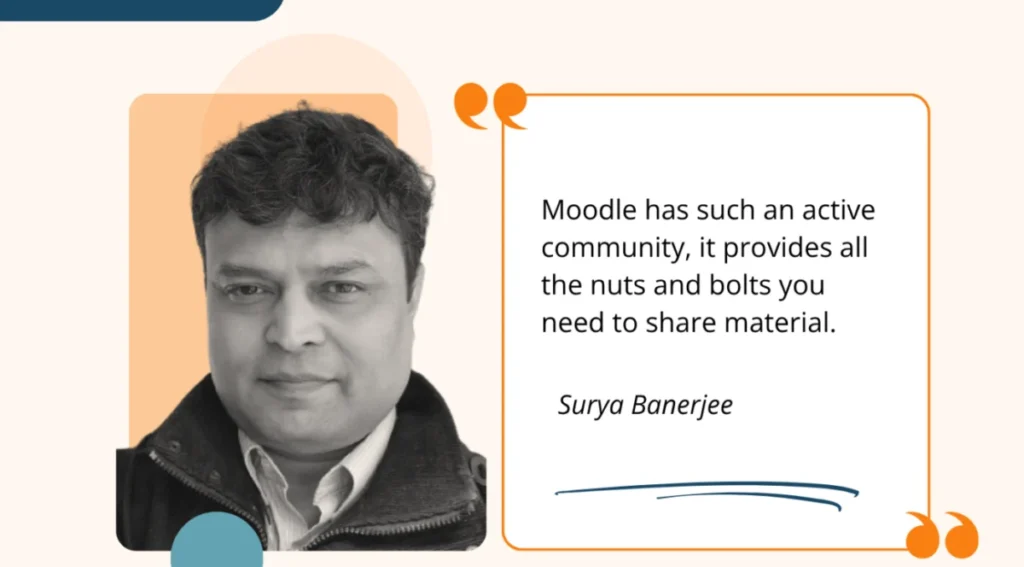
"Moodle has such an active community, it provides all the nuts and bolts you need to share material," Dr. Banerjee observes. "What you do need is the commitment and time. You need that drive. But that’s the price of building something meaningful."
For the hundreds of clinical microbiologists now practicing across the globe who earned their credentials through the platform, that investment has yielded dividends that will influence patient safety and diagnostic standards for generations to come.