



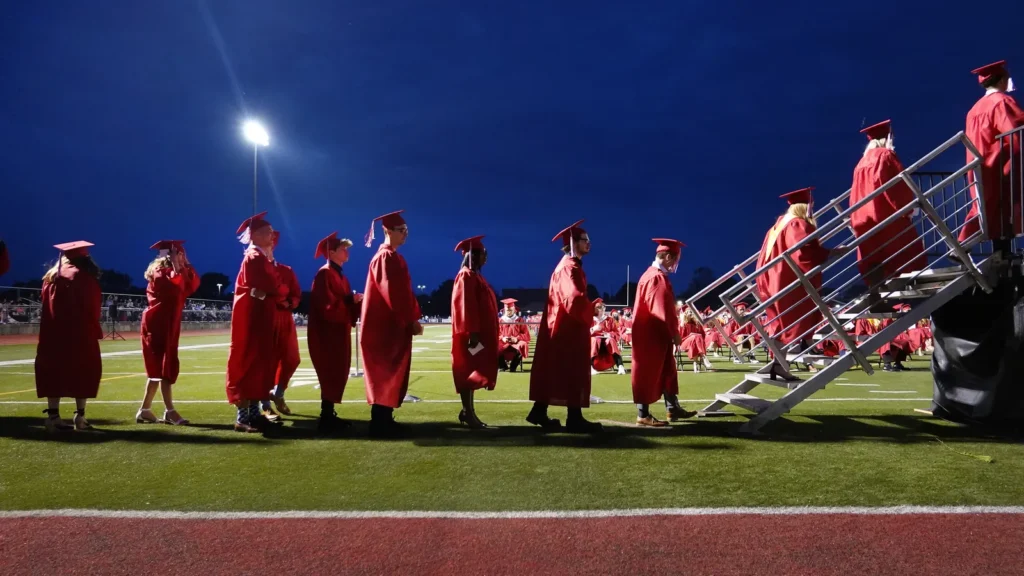
Recent educational data released by the National Student Clearinghouse Research Center reveals a broad, albeit modest, upward trend in college enrollment and persistence rates for high school graduates across the United States. The findings, published on September 18, 2026, offer encouraging signs for educators and policymakers navigating the long-term educational shifts following the disruptions of the early 2020s. According to the report, gains were observed across diverse demographic lines, with both high-poverty and low-poverty high schools registering improvements in the share of students advancing to higher education and returning for their sophomore year.
While the increases are generally incremental, educational analysts note that any sustained upward momentum—particularly among historically underserved student populations—serves as a vital indicator of recovery and stabilization within the American educational pipeline. The comprehensive data set sheds light on how recent graduating classes are engaging with postsecondary opportunities, bridging the gap between secondary and higher education during a period of considerable economic and institutional transformation.
Understanding the Metrics: Enrollment and Persistence
To fully appreciate the scope of the National Student Clearinghouse Research Center’s findings, it is essential to examine the core metrics utilized in educational tracking: college enrollment and college persistence. College enrollment measures the percentage of high school graduates who transition into a postsecondary institution—such as a two-year or four-year college or university—within a specified timeframe. Persistence, on the other hand, tracks the proportion of those enrolled students who successfully return to their studies for a second consecutive year, serving as a primary benchmark for first-year collegiate retention and institutional support.
The newly released data measures the outcomes of the high school graduating classes of 2022 and 2023, tracking their trajectories into higher education. By looking at these sequential cohorts, researchers can identify emerging patterns in student behavior, institutional responsiveness, and socioeconomic equity. The latest numbers suggest that secondary schools and higher education institutions are finding incremental success in preparing students not just to cross the graduation stage, but to sustain their academic journeys into higher education.
High-Poverty Schools Lead the Way in Percentage Gains
One of the most notable takeaways from the recent research is that graduates of high-poverty high schools demonstrated some of the most significant proportional gains in both immediate and extended college milestones. Matthew Holsapple, the senior director of research at the National Student Clearinghouse, highlighted this dynamic in his commentary on the findings.
“What stands out most is that graduates of high-poverty high schools saw the largest gains in both enrollment and persistence,” Holsapple stated.
A closer look at the data underscores this observation. Among the class of 2023 graduates from high-poverty high schools who successfully enrolled in higher education, 76% returned to campus for their second year. This represents an improvement compared to the 74.3% persistence rate recorded for the previous year’s cohort.
Concurrently, college-going rates within two years of graduation also rose for this demographic. Among the 2023 cohort from high-poverty schools, 58.7% enrolled in college within two years of receiving their high school diplomas, marking an increase from the 56.6% rate observed among the class of 2022. Although a persistent gap remains between high-poverty and low-poverty institutions, the narrowing of this margin—even by a few percentage points—signals positive movement toward educational equity.
Steady Progress Among Low-Poverty Institutions
While high-poverty schools saw striking percentage gains, low-poverty high schools continued to maintain high baseline rates of college enrollment and persistence, while still managing to eke out further improvements.
For the high school class of 2023 originating from low-poverty institutions, an impressive 90.6% persisted from their first year of college to their sophomore year. This represents an upward tick from the 89.4% persistence rate posted by the class of 2022.
Similarly, the two-year college enrollment rate for graduates from low-poverty schools rose to 77.9% for the class of 2023, up from 75.9% for the class of 2022. These high retention and enrollment figures reflect the compounding advantages often present in affluent districts, including robust college counseling resources, advanced placement coursework availability, and greater familial socioeconomic stability. Nevertheless, the incremental climb indicates that even well-resourced districts are finding ways to push more students successfully into and through the early stages of higher education.

Geographic Breakdown: Urban Schools Experience Strongest Momentum
Beyond socioeconomic classifications, the National Student Clearinghouse data analyzed outcomes based on geographic settings, categorizing schools as urban, suburban, or rural. The breakdown reveals distinct patterns of growth across different types of communities.
Urban high schools emerged as the geographic sector with the most substantial increase in college participation. Among 2023 urban high school graduates, 67.1% attended a postsecondary institution within two years of earning their diplomas. This represents a noticeable jump from the 65.2% enrollment rate registered by the class of 2022.
In contrast, the gains realized by graduates from suburban and rural high schools were more modest. Rural high schools experienced a slight year-over-year increase of 0.4 percentage points, bringing their two-year college-going rate to 60.9%. Suburban high schools saw an even smaller upward movement, with their rate rising by 0.2 percentage points to reach 70.4% for the 2023 cohort.
These regional variances highlight the complex interplay between local economic conditions, community investments, and educational outreach programs. Urban districts, which often encompass diverse populations and targeted urban-renewal or college-access initiatives, appear to be reaping the benefits of concerted intervention strategies.
A Chronology of Recovery: From Disruption to Stabilization
To understand the trajectory of these 2022 and 2023 cohorts, it is necessary to contextualize the timeline of their secondary education. The class of 2022 entered high school around 2018, experiencing the critical midway point of their secondary education disrupted by the onset of the COVID-19 pandemic in the spring of 2020. The class of 2023 followed a nearly identical timeline of pandemic-era disruptions during their freshman and sophomore years, enduring remote learning, hybrid classrooms, and widespread social adjustments.
In the immediate aftermath of the pandemic, national data showed steep declines in college enrollment as students faced economic uncertainty, mental health challenges, and systemic disruptions. The years 2021 and 2022 marked a period of profound reevaluation for both K-12 and higher education sectors.

By late 2024 and 2025, as institutions adapted to new operational norms and federal emergency relief funds were deployed to support student retention, signs of stabilization began to emerge. The data released in September 2026 for the 2022 and 2023 graduating classes represents the fruits of this stabilization period. It demonstrates that secondary schools have largely rehabilitated their post-graduation tracking and counseling pipelines, while colleges have successfully implemented targeted outreach to retain incoming freshmen.
Expert Analysis and Institutional Implications
Educational researchers and policy analysts are viewing the latest clearinghouse data through a lens of cautious optimism. While the improvements described by Matthew Holsapple as “modest” do not signal a complete resolution of systemic educational disparities, they do challenge narratives of permanent stagnation.
The fact that persistence and enrollment are ticking upward simultaneously suggests that efforts to improve postsecondary readiness are bearing fruit on multiple fronts. For high schools, particularly those in high-poverty and urban environments, the data validates investments in career and college readiness programs, dual-enrollment opportunities, and enhanced counseling ratios.
For higher education institutions, the rise in persistence rates—especially the 76% retention mark for high-poverty high school alumni—underscores the efficacy of first-year retention initiatives. Colleges have increasingly invested in comprehensive student support services, including peer mentoring, academic tutoring, emergency financial aid grants, and mental health resources designed to catch struggling freshmen before they drop out.
Challenges Ahead for the Higher Education Pipeline
Despite the positive indicators highlighted in the September 2026 report, significant challenges remain on the horizon for educators and institutional leaders. The persistent gap in college-going rates between high-poverty schools (58.7%) and low-poverty schools (77.9%) remains stark, illustrating that structural inequalities continue to limit the postsecondary aspirations of millions of young Americans.
Furthermore, economic pressures, shifting public perceptions regarding the return on investment of a college degree, and evolving labor market dynamics continue to influence student decision-making. As workforce alternatives, vocational training programs, and certificate pathways gain traction among high school graduates, traditional higher education institutions must continually demonstrate their value proposition.
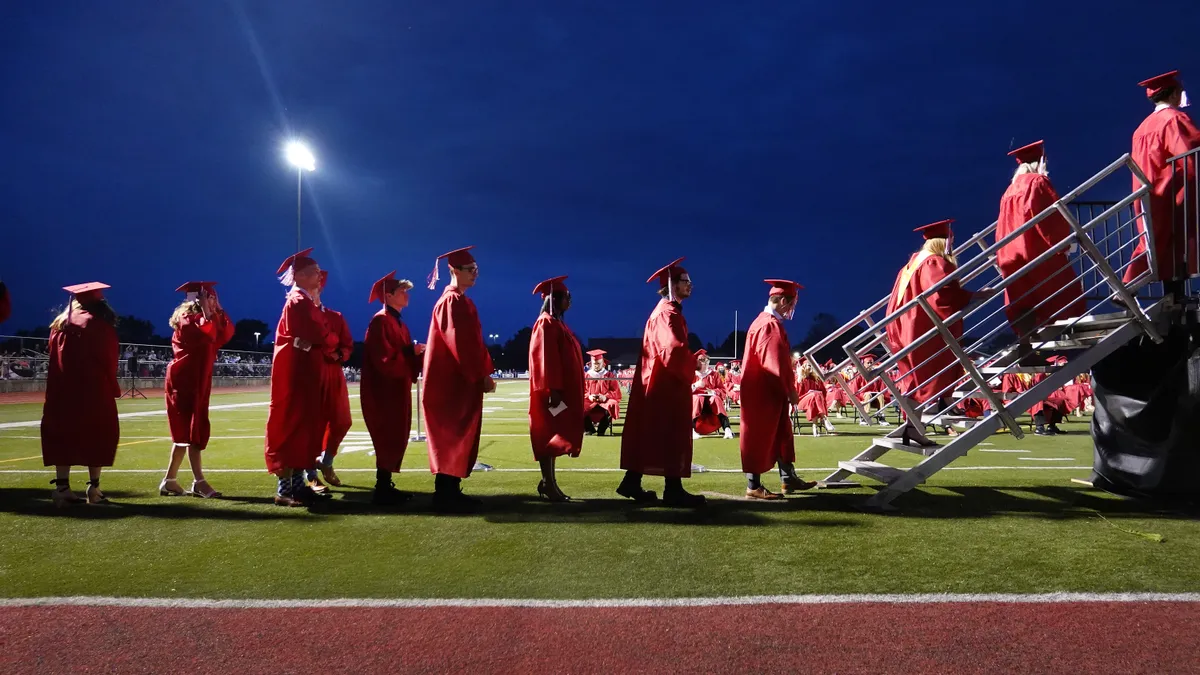
Additionally, demographic shifts—often referred to in higher education circles as the "enrollment cliff," driven by declining birth rates following the 2008 financial crisis—threaten to reduce the pool of traditional college-aged applicants in the coming decade. In this environment, the modest gains observed among urban and high-poverty schools represent a crucial demographic reservoir that colleges and universities must cultivate to sustain their enrollments.
Conclusion and Future Outlook
The National Student Clearinghouse Research Center’s latest data paints a picture of a resilient educational ecosystem making gradual, measurable strides toward recovery. By demonstrating consistent upward movement in college enrollment within two years of graduation and solidifying first-to-second-year persistence rates, the high school classes of 2022 and 2023 have set a promising benchmark.
As educational stakeholders analyze these trends, the focus will likely shift toward scaling the interventions that have proven successful in urban and high-poverty districts. Ensuring that the upward momentum is sustained—and that the stubborn gaps in educational attainment continue to narrow—will require continued collaboration between secondary schools, higher education institutions, and policymakers committed to equitable opportunity for all students.