

A new collaborative study, conducted by researchers from the School of Psychology at the University of Nottingham and the Cognition and Brain Sciences Unit at the University of Cambridge, suggests that different forms of remembering may rely on remarkably similar brain regions. Published in Nature Human Behaviour, the findings challenge long-held assumptions within cognitive neuroscience, indicating that the brain might not segregate memory retrieval into distinct neural pathways based on the type of information being accessed. Instead, the research points towards a significant overlap in brain activity during the retrieval of both episodic and semantic memories, a discovery poised to redefine how memory is conceptualized, investigated, and potentially treated in clinical settings.
Revisiting the Foundations of Memory Classification
For over half a century, the distinction between episodic and semantic memory has formed a cornerstone of cognitive psychology. This dichotomy, famously elaborated by Endel Tulving in the early 1970s, posited that humans possess at least two major types of declarative memory, each serving distinct functions and believed to engage different neural substrates.
Episodic memory refers to the ability to recall specific, personally experienced events that occurred at a particular time and place. It is often described as "mental time travel," allowing individuals to consciously re-experience moments from their past, complete with sensory details, emotions, and contextual information. Examples include remembering what you ate for breakfast this morning, your last birthday celebration, or the details of a specific conversation. This form of memory is highly personal, fallible, and often vulnerable to forgetting over time.
In contrast, semantic memory encompasses our general knowledge about the world, including facts, concepts, language, and abstract ideas. It allows us to know that Paris is the capital of France, that a dog is a mammal, or what the word "democracy" means. Unlike episodic memory, semantic memories are decontextualized; their retrieval is not tied to the original learning event and they typically lack the personal, experiential "flavour" of episodic recollections. They are generally more stable and less susceptible to rapid forgetting than episodic memories.
This theoretical distinction has profoundly influenced experimental design, clinical diagnosis, and our overall understanding of memory disorders. Researchers have often studied these memory types in isolation, assuming that distinct neural networks would be identifiable for each, thereby leading to a relatively limited body of work directly comparing them within the same experimental paradigms. The new study directly confronts this established paradigm.
An Innovative Approach to Memory Investigation
To meticulously compare the neural underpinnings of episodic and semantic memory, the research team developed a sophisticated experimental design. Forty participants were recruited and tasked with remembering associations between various logos and brand names. The cleverness of the design lay in its ability to create two highly comparable memory tasks:
- Semantic Task: Participants were presented with pairings that reflected real-world, pre-existing knowledge. For instance, they might be shown a well-known logo and asked to recall its associated brand name, or vice versa. This tapped into their established semantic memory network.
- Episodic Task: Participants were exposed to novel, artificial pairings of logos and brand names during an earlier learning phase. Later, they were tested on these newly acquired associations, requiring them to recall information learned during a specific, recent event—the study phase. This directly engaged their episodic memory.
The meticulous matching of task difficulty, stimulus type, and retrieval demands between the two conditions was critical. By minimizing extraneous variables, the researchers aimed to isolate the neural processes specific to the type of memory being retrieved, rather than differences in task complexity or familiarity.
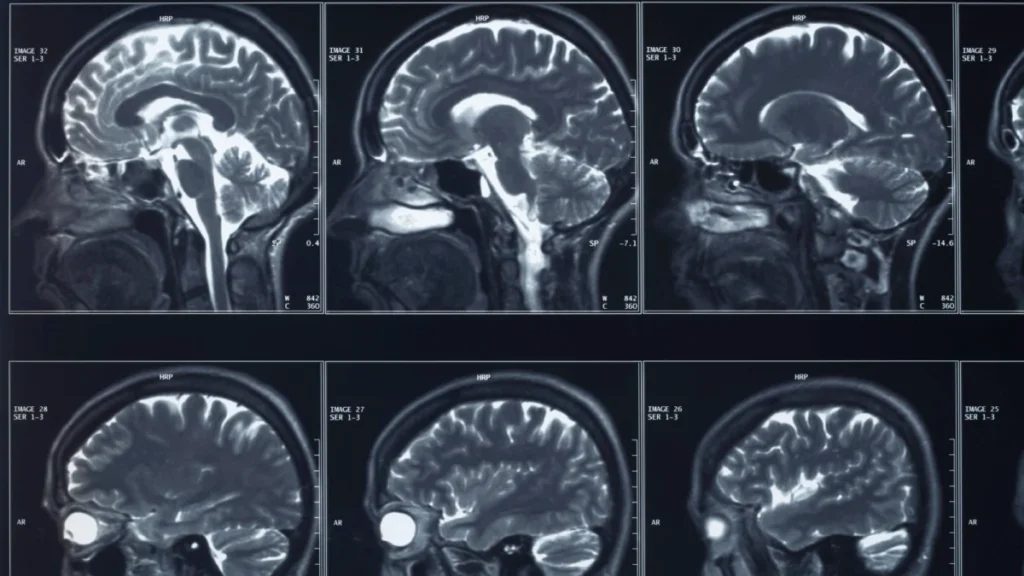
During the memory retrieval tasks, participants underwent fMRI (Functional Magnetic Resonance Imaging) scanning. fMRI is a non-invasive neuroimaging technique that measures brain activity by detecting changes in blood flow. When neurons in a particular brain region become active, they demand more oxygen and nutrients. The body responds by increasing blood flow to that area, a phenomenon known as the BOLD (Blood-Oxygen-Level Dependent) response. fMRI scanners detect these subtle changes in the magnetic properties of oxygenated versus deoxygenated blood, allowing researchers to create detailed, three-dimensional maps of brain activity in real-time. This capability makes fMRI an indispensable tool for studying brain function, understanding neurological conditions, and even assisting in surgical planning by mapping critical brain areas. By using fMRI, the team could precisely observe which brain regions were active during both successful episodic and semantic memory retrieval.
The Unexpected Convergence: Neuroimaging Reveals Overlap
The results of the fMRI analysis proved to be a significant departure from prevailing theories. Dr. Roni Tibon, Assistant Professor in the School of Psychology at the University of Nottingham and lead author of the study, expressed her surprise: "We were very surprised by the results of this study as a long-standing research tradition suggested there would be differences in brain activity with episodic and semantic retrieval. But when we used neuroimaging to investigate this alongside the task based study we found that the distinction didn’t exist and that there is considerable overlap in the brain regions involved in semantic and episodic retrieval."
Specifically, the study found no measurable or statistically significant differences in brain activity patterns between successful episodic and semantic memory retrieval. Both tasks activated a common network of brain regions, including areas within the medial temporal lobe, prefrontal cortex, and parietal cortex—regions long implicated in various forms of memory processing. While subtle differences might exist at a finer grain of analysis or with different methodologies, the robust fMRI data indicated a remarkable convergence at the macroscopic level of brain activity. This suggests that rather than operating as entirely separate systems with dedicated neural real estate, episodic and semantic memory may leverage a shared neural machinery for their retrieval processes.
This finding carries substantial weight because previous research, often relying on lesion studies or studies that did not directly compare both memory types with such precision, had frequently pointed towards some degree of neural dissociation. For example, patients with specific forms of amnesia might show profound impairments in episodic memory while retaining relatively intact semantic knowledge, leading to the assumption of separate underlying systems. The new fMRI data, however, indicates that the retrieval process itself might be more integrated than previously thought, even if the initial encoding or storage mechanisms might differ.
Implications for Neurological Disorders and Beyond
The implications of this research extend far beyond theoretical neuroscience, offering potential new avenues for understanding and treating debilitating neurological conditions. Dr. Tibon highlighted this critical aspect: "These findings could help to better understand diseases like, dementia and Alzheimer’s as we can begin to see that the whole brain is involved in the different types of memory so interventions could be developed to support this view."
Dementia, including Alzheimer’s disease, represents a global health crisis. According to the World Health Organization, over 55 million people worldwide live with dementia, with nearly 10 million new cases each year. The total number of people with dementia is projected to reach 78 million in 2030 and 139 million in 2050. The economic burden is immense, estimated at US$ 1.3 trillion in 2019, projected to rise to US$ 1.7 trillion by 2030. A hallmark of many dementias is progressive memory loss, often beginning with episodic memory impairments (e.g., forgetting recent events or conversations), followed by a decline in semantic memory (e.g., forgetting words or facts).
If, as this study suggests, episodic and semantic memory retrieval rely on overlapping brain regions, it could fundamentally shift how researchers approach interventions. Instead of targeting specific memory systems in isolation, future therapies might adopt a more holistic approach, recognizing the interconnectedness of memory functions across the brain. For example, cognitive training programs or pharmacological interventions designed to bolster one type of memory might inadvertently benefit others due to shared neural resources. Understanding this shared neural architecture could also help explain why both types of memory often decline concurrently in neurodegenerative diseases, rather than always in strict isolation. It might also encourage a focus on maintaining overall brain health and cognitive flexibility, rather than narrowly focusing on a single memory domain.
A Paradigm Shift in Memory Research
The traditional approach to memory research, deeply entrenched in the separate systems hypothesis, has historically led to independent lines of inquiry for episodic and semantic memory. This has often meant that researchers studying one type of memory might not closely engage with findings from the other, leading to a fragmented understanding of the overarching memory system.
Dr. Tibon strongly believes that the new evidence should instigate a re-evaluation of this research trajectory. "Based on what we already knew from previous research in this area we really expected to see stark differences in brain activity but any difference we did see was very subtle," she stated. "I think these results should change the direction of travel for this area of research and hopefully open up new interest in looking at both sides of memory and how they work together."
This call to action is significant. It implies a need for more integrative studies that simultaneously investigate multiple memory types within a single experimental framework. Future research might focus on:
- Neural Connectivity: Exploring how different brain regions communicate during memory retrieval, rather than just which regions are active. Are the patterns of connectivity different even if the active regions are the same?
- Dynamic Brain States: Investigating how brain activity shifts and evolves over time during memory tasks, rather than relying on static snapshots.
- Computational Models: Developing more sophisticated computational models of memory that can account for both differentiation and integration of memory types within a shared neural architecture.
- Developmental Trajectories: Examining how this overlap in neural activity develops across the lifespan, from childhood to old age, and how it might be affected by learning, experience, and disease.
Broader Implications: Learning, Education, and Artificial Intelligence
Beyond neuroscience and clinical applications, these findings could have broader implications for fields such as education and even the development of artificial intelligence. If memory types are more integrated than previously thought, educational strategies might benefit from approaches that deliberately link factual knowledge (semantic) with personal experiences or narratives (episodic) to enhance learning and retention. For instance, teaching historical facts by connecting them to relatable stories or personal anecdotes might leverage this neural overlap more effectively.
In the realm of artificial intelligence, understanding how the human brain integrates different forms of memory could inspire new architectures for AI systems. Current AI often struggles with contextual understanding and "common sense" knowledge, which are hallmarks of human semantic memory, while also lacking the rich, experiential recall of human episodic memory. If biological brains use a more unified approach to retrieve these different information types, it might guide the development of AI that can better integrate factual data with contextual understanding and experiential learning.
The Path Forward
The study from the University of Nottingham and the University of Cambridge represents a crucial step in unraveling the complexities of human memory. By challenging a foundational tenet of cognitive neuroscience, it opens the door to a more integrated and nuanced understanding of how our brains store and retrieve information. While the initial findings are compelling, they also serve as a springboard for extensive future research. The scientific community will undoubtedly engage with these results, seeking to replicate them, explore their boundaries, and delve deeper into the intricate neural dance that allows us to remember our past, understand our present, and anticipate our future. This convergence of memory systems, once thought distinct, promises a richer, more holistic understanding of one of humanity’s most fundamental cognitive abilities.