

The linguistic landscape of French-speaking regions is characterized by nuances that extend far beyond simple vocabulary, particularly when navigating social milestones such as birthdays. For both native speakers and those learning the language, understanding the appropriate terminology for birthday greetings requires an appreciation for regional variations, formal versus informal registers, and the socio-cultural expectations that accompany these celebrations. Whether in the bustling urban centers of France or the distinct cultural environment of Quebec, the act of wishing someone a happy birthday is an exercise in cultural literacy.
Linguistic Foundations of French Birthday Greetings
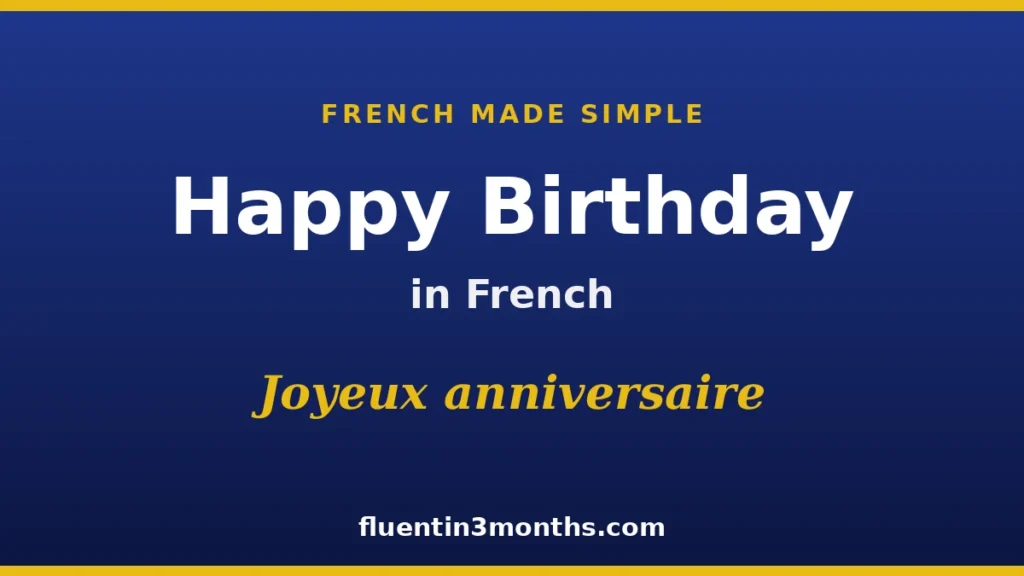
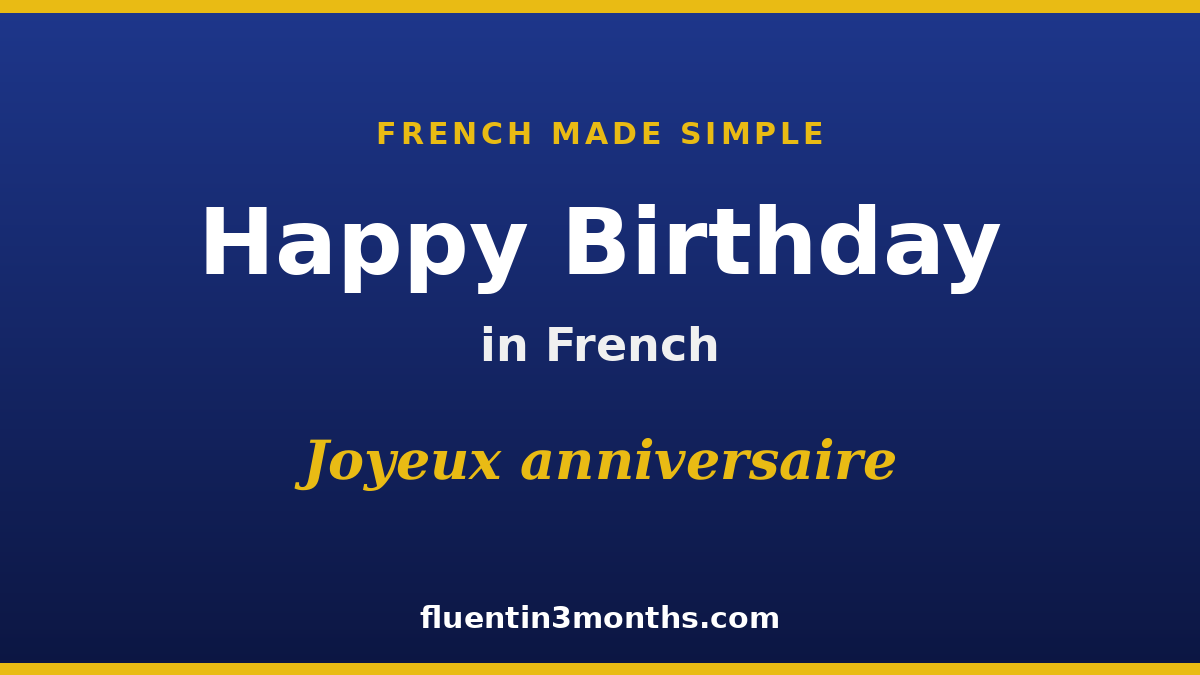
The two primary expressions used to convey birthday wishes in the Francophone world are "Joyeux anniversaire" and "Bon anniversaire." While both are universally understood, their usage is largely interchangeable across various social settings. "Joyeux" translates directly to "joyful," imbuing the phrase with a sense of celebration, whereas "Bon" functions as a general well-wisher.
Data from the Organisation Internationale de la Francophonie indicates that there are over 320 million French speakers globally. Within this diverse demographic, the standard greeting is frequently accompanied by a specific phonological rule known as "liaison." In "Joyeux anniversaire," the final consonant of the first word, the letter ‘x’, is pronounced as a /z/ sound when followed by a vowel, creating a fluid bridge between the two words. Similarly, "Bon anniversaire" sees the final ‘n’ of "Bon" linked to the subsequent vowel, fundamentally altering the pronunciation of the nasal vowel to ensure a seamless phonetic transition. These linguistic markers are essential for maintaining the rhythmic integrity of the French language.
The Quebecois Distinction: A Study in Regional Variance
A critical distinction exists in the usage of the phrase "Bonne fête." In the metropolitan French spoken in France, "Bonne fête" is traditionally reserved for a person’s "name day"—a historical Catholic custom linked to the feast day of the saint for whom an individual is named. However, in Quebec and other parts of French-speaking Canada, "Bonne fête" is the standard, primary way to say "Happy Birthday."
This regional variance is not merely a matter of semantics; it is a point of cultural identity. Linguists note that the Quebecois adoption of "Bonne fête" as a birthday greeting reflects the influence of North American English structures on the French language in Canada. Consequently, a speaker utilizing "Bonne fête" in Paris may cause confusion, as the recipient may anticipate a reference to a saint’s day rather than a natal anniversary. Conversely, in Montreal or Quebec City, using "Joyeux anniversaire" is perfectly acceptable, though it may be perceived as slightly more formal than the local preference.
Chronology of Birthday Customs and Song Traditions
The celebration of birthdays as a global, individualistic event is a relatively modern phenomenon. Historically, many cultures tracked births through ecclesiastical records rather than individual anniversary parties. The widespread tradition of the "Happy Birthday" song—originally written in English as "Good Morning to All"—did not gain international traction until the early 20th century.
In France, while the English melody is frequently sung with translated lyrics, there is a distinct, culturally ingrained alternative: "Bon Anniversaire," composed by Louiguy and with lyrics by Jacques Larue, famously recorded by André Claveau in 1951. This composition serves as a reminder of the mid-century French chanson tradition. Unlike the simple, repetitive nature of the English-language tune, the French version possesses a distinct melodic structure that remains a staple of French social gatherings. The evolution of these songs highlights the intersection of international popular culture and localized French musical heritage.
Socio-Cultural Expectations and Etiquette
Birthday celebrations in France often adhere to specific, often unspoken, rules of conduct. One notable custom is the "la bise," or the act of exchanging cheek kisses. While the number of kisses can vary significantly depending on the department or region—ranging from two to four—it serves as a primary indicator of intimacy. During a birthday event, the expectation of "la bise" is often higher than in casual encounters, although international trends have seen a move toward more neutral greetings like handshakes or verbal well-wishes, particularly in professional environments.
Another significant custom involves the provision of refreshments. In many French workplaces, the responsibility of providing a cake or pastries rests with the person celebrating the birthday, rather than the colleagues. This is a point of frequent friction for expatriates who are accustomed to the Anglo-American model where colleagues provide the treat. This "reverse" expectation underscores the collective, communal nature of French social life, where the birthday person acts as the host of their own celebration.
Formal vs. Informal Communication: The Tu/Vous Divide
French grammar necessitates a choice between the informal "tu" and the formal "vous," a distinction that permeates birthday correspondence. When composing a message for a card or digital communication, the choice of pronoun dictates the tone of the entire greeting.
- Informal (Tu): Reserved for family, close friends, and children. Phrases such as "Je te souhaite une merveilleuse journée" (I wish you a wonderful day) are common.
- Formal (Vous): Applied to professional colleagues, elders, or those with whom one has a distant relationship. Phrases like "Je vous souhaite un très heureux anniversaire" convey respect and professional distance.
The implication of misusing these pronouns can range from mild social awkwardness to unintended perceived rudeness. Therefore, analyzing the existing relationship dynamic before sending a card is a recommended step in social etiquette.
Analysis of Modern Birthday Trends
Modern communication, specifically the rise of social media, has altered how birthdays are acknowledged. The emergence of the abbreviation "anniv" mirrors the English "b-day." While efficient for text messaging and social media platforms, sociolinguists caution that such abbreviations should be restricted to strictly informal contexts. In formal or professional correspondence, the full term "anniversaire" remains the standard to maintain a level of decorum.
Furthermore, the sentiment surrounding "early" birthday wishes has become a subject of debate in modern etiquette. While some cultures view an early wish as a gesture of thoughtfulness, a significant portion of the French population considers wishing someone a happy birthday before the actual date to be an omen of bad luck. This belief, while rooted in superstition, remains a persistent social factor that dictates the timing of communication.
Broader Implications for Language Learners
The acquisition of these social nuances is critical for those seeking to integrate into Francophone societies. Language is not merely a collection of vocabulary and syntax; it is the manifestation of cultural values. By mastering the distinction between "Joyeux anniversaire" and "Bonne fête," or understanding the social obligation of the birthday person to provide cake, individuals move closer to authentic cultural fluency.
For those navigating the French language, the advice remains consistent: context is the ultimate arbiter. Whether through the usage of the "tu/vous" pronouns, the application of phonological liaisons, or the navigation of regional customs, the goal of a birthday greeting is to foster connection. As the French-speaking population continues to grow, the ability to navigate these cultural milestones with precision and respect remains a cornerstone of effective cross-cultural communication. In the final analysis, the most successful birthday message is one that is not only linguistically accurate but also socially aware, reflecting the depth and history of the culture in which it is spoken.