

Microsoft has officially released a comprehensive update to its Education AI Toolkit, marking a pivotal shift in how academic institutions approach the integration of generative artificial intelligence. As the initial wave of AI experimentation gives way to a demand for sustainable, campus-wide implementation, the redesigned toolkit provides a roadmap for primary schools, districts, and universities to move beyond isolated pilot programs toward integrated, systemic impact. This update arrives at a critical juncture in the digital transformation of global education, offering refined practical guidance, enhanced navigational tools, and a focus on the emerging field of agentic AI.
The release is a direct response to a year of intensive feedback from education leaders who have navigated the complexities of deploying large language models (LLMs) in classroom and administrative settings. While early efforts focused on individual productivity, the current landscape necessitates a more structured approach to security, governance, and pedagogy. The toolkit’s new architecture is designed to address these multifaceted needs, organized around a refined landscape orientation that prioritizes actionable strategies over theoretical frameworks.
The Evolution of AI in the Academic Landscape
The journey toward AI integration in education has followed a rapid chronology. Following the public emergence of sophisticated generative AI in late 2022, the 2023-2024 academic year was characterized by "AI anxiety" and rapid-fire experimentation. During this period, Microsoft launched the first iteration of the Education AI Toolkit to help administrators establish basic guardrails. By late 2024, the narrative shifted from "whether" to use AI to "how" to scale it responsibly.
The 2025 update reflects this maturity. It acknowledges that while individual teachers may have mastered basic prompting, institutions are struggling to harmonize these efforts across departments. The updated toolkit aims to bridge this gap, moving the conversation from individual "Snapshots" of success to "Sparks" of systemic innovation. This evolution is supported by three foundational pillars: Student Success, Institutional Innovation, and Simplified/Secure IT.

Strategic Pillars for Institutional Transformation
To facilitate a holistic rollout, Microsoft has structured the toolkit around three primary themes that address the technical, instructional, and operational requirements of modern schooling.
1. Student Success and Pedagogical Support
The first pillar focuses on the core mission of education: improving learning outcomes. The toolkit provides resources for deploying AI-powered tutoring systems that offer 24/7 support, automated assessments that reduce the feedback loop for students, and personalized learning pathways. Beyond immediate academic support, there is a significant emphasis on preparing students for an AI-augmented workforce. This includes providing skills-based pathways and industry-recognized certifications that ensure graduates are "AI-literate" and ready for the evolving job market.
2. Institutional Innovation and Operational Efficiency
The second pillar targets the administrative and faculty experience. By modernizing infrastructure and utilizing AI-powered insights, institutions can identify inefficiencies in enrollment, financial aid, and faculty workloads. The toolkit highlights how universities are using AI to analyze vast datasets to improve student retention and streamline complex administrative workflows, allowing educators to focus more on instruction and less on bureaucratic tasks.
3. Simplified and Secure IT Governance
Perhaps the most critical pillar for risk management, this section provides rigorous guidance on protecting data and AI systems. With the rise of cybersecurity threats targeting educational institutions, Microsoft has integrated guidance for tools like Microsoft Security Copilot. This ensures that as schools adopt AI, they are simultaneously strengthening their threat detection capabilities and adhering to strict data privacy regulations, such as GDPR and FERPA, to maintain stakeholder trust.
From Individual Use to Systemic Innovation: The AI Sparks
A significant addition to the toolkit is the introduction of "AI Sparks." In previous versions, "AI Snapshots" provided examples of how a single practitioner might use AI—such as an educator using Microsoft 365 Copilot to draft a lesson plan. While valuable, these snapshots did not address the complexities of departmental coordination.

AI Sparks are designed to demonstrate how teams and departments can drive institutional change. For example, a Spark might detail how a district-wide literacy team uses "Learning Accelerators," such as Reading Coach and Reading Progress, to create a unified strategy for early literacy across dozens of K-3 classrooms. In a higher education context, a Spark would illustrate how an entire IT department uses Copilot Studio analytics to identify recurring helpdesk issues and proactively deploy solutions, thereby reducing the overall volume of support tickets across the university. This shift from the individual to the collective is essential for institutions aiming for long-term sustainability.
The Rise of Agentic AI: Moving from Assistance to Autonomy
The updated toolkit introduces the concept of agentic AI, a significant leap from traditional "chat-based" assistants. Agentic AI refers to systems capable of performing multi-step tasks with a degree of autonomy, acting as "agents" that can route queries, manage administrative workflows, and interact with other software systems based on predefined governance rules.
Microsoft outlines two distinct paths for implementing these agents:
- Microsoft Copilot Studio: A low-code/no-code environment that allows staff and faculty to rapidly create custom agents for specific tasks, such as answering common student queries about campus housing or financial aid.
- Microsoft Azure AI Foundry: A more robust platform for developers to build sophisticated, custom AI solutions tailored to the unique data ecosystems of large research universities or massive school districts.
A featured case study from the University of Leicester demonstrates the efficacy of this approach. By deploying an AI-powered digital coach, the university was able to provide students with on-demand access to critical information while significantly reducing the manual workload on administrative staff.
Actionable Frameworks and Research-Backed Decision Making
Recognizing that education leaders are often overwhelmed by the speed of technological change, the toolkit now includes "Action-ready Checklists." These are not merely suggestions but assignable, step-by-step frameworks that ensure no fundamental stage is skipped during implementation. These checklists cover everything from forming an AI leadership committee to conducting ethical impact assessments and technical readiness audits.

Furthermore, Microsoft has strengthened the research foundation of the toolkit. As school boards and regents demand evidence-based strategies, the Research section has been reorganized to provide quick access to peer-reviewed studies, white papers on AI ethics, and data-driven reports on learning outcomes. This allows leaders to ground their AI strategies in proven practices, helping to alleviate concerns from faculty, parents, and governing bodies.
Building Global Networks through Microsoft Elevate
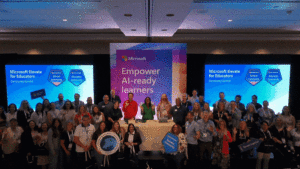
The toolkit also serves as a gateway to "Microsoft Elevate for Educators," a new framework that merges the Microsoft Showcase Schools and the Microsoft Innovative Educator Expert (MIEE) programs. By unifying these communities, Microsoft is fostering a global network where leaders can share "blueprints" of their AI implementations. This peer-to-peer exchange is vital for solving localized problems, such as localized language support or regional regulatory compliance.
Additionally, the toolkit emphasizes AI literacy through a partnership with Code.org’s "Hour of AI." Launched in Fall 2025, this initiative builds on the global success of the "Hour of Code." It includes Minecraft-based lessons, such as "Generation AI," which teach students the foundational mechanics of how AI works, ensuring that the next generation understands the technology behind the tools they use daily.
Analysis of Implications for the Future of Education
The release of the updated Microsoft Education AI Toolkit signifies a shift in the corporate responsibility of technology providers. By providing a structured, "responsible by design" framework, Microsoft is positioning itself as more than a vendor; it is acting as a strategic partner in institutional governance.
The move toward agentic AI and systemic "Sparks" suggests that the next phase of the digital divide will not be about access to AI tools, but about the "implementation gap"—the difference between institutions that can effectively scale these tools and those that remain stuck in the pilot phase. For institutions, the implications are clear: the successful integration of AI requires a move away from siloed IT projects toward a holistic strategy that involves pedagogy, administration, and cybersecurity in equal measure.

As educational institutions worldwide face budget constraints and increasing demands for personalized learning, the efficiencies promised by the updated toolkit offer a potential pathway toward sustainability. However, the toolkit also makes it clear that the "human-in-the-loop" remains the most critical component. Whether through the University of Leicester’s digital coach or Auburn University’s innovative use of AI in research, the goal remains to empower educators and students, not to replace them.
The updated Microsoft Education AI Toolkit is now available for download, providing the frameworks, checklists, and research necessary for institutions to navigate the complex journey from AI adoption to true institutional transformation.