



The federal New Democratic Party (NDP) has issued an urgent appeal to Immigration, Refugees and Citizenship Canada (IRCC), calling for the immediate implementation of biometric processing alternatives to expedite study permits for 136 Palestinian students. These students, who have secured admission offers and scholarships at 26 Canadian universities, find themselves in a protracted state of uncertainty, unable to commence their academic pursuits. The party’s demands come amidst growing concern over the protracted delays and the perceived inequitable treatment of these aspiring scholars.
Call for Humanitarian Alternatives
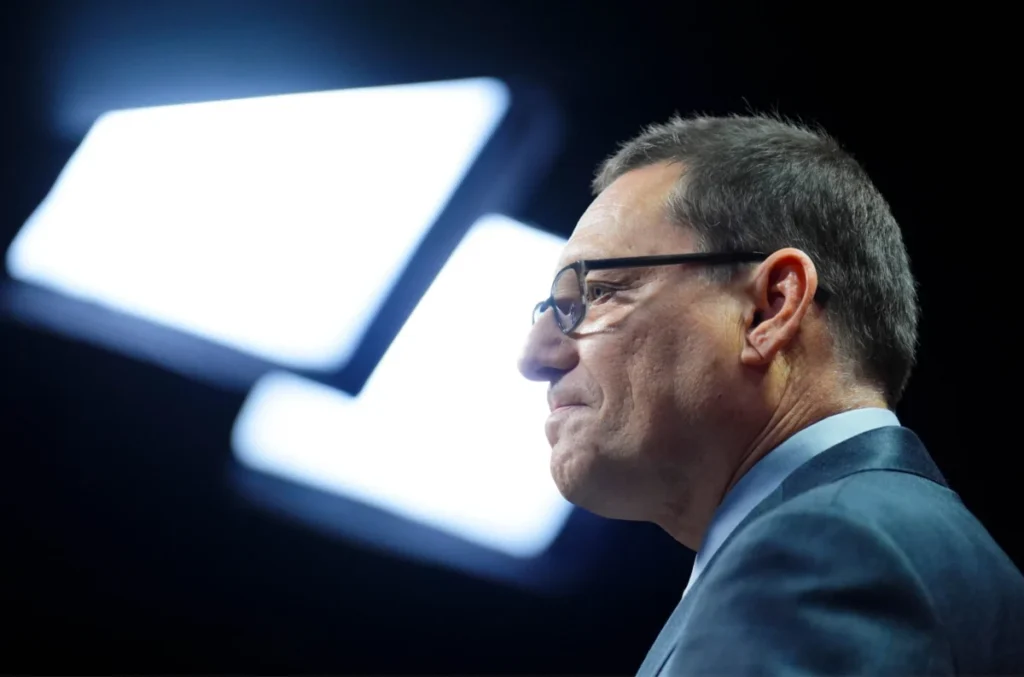
At a press conference held in Ottawa on April 14, 2026, newly elected NDP Leader Avi Lewis articulated a series of concrete proposals aimed at alleviating the crisis. He urged IRCC to permit Palestinian students to complete biometric data collection, such as fingerprinting or retinal scans, within Canada. Furthermore, the NDP advocates for the provision of temporary biometric exemptions or deferrals, and the establishment of remote or alternative processing channels.
"These are secure and humane alternatives that are both feasible and already in use around the world," Mr. Lewis stated, emphasizing the practicality and ethical considerations underpinning the NDP’s recommendations. "These alternatives ensure fair, timely decisions for qualified applicants who have already been accepted at Canadian universities. This is about justice, equitable treatment, and fundamental human rights."
The Biometric Hurdle: A Barrier to Education
The core of the delay, according to an NDP background document, lies in the unavailability of biometric processing facilities in Gaza. Ninety-eight of the affected students remain within the besieged territory, rendering the standard biometric submission process impossible. The NDP highlighted a critical provision within the Immigration and Refugee Protection Act (IRPA), specifically section 12.8, which stipulates that biometrics are not required when compliance is "impossible or not feasible."
Adding to the complexity, an additional 27 Palestinian students have sought to apply for Canadian study permits from Egypt. However, these individuals face an additional layer of security screening. This intensified scrutiny is reportedly applied to anyone who was in Gaza after July 1, 2023, a timeframe that predates Israel’s military offensive in the region by three months.
The implications of this enhanced screening are significant. The NDP noted that such delays have extended processing times to over 18 months, a stark contrast to the standard nine-week processing period for study permits in Egypt. This prolonged waiting period jeopardizes not only the students’ academic futures but also their financial stability and personal well-being.
Personal Stories of Despair and Resilience
The plight of these students is poignantly illustrated by the case of Alaa, whose last name was withheld by University Affairs for security reasons. Alaa, a 40-year-old Palestinian man with a master’s degree in electrical engineering from the Islamic University of Gaza, has been waiting for a study permit for an unprecedented 23 months. In March 2024, he received an offer to join the doctoral program in engineering at the École de technologie supérieure (ÉTS) in Montreal. His research was slated to focus on enhancing data transmission in urban wireless networks, a critical area of technological advancement.
At the time of his admission, Alaa was awarded an annual stipend of $18,750 from ÉTS, a scholarship from the Fonds de recherche Québec, and secured a teaching and research position under his postgraduate supervisor. Despite fulfilling all requisite documentation, submitting biometrics, and paying the necessary processing fees for his study permit application to IRCC, his academic journey remains on hold.
Alaa, who was born in Saudi Arabia, was forced to flee Gaza with his wife and three children in April 2024, seeking refuge in Cairo to escape the escalating conflict. He is among a group of five Palestinian postgraduate students who have resorted to filing mandamus applications with the Federal Court, seeking to compel IRCC to issue their study permits. Alaa expressed his grave concern to University Affairs, stating that if he does not receive his permit soon, he risks losing his doctoral opportunity at ÉTS, with a critical deadline in May.
A "Blanket Holdup" Unprecedented in Academia
Nadia Abu-Zahra, a professor in the School of International Development and Global Studies at the University of Ottawa and a member of the Palestinian Students and Scholars at Risk (PSSR) Network, shared her professional perspective. In an interview, she stated that in her 16 years on faculty, she has never witnessed foreign graduate students, as a collective group, face such a "blanket holdup."
"This is, in effect, a concerted effort to block Palestinian students from coming to the universities that have accepted them and offered them scholarships," she asserted, highlighting the systematic nature of the delays.
Dr. Abu-Zahra further criticized the government’s approach, suggesting that Immigration, Refugees and Citizenship Minister Lena Diab is effectively forcing students "to stay in the same place where students and professors are being killed." She described the situation as a "complete dehumanization of students whose main goal is to flourish and to give to society – and Canada is treating them in a totally different way from the way it treats everyone else."
The PSSR Network’s data underscores the severity of the situation, reporting that only eight Palestinian students managed to arrive in Canada last year, with the majority of their applications processed in Europe. This figure represents a minuscule fraction of the potential cohort of Palestinian students seeking to pursue higher education in Canada.
IRCC’s Response and Procedural Realities
In response to the mounting pressure and the concerns raised, IRCC issued a statement acknowledging the dire situation in Gaza. "The federal government is deeply concerned about the ongoing situation in Gaza and recognizes the extremely difficult circumstances faced by people in the region, including those hoping to study in Canada," the statement read.
The department sought to differentiate between general study permit applications and specific measures designed to support temporary residence for individuals in Gaza who are extended family members of Canadian citizens and permanent residents. "These special measures are being prioritized, consistent with Canada’s priority to reunite families and provide a temporary safe haven for directly affected Palestinians with family support in Canada," IRCC explained.
Regarding the study permit delays, IRCC stated, "We understand that some students, including those with acceptance letters from Canadian institutions, have been experiencing increased processing times for their study permit applications. While an offer of admission is an important step, it does not automatically lead to a study permit. All prospective international students must meet the requirements of Canada’s immigration system – including obtaining a letter of acceptance from a designated learning institution and securing an approved study permit – before they can travel to Canada."
The department reiterated that all individuals seeking entry to Canada must adhere to admissibility and eligibility requirements, which encompass biometrics and security screening, as mandated by the IRPA and its associated regulations. IRCC emphasized that security screening is conducted by independent security partners, and the timing and outcomes of these assessments are beyond the department’s direct control. Furthermore, IRCC stated that biometrics can only be completed once individuals have departed Gaza, as the department has no operational presence within the territory.
Broader Implications and Future Outlook
The ongoing impasse over study permits for Palestinian students raises significant questions about Canada’s commitment to academic freedom, international collaboration, and humanitarian principles. The delay not only hinders the educational aspirations of individual students but also deprives Canadian universities of talented researchers and future leaders. The PSSR Network’s findings suggest a systemic issue that goes beyond individual application processing, pointing towards broader policy or procedural challenges.
The NDP’s call for immediate action, including the implementation of alternative biometric solutions, highlights the urgent need for IRCC to adopt flexible and compassionate approaches in times of crisis. The legal basis for waiving biometric requirements when submission is impossible or not feasible, as outlined in the IRPA, provides a clear pathway for the government to expedite these applications.
The personal testimonies of students like Alaa underscore the human cost of these bureaucratic hurdles. The risk of losing academic opportunities, particularly for postgraduate students engaged in vital research, represents a loss for both the individuals and the Canadian academic landscape. As the situation in Gaza remains volatile, the international community, including Canada, faces a moral imperative to support those seeking to build a better future through education. The coming weeks will be critical in determining whether IRCC will heed the NDP’s calls and implement the necessary measures to allow these 136 Palestinian students to finally pursue their studies in Canada. The case serves as a stark reminder of the complex interplay between immigration policy, geopolitical realities, and the fundamental right to education.