


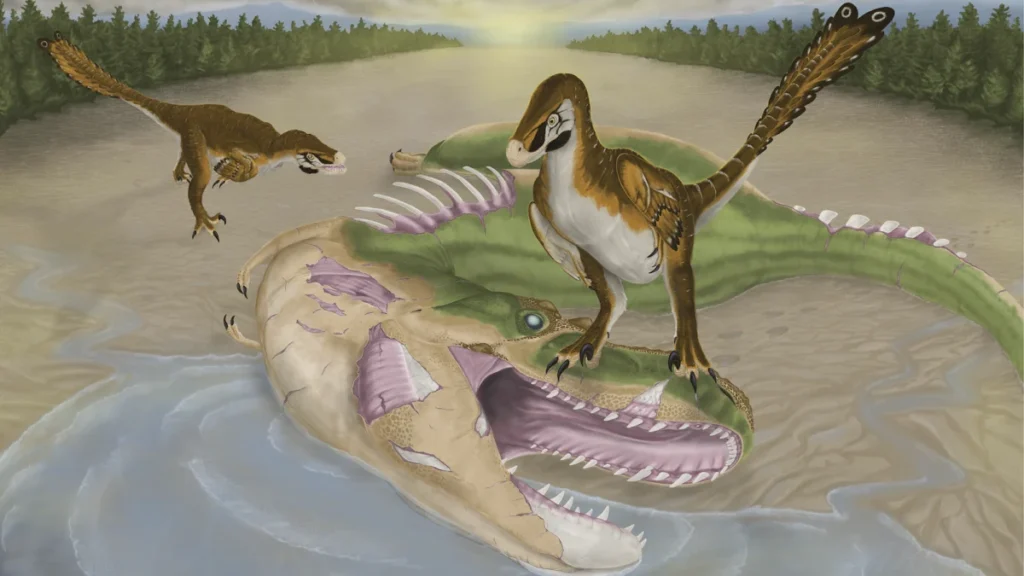
The discovery of distinct tooth marks on the fossilized lower jaw of an Albertosaurus has provided paleontologists with unprecedented insight into Late Cretaceous trophic interactions, suggesting that smaller dromaeosaurid raptors—or potentially even juvenile members of the same species—scavenged upon the remains of the region’s apex predator. Detailed in a recent publication within the Journal of Paleontology, the findings challenge traditional assumptions regarding predator-prey hierarchies in North American fossil beds and offer a rare glimpse into postmortem interactions among prehistoric fauna.
Background and Geological Context
Dating back approximately 73 to 67 million years to the Late Cretaceous period, Albertosaurus was a formidable member of the tyrannosaurid family and a close evolutionary relative of the iconic Tyrannosaurus rex. Roaming across what is now the modern Canadian province of Alberta and surrounding regions, adult specimens typically reached lengths of up to 30 feet and weighed roughly 6,000 pounds. As the undisputed apex predators of their ecosystem, these large theropods sat firmly at the top of the local food chain.
Despite their dominance, individual Albertosaurus specimens frequently succumbed to environmental pressures, injuries, illness, and natural mortality. The specimen at the center of the recent study represents an immature individual that died between the ages of 8 and 10. Although classified as a subadult, or "teenager," by paleontological standards, the creature was already substantial in size, measuring over 19 feet in length and weighing an estimated 1,170 pounds at the time of its death.
Chronology of the Discovery and Analysis
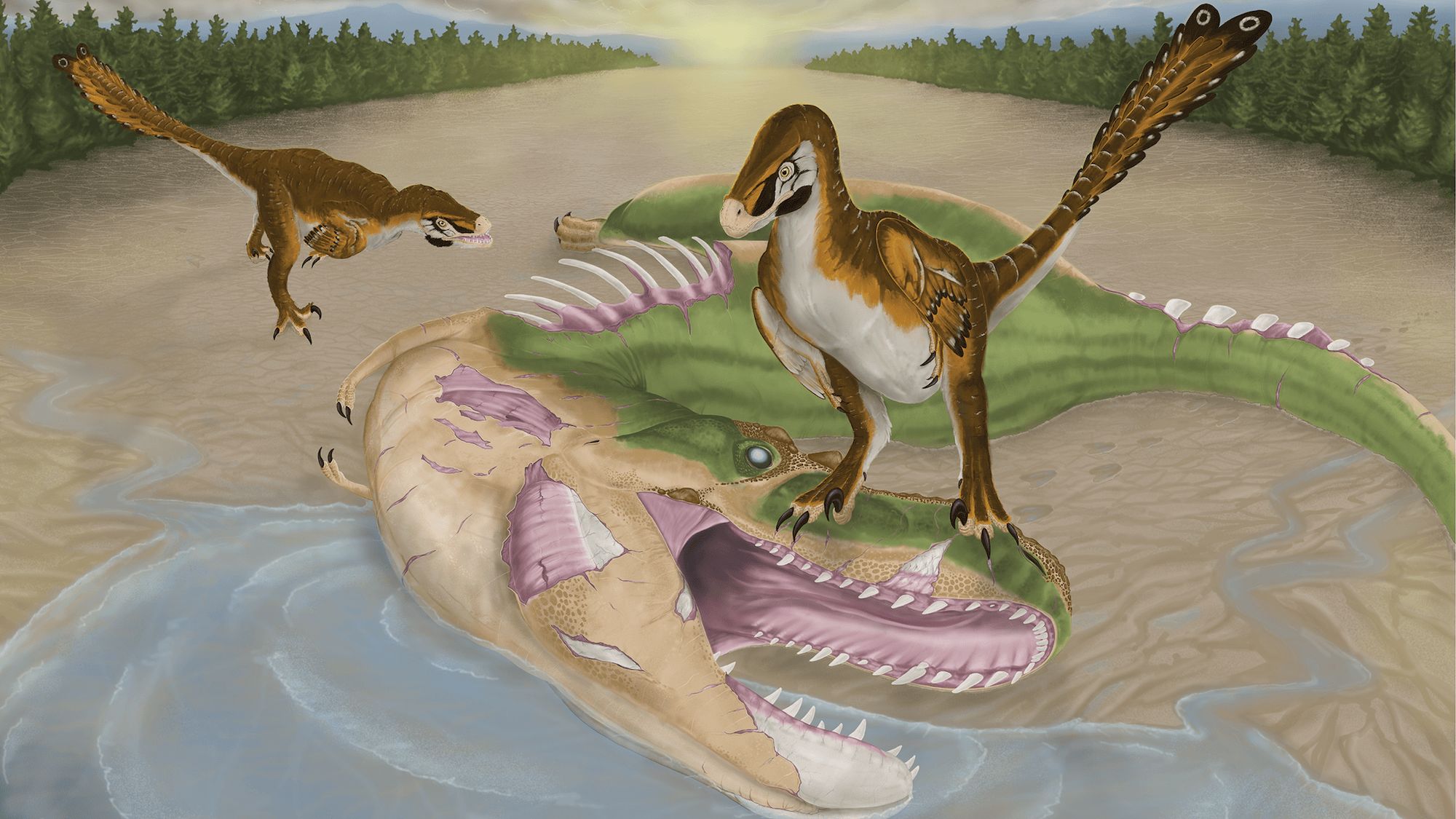
The investigation began when researchers analyzing the fossilized jaw fragments noticed unusual surface modifications. A meticulous examination under magnification revealed distinct, patterned bitemarks embedded in the bone. Crucially, the research team found no evidence of bone healing around the affected areas. This lack of regenerative tissue growth confirms that the trauma occurred at or near the time of the animal’s death, establishing the marks as postmortem feeding traces rather than scars from an intraspecific territorial skirmish.
The realization that a much smaller carnivore had fed upon the carcass of a massive tyrannosaur inverted conventional expectations of fossil scavenging patterns. Typically, larger carnivores displace smaller ones at feeding sites; however, this specimen records the inverse dynamic.
Evaluating the Suspects: Dromaeosaurids Versus Cannibalism
In their assessment of the fossil evidence, paleontologists evaluated two primary hypotheses regarding the identity of the scavenger. The first and most statistically probable scenario points to dromaeosaurids, a clade of small-to-medium-sized, feathered theropod dinosaurs colloquially known as raptors. Made famous globally by popular culture franchises such as Jurassic Park, this group includes well-documented genera like Velociraptor and Utahraptor.
In the specific ecosystem inhabited by Albertosaurus, contemporaneous dromaeosaurids such as Albertavenator curriei—a feathered, sickle-clawed hunter—roamed the same landscape. According to researchers, a pack of these agile predators could have easily converged upon a recently deceased subadult Albertosaurus, utilizing their specialized dentition to strip flesh from the heavy bone structure of the jaw.
However, the research team cannot entirely dismiss an alternative, more macabre hypothesis. Based on the specific spacing and dimensions of the individual tooth marks, an even younger Albertosaurus—measuring roughly 6.5 feet in length—represents the only other anatomical match capable of leaving such impressions.

Statements and Expert Analysis
Describing the implications of the find, study co-author and University of Alberta paleontologist Philip Currie noted the paradigm-shifting nature of the discovery. In statements accompanying the published research, Currie emphasized the reversal of expected ecological roles, noting the anomaly of observing smaller predators utilizing a massive tyrannosaur as a nutritional resource.
Co-author Joshua Doyon expanded on the dual possibilities of the investigation, highlighting the significance of the second hypothesis. Doyon pointed out that if the tooth marks correspond to a juvenile Albertosaurus, the evidence documents an instance of early-stage cannibalism within the tyrannosaurid lineage. While cannibalistic behavior is well-documented across modern and evolutionary animal history, capturing direct, physical evidence of the practice in the fossil record remains exceedingly rare.
Broader Implications for Prehistoric Ecosystems
The identification of these bitemarks carries substantial weight for paleoecologists attempting to reconstruct the complex food webs of the Late Cretaceous. Regardless of whether the feeding was executed by a pack of agile dromaeosaurids or an opportunistic juvenile relative, the specimen illustrates a fluid and opportunistic scavenging network that operated alongside apex predation.
Instances of scavenging on large-bodied dinosaurs provide vital data points regarding nutrient cycling in ancient environments. When an apex predator dies, its massive biomass represents a critical caloric windfall for smaller carnivores. The fossilized remains of this young Albertosaurus serve as a permanent record of that biological imperative, demonstrating that even the most feared predators of the Mesozoic era ultimately sustained lower tiers of the prehistoric ecosystem.