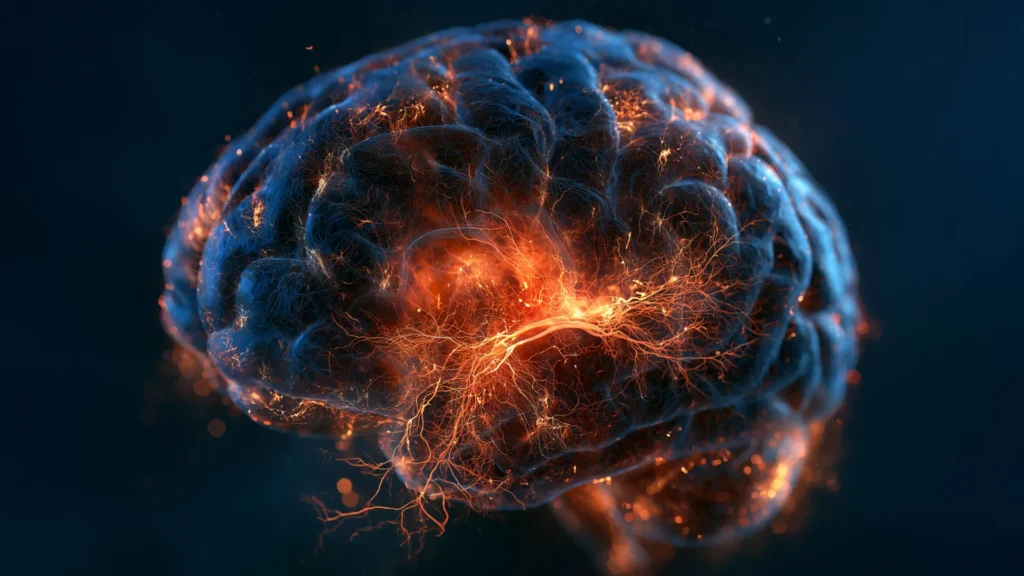


In a significant breakthrough for neuroscience, researchers at the University of Bonn have illuminated the intricate mechanism by which the human brain constructs useful memories, revealing a sophisticated system that stores the "what" and the "where/when" of an experience separately before coordinating them into a cohesive whole. Published in the prestigious journal Nature, these findings challenge previous assumptions based on animal models, suggesting a uniquely human strategy for memory formation that prioritizes flexibility and adaptability. Instead of blending all informational components within the same neural units, the brain maintains distinct neural libraries for content and context, linking them dynamically only when recall is required. This division of labor provides a powerful explanation for the remarkable versatility of human memory, enabling individuals to recognize familiar elements across wildly disparate situations.
The Enduring Puzzle of Contextual Memory
For memories to serve their adaptive purpose, the brain must seamlessly integrate factual information—the "content"—with the specific circumstances in which that information was acquired—the "context." This integration allows humans to distinguish between, for instance, a casual dinner with a friend and a formal business meeting with the very same individual, despite the shared presence of the person. Prior research has established the existence of "concept neurons" deep within the brain’s memory centers, particularly in regions like the hippocampus. These specialized cells exhibit an impressive ability to respond to a particular person, object, or concept irrespective of its surrounding environment, acting as invariant detectors for specific entities. Professor Florian Mormann from the Clinic for Epileptology at the University Hospital Bonn (UKB) and a member of the Transdisciplinary Research Area (TRA) "Life & Health" at the University of Bonn, a lead author on the study, highlights this known phenomenon: "We already know that deep in the memory centers of the brain, specific cells, called concept neurons, respond to this friend, regardless of the environment in which he appears." This invariant recognition is fundamental to our ability to navigate a complex world.
However, the precise mechanism by which these invariant representations are then bound to their unique contexts to form discrete, episodic memories has remained a subject of intense scientific inquiry. Studies in rodents, often serving as foundational models for neurological research, have suggested a more integrated approach, where individual neurons frequently encode both content and context concurrently. This observation led researchers to ponder whether the human brain, with its vastly greater cognitive capacities, might employ a fundamentally different strategy. Dr. Marcel Bausch, working group leader at the Department of Epileptology and also a member of TRA "Life & Health," articulated the central questions driving their investigation: "We asked ourselves: Does the human brain function fundamentally differently here? Does it map content and context separately to enable a more flexible memory? And how do these separate pieces of information connect when we need to remember specific content according to context?" Unraveling these questions promised to shed light on the unique computational power of the human brain.
A Unique Window into Human Neural Activity
To address these complex questions, the research team employed a unique and ethically sensitive methodology: recording electrical signals directly from individual neurons in human patients. This rare opportunity arose from the clinical evaluation of individuals suffering from severe, drug-resistant epilepsy. As part of their diagnostic protocol, these patients undergo invasive monitoring where electrodes are surgically implanted into critical brain regions, including the hippocampus and adjacent structures known to be vital for memory formation and recall. While these electrodes primarily serve to localize the origin of seizures and assess potential treatment options, they also provide an unparalleled, real-time window into the intricate workings of the human brain at a cellular level.
During the monitoring period, and with their full voluntary consent, participating patients engaged in a series of computer-based tasks. These tasks were meticulously designed to dissect the interplay between content and context. Participants were presented with pairs of images and subsequently prompted with different types of questions about them. For instance, they might see an image of a biscuit and then be asked, "Bigger?" This experimental design was crucial, as it allowed the researchers to observe how the brain processed the exact same visual content under varying contextual demands. "This allowed us to observe how the brain processes exactly the same image in different task contexts," Mormann explained, underscoring the precision of their approach. The ability to isolate and manipulate these variables in real-time, within the human brain, represents a significant methodological advantage over animal models or non-invasive imaging techniques that lack single-neuron resolution.
Two Distinct Neural Systems: Content and Context Neurons
The meticulous analysis of electrical activity from over 3,000 individual neurons yielded a profound discovery: the identification of two largely independent populations of neurons, each specialized in encoding a distinct aspect of memory. One group, aptly named "content neurons," consistently responded to specific images—such as the biscuit mentioned earlier—irrespective of the question posed or the task context. These neurons fired reliably whenever their associated content appeared, demonstrating their role in representing the "what" of an experience.
In parallel, the researchers identified a second, equally distinct group, termed "context neurons." These cells showed preferential activation based on the type of question being asked, such as "Bigger?" or "Smaller?," regardless of the specific image displayed. Their activity was tied to the operational context, the "how" or "why" of the interaction, rather than the visual stimulus itself. This stark functional separation stood in direct contrast to prior observations in rodents, where a single neuron might often encode both the visual content and the spatial context simultaneously. In the human subjects, only a small fraction of the neurons examined exhibited such dual encoding capabilities, highlighting a fundamental difference in neural architecture.
A critical validation of this functional segregation was observed in the accuracy of the patients’ responses. "A key finding was that these two independent groups of neurons encoded content and context together and most reliably when the patients solved the task correctly," Bausch noted. This correlation between distinct neural activity and correct behavioral output strongly suggests that the coordinated, yet separate, encoding by content and context neurons is fundamental to the formation of accurate and accessible memories. This finding implies that the brain’s ability to correctly link what happened with where it happened is directly reflected in the precise activity patterns of these specialized neuronal populations.
The Dynamic Dance of Memory Reconstruction
The study further elucidated the dynamic interplay between these two specialized neuronal groups, revealing how the brain reconstructs complete memories from these separate components. As the experiment progressed and patients performed more tasks, the interaction between content and context neurons became demonstrably stronger. This strengthening was not instantaneous but evolved over time, suggesting a learning process at the neural level. Intriguingly, the researchers observed a predictive relationship: activity in a content neuron would reliably precede the response of a context neuron by mere tens of milliseconds. Mormann vividly described this emergent property: "It seemed as if the ‘biscuit’ neuron was learning to stimulate the ‘Bigger?’ neuron." This temporal sequencing indicates a directed flow of information, where the recognition of specific content primes the brain for the relevant contextual frame.
This sophisticated interaction functions akin to a neural control system, ensuring that during memory recall, only the pertinent context is retrieved alongside the remembered content. This process is a cornerstone of cognitive function, known as "pattern completion," where the brain can reconstruct a full memory even when presented with only partial cues. For instance, seeing a familiar face might trigger the recall of an entire past event, complete with its location, time, and associated emotions. The researchers contend that this novel separation of roles between content and context neurons is a key factor explaining the extraordinary adaptability of human memory.
By maintaining distinct "neural libraries" for content and context, the brain achieves remarkable efficiency and flexibility. Instead of requiring a unique neuron for every conceivable combination of content and context (which would quickly become an unmanageable combinatorial explosion given the vastness of human experience), the brain can reuse the same content representations across an infinite number of contexts, and vice versa. "This division of labor probably explains the flexibility of human memory: the brain can reuse the same concept in countless new situations without needing a specialized neuron for each individual combination, by storing content and context in separate ‘neural libraries’," Bausch elaborated. Mormann further emphasized the broader implications: "The ability of these neuronal groups to link spontaneously allows us to generalize information while preserving the specific details of individual events." This elegant solution allows for both the robust recognition of invariant entities and the nuanced recall of specific, contextualized experiences, a hallmark of human cognition.
Broader Implications and Future Research Trajectories
The implications of this research extend far beyond a deeper understanding of fundamental memory mechanisms. This discovery offers new avenues for investigating neurological and psychiatric conditions characterized by memory impairments. For instance, disorders like Alzheimer’s disease, which affects over 6 million Americans according to the Alzheimer’s Association, often involve difficulties in forming and recalling episodic memories, where specific events become detached from their temporal and spatial contexts. Understanding how the healthy brain links content and context could provide crucial insights into what goes awry in such diseases. Similarly, conditions like Post-Traumatic Stress Disorder (PTSD) are often associated with the inappropriate recall of traumatic content in safe contexts, or conversely, a failure to appropriately contextualize stressful events. While this study focused on specific task-defined contexts, its principles could inform future research into how emotional or environmental contexts are processed.
The scientists acknowledge that their initial study defined "context" through explicit questions presented on a screen. Real-world contexts, however, are often passive and multifaceted, encompassing sensory environments, emotional states, and temporal sequences. A crucial next step for future research will be to determine whether the brain processes these more ecological, everyday contexts using the same segregated neural architecture. This will involve designing experiments that mimic naturalistic memory formation more closely.
Furthermore, the research team plans to extend these investigations beyond the controlled clinical setting, potentially utilizing non-invasive brain imaging techniques in conjunction with sophisticated behavioral paradigms to confirm and expand upon these findings in a broader population. Another vital avenue of inquiry involves deliberately disrupting the interaction between these content and context neuron groups. By employing advanced neuro-modulation techniques, scientists could investigate whether such interference impairs a person’s ability to recall the correct memory in the right context or to make accurate, contextually appropriate decisions. Such experiments could provide causal evidence for the critical role of this dual-system interaction in flexible memory function and decision-making.
This groundbreaking research was made possible through the generous financial support of several key organizations, including the German Research Foundation (DFG), the Volkswagen Foundation, and the NRW joint project "iBehave." Their investment in fundamental neuroscience continues to push the boundaries of our understanding of the human brain, offering hope for new diagnostic and therapeutic strategies for a wide range of neurological and psychiatric conditions that impact memory and cognition. The University of Bonn’s contribution marks a significant milestone in unraveling the complexities of human memory, reinforcing its role as a leading institution in brain research.