


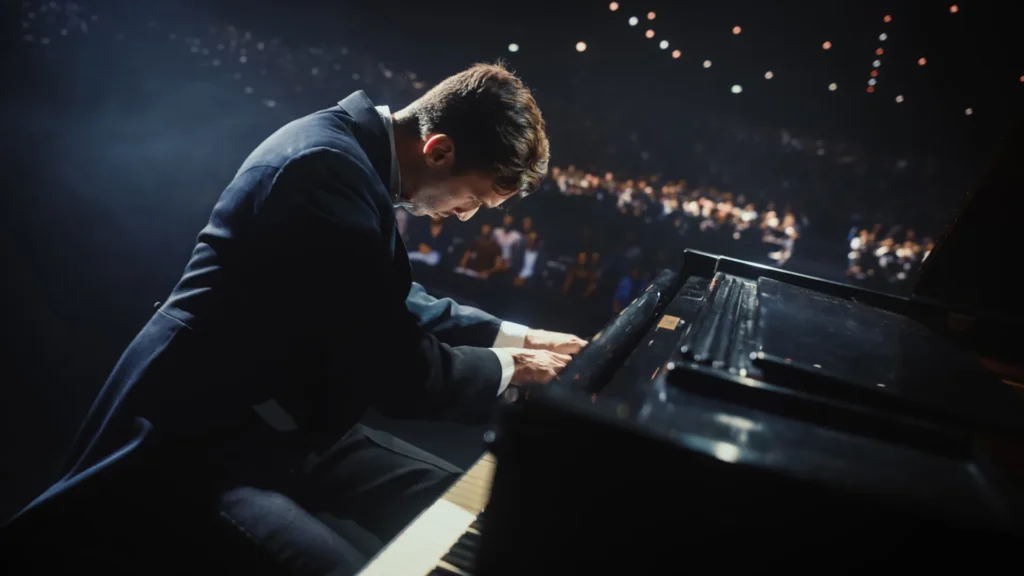
For generations, the nuanced world of piano performance has been characterized by a profound debate: can a pianist’s touch genuinely alter the inherent character, or timbre, of a piano’s sound? Traditionalists, particularly within the classical music pedagogy, have long insisted on the existence of a "golden touch" – a mystical ability to coax warmth, brightness, or darkness from the instrument. Conversely, a significant portion of the scientific community, primarily acousticians and physicists, remained skeptical, arguing that once a hammer strikes a string, the resulting tone is almost entirely dictated by the instrument’s mechanics and physics, with variations primarily limited to loudness (dynamics) and timing (rhythm and tempo). Now, groundbreaking research has provided some of the clearest, most compelling evidence to date, definitively proving that pianists truly possess the ability to shape a piano’s timbre through touch alone, moving this long-standing artistic intuition firmly into the realm of measurable science.
This pivotal study, led by Dr. Shinichi Furuya of the NeuroPiano Institute and Sony Computer Science Laboratories, Inc., utilized cutting-edge ultra high-speed sensing technology to meticulously unearth the previously imperceptible movements that underpin expressive piano playing. Their comprehensive findings, published in the esteemed Proceedings of the National Academy of Sciences (PNAS), signify a monumental shift in understanding the intricate relationship between human motor control, instrument mechanics, and auditory perception. The research indicates that the most subtle, microscopic motions of a pianist’s fingers and hands exert a tangible influence on how listeners perceive qualitative attributes of musical notes, such as brightness, heaviness, clarity, and warmth.
A Century-Old Musical Conundrum: The Timbre Debate
The question of whether pianists could truly manipulate timbre through their physical touch has been a subject of fervent discussion and disagreement since the early 20th century, if not earlier in less formalized contexts. While renowned pedagogues and virtuosos like Theodor Leschetizky and Josef Hofmann passionately advocated for the profound impact of touch on tonal color, describing notes with a rich vocabulary of sensory adjectives – "warm," "dark," "bright," "heavy," "singing," or "percussive" – many scientists, particularly those focusing on the pure acoustics of the piano, viewed these descriptions as largely metaphorical or subjective.
Prior scientific perspectives often posited that perceived differences in timbre were primarily psychological interpretations, or mere byproducts of changes in volume (loudness) and timing (articulation and tempo), rather than a direct consequence of the physical interaction between the finger and the key. The mechanical complexity of the piano, with its intricate lever system culminating in the hammer striking the string, seemed to present a logical barrier to direct timbral control beyond velocity. This mechanistic view, while sound in its understanding of basic physics, often struggled to reconcile with the lived experience and artistic intuition of accomplished pianists who consistently demonstrated a seemingly inexplicable mastery over tonal nuances. Early attempts to scientifically quantify "touch" were hampered by the limitations of measurement technology, making it impossible to capture the minute, high-speed movements involved. This new research directly challenges and overturns that long-held assumption.
Unveiling the Micro-Mechanics of Expressive Performance
To resolve this enduring debate, Dr. Furuya’s team developed a custom-built, noncontact sensing system dubbed "HackKey." This innovative technology allowed them to record the movements of all 88 piano keys at an astonishing speed of 1,000 frames per second, combined with microscopic spatial precision. This level of detail was crucial for capturing the elusive, rapid, and minute variations in key depression that previous systems simply could not detect.
The experimental design was rigorously structured to isolate the variable of "touch." Twenty internationally acclaimed concert pianists, representing a pinnacle of technical and expressive mastery, were recruited for the study. These virtuosos were tasked with playing individual notes while intentionally striving to produce contrasting tonal qualities. For instance, they were asked to play the same note with the same intended loudness but aiming for "bright" versus "dark" sounds, or "light" versus "heavy" sounds. This methodology was designed to ensure that any observed differences in timbre were directly attributable to their intentional manipulation of touch, rather than variations in volume or tempo.
The results of the listening tests were unequivocal and compelling. An independent panel of listeners, comprising both musically trained individuals and those with no formal musical background, consistently recognized the intended timbres. Participants could reliably differentiate between a note played "brightly" and one played "darkly," even when the objective loudness was maintained. Professional pianists within the listening test group demonstrated an even higher degree of sensitivity and accuracy in identifying these subtle timbral distinctions, highlighting the refined auditory perception developed through years of musical training.
The Hidden Choreography Behind Musical Expression
The researchers meticulously analyzed the vast dataset generated by HackKey, identifying specific movement features that correlated strongly with the perceived changes in timbre. Their analysis revealed that only a select handful of extremely precise movement characteristics were robustly connected to these timbral shifts. These included infinitesimally tiny variations in key acceleration, the exact timing of the key press relative to other movements, and the precise synchronization between the two hands when playing chords or rapid passages.
A particularly significant finding underscored the causal relationship between touch and timbre: the researchers discovered that by altering just a single one of these identified movement features, they could reliably change how listeners described the sound. This direct evidence confirmed that touch itself plays a causal, rather than merely correlative, role in shaping timbre. It unequivocally demonstrated that timbral manipulation is not simply an incidental accompaniment to changes in loudness or tempo, but a distinct and controllable expressive parameter.
The study conceptualized these subtle gestures as components of a highly refined, shared motor skill, meticulously developed and honed through years of advanced piano training. This insight transforms the understanding of piano artistry: the nuanced control over piano tone is not merely a metaphorical concept or a subjective aesthetic experience; it is demonstrably grounded in measurable, repeatable physical actions. As Dr. Furuya eloquently explained, this groundbreaking work helps bridge the divide between a long-standing artistic intuition and the rigorous demands of scientific inquiry. The findings not only validate what countless pianists have inherently believed for decades but also provide an unprecedented, clearer understanding of the precise mechanisms through which skilled movement translates into profound emotional and aesthetic experiences in music.
Broader Implications: Beyond the Concert Hall
The ramifications of this research extend far beyond the confines of concert halls and practice rooms, promising to resonate across diverse scientific and technological domains.
Transforming Music Education and Pedagogy:
One of the most immediate and impactful implications lies within music education. For centuries, piano students have been guided by abstract, often poetic instructions from their teachers: "play warmer," "use a lighter touch," "make it sing," or "give it more color." While invaluable for artistic development, these subjective directives can be challenging to interpret and implement consistently. The new findings offer a pathway to revolutionize music pedagogy by making expressive techniques quantifiable, easier to teach, and visually demonstrable. Future training systems could potentially leverage advanced sensing technologies similar to HackKey, providing students with real-time biofeedback and visual representations of the exact physical movements associated with specific tonal qualities. Imagine an AI-powered tutor that can show a student precisely how to adjust finger acceleration or synchronization to achieve a desired "bright" or "dark" sound, moving beyond trial-and-error to a more targeted, efficient learning process. This could significantly accelerate skill acquisition and foster a deeper understanding of musical expression, potentially benefiting the estimated hundreds of millions of individuals globally who engage in musical instrument learning.
Advancements in Neuroscience and Rehabilitation Science:
The study offers profound insights into the intricate relationship between advanced motor control and sensory perception. It illuminates how the human brain seamlessly integrates complex movements with the resulting sensory experience, providing a tangible model for investigating sensorimotor learning and plasticity. Neuroscientists can now explore the neural correlates of timbral control, examining which brain regions are activated during the execution and perception of these subtle expressive gestures.
Furthermore, these discoveries hold significant promise for rehabilitation science. The precise motor control required for timbral manipulation could inspire novel therapeutic interventions. For individuals recovering from neurological conditions like stroke, or those with fine motor skill impairments, musical movement-based therapies could be developed. By engaging patients in tasks that demand precise control over subtle finger and hand movements to achieve specific auditory outcomes, these systems could potentially enhance dexterity, coordination, and neural pathway reorganization. The intrinsic reward of creating expressive music could also boost patient engagement and motivation.
Innovations in Robotics and Human-Computer Interaction (HCI):
The research provides critical data for the burgeoning fields of robotics and HCI. The ability to precisely quantify the physical actions that produce specific expressive nuances in piano performance opens new avenues for developing more sophisticated and human-like robotic systems. For example, robotic pianists could be programmed to reproduce not just the notes and dynamics, but also the subtle timbral variations that characterize human artistry.
In HCI, the findings could lead to the creation of more expressive and intuitive digital musical instruments and interfaces. Current digital pianos, while advanced, often struggle to replicate the full expressive range of acoustic instruments. By understanding the underlying physics of expressive touch, developers can design digital instruments that respond more accurately and sensitively to a performer’s input, enabling greater timbral control. This could also inform the design of haptic feedback systems, allowing users to "feel" the nuances of touch in virtual environments, extending beyond music to areas like surgical training simulators or industrial control systems. The global music technology market, already valued in the tens of billions of dollars, stands to benefit from such innovations.
The Science of Creativity and Performance: Dynaformics
Beyond its practical applications, this study makes a substantial contribution to a broader scientific endeavor: understanding creativity itself. For decades, much of the scientific research into music perception primarily focused on easily measurable elements such as pitch, loudness, and rhythm. Timbre, however, has proven far more elusive and challenging to study, precisely because it involves higher-level sensory interpretation, subjective aesthetic judgment, and deep emotional response.
By systematically identifying the specific physical actions directly linked to timbre perception, the researchers have effectively opened a crucial door. They have provided a concrete framework for studying how artistic expression emerges from the complex, dynamic interaction between the human body, the brain, and the resulting sound. This work is a cornerstone of an emerging interdisciplinary field sometimes referred to as "dynaformics," which aims to comprehensively understand music performance from a scientific perspective, integrating biomechanics, neuroscience, and acoustics.
Proponents of dynaformics believe that a deeper scientific understanding of performance mechanics can offer tangible benefits to musicians. This includes developing more efficient training methodologies, designing ergonomic instruments and practice routines to prevent performance-related injuries that plague many professional musicians, and even helping artists overcome physical limitations that can arise from years of intense practice. The excitement surrounding these findings stems not only from solving a century-old musical mystery but also from the profound realization that some of the most potent emotional power and aesthetic beauty in music may originate from movements so infinitesimally small they are almost invisible to the naked eye, yet so exquisitely precise that human listeners instinctively feel the difference. This research underscores that the art of music is not just a matter of inspiration, but also a triumph of sophisticated human motor control and sensory refinement.