



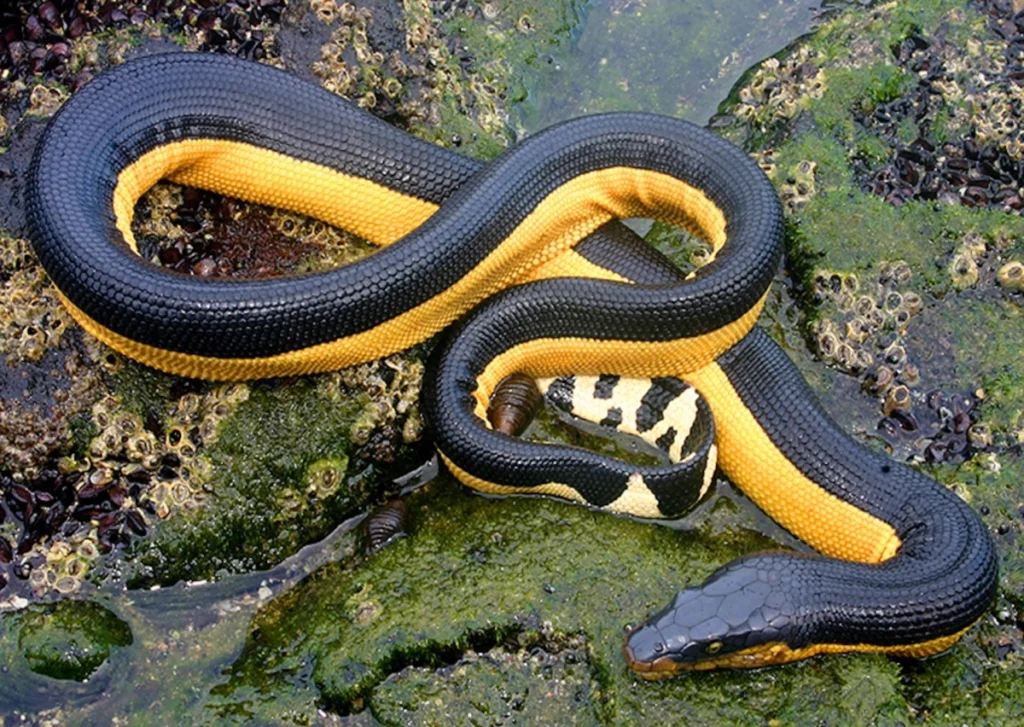
Marine biologists have documented a bizarre ecological phenomenon off the Pacific coast of Costa Rica, discovering that juvenile land crabs routinely hitch rides on the backs of pelagic sea snakes. While scientists have long studied the symbiotic relationships and epibionts—organisms that live on the surface of other animals—associated with marine turtles and cetaceans, the interaction between ocean-faring reptiles and terrestrial crustacean species has remained largely unexamined until now.
The findings, detailed in a study published in the journal Ecology and Evolution, shatter previous assumptions regarding marine migration, larval dispersal, and the ecological boundaries separating terrestrial and marine ecosystems. Led by a team of researchers from the University of Florida and the University of Guam, the investigation reveals that multiple crab species belonging to the family Grapsidae mistake venomous yellow-bellied sea snakes for floating driftwood or solid coastal surfaces, resulting in a misplaced oceanic voyage from which few return.
Background Context and the 2012 Discovery
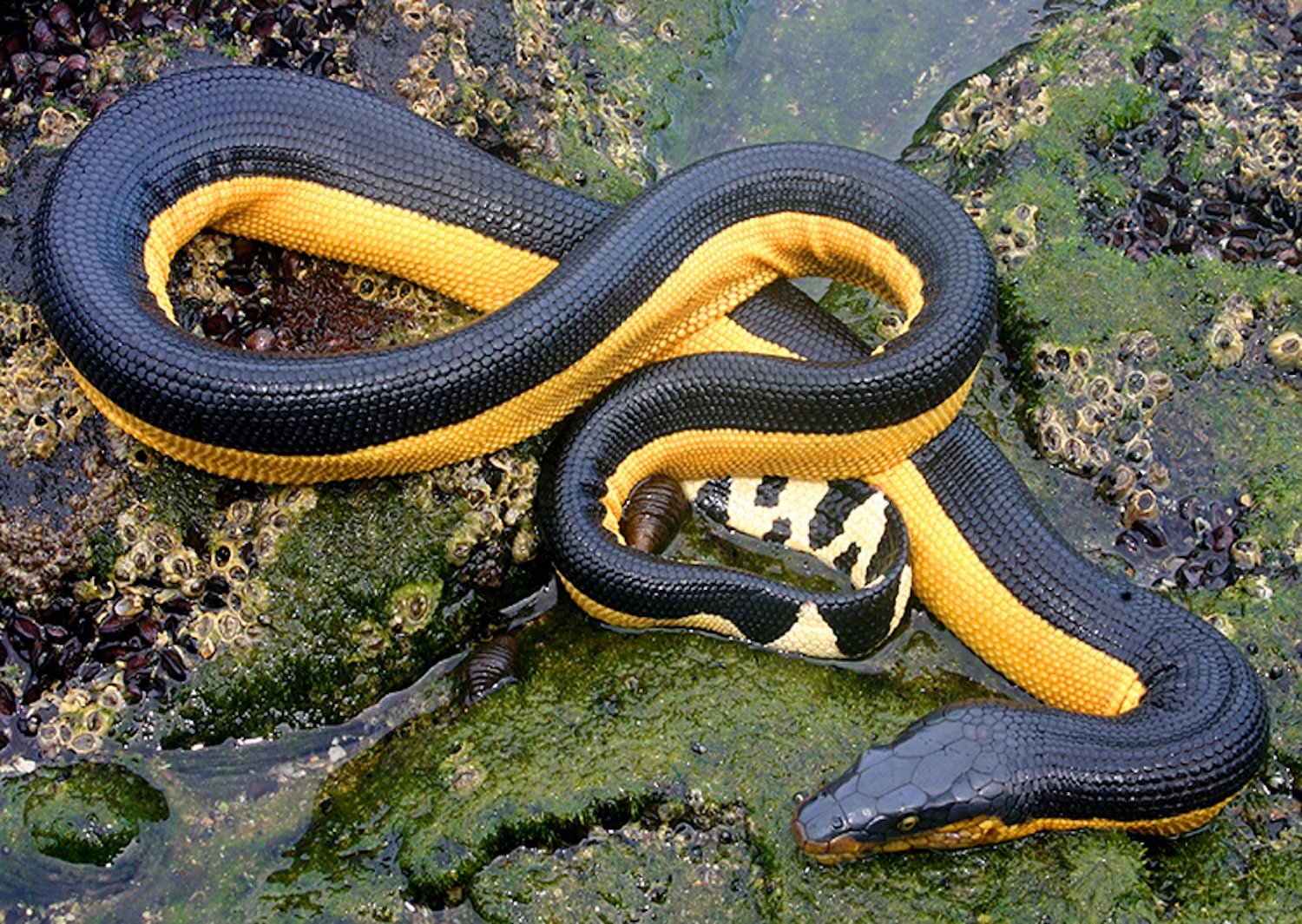
The roots of this discovery date back more than a decade to a 2012 marine biology expedition. During field surveys along the Pacific coast of Costa Rica, University of Florida marine herpetologist Joseph Pfaller was actively studying the yellow-bellied sea snake, scientifically known as Hydrophis platurus. These highly specialized, air-breathing reptiles spend their entire lives at sea, navigating vast ocean currents while hunting small fish.
Pfaller’s primary objective at the time involved analyzing how sea snakes shed their epidermal layers. Unlike terrestrial snakes that rub against rough surfaces like rocks, tree bark, or soil to slough off dead skin, sea snakes operate in a frictionless aquatic environment. To overcome this obstacle, the reptiles coil their slender bodies into tight, interlocking knots, generating enough mechanical pressure to peel away old skin.
During the collection and examination of these shed skins and live specimens, Pfaller noticed an unexpected detail: small, crab-like invertebrates occasionally detached from the reptiles. While marine biologists were well aware that sea snakes occasionally host stationary organisms such as barnacles, bryozoans, or tiny marine algae, the presence of mobile crustaceans moving freely across the snakes’ scales was unprecedented.

Expanding the Scope of Marine Surveys
Intrigued by the initial sighting, Pfaller expanded his methodology for the remainder of the expedition. As the survey progressed, he systematically cataloged the external fauna associated with every captured reptile. By the conclusion of the fieldwork, researchers had amassed a comprehensive dataset comprising 371 individual sea snakes.
The exhaustive collection effort yielded far more than just stray crustaceans. Alongside the suspected crabs, the reptiles served as transport hosts for a diverse array of marine hitchhikers, including specialized amphipods, small shrimp, marine snails, and even a species of clingfish. Despite the frequency of these observations, the underlying biological mechanisms remained a mystery. Herpetologists focused primarily on the unique morphological adaptations, coloration patterns, and evolutionary history of the yellow-bellied sea snake—leaving the identities of its tiny passengers unexamined for years.
Pfaller subsequently shifted his academic focus toward sea turtle conservation and ecology, placing the sea snake specimens into long-term storage at the Florida Museum of Natural History. The jars remained preserved for nearly ten years, waiting for the technological advancements and interdisciplinary collaboration necessary to decode their true identities.
A Decade Later: DNA Sequencing and the "Planes on a Snake" Joke
The investigation resumed years later when Pfaller casually mentioned the decade-old collection to University of Guam crustacean expert Robert Lasley. The conversation quickly shifted from routine scientific banter to biological curiosity, punctuated by Lasley’s pop-culture-inspired exclamation: "Wait! Wait! Wait! Are you saying you have planes on a snake?"—a playful nod to the 2006 action film Snakes on a Plane.
The moniker stuck, quickly becoming the working title for the research project as the team prepared to formally analyze the preserved specimens. Teaming up with University of Florida invertebrate researcher Soma Elefánti, the scientists initiated genetic sequencing to identify the species. Given that adult crabs of the genus Planes—commonly known as raft crabs or turtle crabs—frequently inhabit the crevices between sea turtle shells and soft tissue, the research team operated under the working hypothesis that the passengers belonged to this well-documented marine lineage.
However, the DNA analysis delivered entirely unexpected results. When Elefánti processed the genetic markers, the data confirmed that not a single specimen belonged to the genus Planes.
Understanding the Grapsidae Family and Larval Development
To understand why the DNA results shocked the researchers, it is necessary to examine the life cycle of crabs within the family Grapsidae. Adult members of this family are distinctly terrestrial or semi-terrestrial. Along the rocky shorelines, estuaries, and coastal mangroves of Costa Rica, mature grapsid crabs spend their lives navigating boulders, climbing coastal vegetation, and scurrying across the intertidal zone.
Despite their land-based existence, nearly all grapsid crabs must release their microscopic, free-floating larvae into the open ocean to complete the early stages of their life cycle. These larvae drift with marine currents for weeks or months, undergoing a series of molts before transitioning into the megalopa stage—a transitional phase bridging the microscopic larval period and juvenile adulthood.
During the megalopa stage, young crabs develop advanced swimming capabilities coupled with a strong instinctual drive to locate a solid, stable substrate upon which they can settle, feed, and mature into benthic juveniles. In a coastal environment, these megalopae frequently encounter floating flotsam, driftwood, and macroalgae mats swept out to sea by tides and river discharges.
Evolutionary Mismatches and Ecological Implications
The researchers concluded that the young crabs found on the sea snakes were victims of an evolutionary mismatch. As the megalopae drifted near the coastal convergence zones where land meets the open ocean, they encountered the yellow-bellied sea snakes swimming near the surface. Unable to distinguish between a stationary piece of oceanic timber and a living, mobile reptile, the juvenile crabs latched on using their specialized claws.

Once firmly attached, the crabs found themselves trapped in an ecological trap. Sea snakes routinely migrate miles away from the shoreline into deep, pelagic waters. While Planes crabs have evolved specific physiological and behavioral adaptations to thrive exclusively on long-lived marine hosts like sea turtles, the grapsid land crabs possess no such evolutionary history.
Because the yellow-bellied sea snake never returns to land, any terrestrial crab hitching a ride on its scales is ultimately doomed to perish in the open ocean once its energy reserves are exhausted or it fails to find an alternative substrate. As Robert Lasley bluntly summarized regarding the crabs’ poor navigational choices, the journey ultimately represents a dead end for the misplaced invertebrates.
Broader Scientific Significance
The publication of these findings in Ecology and Evolution provides marine biologists with fresh insights into the complexities of larval dispersal and inter-species interactions in marine ecosystems. By documenting how terrestrial invertebrates inadvertently exploit pelagic vertebrates, the study highlights the fluidity of marine boundaries and the powerful, sometimes fatal, role that instinct plays during the transitional phases of marine life.
Moving forward, researchers plan to investigate whether similar cross-species interactions occur in other tropical marine regions where terrestrial landmasses intersect with high-density reptile habitats. While the yellow-bellied sea snake may remain oblivious to its temporary, ill-fated passengers, the scientific community now possesses a clearer picture of the unexpected lifeforms sharing the ocean currents.