




The landscape of modern education is increasingly defined by a shift toward structured, evidence-based planning methodologies that prioritize student outcomes over mere content delivery. As pedagogical research continues to emphasize the efficacy of intentional instructional design, many educators are revisiting the fundamentals of unit planning to ensure their classrooms are aligned with rigorous academic standards. Central to this movement is the adoption of "backward design," a framework that necessitates the alignment of learning objectives, assessment strategies, and daily instructional activities to create a cohesive educational experience.
The Evolution of Instructional Planning
The concept of backward design, popularized by Grant Wiggins and Jay McTighe in their seminal 1991 work, Understanding by Design, has become a cornerstone of professional development for K-12 educators worldwide. This model posits that effective instruction begins not with the selection of textbooks or activities, but with the identification of desired results. By establishing clear summative assessments before drafting individual lessons, teachers ensure that every classroom activity serves a specific, measurable purpose.
Historically, pedagogical approaches often relied on a "forward design" model, where instructors focused on the daily curriculum content first, leaving the assessment phase as an afterthought. Data from the National Center for Education Statistics (NCES) suggest that teachers who engage in comprehensive, long-term unit planning report higher levels of self-efficacy and improved student engagement. By shifting the focus to the terminal goal, educators reduce the risk of "curriculum drift," a phenomenon where the pace and focus of a course become disconnected from the state or local standards mandated by school districts.

Chronology of the Unit Design Process
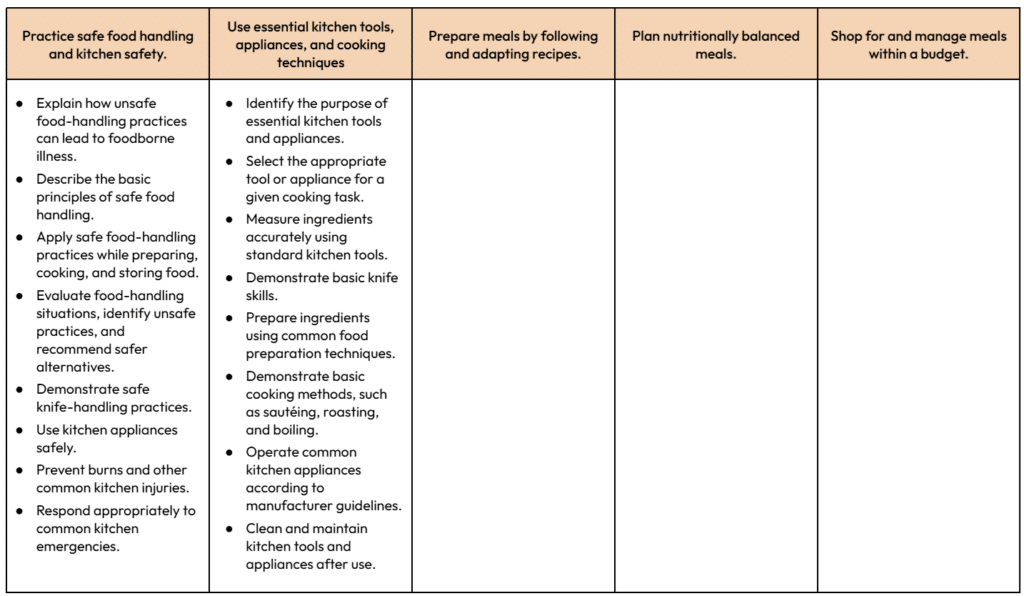
The implementation of a high-quality unit plan follows a specific chronological sequence designed to minimize instructional fragmentation. The initial phase involves the translation of broad, often abstract state standards into concrete, measurable learning objectives. In a hypothetical eight-week curriculum, such as a "Cooking Fundamentals" course, this process requires the distillation of complex skills—such as food safety, appliance management, and nutritional analysis—into distinct thematic units.
Following the identification of objectives, the process moves to the design of the summative assessment. This is a critical juncture where the instructor must determine the most accurate method for evaluating student mastery. Whether through project-based learning, performance tasks, or traditional testing, the assessment must be calibrated to the level of cognitive demand required by the curriculum standards.
The final phase in this chronology is the construction of daily lesson plans. Only after the objectives and the assessment parameters are fixed can the instructor effectively map out the "scaffolding" required to bring students to the point of mastery. This sequence ensures that the lessons function as a logical progression toward the final assessment, rather than a disconnected series of lectures or exercises.
Supporting Data and Pedagogical Research
The efficacy of backward design is supported by cognitive science research regarding "goal-oriented learning." Studies published by the American Educational Research Association (AERA) indicate that students perform significantly better on standardized measures when they are provided with clear expectations and a transparent roadmap of the unit’s objectives.
Furthermore, the implementation of essential questions—open-ended, inquiry-based prompts—serves as a primary tool for increasing student metacognition. By framing a unit like "Safe Food Handling" with a question such as, "How do your choices in the kitchen affect the safety of the food you prepare?" educators shift the student’s role from a passive recipient of information to an active investigator of the subject matter. This approach aligns with the principles of constructivism, which suggests that learning is most durable when students can connect new information to existing knowledge and real-world applications.
Perspectives from the Educational Community
Educational experts and instructional coaches have long debated the balance between rigid curriculum adherence and teacher autonomy. While proponents of standardized curricula argue that scripted lessons ensure equity across different schools, critics point to the "de-skilling" of the teaching profession when educators lose the ability to design their own units.
The consensus among modern pedagogy experts—including those associated with organizations like Cult of Pedagogy—is that teachers require a robust internal process for unit design, regardless of whether they are provided with pre-packaged materials. Many veteran educators express that even when a curriculum is supplied by a district, the ability to tailor that curriculum to the specific needs of a classroom cohort through backward design is essential for success. This sentiment is echoed by pre-service teachers who, according to recent surveys from the Council for the Accreditation of Educator Preparation (CAEP), identify "lesson and unit planning" as the most critical skill needed to enter the workforce with confidence.
Broader Implications for Classroom Instruction
The move toward more rigorous unit planning has profound implications for student achievement and teacher retention. High teacher turnover rates are often attributed to the stress of managing daily instructional demands without a clear, long-term strategy. A systematic approach to unit design mitigates this pressure by creating a sustainable workload where the teacher acts as a designer rather than just a delivery agent.
Moreover, the emphasis on differentiating instruction, the fourth component of the unit design process, ensures that the framework remains inclusive. By planning for various learning needs during the unit design phase—rather than attempting to modify lessons on the fly—instructors can better support students with diverse academic backgrounds.
Conclusion and Future Directions
As schools continue to navigate the demands of high-stakes testing and changing academic standards, the reliance on methodical, backward-designed unit plans is likely to increase. The ability to define standards, translate them into actionable objectives, design rigorous assessments, and sequence daily lessons is not merely a bureaucratic requirement; it is the fundamental architecture of effective teaching.
By prioritizing the "big picture" of the unit, educators are better positioned to foster environments where student success is not left to chance, but is the result of intentional, evidence-based instructional engineering. As the field continues to evolve, the integration of new digital tools and data-driven insights will further refine these processes, ensuring that the act of planning remains as dynamic and responsive as the students themselves. The shift toward mastery-based planning represents a significant, positive evolution in the professional standards of the modern classroom, reinforcing the importance of clarity, purpose, and alignment in every aspect of the teaching profession.